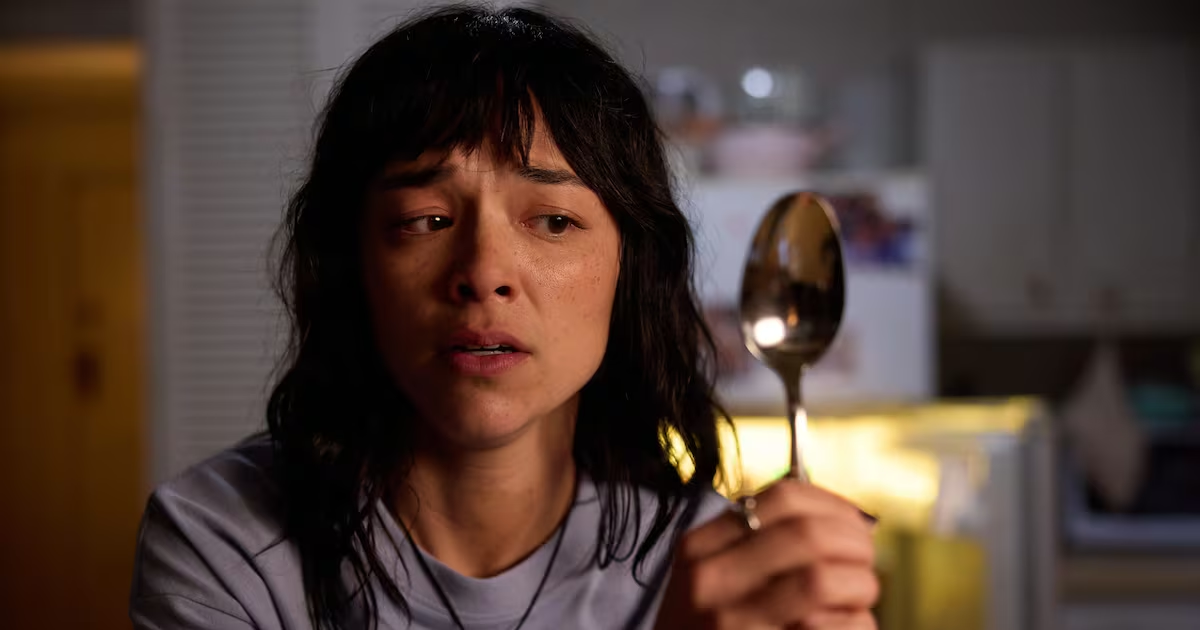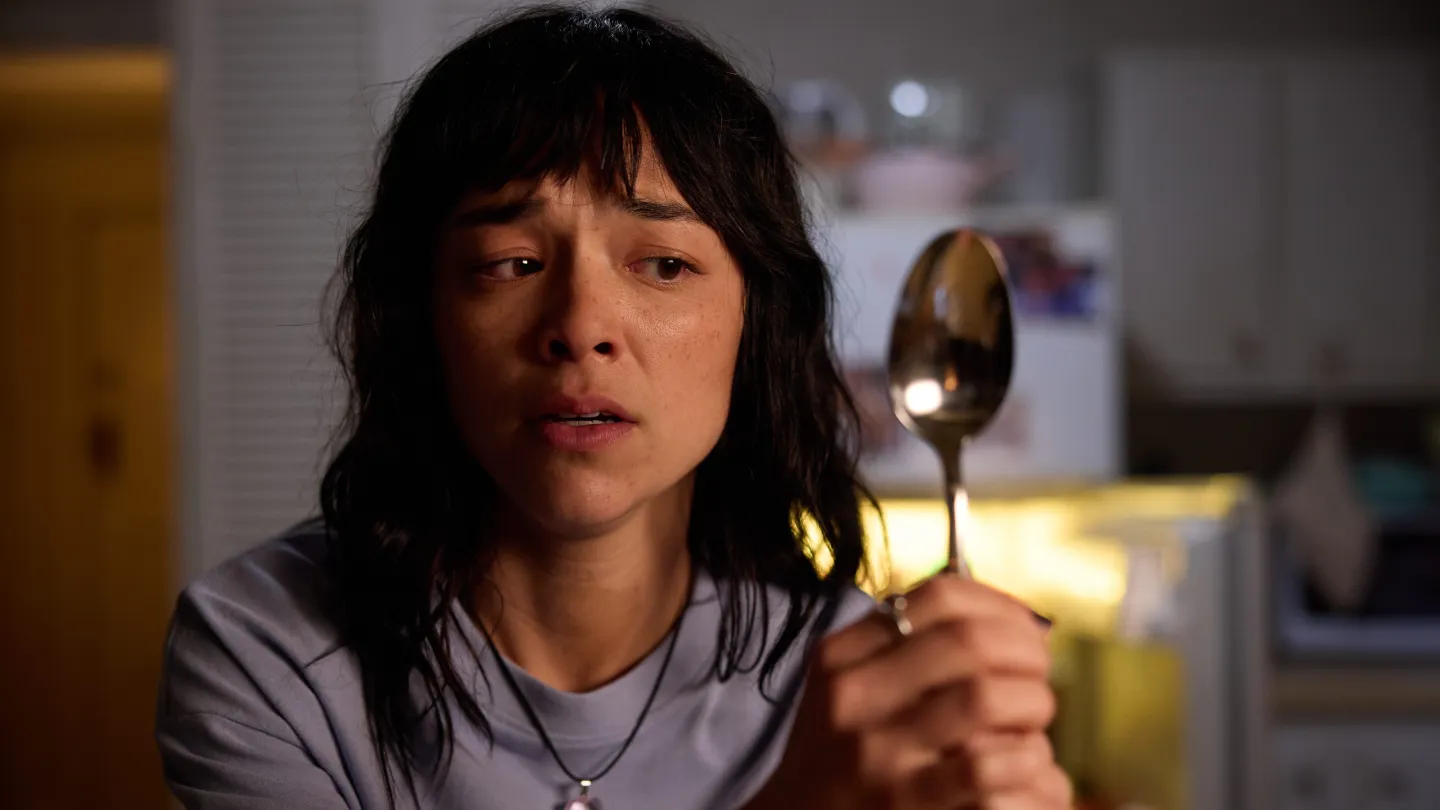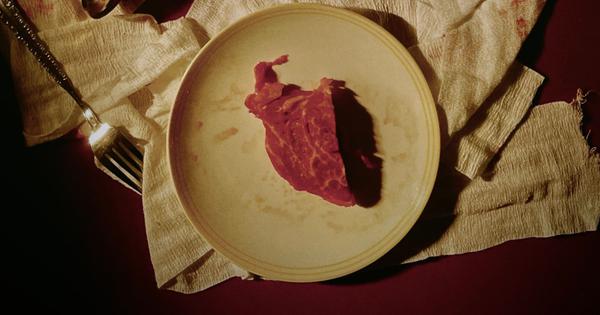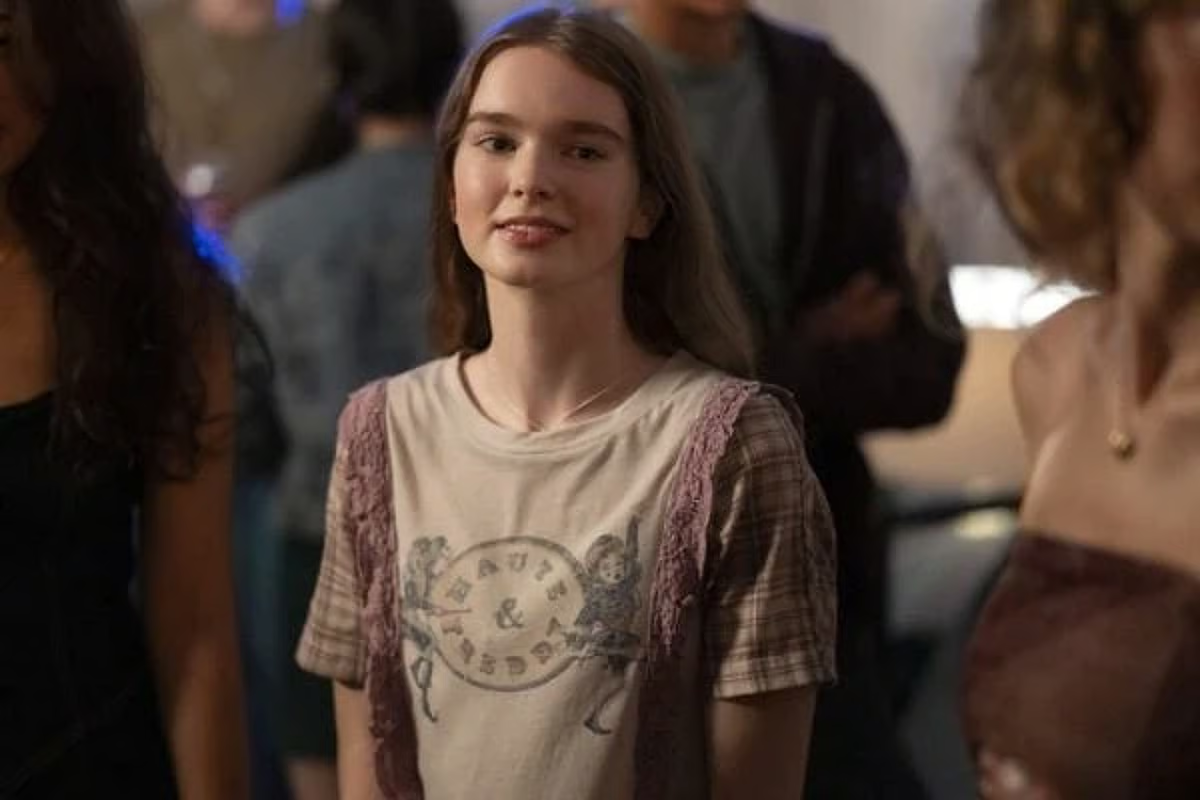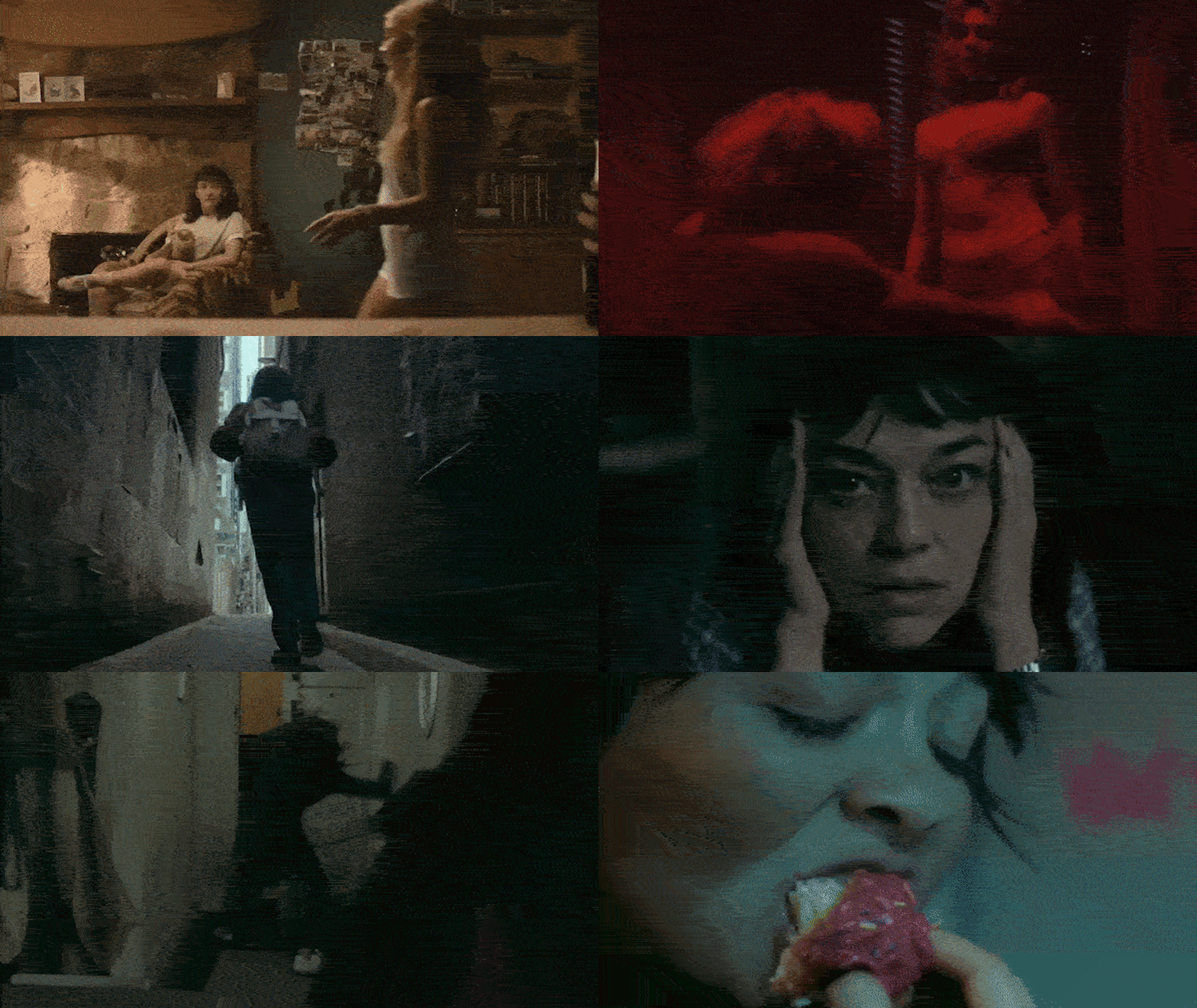
Skinny. It’s a word that strikes horror into the hearts of most women. We want to be skinny, or at least we’re told we should be. God forbid we’re too skinny, though, lest we concern those around us. Either way, we know we’ll be judged.Natalie Erika James is all too aware of this. Growing up with one parent struggling with food addiction and the other with food restriction, body image has long been a pain point for the Australian-American filmmaker. So, naturally, she made a film about it. Midori Francis (left) and Natalie Erika James on the set of Saccharine.Saccharine, a supernatural body horror, follows insecure medical student Hana (Midori Francis of The Sex Lives of College Girls) who begins taking an Ozempic-like weight-loss drug that contains human ashes. But the more weight she loses, the more she’s terrorised by an insatiable spirit.Though incredibly personal, James says the film’s true power lies in its relatability, especially as more people use weight-loss drugs like Ozempic.“Anything to do with weight and body image is tricky,” James says. “I thought the best way to explore it was to depict something as close to myself as possible. I felt I owed it to the audience because so much of Hana’s journey is coping with shame, and shame thrives in secrecy. Connection is the antidote.”In Saccharine, Midori Francis plays an insecure medical student who begins taking a mysterious weight-loss drug.Deeply personal yet exceedingly relatable – this has become the calling card of horror films directed by Australian women. From body image and autonomy to female rage and motherhood, these filmmakers are discovering horror as the ideal outlet through which to express their most complex, often unspoken, fears and frustrations.“Women in our society are often in danger. So much of our experiences and our bodies are dissected through the media,” James says. “When you’re socialised to be agreeable, some of those feelings have to go somewhere. Horror is the perfect outlet for some of that rage, aggressiveness, violence, or whatever it is that’s denied or contained by society. It’s a safe space in which that can come out.”Natalie Erika James is one of several female Aussie filmmakers taking a big bite out of the horror genre.Mia’Kate Russell is another Australian filmmaker exploring the intricacies of the female experience, albeit with a few more laughs and a lot more blood. Her new film Penny Lane Is Dead, a grisly Ozploitation caper, chronicles a summer night in 1986 when three friends visit a remote beach house to celebrate a university acceptance. The night goes awry when a jealous cousin arrives, followed by a nasty gang of thugs with a penchant for violence.James and Russell join a growing wave of Aussie women killing it in this space. In The Babadook (2014), Jennifer Kent terrified everyone with her pop-up book monster, but it was mothers who felt its honest exploration of motherhood and grief most deeply. Similarly, Daina Reid’s Run Rabbit Run (2023), about the young daughter of a fertility doctor who claims to have memories of another life, took on unresolved guilt and the burden of motherhood.Sissy (2022) tackled more contemporary female anxieties. Directed by Hannah Barlow and Kane Senes, the film gruesomely parodied influencer and wellness culture, touching on feminine rage and the ironic disconnect caused by social media.Aisha Dee plays troubled wellness influencer Cecilia in the horror film Sissy.ArcadiaJames has delved into the female psyche before. Relic (2020), a film about a daughter, mother and grandmother who are haunted by a manifestation of dementia, drew upon James’ own experience with her grandmother. Apartment 7A wasn’t based on the director’s life, but touched on universal female concerns like fertility and bodily autonomy.“When you’re talking about things like this, which are often processed so privately, it opens a door to conversation for people,” James says. “I’ve had so many people share their own stories with me, both after Relic and Saccharine. It’s the best that it gets in terms of filmmaking: to have people connect with you around a shared human experience.”Russell’s Penny Lane might initially appear as a classic survival slasher with pitch-black humour (including a moment when a man’s feet are nearly sliced off at the ankles, leaving the extremities flopping around on the ground). But beneath the perverse comedy lies a more sinister story about toxic masculinity and gendered violence. The film’s eponymous character, played by Bailey Spalding (Scrublands), is sexually assaulted by her cousin’s sadistic boyfriend, setting off a killing spree in which he tries to murder any witnesses.Mia’Kate Russell lifts the lid on taboo in Penny Lane Is Dead.Simon Schluter“I’m not someone who thinks that gendered violence and sexual abuse should be slipped under the carpet,” says Russell, a make-up artist turned director who has worked on films including Better Man and Nitram.“You can’t even say the word rape on YouTube now, you have to say ‘SA’. It’s like men can do all these things, but we can’t talk about it. Talk to anyone in their 50s and they’re going to have a story about a girl who passed out at a party. I don’t think we should not talk about that. I think we should say, ‘Thank god we’ve changed’. That needs to be acknowledged.”Russell consciously decided not to show the sexual assault on screen. “I don’t think we need to see that,” she says.However, she doesn’t think there should be limits to what horror directors, especially female ones, can show, especially given the very real horrors in the daily news cycle. “You couldn’t put what’s happening in the world in a horror film. They’d say, ‘You’ve gone too far.’ And we’re like, ‘We’ve gone too far? Are you f---ing kidding?’”As much as horror allows them to explore specifically female anxieties, these filmmakers give just as much back to the genre. Fresh perspectives like Russell’s dismantle exhausted horror tropes, such as the (usually scantily dressed) damsel in distress or “hysterical woman”. For example, cousin Cat’s (Sophia Wright-Mendelsohn) jealousy and rage isn’t pathologised. Rather, she’s simply shown as “an arsehole”, something Russell says has defined many male characters without audiences asking for a “diagnosis” (remember Stuart Macher from Scream?).Penny Lane Is Dead may not always be easy to watch, but it speaks to an uncomfortable truth for many women.Many of these women are also improving the way horrors are made. On-set safety and mental wellbeing was paramount for Russell. When casting the older male characters, she turned to long-time friends Fletcher Humphrys (The Stranger) and Steve Le Marquand (Underbelly).“We cast them knowing they were both dads of daughters, and knowing that they would be really nourishing and they would allow the girls to have absolute freedom,” she says.Mia’Kate Russell on the set of Penny Lane Is Dead.It was similar on the Saccharine set. James and an intimacy co-ordinator carefully monitored Midori Francis throughout the film as her body transformed. They put all departments to work, James says, so as not to put all pressure on Francis herself. This included bodysuits, prosthetics, costuming and make-up. When using the bodysuit, specific language had to be used – there was no referring to it as a “fat-suit”, for instance.From Kitty Green and her regional thriller-horror The Royal Hotel to 21-year-old trans director Alice Maio Mackay and her queer punk-horror T-Blockers, Australian women continue to stand out in the genre. Why are they turning to horror? Because it sells.Even during iffy box-office periods, such as the pandemic, horror has long remained a buoy for the industry. It’s one of few genres that continues to thrive without over-relying on intellectual property – just look at the success of Ryan Coogler’s vampire horror Sinners last year. It also creates space for smaller-scale, indie productions to break through (Obsession, Longlegs, Talk to Me). All you need is a great hook and the ability to tell a story, James notes.“At a market level, horror really cuts through,” James says. “When you have a genre that has such a strong framework, point of reference or tropes, you can appeal to a broader global audience. There’s a shorthand in that language.”Tahlee Fereday as Toni in Penny Lane Is Dead.For emerging or young female filmmakers who don’t have the big budgets and star-studded casts to back an internationally sellable drama or comedy, horror offers a valuable launchpad. Russell is a prime example.She began as a make-up artist around 2005, often the “only chick in the room”. However, as someone who loved horror ever since hearing her grandfather, a policeman, speak about gnarly crime scenes, she began making small-budget horror shorts in 2012, slowly building her skills before launching Penny Lane with much of the same crew she worked with previously.“When I found people that I could share corpse images with, I went, ‘oh, I’m home’,” Russell says. “One thing being a make-up artist has done is it’s given me the biggest friendship group of really creative people … So whenever I got a small amount of money, I’d go and make a short film.”Ultimately, horror suits the female experience because much of it is driven by fear. A celebratory night with friends can be marred by abuse, a small snack can become an existential crisis. For many women, that kind of fear is real and far beyond their control. By positioning themselves behind the camera, women like Russell and James are taking control of that fear and finding peace within the terror.Saccharine and Penny Lane Is Dead are in cinemas now.Want more movies? We’ve got you.Must-see movies, interviews and all the latest from the world of film delivered to your inbox. Sign up for our Screening Room newsletter.How does The Odyssey compare to Oppenheimer? We rank Christopher Nolan’s films.The film that made women wonder if the director had read their diary.The AI scene that was meant to make us laugh.
Horror has long torn women apart, but these local filmmakers are taking back the knife
From body horror to survival slashers, local female filmmakers are using the horror genre to expose the terrifying reality of navigating the world as a woman.
1,635 words~7 min read