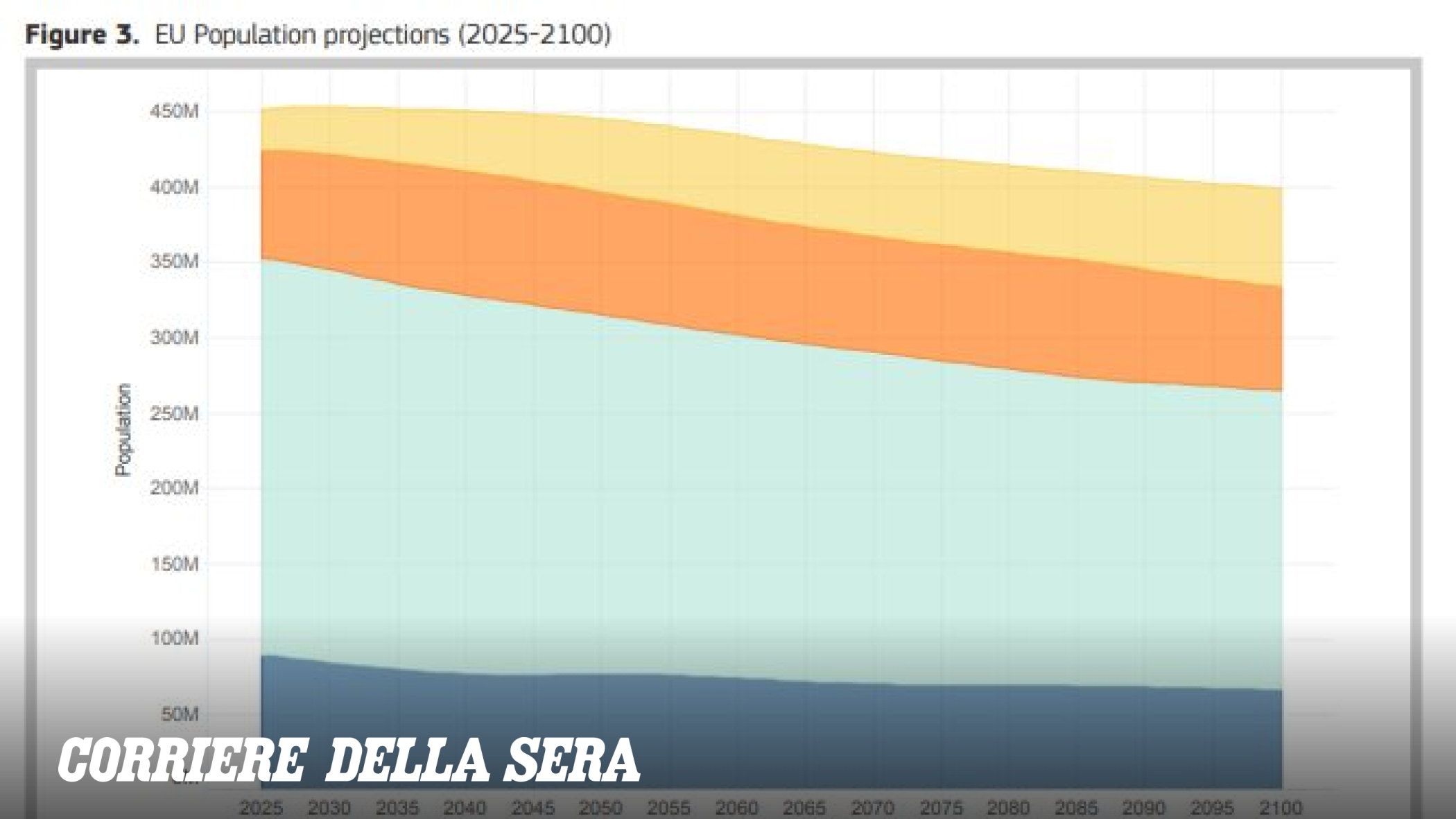
Europe’s demographic crisis is no longer a challenge for the future but one already reshaping the continent, the European Commission said in a new report warning that the European Union’s population is expected to shrink by 50 million people by the end of the century while growing significantly older.
The report projects that the EU’s population will fall from about 450 million today to around 400 million by 2100. By 2050, one in three Europeans is expected to be 65 or older, compared with one in five today.
“That is a great achievement, but it also raises fundamental questions: How will we ensure the workforce we need? How will we finance pensions and health care?” European Commissioner for Mediterranean Dubravka Šuica, who is responsible for demography, said in presenting the report.
The findings underscore challenges already evident in countries such as Lithuania, where deaths continue to far outnumber births.
About 18,000 children are born in Lithuania each year, while roughly 38,000 people die annually, creating a natural population decline of about 20,000 people every year, said Daumantas Stumbrys, an associate professor at Vilnius University’s Faculty of Philosophy.