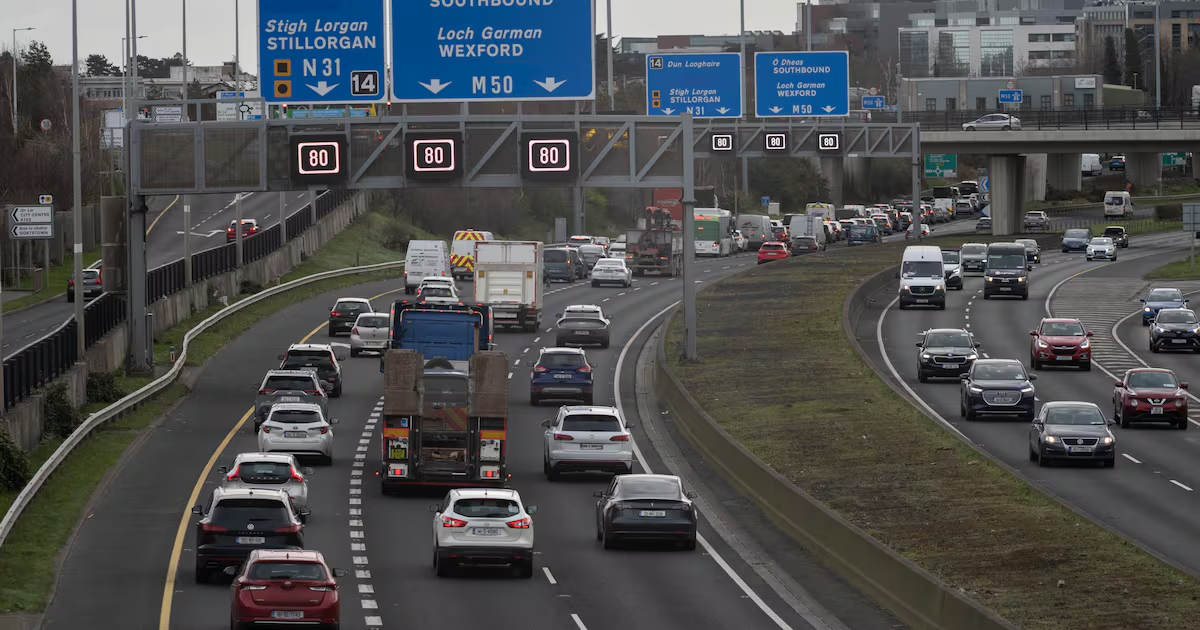
Social media habits may explain nearly a quarter of risky driving behaviour in young people, according to new research by University College Dublin (UCD).The research, conducted by the university’s Contextual Behavioural Science Laboratory, found close to 70 per cent of young drivers who participated in the research feel pressure from other drivers to take risks.At the same time, more than two thirds reported that they speed to “keep up with traffic”.The link between watching social media content depicting dangerous driving, and engaging in dangerous driving itself, is “much greater than expected”, researcher Conor McCloskey said.“Our results suggest that close to a quarter of the variance in risky driving among young people may be explained by social media consumption habits, and though we did expect to see an association, the scale of it was much more than expected,” he said. Young people are among the most at risk on Irish roads, with people aged 16 to 25 making up 21 per cent of deaths on Irish roads last year.The study is the first to note the significant role of peer pressure from other road users and how this can impact on risky driving habits.A further 62.1 per cent of young drivers who participated in the study said they would overtake a cyclist without leaving enough space to keep other drivers happy.“To fully comprehend the volume of pressure that young drivers experience, researchers should critically examine various sources of peer pressure in conjunction with the exponentially growing volume of online pressures in today’s digital age,” researcher Dónal O’Hare said.The study also highlighted the differences between young male and female drivers, noting that male drivers hold “significantly stronger beliefs that their friend would approve of dangerous driving”Meanwhile, female drivers reported “higher encouragement of safety from their peers”.The research is part of a broader project examining road safety behaviours among learner and young drivers.Researchers noted that the city of Helsinki, in Finland, set records in 2025 after a full year passed without any road fatalities. A stronger enforcement of speed limits was central to this plan, researchers said.
Social media linked to nearly a quarter of risky driving behaviour in young people
Six in 10 young drivers would overtake a cyclist without leaving enough space to keep other drivers happy, UCD study finds
344 words~2 min read