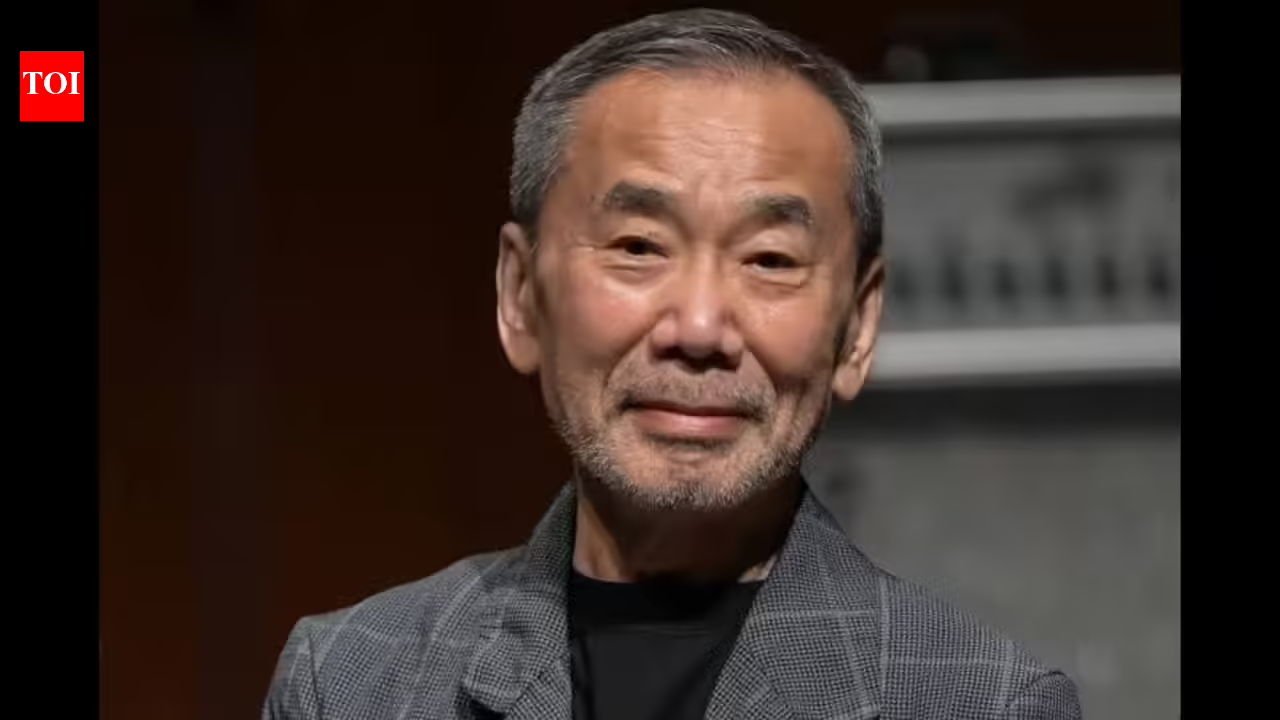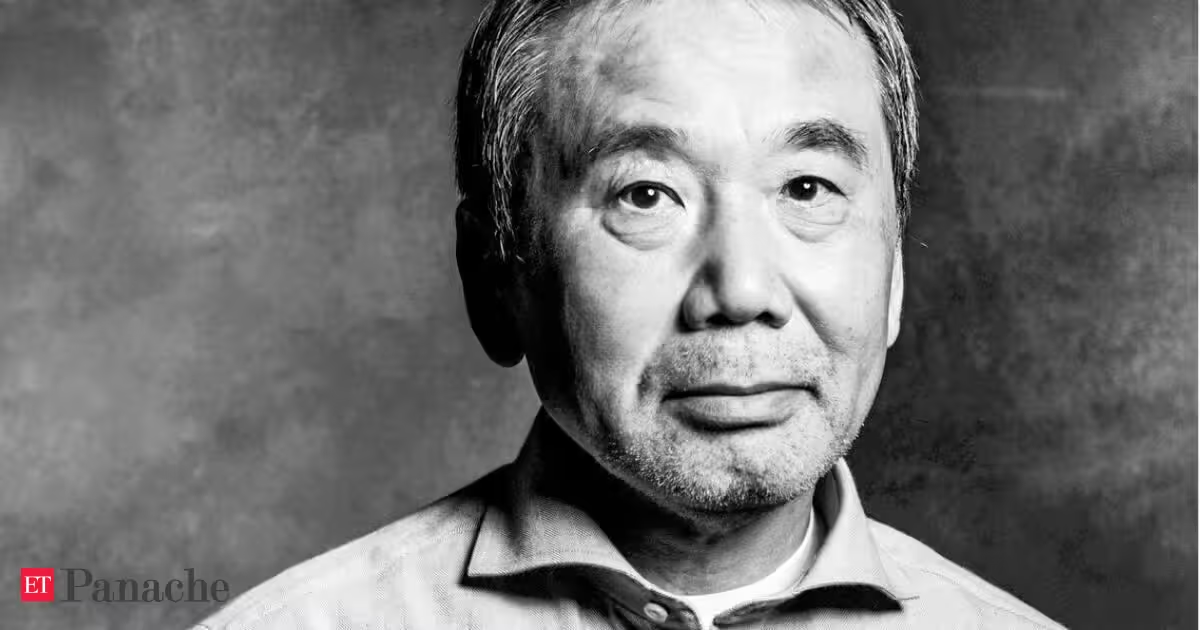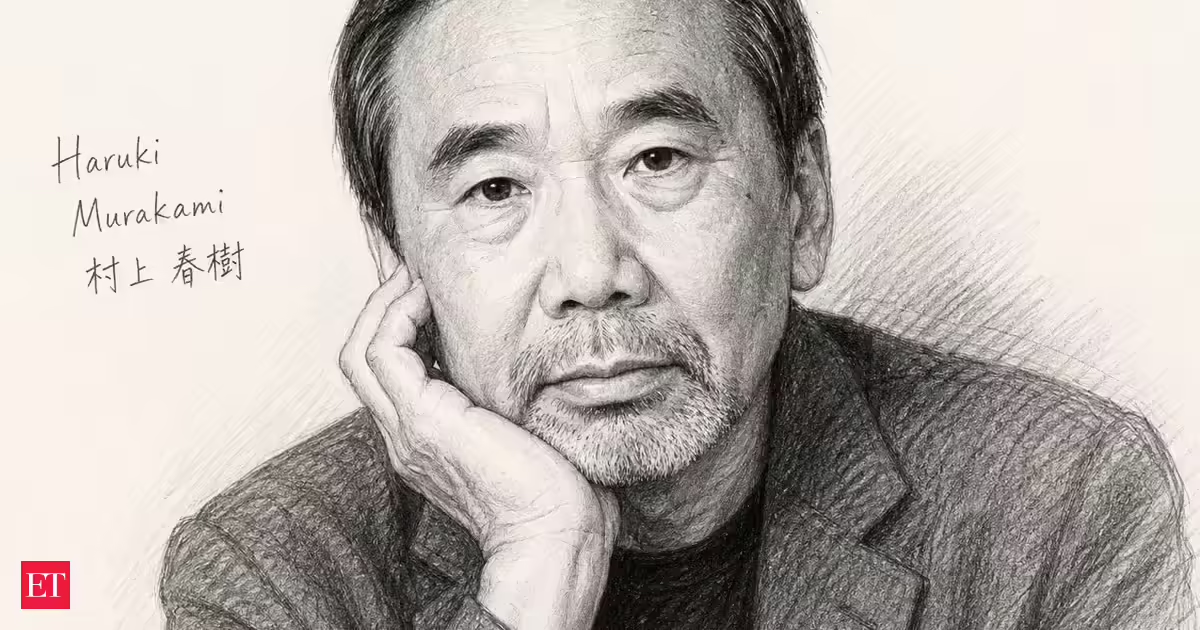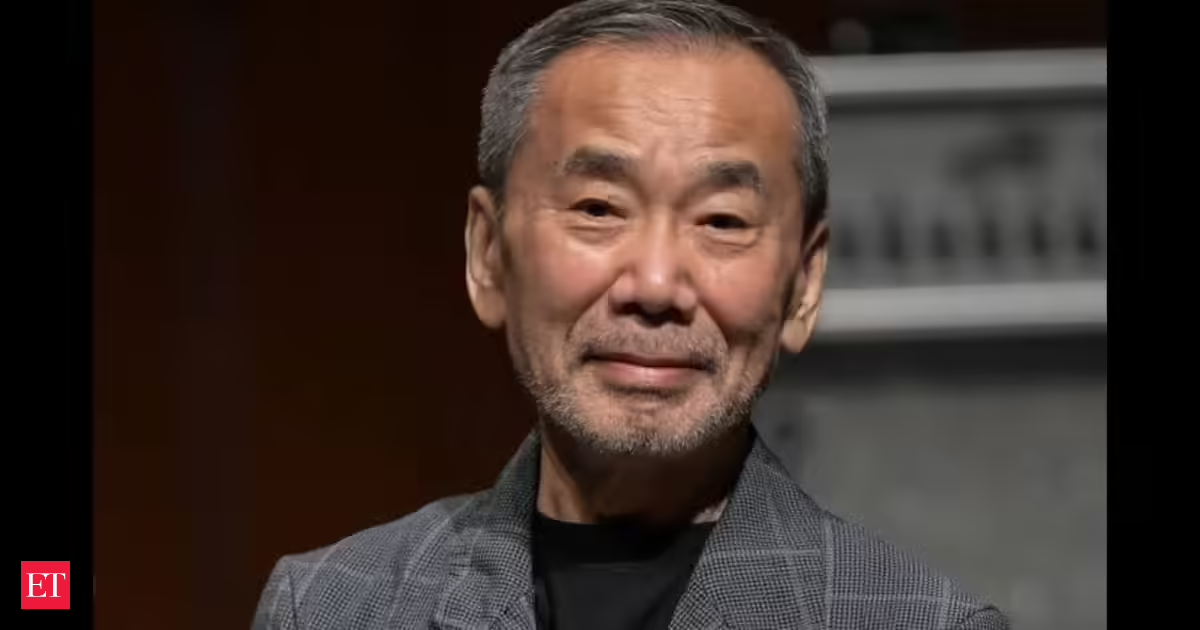
Quote of the Day by Haruki Murakami—originally published in his celebrated 2002 novel Kafka on the Shore and widely archived across literature portals as per BrainyQuote—explores the psychology of human endurance. The "storm" represents deep emotional, financial, or psychological turmoil that feels impossible to navigate while inside it.Quote of the Day by Haruki Murakami: “And once the storm is over, you won’t remember how you made it through, how you managed to survive. You won’t even be sure, whether the storm is really over. But one thing is certain. When you come out of the storm, you won’t be the same person who walked in. That’s what this storm’s all about.”― Haruki Murakami, Kafka on the ShoreThis line from Haruki Murakami captures something almost every person recognizes but rarely says out loud: the hardest chapters of our lives blur the moment they end. We remember that we survived, but the exact mechanics of survival — the sleepless nights, the small decisions, the moments we almost gave up — fade into a kind of fog. Murakami isn't offering comfort so much as an observation about memory and resilience: struggle changes us permanently, even when the details of the struggle disappear.Meaning of Haruki Murakami’s Quote About ResilienceRead literally, the sentence is about forgetting. Read closely, it's about transformation. Murakami is drawing a line between the experience of hardship and the identity it leaves behind. A storm, in his framing, isn't just an event — it's a passage. You don't walk through it and come out the same person carrying a memory. You come out a different person, and the memory itself becomes almost irrelevant next to the change. This is a recurring idea across Murakami's fiction. His characters are frequently pulled into surreal, disorienting ordeals — wells, alternate cities, missing cats that turn out to mean everything — and what matters by the end is rarely the plot mechanics of the ordeal itself. What matters is who the character has become. The storm quote distills that pattern into a single sentence: the process is forgettable; the outcome is not. There's also a quieter, more practical reading. Anyone who has been through a genuinely hard period — a loss, an illness, a collapse of some kind — knows that trying to reconstruct exactly how they got through it afterward is strangely difficult. The mind doesn't archive suffering with the same clarity it archives ordinary events. In some ways, that's protective. If we remembered every hour of a hard time in full resolution, moving forward might be much harder than it already is.Why You Should Embrace Transformation Through AdversityYou don't need to be in the middle of a crisis for this idea to be useful. It's a reframe for how to think about difficulty before it happens, and for how to be gentler with yourself afterward. You won't have to remember it perfectly to have grown from it. People sometimes feel guilty for not being able to explain, in detail, how they got through a hard year — as if forgetting means it wasn't handled well. Murakami's line pushes back on that. Not remembering the how is normal, not a failure of memory or resilience. The goal isn't documentation, it's endurance. You don't need a clean narrative of your hardest moments to prove you made it through them. You just need to have made it through. The story can stay messy, partial, even half-forgotten, and the outcome is the same. Storms end. It sounds almost too simple to say, but it's the quiet engine of the sentence. Whatever feels endless in the middle of it will, eventually, be something you're on the other side of — even if you can't picture that from inside the storm itself.Early Life of Haruki MurakamiHaruki Murakami was born on January 12, 1949, in Kyoto, Japan, during the post-World War II reconstruction era. He grew up in Shukugawa, Ashiya, and Nishinomiya, raised by parents who both taught Japanese literature.Despite his traditional literary upbringing, Murakami was drawn heavily to Western culture from a young age. He spent much of his youth immersed in American literature and jazz music, influences that would later define his iconic writing style.Education and Academic DevelopmentMurakami attended Waseda University in Tokyo, studying drama at the School of Letters, Arts and Sciences. His time at university coincided with the widespread student protests of the late 1960s, an era of social upheaval that subtlely informs the backdrop of his work.While in college, Murakami met his wife, Yoko, and spent less time in lecture halls and more time working at a record store. Before embarking on his full-time literary career, he opened a jazz bar in Tokyo called "Peter Cat," which he ran successfully for several years.From Jazz Bar Owner to Global Novelist Murakami's turn to writing is, by his own account, almost accidental. He has described the moment the idea to write a novel arrived to him while watching a baseball game in 1978 — a sudden, unplanned decision that led to his first novel, Hear the Wind Sing, published in 1979. What followed was a career defined by a handful of major, genre-blurring works: Norwegian Wood (1987), a comparatively realist coming-of-age novel that made him a literary star in Japan. The Wind-Up Bird Chronicle (1994–95), a sprawling, surreal narrative blending history, memory, and the fantastic. Kafka on the Shore (2002), which contains the storm quote and exemplifies his signature mix of the mundane and the mythic. 1Q84 (2009–10), a three-volume, alternate-reality epic that further cemented his international reputation. Across these works, Murakami's recurring preoccupations — isolation, memory, the porous line between the real and the surreal — reflect a consistent personal philosophy: that ordinary life is never as stable or as fully explainable as it appears, and that meaning tends to arrive sideways, not head-on.Despite global acclaim and frequent nomination as a frontrunner for the Nobel Prize in Literature, Murakami maintains an intensely private life. He rejects the spotlight, preferring long-distance running, listening to vinyl records, and writing in quiet routine.His personal philosophy is deeply tied to discipline and physical endurance. An avid marathoner and triathlete, Murakami views physical fitness as essential to sustaining the mental stamina required for long-form fiction writing.Life Lessons from Haruki Murakami’s Famous QuoteQuote of the Day by Haruki Murakami delivers timeless wisdom that remains intensely relevant in today’s unpredictable, fast-paced world. Here are the core takeaways from his iconic message on survival:Survival Is an Invisible Process: You do not need a perfect, step-by-step strategy to make it through a crisis; simply taking the next breath is enough.Accept the Permanent Shift: Do not expect to return to who you were before the trial. Growth requires leaving your old self behind.Trust Your Inner Strength: When the dust settles, the exact details of how you endured matter far less than the resilient person standing on the other side.
Quote of the Day by Haruki Murakami: “And once the storm is over, you won’t remember how you made it through, how you…” — Inspiring lessons on resilience, healing, inner strength, and why life's greatest struggles quietly transform who we become
Quote of the Day by Haruki Murakami: Haruki Murakami's unforgettable quote, “And once the storm is over, you won't remember how you made it through…”, captures one of life's deepest truths: hardship changes us in ways we rarely understand while we are living through it. The quote is not only about surviving difficult times but also about personal transformation.
1,143 words~5 min read