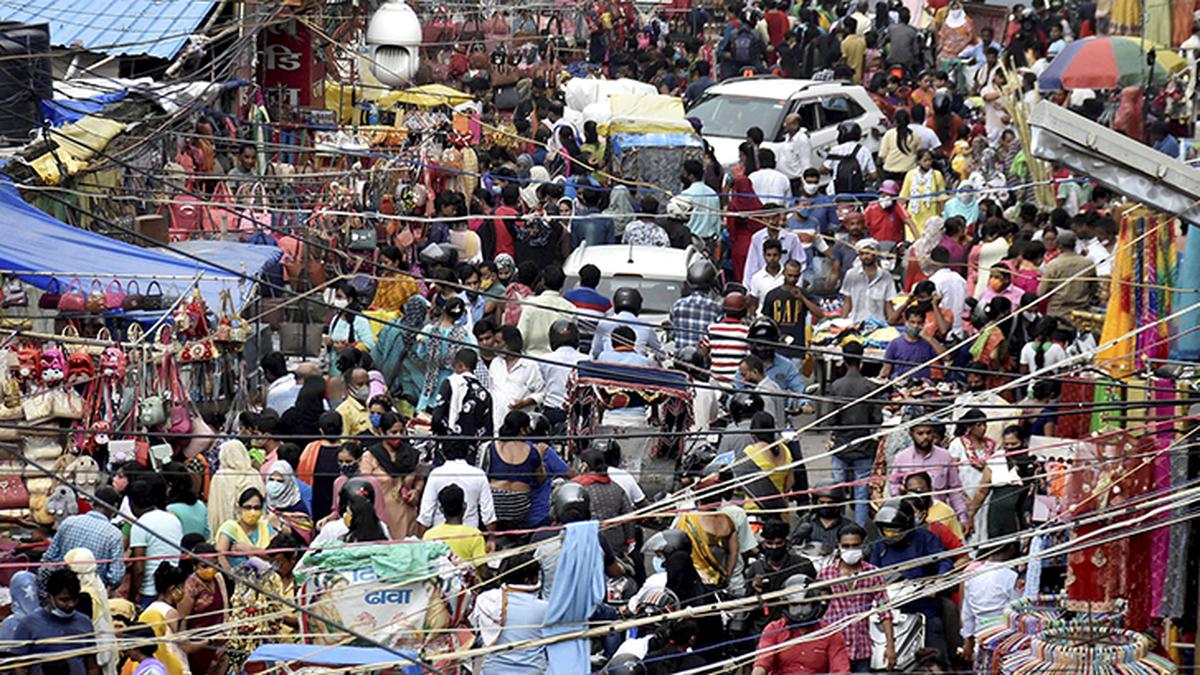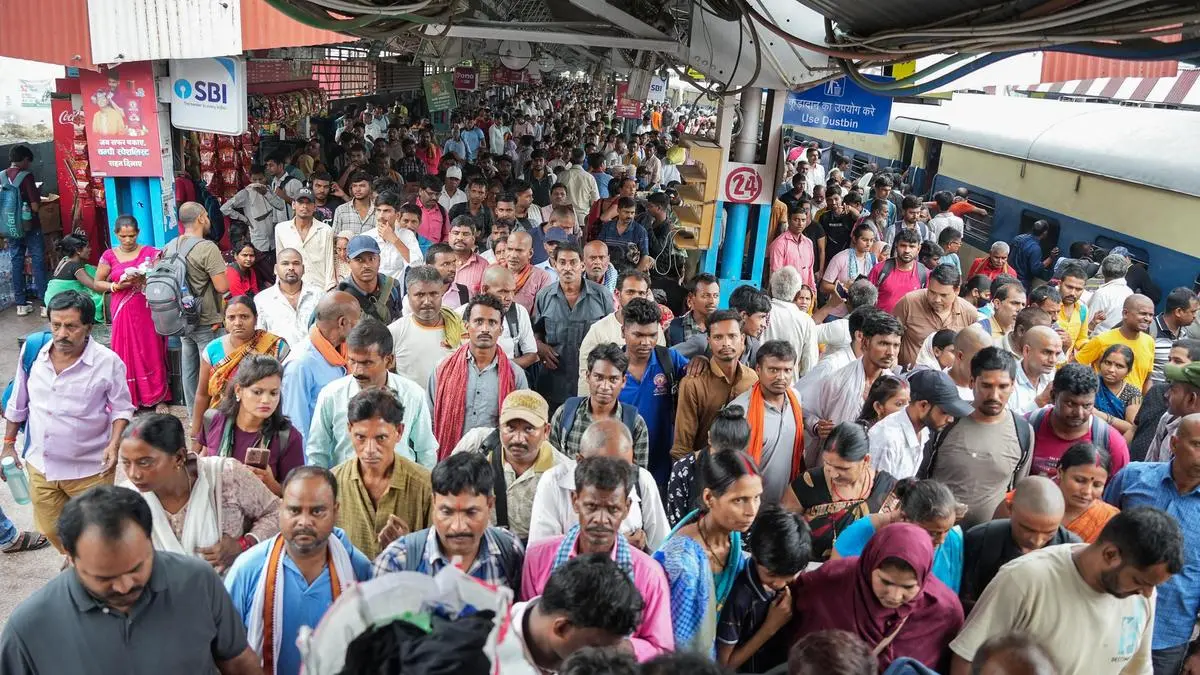
India, despite fertility nearing replacement level, remains so populous because of the momentum created by earlier decades of high birth rates
| Photo Credit:
Every few years, the world returns to the same old argument. One side warns that humanity is growing beyond the planet’s limits. The other worries about empty cradles, ageing societies and shrinking workforces. Both arguments contain a grain of truth, but they both overlook the larger context. The real story is not a single global population crisis. It’s a world moving in different demographic directions at once.The global population has crossed 8.3 billion and is still rising. But beneath that headline lies a remarkable shift. The average woman today has about 2.3 children — less than half the global fertility rate of the 1950s. Per different estimates, nearly two-thirds of the world’s people now live in countries where fertility has fallen below the replacement level of 2.1 births per woman. Once fertility remains below that threshold for long enough, populations begin to age and decline.East Asia illustrates the trend dramatically. South Korea’s fertility rate has fallen to around 0.72, the lowest ever recorded for a major economy. China, after decades of limiting births, is now urging couples to have more children. Japan has become a symbol of demographic ageing, with shrinking schools, deserted villages and an expanding elderly population. Much of Europe faces similar challenges, while even the US now records births below replacement level.The picture is very different elsewhere. Across much of Sub-Saharan Africa, populations continue to grow rapidly. India, despite fertility nearing replacement level, remains so populous because of the momentum created by earlier decades of high birth rates. However, southern States such as Kerala and Tamil Nadu already have fertility rates comparable to Europe, while some northern States still have relatively higher fertility. In other words, the global demographic paradox exists within India as well.Fears of overpopulationFor decades, population debates were dominated by fears of overpopulation. Influential books such as The Population Bomb predicted global catastrophe, prompting governments to launch population-control programmes. Many people came to believe that fewer births automatically meant a better future. Reality has proved far more complex.Fertility usually declines as countries become healthier, wealthier and better educated. Women pursue higher education and careers, infant mortality falls, urban housing becomes expensive, and raising children costs more. Smaller families are often signs of development rather than decline.Yet success brings new problems. Ageing societies have fewer workers supporting more retirees. Pension systems come under pressure, healthcare costs rise, labour shortages become chronic and economic growth slows. Governments have responded with generous incentives, subsidised childcare and extended parental leave, but to little effect. Government bonuses are not as important as economic security, affordable housing and confidence in the future as it pertains to decisions about having children.Meanwhile, countries with rapidly growing populations face different pressures — overcrowded schools, youth unemployment, housing shortages, and increasing stress on food and water resources.Perhaps the greatest misconception is that there is an ideal population size. There is not. What matters is not simply how many people a country has, but their age structure, health, education, productivity, and opportunities. A rapidly ageing society and a rapidly growing one require entirely different policy responses. Nor is population alone responsible for environmental pressure. Consumption matters just as much. A child born in a wealthy country will typically consume far more energy and natural resources over a lifetime than one born in a poorer nation. Concentrating on population numbers alone ignores these huge inequalities.The goal, therefore, shouldn’t be to increase or reduce population indiscriminately but to build demographic resilience. That means making parenthood affordable where people want children, embracing well-managed immigration where labour shortages threaten growth, using automation to offset shrinking workforces, and ensuring universal education, healthcare, and reproductive choice where populations are still expanding. That would reduce fertility rates.The writer is Professor of Statistics, Indian Statistical Institute, KolkataPublished on July 22, 2026