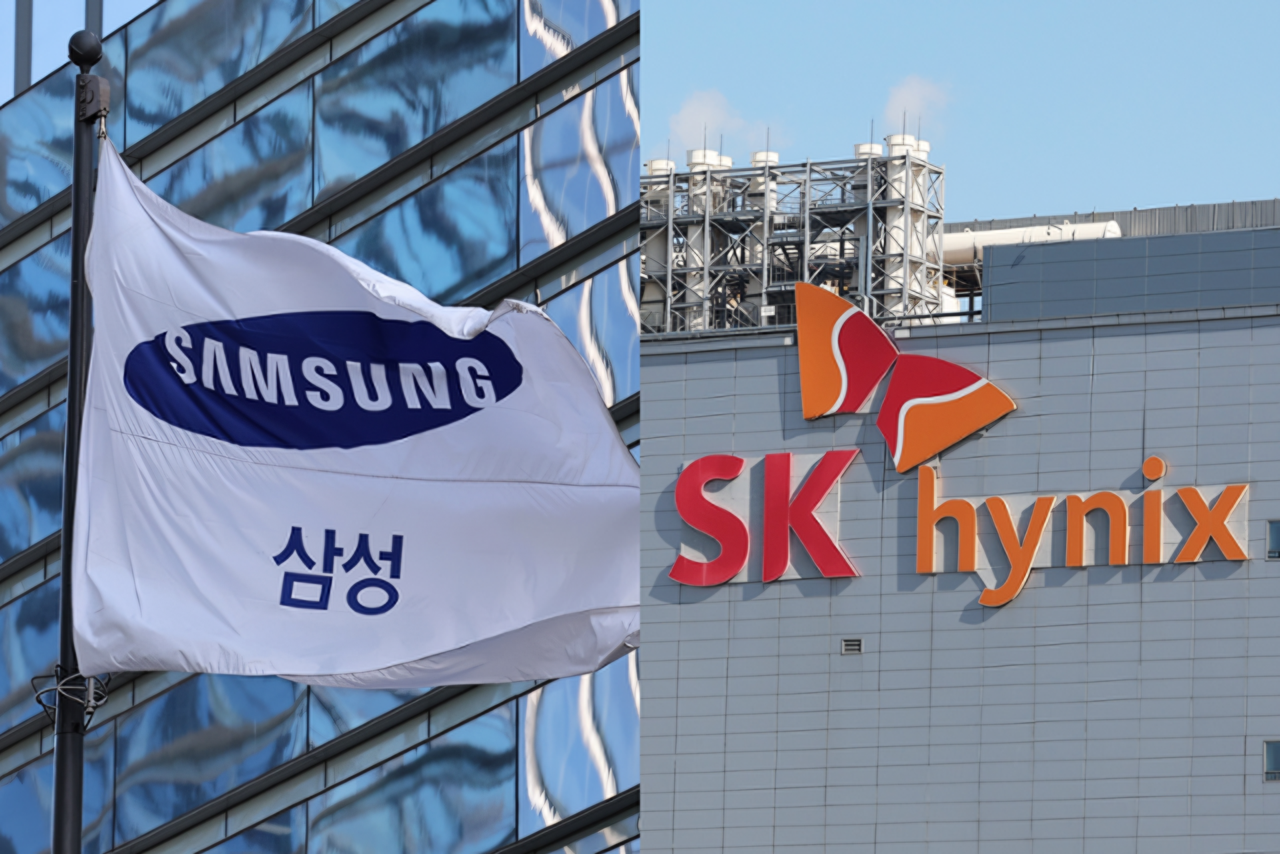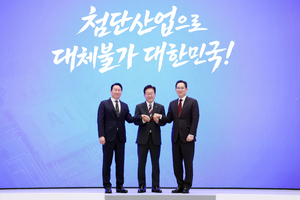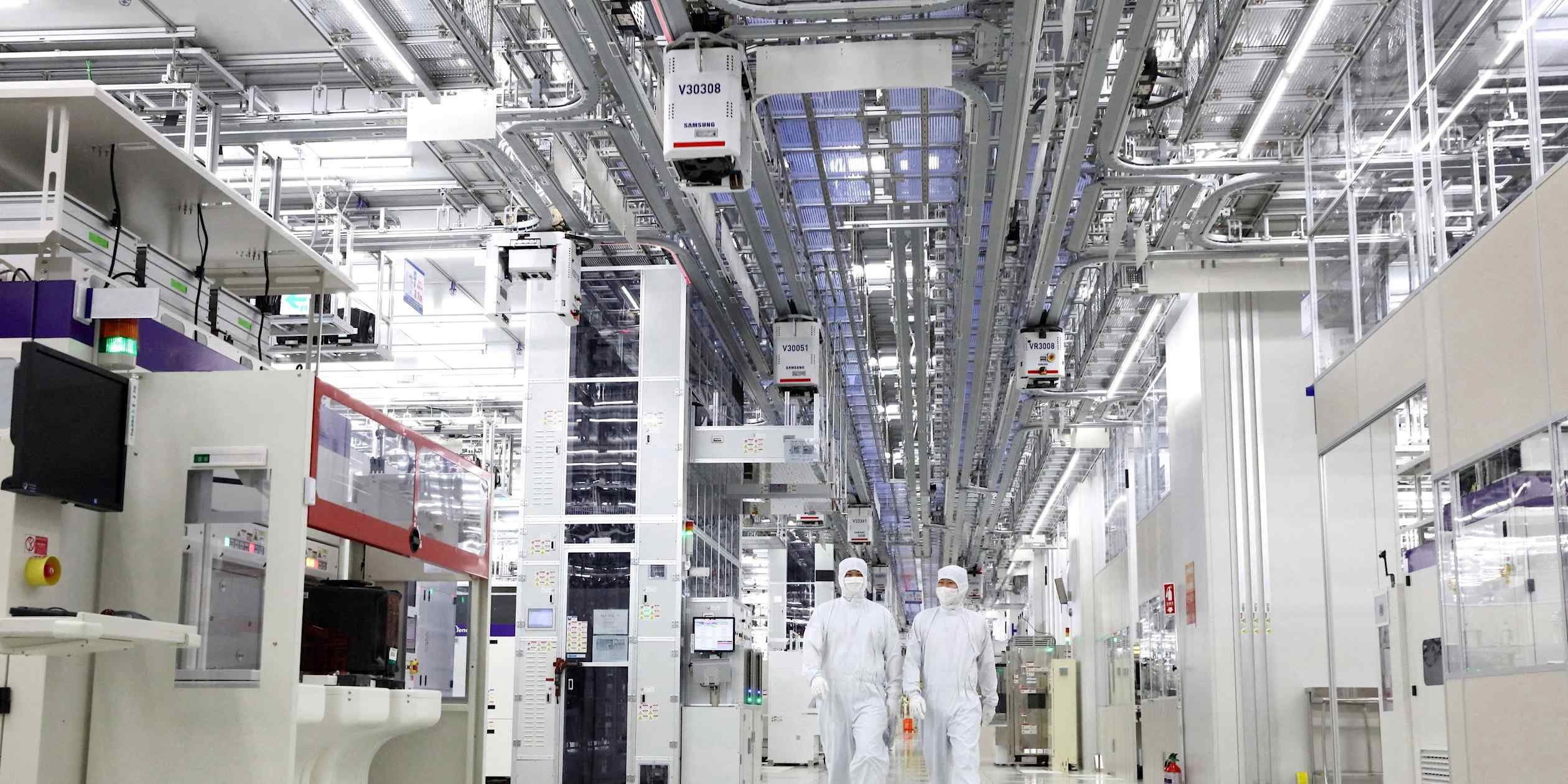
Man-Ki Kim South Korea is asking Samsung Electronics and SK hynix to shoulder three national burdens: win the global semiconductor race, sustain the country’s export economy and revitalize regions left behind by decades of industrial concentration. That may prove visionary industrial policy. It may also place excessive weight on companies that already serve as Korea’s most important economic engine.The government has announced plans for Samsung Electronics and SK hynix to invest a combined 800 trillion won, or roughly $518 billion, in four semiconductor fabrication facilities in Gwangju and southwestern Korea. The investments would be made over many years, subject to market conditions and board approvals.The issue is not whether the government should intervene in the economy. Every major industrial power, including the US, Japan and Europe, supports strategic manufacturing through subsidies, infrastructure, research funding, tax incentives or trade policy. Public support may therefore be necessary to make a new industrial location viable.The real question is whether such support enables sound private investment and sustainable growth or substitutes political judgment for corporate decision-making.Economic thought has long oscillated between market freedom and state intervention. Francois Quesnay’s concept of laissez-faire challenged excessive state control, while Adam Smith’s “invisible hand” explained how private incentives could allocate resources efficiently. Keynes later argued that markets can fail and that government intervention may be necessary, helping to shape the modern mixed economy.Korea adopted a more interventionist version of that model. The state directed credit, shared investment risks, built infrastructure and supported strategic industries. Yet Korea’s developmental strategy went beyond conventional Keynesianism. The results were extraordinary. Over Korea’s 35-year planning period, nominal gross national income per capita rose from about $100 in 1960 to more than $13,000 by 1996.The government has now unveiled its “3-4-5 Economic Vision”: raising Korea’s potential growth rate to 3 percent, making Korea the world’s fourth-largest exporter, and increasing per capita national income to $50,000. Achieving these goals will require another period of productivity growth, technological leadership and industrial transformation. Semiconductors will inevitably be central to this effort.But Korea’s development history offers two lessons, not one. Political will can transform an economy, but it cannot, on its own, make every investment profitable.There may be legitimate reasons to expand semiconductor production to Gwangju and southwestern Korea. Existing clusters may face mounting constraints on land, electricity, water, congestion and housing. The proposed locations may offer new infrastructure, a broader workforce, improved living conditions and stronger government support.But public support should create favorable conditions for investment, not predetermine companies’ decisions.Samsung and SK hynix are among the nation’s most valuable economic assets. They are not unlimited sources of capital that the government can repeatedly draw on to achieve regional, political or social objectives.In June 2026, chip exports totaled $44.8 billion, representing about 43.8 percent of the country’s total monthly exports. Is this export model sustainable? This dependence on a single cyclical industry is both Korea’s greatest economic strength and a significant concentration risk.The AI boom has driven exceptional demand, particularly for high-bandwidth memory and advanced computing infrastructure. Yet memory semiconductors remain cyclical. Both companies must finance new fabs, advanced packaging, next-generation memory, research and overseas production while competing against well-funded global rivals.Investment decisions made during a period of exceptional demand must therefore be stress-tested against adverse scenarios, such as lower prices, slower AI spending, technological disruption and shifts in global supply chains.This raises an important question: If southwestern Korea now presents a compelling commercial case for investment on an unprecedented scale, why did that case not exist under previous governments, and what has fundamentally changed?Perhaps AI demand has reshaped long-term capacity requirements. Perhaps existing clusters can no longer accommodate further expansion. Perhaps new commitments to electricity, water, transportation, housing and renewable energy have altered the region’s commercial viability.Those explanations may be persuasive, but they must be backed by credible financial projections, clear technological priorities and rigorous comparative location analysis.Before each investment phase proceeds, four conditions should be independently verified: reliable electricity, secured industrial water, a viable workforce and supplier ecosystem, and sufficient long-term demand to justify additional capacity.The analysis should compare Gwangju and other southwestern locations with alternative sites and stress-test adverse scenarios. The relevant question is not whether the region deserves economic development. It is whether these specific investments, at this scale and time, offer the strongest long-term value.Samsung Electronics and SK hynix are publicly traded corporations owned by shareholders in Korea and around the world. They are not instruments of government policy.Their boards have fiduciary duties to shareholders and must answer three questions: Why now? Why these locations? And how will the investments strengthen each company’s sustainable growth and global competitiveness?Government can set national priorities, build infrastructure, develop talent, accelerate permitting and remove investment barriers. But the companies that will pay the bill and bear the commercial risk must lead the strategy.They must remain free to delay, resize, relocate or revise their investments when technological or market conditions change. Ultimately, each investment must pass the market test without political penalty.Korea’s first economic miracle required a state strong enough to direct capital allocation. Its next will require a state disciplined enough to know when not to intervene.- - -Man-Ki KimMan-Ki Kim is a professor at the KAIST Graduate School of Future Strategy, specializing in global public procurement, defense acquisition innovation and global strategic trends. He also serves as a senior adviser at Yulchon. The views expressed here are the writer’s own. -- Ed.
[Man-Ki Kim] Test Korea's chip blueprint faces
South Korea is asking Samsung Electronics and SK hynix to shoulder three national burdens: win the global semiconductor race, sustain the country’s export econo
897 words~4 min read