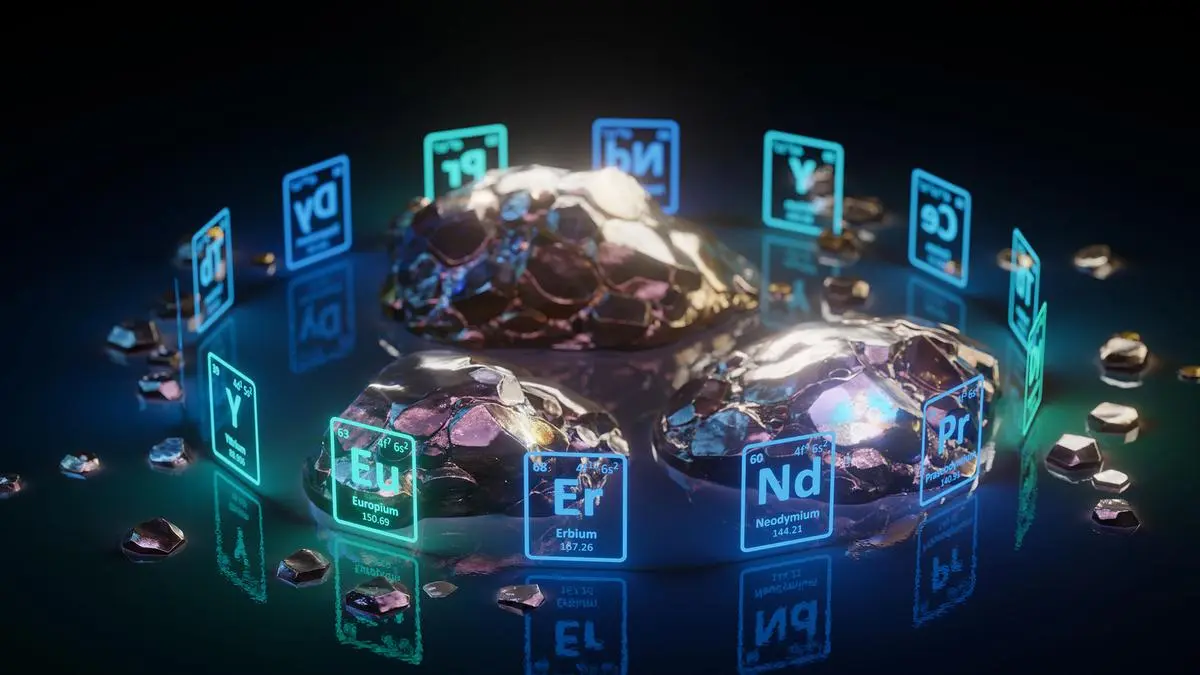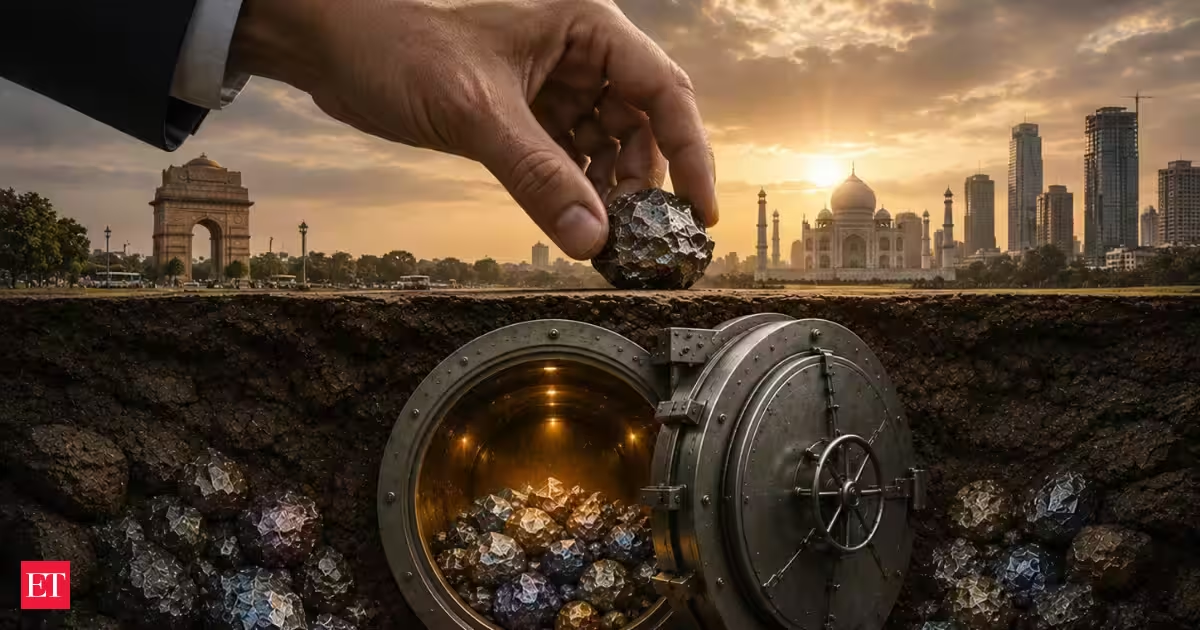
India has ₹7,280 crore on the table in incentives for companies willing to build it a rare-earth magnet industry from scratch. In late June, for the second time, it pushed back the deadline for them to bid — because the bidders were not ready to say yes.A postponed deadline looks like paperwork. It is, in fact, one of the most revealing things to happen in India’s critical-minerals push all year. The state has done the hard work, and builders are still hesitating. When money on this scale goes unclaimed, the issue is sitting somewhere the money cannot reach.That somewhere is the science of the magnet itself.Start with what is at stake. India buys 85-90 per cent of its rare-earth magnets from abroad, almost all of it from China. When Beijing tightened rare-earth exports through 2025, carmakers around the world had to slow or halt production for want of a part smaller than your fist, and the price of neodymium outside China shot up several-fold. Those curbs are only paused, not lifted — the pause on the harshest measures runs out in November.When the restrictions first hit, India’s magnet stock was reckoned to last two to three weeks. That thin buffer is all that stands between the country’s factories and a standstill.India’s answer has not been small. A ₹34,300-crore National Critical Minerals Mission. The ₹7,280-crore magnet scheme, spread across five producers, to build 6,000 tonnes of capacity a year. Rare-earth corridors in four States in this year’s Budget, and a pilot magnet plant at Hyderabad. On paper, a full chain from mine to magnet. But the plan is aimed at the wrong target. It treats the problem as money and ore. It is neither.China grasped the real prize long ago. Deng Xiaoping’s much-quoted line from 1992 — that the Middle East had oil, and China had rare earths — is usually read as a boast about deposits. It was cleverer than that. China did not just sit on the ore; it spent three decades learning what to do with it, soaking up the pollution and the failures that richer countries were happy to send elsewhere.The result shows up in one lopsided fact. China digs up about 60 per cent of the world’s magnet-grade rare earths — a lot, but not a stranglehold. It does about 91 per cent of the refining that turns them into usable material.The bottleneck, in other words, is not the digging. It is the refining and the making. Rare earths, despite the name, are not rare in the ground. What is rare is knowing how to tame them.Why can nothing cheaper stand in? Because of how magnetism actually works. Think of two kinds of magnet: a fair-weather one and a committed one. Ordinary iron is fair-weather — magnetise it and it loses its grip easily, especially when heated or knocked. Neodymium is committed.Its magnetism sits deep and shielded inside the atom, which lets it hold its direction fiercely. That is what makes a rare-earth magnet both powerful and stubborn.And for the hottest jobs — the motor of an electric car, a wind turbine, a guided missile — even neodymium needs help, so a pinch of two scarcer cousins, dysprosium and terbium, is added to stop the magnet losing its nerve when things get hot. Those were the very elements China restricted first. You cannot simply swap in something common and abundant. The strength is built into the atom.Here is the part almost every debate on this misses. A magnet is less a material than an arrangement. Inside it sit millions of tiny magnetic grains, and the whole thing works only when nearly all of them are combed to point the same way — a crowd all facing one direction. Melt the same atoms and let them cool at random, and the grains point every which way and cancel out. You get a paperweight, not a magnet. So what a magnet-maker really sells is not neodymium. It is ordered. And order is the most expensive thing in nature, because the world constantly tends towards mess, and holding it in neat formation takes relentless effort. India is not trying to buy metal. It is trying to buy orders, made perfectly, again and again.Over a dozen exacting stepsThis is what the bidders mean when they say they need “technology access”. Even with the right elements in hand, turning them into a finished magnet takes a dozen-plus exacting steps — separating the elements, grinding the material to a powder finer than flour, pressing that powder in a magnetic field so the grains line up, baking it in a furnace above a thousand degrees, machining, coating and finally magnetising it. Each step quietly loses a little quality, like a relay in which any runner can drop the baton.Getting the powder pure, keeping stray air out, timing the furnace just so — none of this comes written in a manual you can buy. It is know-how, earned the hard way through spoiled batches. China’s edge is not that it built the furnaces first. It is that it has been getting it wrong inside them for 30 years, and learning.That word — learning — is where the economics bites. Making things has an iron rule: costs fall only as you build up experience, batch after batch, mistake after fixed mistake. You cannot pay your way past that curve; you can only climb it, one failed run at a time. It is like pottery — the first hundred pots crack no matter how big the grant. A scheme that pays out per tonne assumes the tonnes are good. Early tonnes rarely are. If half your magnets flunk quality while the furnace learns, your true cost per usable magnet is double what the spreadsheet says — and that gap, not the headline figure, is what a careful bidder is staring at.India’s own numbers show the distance. IREL, the state producer that has run this work since 1963, currently makes only about 400 to 500 tonnes a year of the key refined material — enough to feed roughly a quarter of the new scheme’s target. It hopes to reach 10,000 tonnes by 2027. The gap between that promise and today is the whole task.None of this is a case for giving up. It is a case for spending where the real difficulty lies. Pay for know-how — the chemistry, the furnace craft, and the people who own it — as seriously as the mines, because that, not ore, is the scarce thing. Lean hard on recycling: India imports its magnets already tucked inside motors, drives and speakers, which means its richest rare-earth mine may turn out to be its own scrapyard — and pulling magnets out of dead machines skips the hardest steps entirely. And use the friends India has — its mineral partnerships with Australia, Japan and the West — to borrow skill while its own furnaces learn.The writer is a physicist at the University of North Carolina at Chapel Hill and a tech columnistPublished on July 22, 2026
Coming to grips with rare earths
China doesn’t dominate rare earths because it owns the mines. It dominates because it spent 30 years learning to refine them — a lead money alone can’t close
1,173 words~5 min read