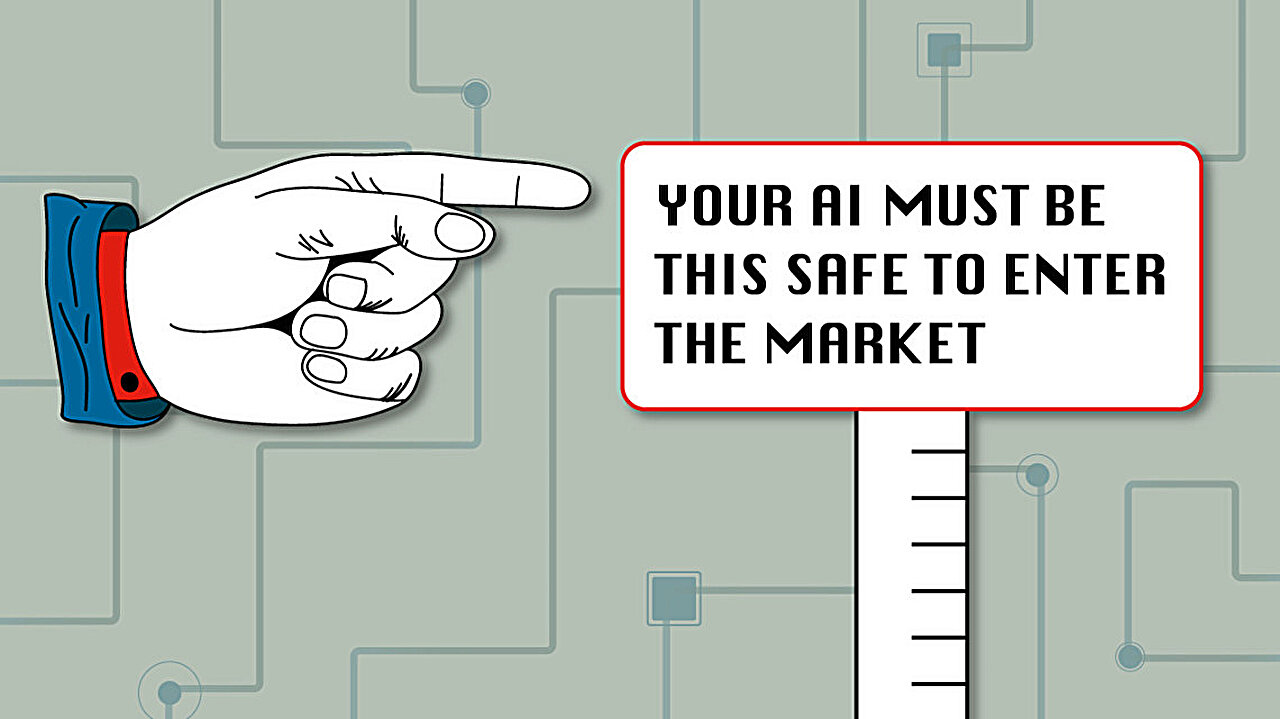
A new modeling study finds that weak AI regulation may be worse than no regulation at all when it comes to the safety of AI products and services.
In the absence of strong federal AI regulation, states have attempted to take up the slack, but it's unclear how this patchwork of laws will alter incentives for companies to invest in the safety of their products. To better understand the implications, researchers at Cornell and Carnegie Mellon University developed a theoretical model to estimate the effects of AI regulation, both for companies that produce general-purpose AI models—like the ones behind popular chatbots—and downstream companies that apply those models, such as for customer service chatbots or medical diagnostic systems.
They hope that this work will inform thoughtful regulation of AI products.
Modeling incentives across the AI chain
"The goal of regulation should be the mutual benefit of everybody in society, and this can include those developing the technology, but also end users and the public," said Benjamin Laufer, Ph.D '26, first author of "The Backfiring Effect of Weak AI Safety Regulation," which is published in Proceedings of the National Academy of Sciences.