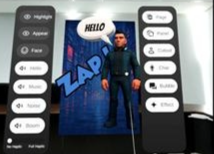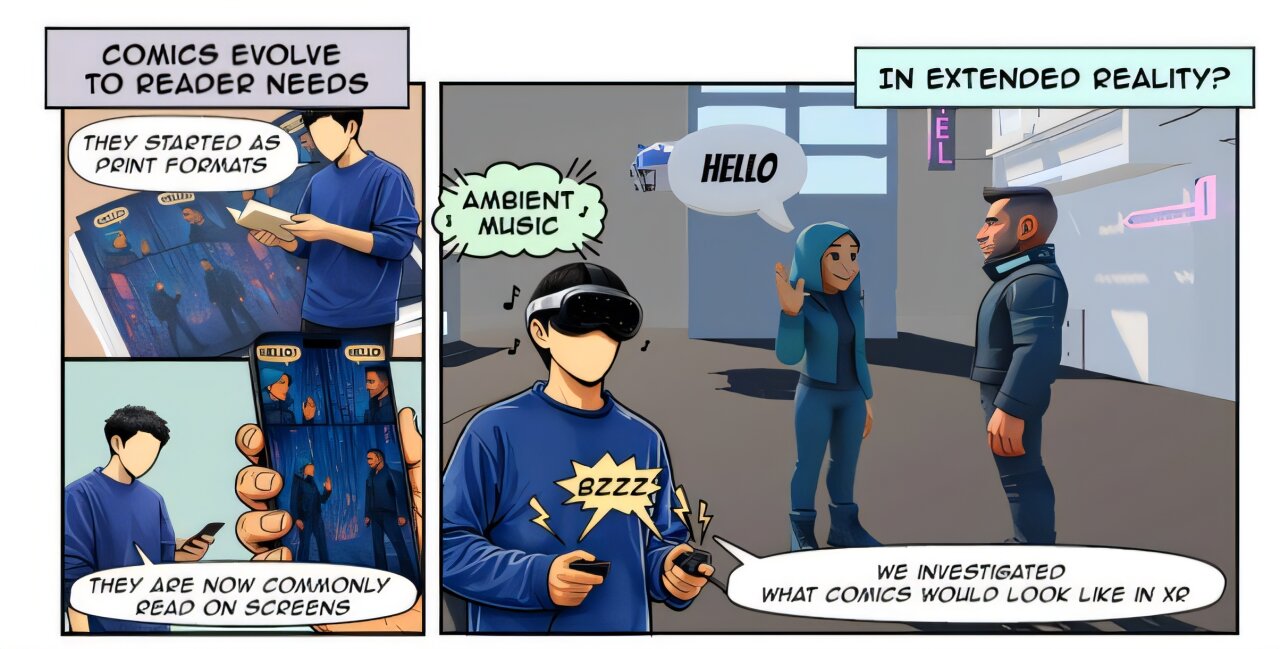
A comic summarizing our study: Comics evolve to meet reader needs, and the digital age has further changed their layouts. To address the next stage in their evolution, we investigated how comics may be laid out in eXtended Reality (XR). Credit: KAIST
Webtoons are coming to life in the physical world, ushering in a new era in which comics are not merely viewed but experienced. A KAIST research team has developed the world's first next-generation extended reality (XR) comics platform that enables a wide range of readers to enjoy immersive, three-dimensional comics in physical space. By expanding webtoons beyond the screen and into the real world, the team has opened up new possibilities for the future of comics.
A research team led by Professor Ian Oakley from the School of Electrical Engineering has proposed core design principles and future directions for next-generation extended reality (XR) comics through a systematic user study involving 15 participants, including human-computer interaction (HCI) experts, professional webtoon creators and readers.
The research team developed ComiXR, a new platform that enables users to both read and create comics in XR environments. Participants used the platform to transform a conventional print comic into an XR comic and explored how different visual, auditory, haptic and interactive features could be combined.