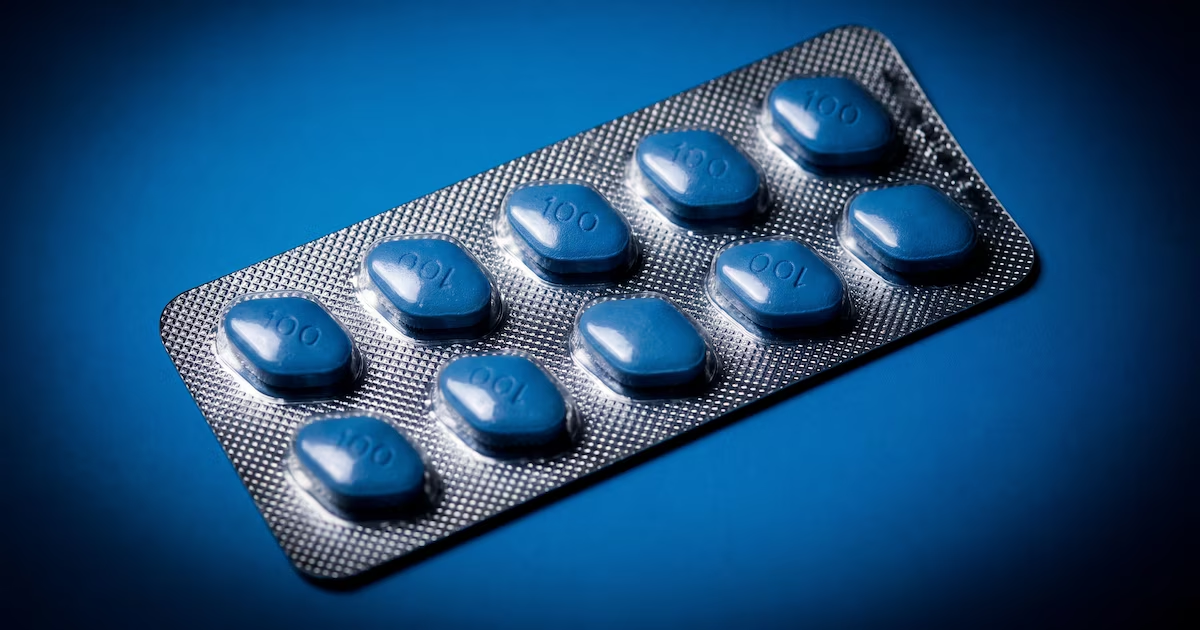
Viagra was originally developed to treat high blood pressure and chest pain caused by reduced blood flow to the heart, but over the past three decades it has become the world's best-known therapy for erectile dysfunction. In the future, this blockbuster drug may find yet another use. In a study published recently in Cancer Research, scientists in the lab of professor Ayelet Erez at the Weizmann Institute of Science found that sildenafil, Viagra's active ingredient, may restrict cancer metastasis through a newly discovered biological mechanism.
The researchers, led by Dr. Yarden Ariav in Erez's lab, showed that sildenafil limits cancer cells' ability to use cholesterol, an essential component of cellular membranes. Cholesterol is particularly important for cancer cells seeking to break away from the primary tumor, migrate throughout the body and invade distant organs. When their access to cholesterol is disrupted, these cells have a harder time forming metastases.
How sildenafil cuts cholesterol access
Sildenafil creates this disruption by blocking an enzyme called phosphodiesterase type 5, or PDE5, thereby increasing levels of a signaling molecule known as cGMP. Elevated cGMP levels dilate blood vessels, increasing blood flow to the penis—the effect that has made Viagra a successful treatment for erectile dysfunction.