view more
The Milky Way may have undergone a dramatic change in orientation during its history, according to new research that helps explain a long-standing mystery about our galaxy.
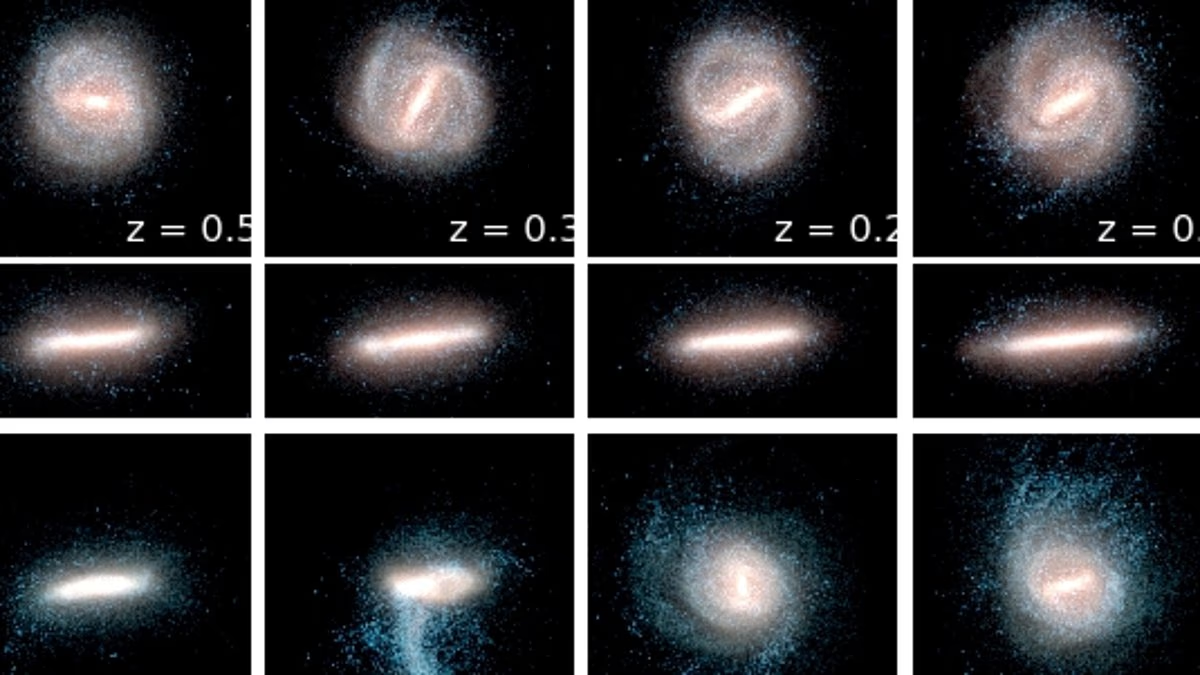
Using supercomputer simulations of galaxies like the Milky Way, a team of astronomers from Durham University found that galaxies with slowly rotating stellar haloes are more likely to have experienced a major 'disc flip', where the galaxy's disc changed its orientation by more than 90 degrees.
The research is being presented this week at the Royal Astronomical Society's National Astronomy Meeting in Birmingham.
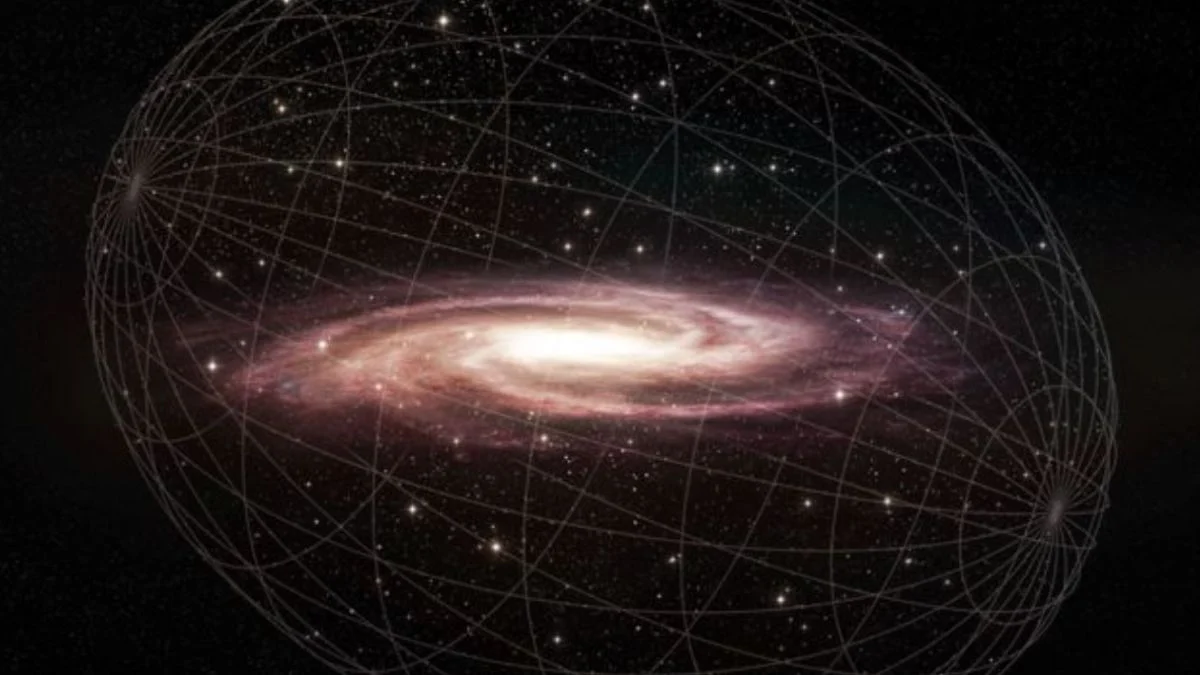
Most of the Milky Way's stars are found in its flat spiral disc. Surrounding this is a much larger but much sparser stellar halo, made up mostly of stars that originally formed in smaller galaxies before being pulled into the Milky Way through galaxy mergers.