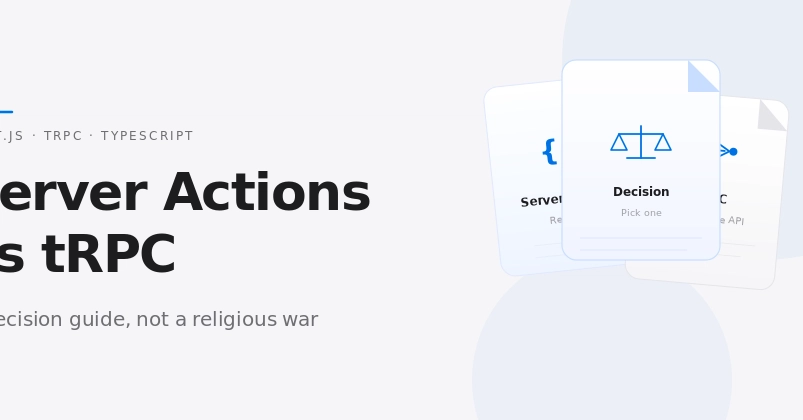
Next.js Server Actions vs tRPC: how to actually choose
If you are building a Next.js app with the App Router and trying to decide between Server Actions and tRPC for your mutations, here is the short version: reach for Server Actions when you have simple forms tied to a single web client, and reach for tRPC once you need request batching, query caching, or a shared API layer across web and mobile. Both solve the same underlying problem, getting typed data from the browser to the server without hand rolling REST endpoints. The right pick depends less on which one is trending and more on what your app actually needs to scale.
The mutation problem both tools solve
Every full stack app eventually answers the same question: how do you move data from a client component to a database, safely, with types that do not lie to you. In the Pages Router era that meant API toutes, fetch calls, and manually keeping request and response types in sync by hand. React 19 changed the equation by building Server Actions directly into React itself. Around the same time, tRPC matured into the default choice for teams who wanted end to end type safety without giving up a real API layer.
Both approaches let you call server code from the client like it is a regular function. The difference shows up once your app grows past a single form.