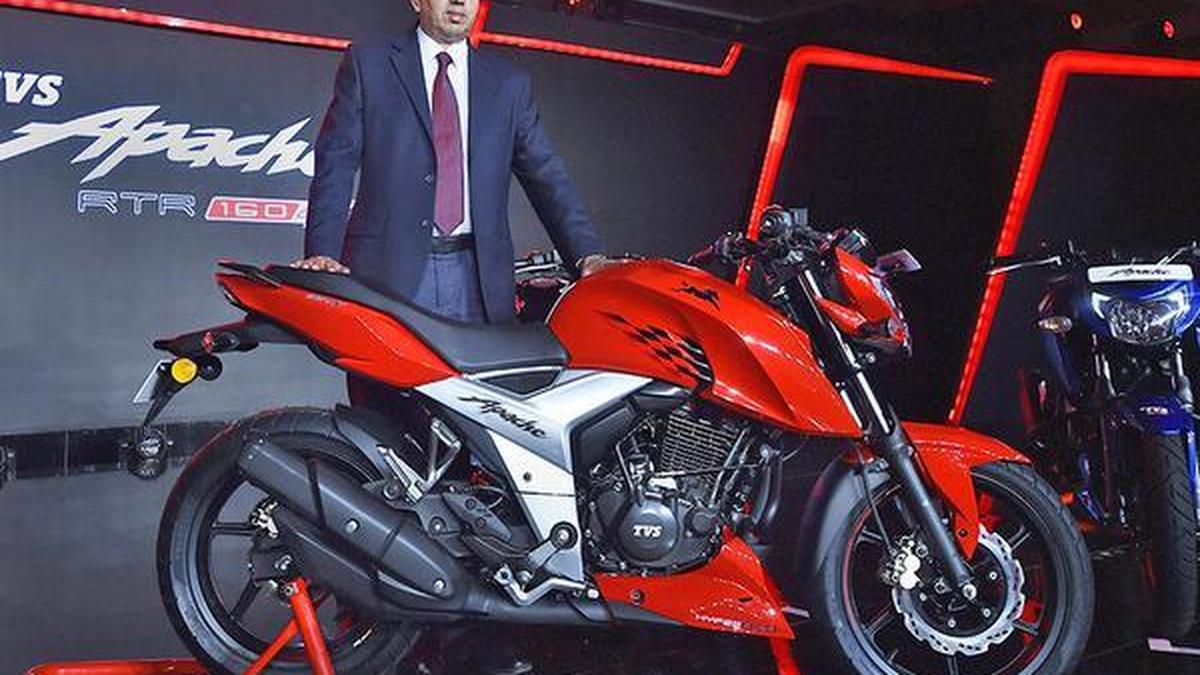
TVS Motor President and CEO KN Radhakrishnan
| Photo Credit:
TVS Motor and Bajaj Auto posted record quarterly profits in Q1 FY27, with electric vehicles, exports and premium motorcycles helping offset higher input costs and drive growth.TVS Motor’s profit after tax rose 51 per cent to ₹1,174 crore, while revenue jumped 38 per cent to ₹13,896 crore. Bajaj Auto’s standalone profit increased 42 per cent to ₹2,983 crore, with revenue rising 37 per cent to ₹17,244 crore.The results highlight two distinct growth strategies. TVS is leveraging premium scooters, EVs and international markets to expand its consumer franchise, while Bajaj is banking on exports, premium motorcycles, electric three-wheelers and KTM to strengthen profitability and protect margins.EVs and International MomentumTVS Motor’s electric two-wheeler sales surged 86 per cent to 1,29,940 units in Q1 FY27, while scooter sales increased 36 per cent. International sales grew 33 per cent to 4.68 lakh units, providing a strong second growth engine beyond its domestic business.The company, however, faced rising commodity costs, with the cost of materials consumed climbing 45 per cent year-on-year on a standalone basis. TVS said it is offsetting the impact through selective price hikes, a better product and geographic mix, cost optimisation and scale efficiencies.TVS CEO K.N. Radhakrishnan said domestic demand is expected to remain robust in the July-September quarter, supported by GST rationalisation, tax relief and improved affordability.“Overall, the outlook remains very, very strong,” Radhakrishnan said, adding that momentum in the current quarter could be similar to or slightly better than Q1. The company also expects EV growth to remain strong and aims to outperform the industry in both domestic and international markets.Morgan Stanley noted that TVS Motor expanded its EBITDA margin to 12.8 per cent from 12.5 per cent despite raw-material inflation, reflecting pricing power and cost discipline.Exports and Premiumisation Drive BajajAt Bajaj Auto, EVs now contribute nearly 30 per cent of domestic revenue, while demand for the Chetak scooter has exceeded production capacity. Bajaj Auto plans to increase annual production capacity by more than 25 per cent, from around seven million units to more than nine million units.Export volumes crossed 7 lakh units for the first time, supported by strong demand in Latin America and a recovery in Africa. Nigeria recorded threefold growth. Analysts attributed the performance to robust volume growth, price increases, operational efficiencies, favourable export mix and rupee depreciation.