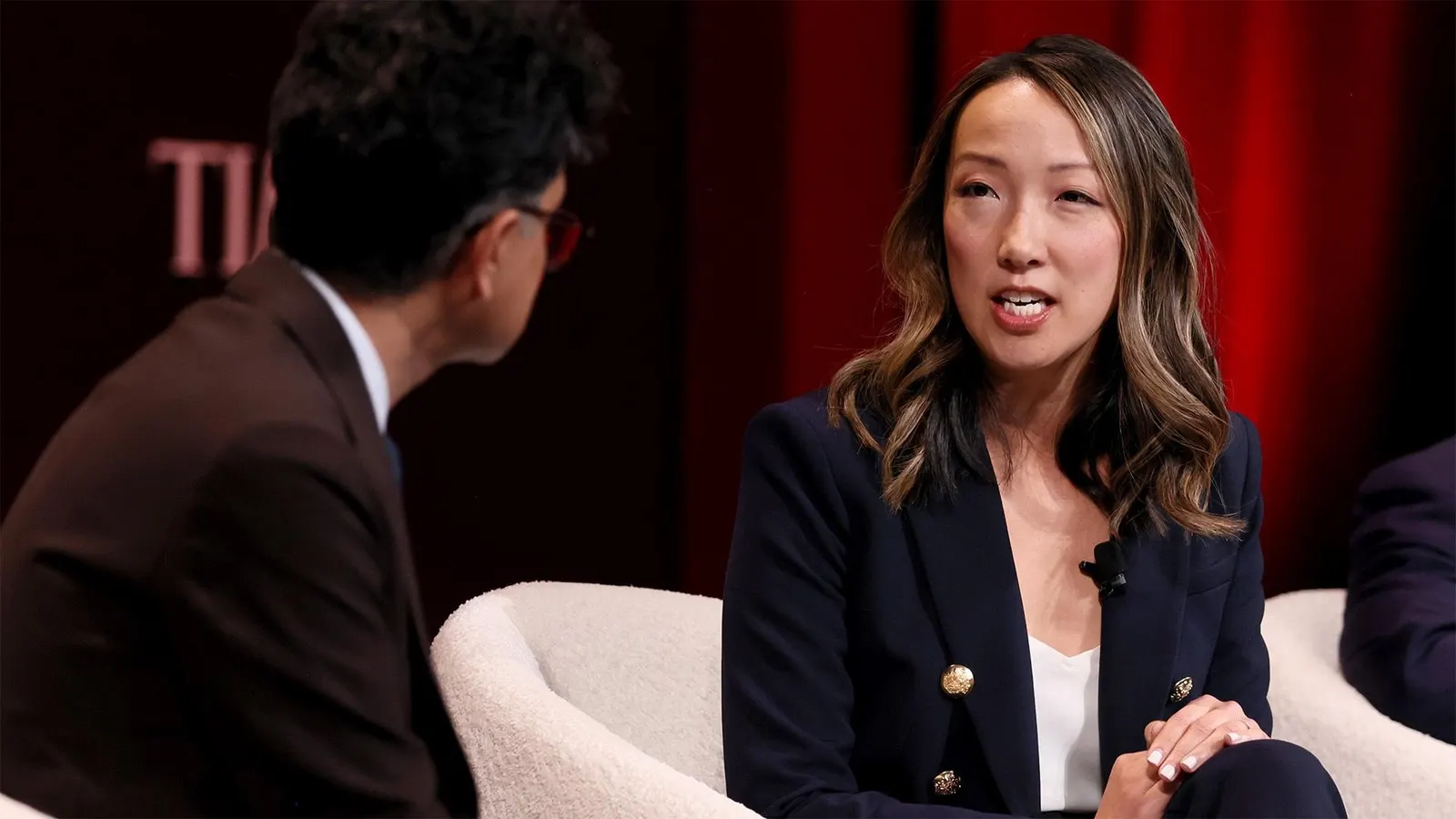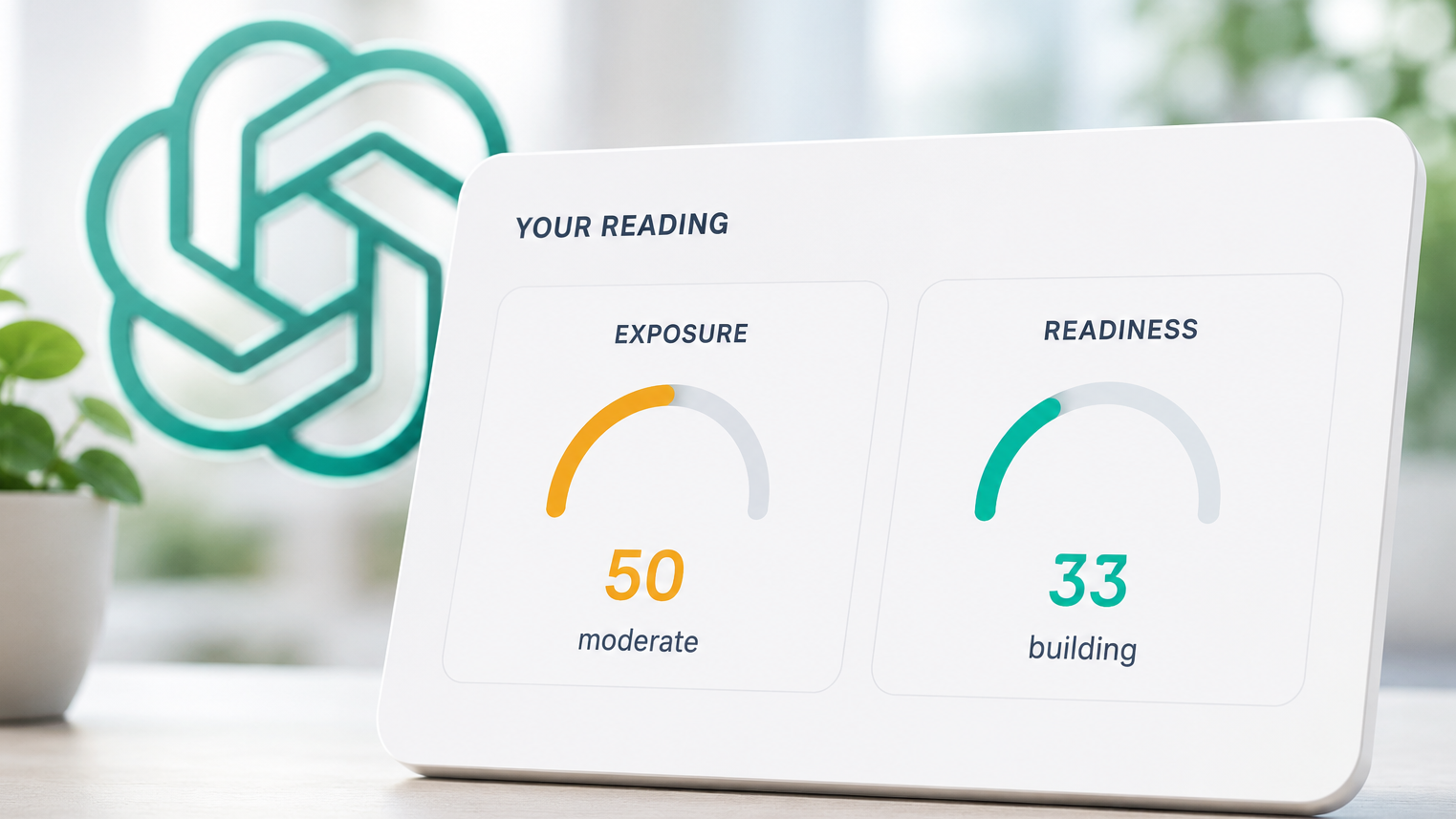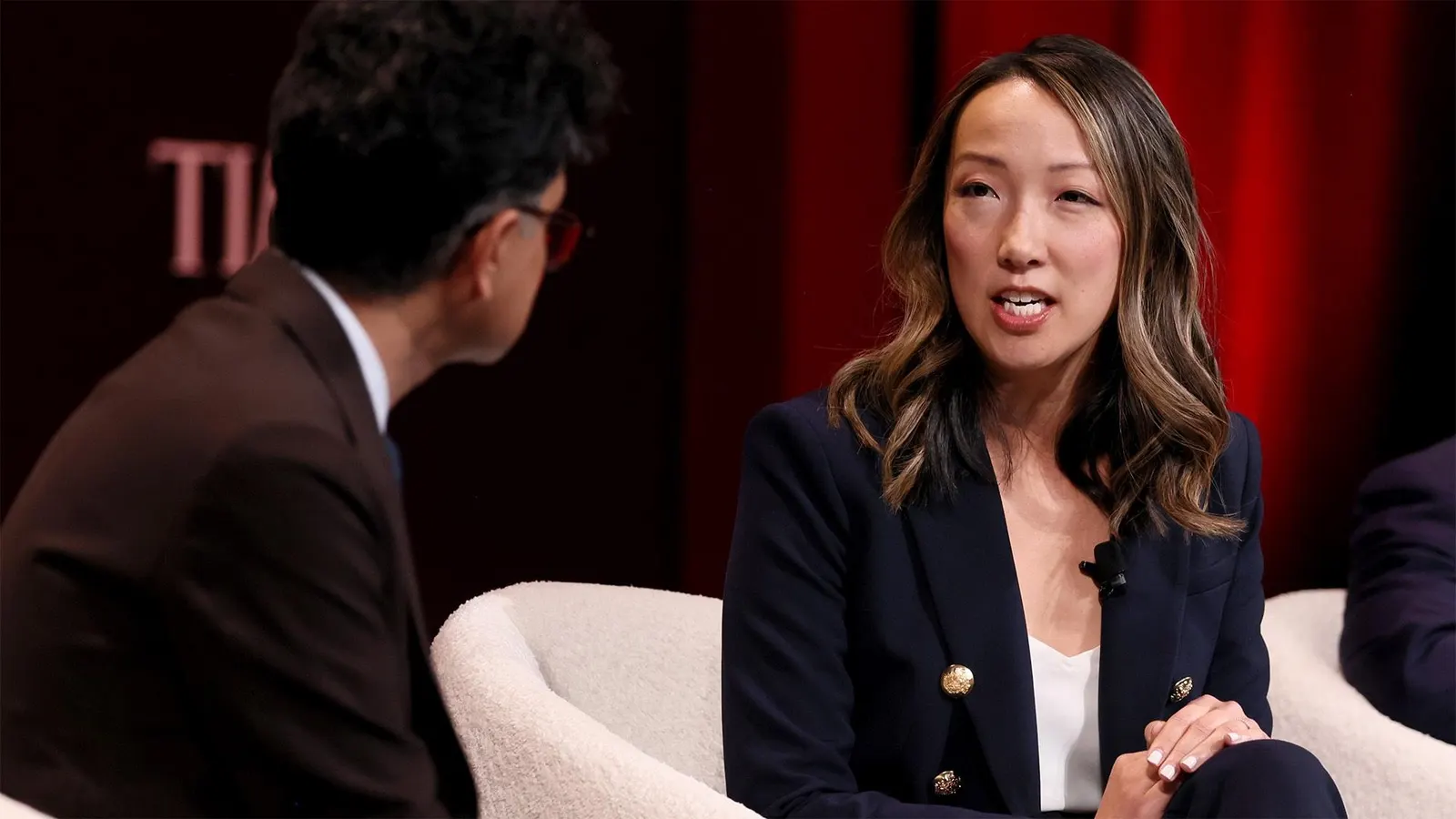
Tech executive Clara Shih discussing the launch of the New Work Foundation at the TIME100 Summit in April 2026.New Work FoundationIn August 2025, Clara Shih was working as the Head of Business AI at Meta when she and her team built an artificial intelligence agent for businesses that answered customers’ questions, remembered their preferences, and even offered product discounts to seal a sale. The tool, Shih said, was rapidly adopted by business owners who found it helped keep consumers engaged and streamlined their sales process. “It was everything you would want when you’re a builder in technology,” recalls Shih, now 44, who was honored on the Forbes 30 Under 30 list in 2012 as cofounder and CEO of the client engagement platform Hearsay Systems. She became CEO of Salesforce AI in 2023, before moving to Meta the next year. (Hearsay was acquired by the digital platform Yext in 2024.)But the feedback from entrepreneurs using Meta’s new tool, also opened Shih’s eyes to the real–and potentially negative–impact AI could have. “The feedback we got from the businesses using our software was that they no longer needed their staff,” she says. “We didn't know whether we should cry or celebrate because we've been wanting it for so long and yet when we achieved our goal, we started to realize what the implications were.”The Problems of Gen Z GradsAt the time, Shih was also hearing stories from younger family members and recent graduates about how they were struggling to find work and how some even had job offers rescinded. “I started looking into this problem more and what I found alarmed me,” she says. “We are in a youth unemployment crisis in this country.”According to the Federal Reserve Bank of New York, 5.6% of recent graduates aged 22 to 27 are unemployed and 41.5% are underemployed. This means, Shih says, that nearly half of American college graduates are either without jobs or working jobs where their skills are underutilized. “These are smart, talented, ambitious young people who should be gainfully employed, but because of what's been happening with AI automating entry level tasks, they're being underutilized and it not only hurts them, it hurts our society because this is our tax base and this is our voter base for the future,” she declares.Clara Shih, Founder of the New Work Foundation.New Work FoundationBirth of the New Work FoundationShih’s desire to solve this employment gap for young people led her to leave her job at Meta and launch the New Work Foundation in April 2026, with businessman Andrew Yang, who ran as a longshot candidate in the 2020 Democratic presidential primary, as a founding advisor. What started as a self-funded organization is now a nonprofit where individuals can donate to the organization’s mission of equipping young workers with the tools, information, and skills needed to navigate an economy being reshaped by AI.“The first problem we want to address is this information gap between people who work in AI and everybody else,” says Shih. “I believe that if young people are informed, they’re going to do the right thing, but right now they're not sure what to believe and they're not sure what to do.”Closing the Information Gap So far, the New Work Foundation is building three pillars to close the information gap. The first and most basic is a media and data platform called “dear [CC]” with “CC” representing Shih’s nickname and being short for career coach. This includes all of the foundation’s educational content, which currently consists of its podcast and short-form videos on Instagram, TikTok, and YouTube. “We want to reach young people where they spend time and we go role by role across all of the most common entry level knowledge jobs in fields like marketing, sales, software engineering, and accounting, and we demystify what is happening to those jobs as a result of AI,” Shih says. “Those jobs aren't going away, but they're changing and they require specific AI skills. So we're interviewing hiring managers and we're interviewing Gen Z workers who have been on the job search for six or more months but who have recently found a job and they share their tips and tricks with their peers.”The second pillar is what New Work Foundation calls “Field Report,” which Shih describes as an “AI jobs explorer.” With Field Report, young workers can enter their field of study and the AI tool will look at the number of entry-level jobs in that field to see if it’s increasing or decreasing year-over-year. The tool will also examine overall hiring trends in that field to measure its exposure to AI and it will use data from the Bureau of Labor Statistics to show the median entry-level salary in that sector. “We want young people to have data when they're making decisions about what to major in, which interns to prioritize, and what jobs to apply for,” Shih says.Building a Free AI Jobs Coach The foundation’s third–and potentially most useful– pillar, known as “JobClaw,” is key for linking young workers to the opportunities they are seeking by “closing the gap between where they are today and the job they want to go for,” Shih explains. The tool, which is in beta and being tested by a group of Gen Z professionals, allows an individual to paste in the last couple of jobs they applied for but didn’t get. The AI agent then connects with the individual’s LinkedIn profile and gives them feedback on the AI training or skills they might need, as well as any work experience they might be missing to be hireable for the role. For example, Shih says if more real world experience is what someone needs then the tool might suggest a specific nonprofit or organization they can volunteer or intern with to get that exposure. “We're trying to create this marketplace where we can connect Gen Z job seekers with opportunities,” Shih explains. “Anytime someone has a job posting or internship or apprenticeship, we want to include that in our index so we can match it and recommend that a young person go after it.”The Bigger Jobs Mismatch CrisisIn today’s low-hire labor market where job growth is uneven across sectors, Shih recognizes that the work of the New Work Foundation is about more than just helping individual members of Gen Z navigate an economy reshaped by AI. It’s also about tackling the broader, systemic problem of a worsening mismatch between the jobs that are growing and the skills and location of the workers who can fill them. “I think there are three issues that we need to address,” she says. “The first one is that if you look at the aggregate numbers, those jobs are being created in sectors like leisure, hospitality, and healthcare. That’s not where everyone is getting their degrees. If you graduate with a degree in accounting, you can't just suddenly be a nurse.”The second issue, she says, is that many of the current job openings are for experienced job seekers, which leaves young workers on the sidelines. “If you're just graduating at 22 years old, you don't have experience,” she says. “It's like this chicken and egg problem where to get hired, you need to have experience. But if you're trying to get experience, you can't because you can't get hired in the first place.”This gap, Shih says, is one that her foundation is committed to addressing with its “JobClaw” platform linking young workers with the internships, apprenticeships, and volunteer opportunities they need in order to gain work experience. The third aspect of the mismatch problem, which Shih knows is a reality that is out of her control, is that some companies will leave job postings up with no intention to fill them because they know investors are looking. That’s something she says young people should keep in mind as they apply to job after job and don’t hear back. In some cases, it’s not that they’ve been rejected–the job doesn’t actually exist. Scaling for Efficiency As someone with over a decade of tech and scaled business experience, Shih says her biggest challenge when it comes to ensuring that the New Work Foundation is effective in creating change is to “not get overwhelmed by the scale of the problem.”“We’re taking a tech startup approach,” she says–meaning her organization is testing its offerings to see which ones have the biggest impact. “We're getting feedback, we're iterating really quickly and we want to get to product market fit and then scale this thing.”Shih says she wishes more leaders would also adopt an “agile startup approach” when it comes to solving some of AI’s biggest challenges. “I guess this is more a call to action asking for ideas, for help, for donations, for people to build their own experiment with other ideas,” she says. “I think as a society, we need our best thinkers on this because if we get it right, this could unlock unprecedented prosperity for everyone. But, at the current course of speed, it's looking like AI could exacerbate the inequality and the polarization in our society if we don’t take action.”Want to be more successful? Subscribe to the weekly Forbes Careers newsletter to get insider tips and insights.More from ForbesForbesAI Is Changing Work. These Are The Human Skills Employers Want MostBy Courtney Connley-Hampton[id=NaN]ForbesThe College Majors Most Likely To Get You Hired In Your Field And Outside Of ItBy Courtney Connley-HamptonForbesAI Might Not Bring On A Job Crisis, But A Workforce ‘Mismatch’ CouldBy Courtney Connley-Hampton
As AI Threatens Entry Jobs, This Ex-Meta Exec Is Building A Solution
After seeing how AI can transform hiring, tech exec Clara Shih started the New Work Foundation to help young people build careers using AI, rather than be replaced by it.
1,581 words~7 min read