South Africans are getting used to the term “gas cliff” as pressure ramps up for action to be taken ahead of expected gas shortages. Natural gas supplies from Mozambique’s Pande and Temane fields will begin to fall after 2028 as their production declines. The fields have supplied roughly 90% of South Africa’s gas for more than two decades. Mechanical engineer and lecturer Davies Tsikayi sets out why the looming supply shortage poses serious risks for the country.
What’s at stake?
South Africa imports a significant share of the gas it consumes from southern Mozambique. The gas comes from the Pande-Temane fields and moves through the Republic of Mozambique Pipeline Investments Company (Rompco) pipeline into South Africa’s Mpumalanga province.
The gas cliff matters because gas is not simply another fuel in the energy mix. Although natural gas accounts for only about 2.5% of South Africa’s total energy supply, it carries strategic weight.
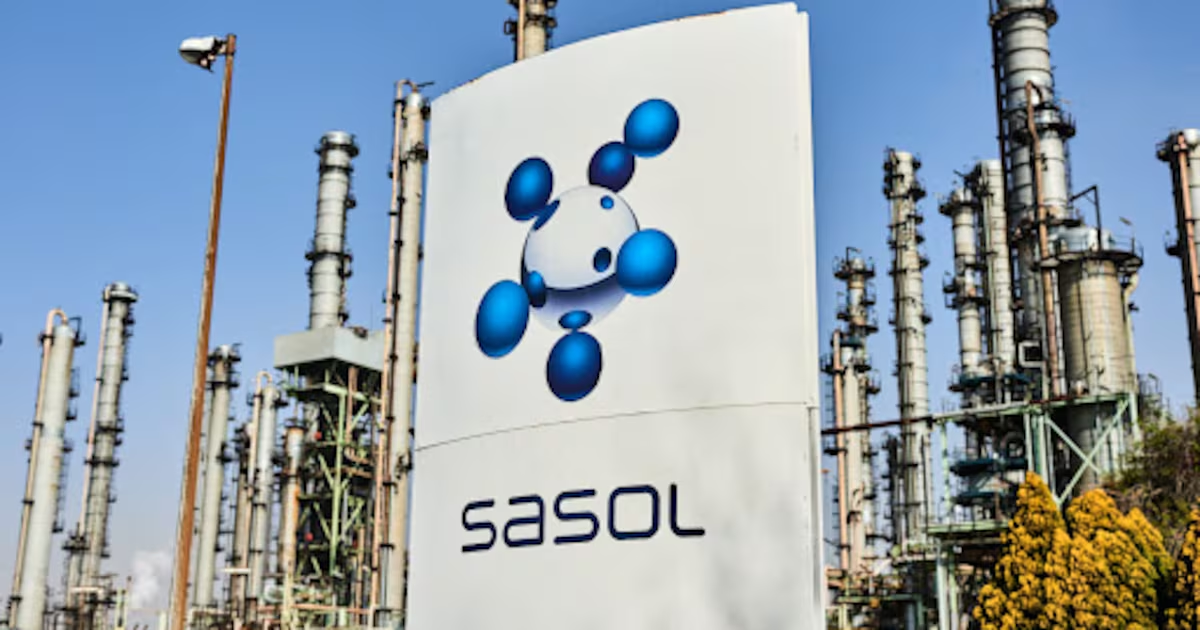
Roughly 35%-40% of the gas from Pande-Temane is used in Sasol’s Secunda operations, where the South African chemicals and energy company converts coal and natural gas into synthetic fuels and chemical feedstocks.