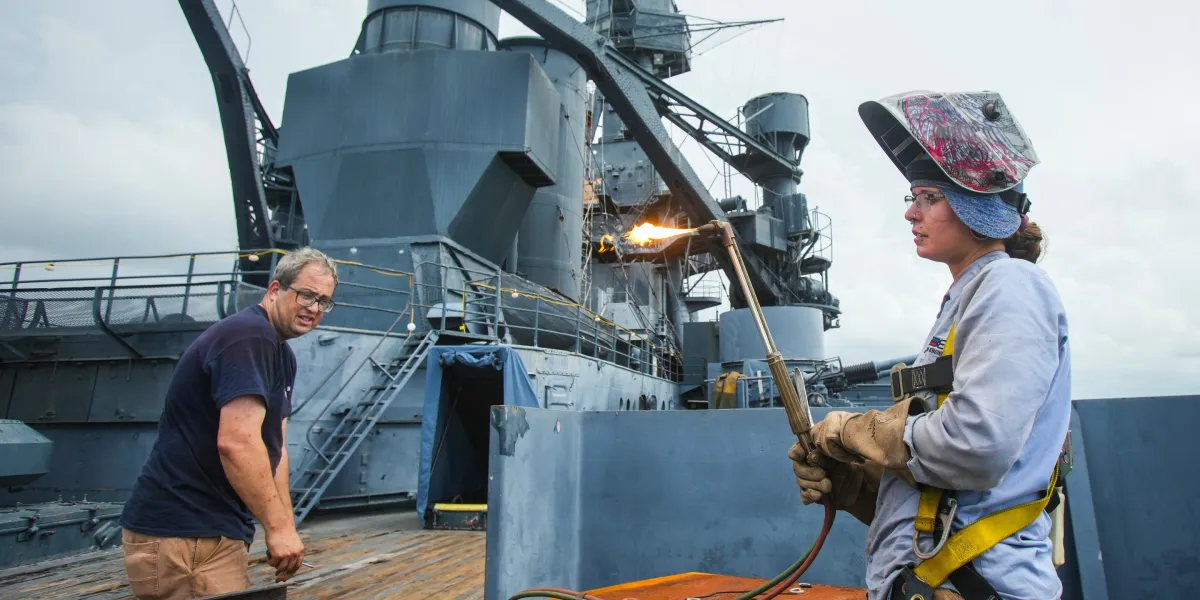
Earlier this month, JPMorgan Chase CEO Jamie Dimon pointed to shipbuilding as an example of the modern American Dream: a career where workers can earn six-figure salaries after just a few years of training while helping rebuild a critical piece of U.S. infrastructure. And while on paper, it’s an attractive proposition—in practice, it might be a much harder sell.
Shipyard jobs often require long shifts, physically demanding labor, and spending hours outdoors in extreme heat, cold, or rain. Those conditions have contributed to chronic worker shortages that defense leaders say threaten the country’s ability to expand naval production.
Attrition rates among shipyard workers have historically ranged from 20% to 22%, Eric Labs, the Congressional Budget Office’s senior analyst for naval forces and weapons, told National Defense last year. In some high-demand skilled trades, turnover can exceed 30%. By comparison, one survey found the average voluntary turnover rate in the U.S. to be 13.0% between 2024 and 2025.
“There is no way to improve the condition of the shipbuilding industrial base with attrition rates that high,” Labs said.
Former Navy Secretary John Phelan has argued pay is a main part of the equation—when workers can earn a similar amount without those dangers.