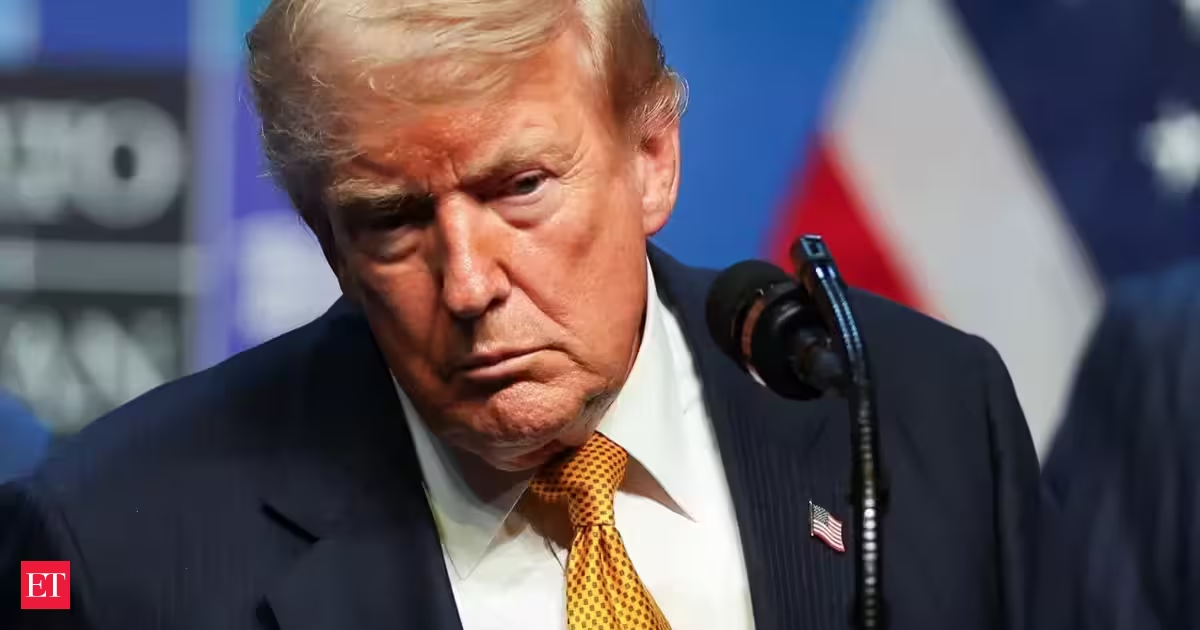
On Monday, President Donald Trump announced a 50% tariff on Canadian imports, marking one of the steepest duties to take effect since the Supreme Court struck down his most sweeping tariffs earlier this year.
The administration framed the move as a response to what it says is Canada’s longstanding trade barriers. But the decision sends a message to every other US trading partner: You could be next.
Ever since the Supreme Court blocked Trump’s broad tariff authority, many governments and businesses believed the risk of being hit with new tariffs had eased. But now, Trump is signaling that he may have found a way to revive them.
Trump is relying on a 1930 trade law that gives a president the power to impose tariffs of up to 50% when another country discriminates against American goods. But since the law has never been used to impose tariffs, the move could face a legal challenge.
US Trade Representative Jamieson Greer said Tuesday these tariffs are a response to Canada’s decision to retaliate against earlier US tariffs, a step that only China took. “We have a tariff, which is, again, a natural consequence of the Canadian retaliation,” Greer said in a morning interview with CNBC.