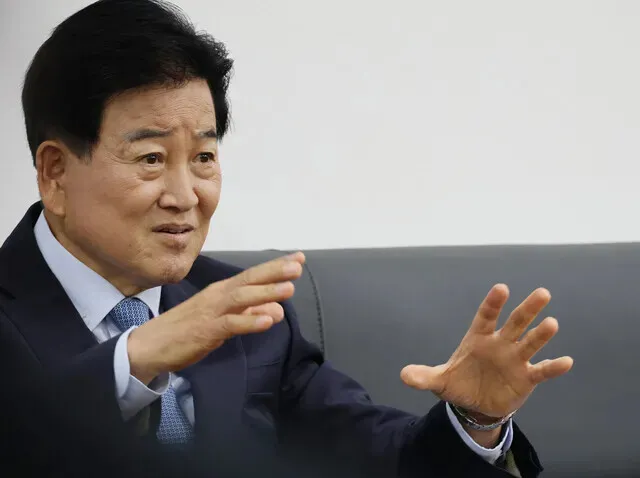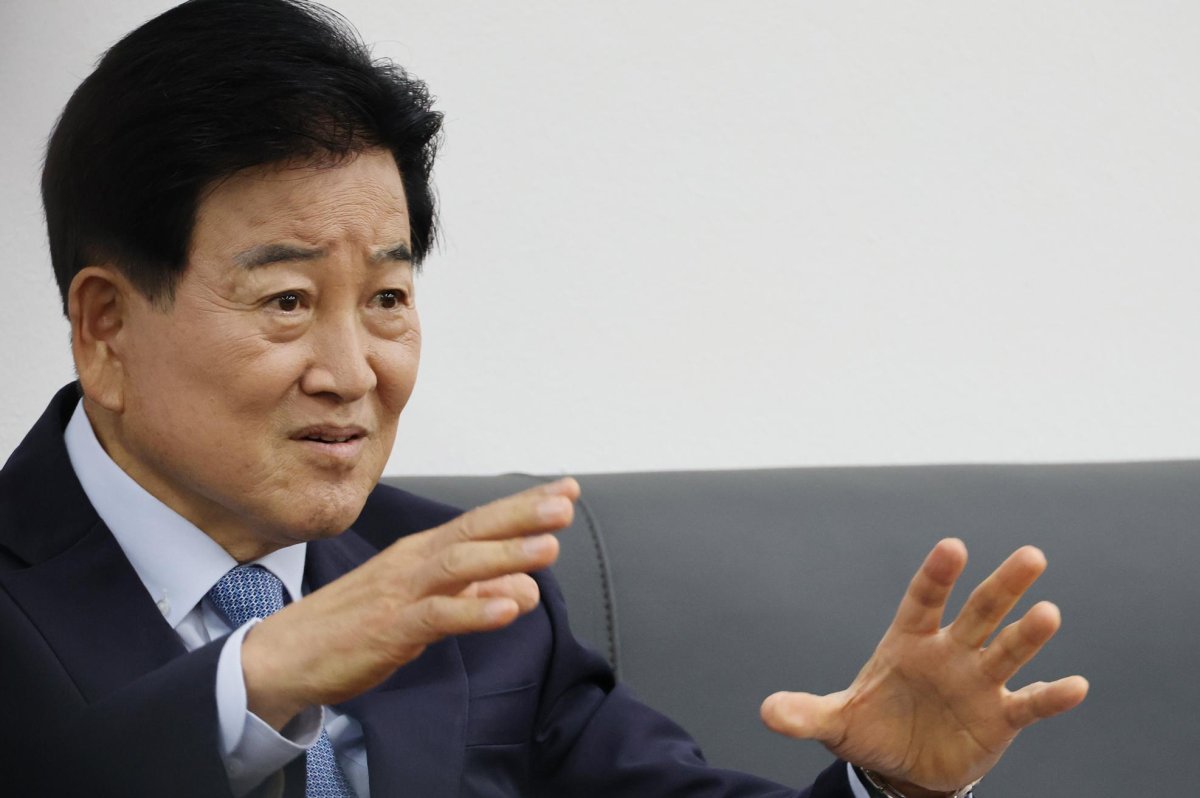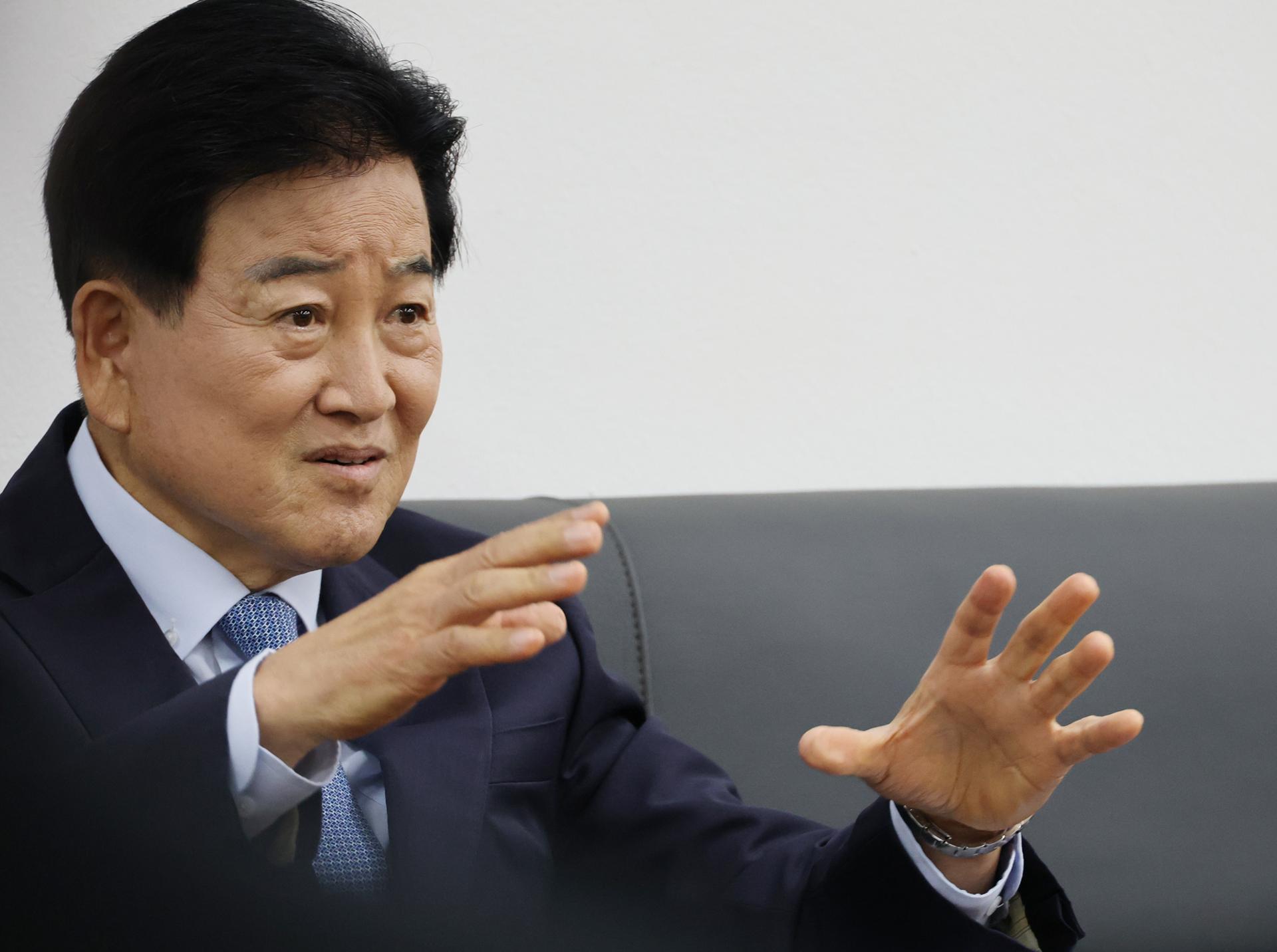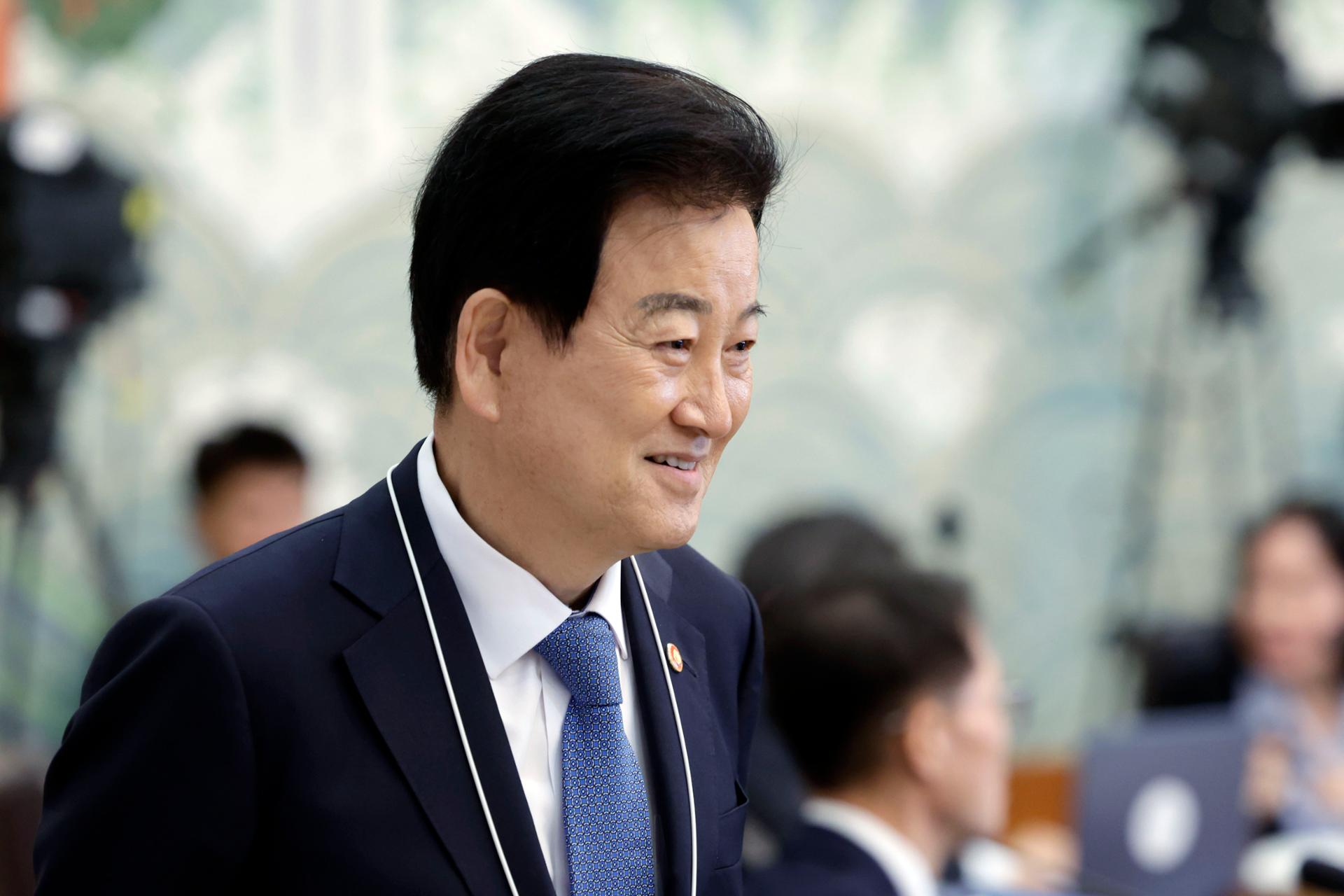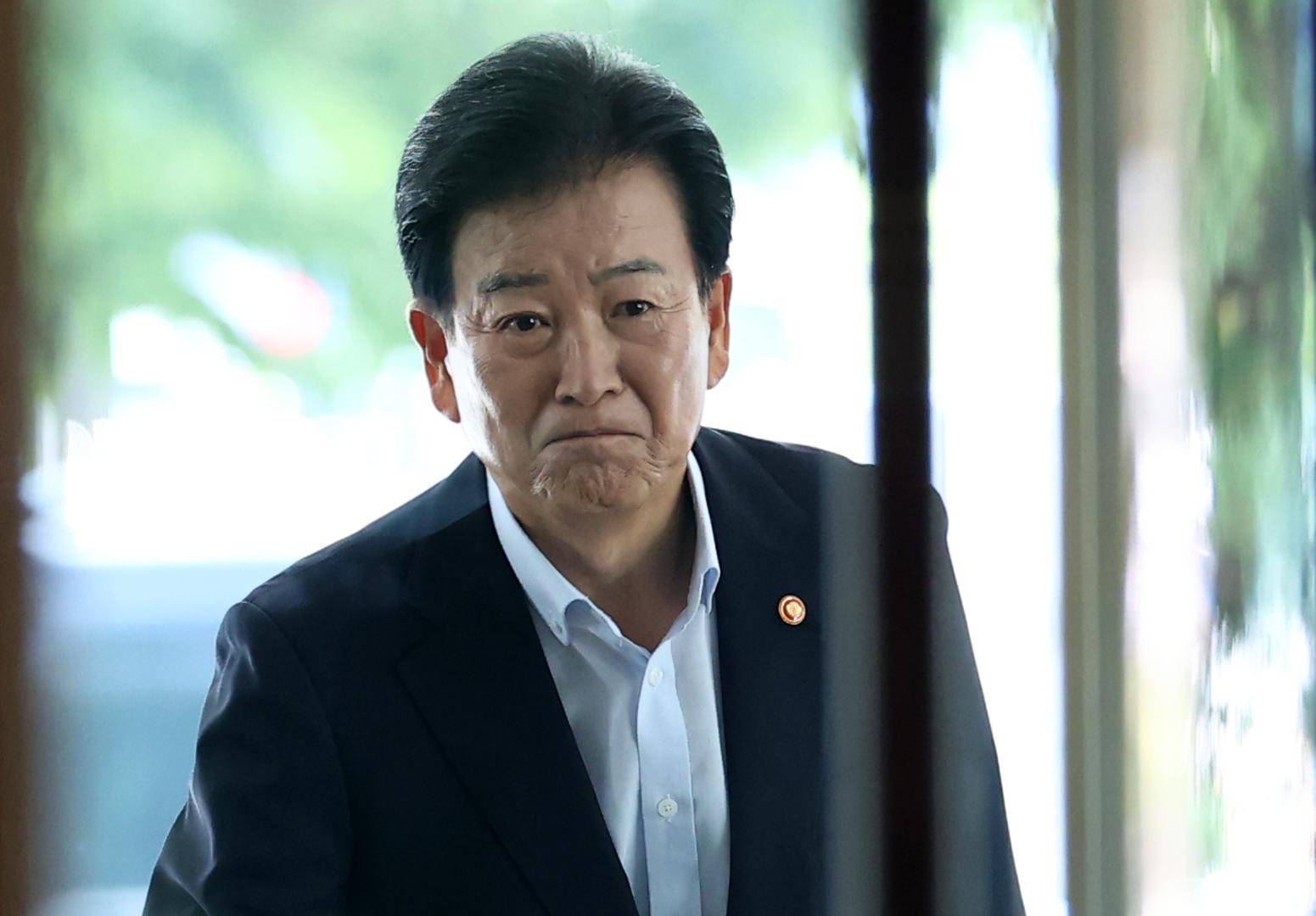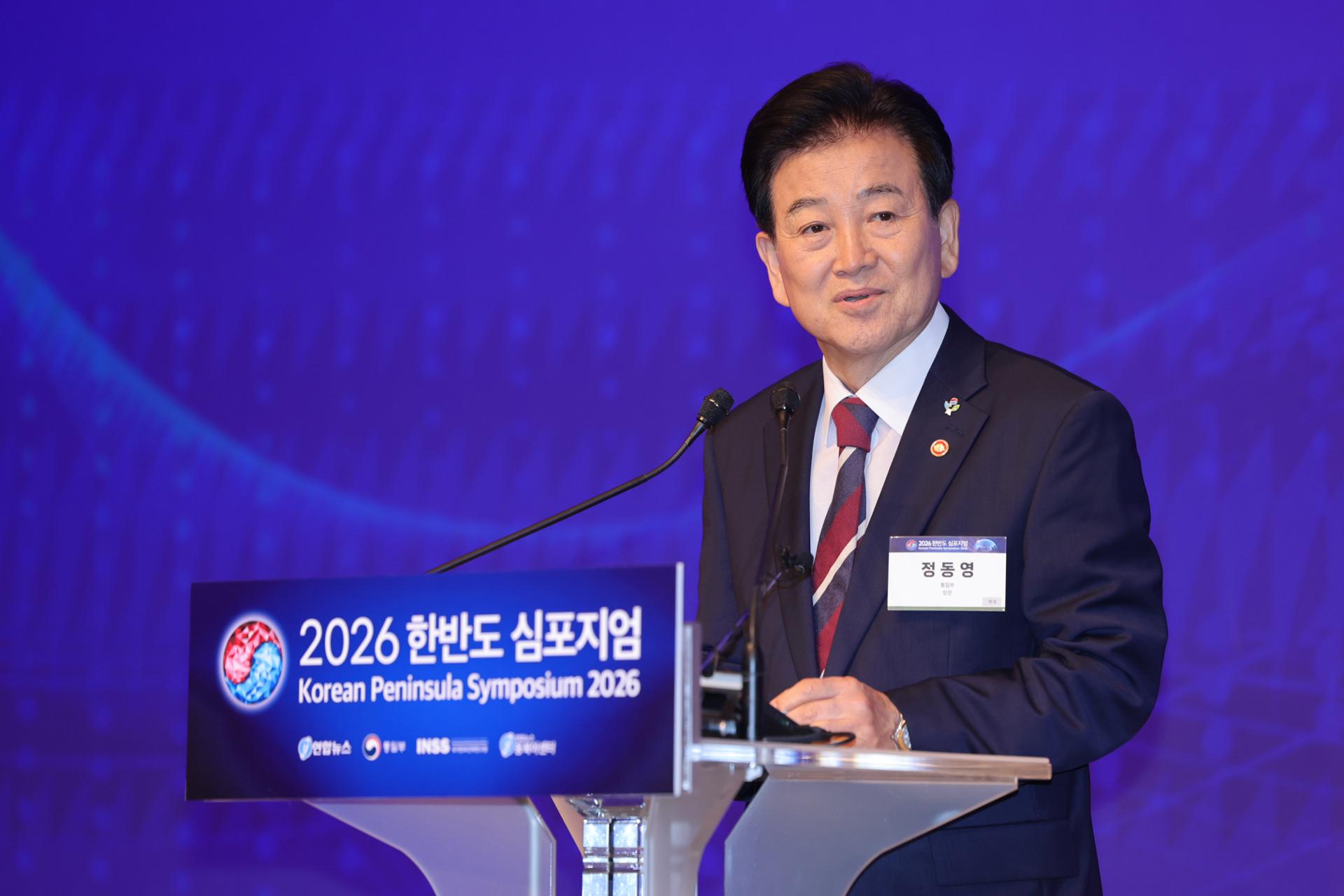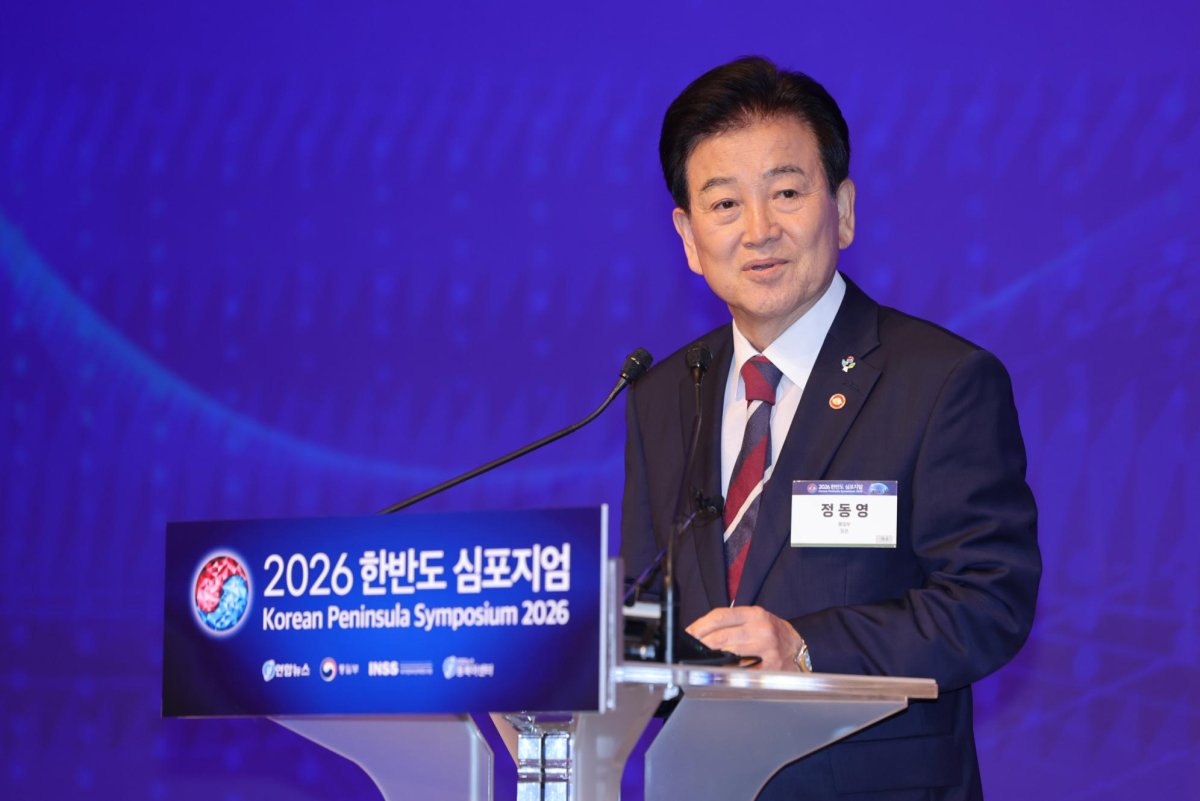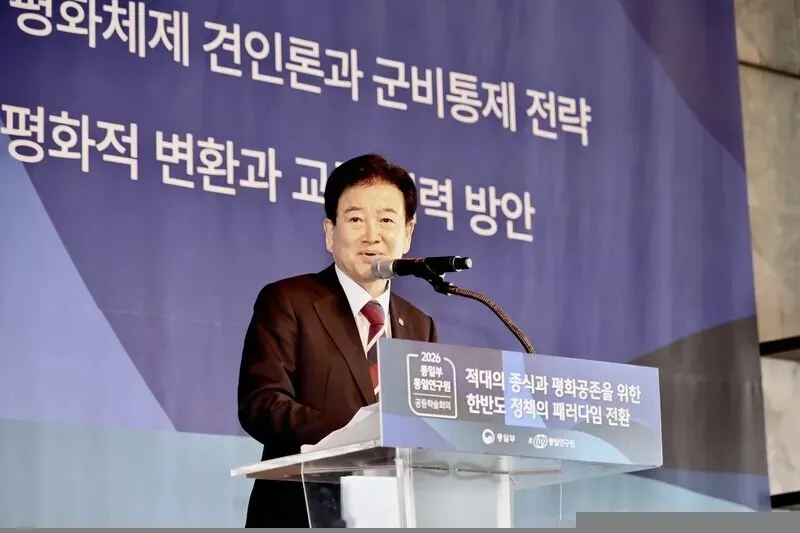
Unification Minister Chung Dong-young speaks at a conference put on by the ministry in collaboration with the Korea Institute for National Unification on March 25, 2026. (courtesy of the Ministry of Unification)
By Chung-in Moon, James Laney Distinguished Professor at Yonsei UniversityFor several weeks now, a political controversy has been raging over comments made by South Korean Unification Minister Chung Dong-young before the National Assembly’s Foreign Affairs and Unification Committee on March 6.Here are Chung’s remarks: “The reason I’m saying that [North Korea’s nuclear program] is still in progress is that the uranium enrichment facilities in Yongbyon, Kusong and Kangson in [IAEA] Director General Grossi’s report are producing weapons-grade uranium at 90% enrichment, compared to the 60% level of the Iranian uranium destroyed in the US’ bombing campaign. The director general reported that [North Korea] is building another such facility at Yongbyon right now.”Chung’s intended point was that since North Korea is dramatically increasing its nuclear capability, it’s necessary to rapidly shift to dialogue and negotiations.Over a month after Chung’s remarks, South Korea’s main opposition People Power Party is accusing Chung of wrecking Korea’s alliance with the US by leaking what it describes as sensitive information and is demanding that he step down. The presumed smoking gun is the US’ hesitation to share classified intelligence with Korea.The whole situation is truly absurd.There’s hardly anything sensitive about Chung quoting a report by Rafael Grossi, the director general of the International Atomic Energy Agency.To be sure, the city of Kusong isn’t mentioned in Grossi’s report. That was Chung’s error.But the high-enrichment facility at Kusong is publicly available information that has been repeatedly shared since 2016. Furthermore, Chung’s comments don’t contain any concrete information specifying that facility.If the US actually stopped sharing intelligence with Korea over this issue, the object of our criticism ought to be not Chung, but the US.Referring to the Zen saying about not mistaking the finger pointing at the moon for the moon itself, Chung lamented that opposition lawmakers were finding fault with the pointing finger (his reference to Kusong) while ignoring the moon (the severity and urgency of North Korea’s nuclear program).While this kind of willful misinterpretation of public comments is hardly newsworthy, the People Power Party has really crossed the line this time. It seems clear that the opposition is acting against the national interest.As Chung remarked, time is not on our side. We have to bring North Korea to the table for talks, and resuming North Korea-US dialogue is critical to that.During his meeting with US President Donald Trump last month, Korean Prime Minister Kim Min-seok proposed exchanging letters with Kim Jong-un, sending a special envoy, and holding a summit — ideas to which Trump apparently responded positively.The Korean government needs to sustain that momentum and persuade the US to take steps to resume dialogue with North Korea around the China-US summit in Beijing in mid-May.If May isn’t practicable, Seoul will have to make every possible effort to facilitate dialogue around the Asia-Pacific Economic Cooperation (APEC) summit in Shenzhen in November.For North Korea-US dialogue to be feasible, we need to adjust our current goal of denuclearization.North Korea is a de facto nuclear power that has carried out six nuclear tests and is in possession of nuclear facilities, fissile materials and quantities of nuclear warheads and missiles to carry them. Pyongyang has declared itself to be a nuclear weapon state in its constitution and has clearly stated it will not engage in any negotiations aimed at denuclearization.Under such conditions, it would be futile to insist that denuclearization be the goal of negotiations.While South Korea, as a party to the Treaty on the Non-Proliferation of Nuclear Weapons, cannot officially acknowledge North Korea’s nuclear status, it should engage in dialogue and negotiations based on North Korea’s actual nuclear capabilities.That’s what I find persuasive about South Korean President Lee Jae Myung’s step-by-step approach — consisting of a freeze on nuclear development and a reduction of nuclear weapons with the long-term goal of ridding the Korean Peninsula as a whole of nuclear weapons. Trump reportedly has a similar attitude about these matters.Even Victor Cha, the Korea chair at the Center for Strategic and International Studies and a hard-liner on North Korea, acknowledged in an interview with Yonhap on April 21 that it would be impossible to persuade the North to give up its nuclear weapons in the short term.“The US should open conversations with Pyongyang on arms control agreements, limits on nuclear testing and missile production, crisis management mechanisms and bans on the transfer of nuclear weapons or technology to others,” Cha said.Without such a pragmatic approach, there’s little chance of the US reaching an agreement with North Korea.Achieving such goals as a nuclear freeze, nuclear arsenal reduction and nonproliferation will require giving North Korea suitable compensation. If the North halts its development of nuclear weapons and missiles and expresses a clear commitment to nonproliferation, the US should respond with bold measures, such as winding down what North Korea decries as a “policy of hostility,” normalizing relations with the North, and even easing financial sanctions on the North.At verifiable stages in the negotiation of nuclear and conventional arms control and reduction, the US should be ready to offer such incentives as lifting UN Security Council sanctions, working with the North to reduce their threat to each other, permitting the peaceful use of nuclear power, and making large-scale investments in the North.Finally, rather than always dealing with the North Korean nuclear issue and peace on the Korean Peninsula through the bilateral framework of North Korea and the US, we should also seriously consider multilateral approaches such as holding regular security summits in Northeast Asia and creating a vision for a nuclear-weapon-free zone in Northeast Asia. Toward that end, the Korean government needs to take the lead in drafting a roadmap for negotiations through proactive diplomacy with the US.It’s truly regrettable that Chung’s reminder of the severity and urgency of North Korea’s nuclear program and his call for a solution have been taken as an excuse for bickering by Korea’s opposition lawmakers. We need to firmly grasp the North Korean nuclear dilemma and use preventive diplomacy to turn the situation around, if only to ensure that the crisis unfolding in Iran is not repeated on the Korean Peninsula.Please direct questions or comments to [english@hani.co.kr]