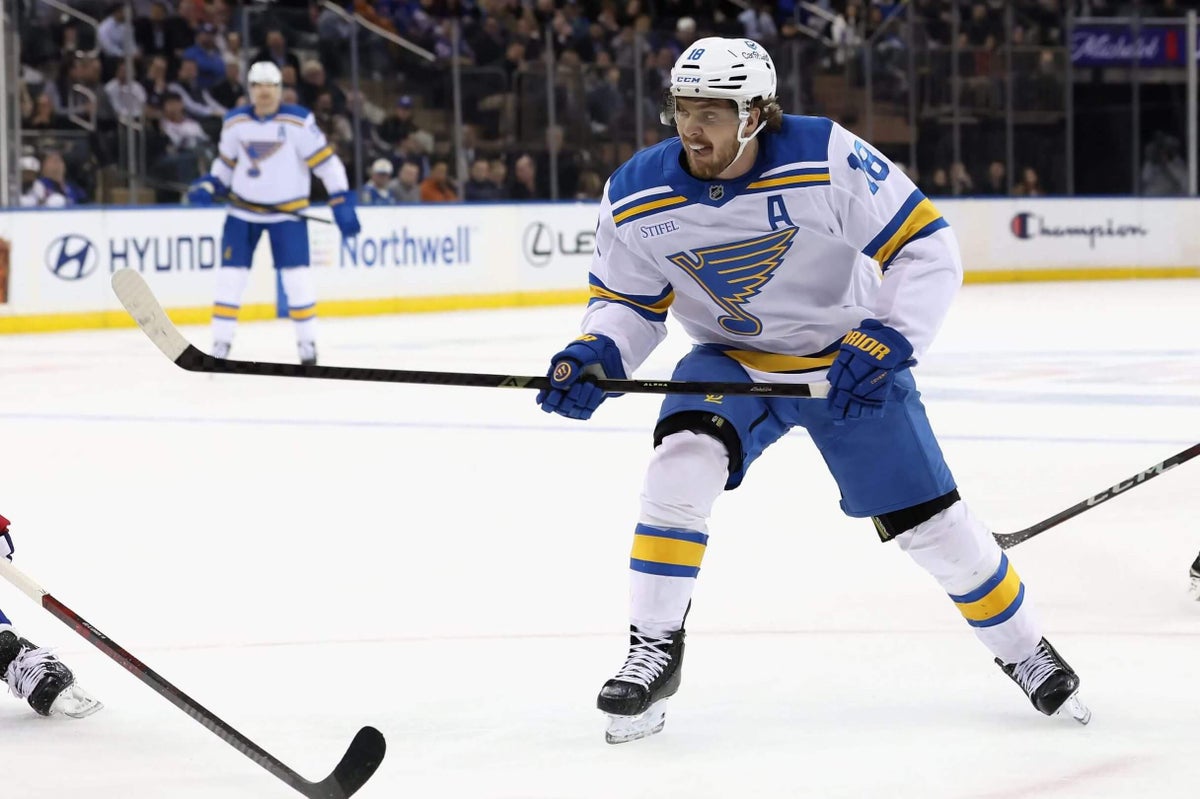
ST. LOUIS — By far, the most asked question in this edition of the St. Louis Blues’ mailbag was about the team’s TV broadcast plans for the 2026-27 season.Main Street Sports, which owned FanDuel Sports Network Midwest, shut down operations in the spring, leaving the Blues without a home.Regional sports networks have been engulfed by uncertainty for several years, so that was not a surprising development, and the Blues had been planning for the possibility. While the business department worked behind the scenes for a more permanent, sustainable solution, fans wondered what it would be.Well, we finally have an answer.The Blues announced Tuesday that beginning with the 2026-27 season, regional broadcasts will be produced by the team and the NHL in a new partnership with the league. The club is actively working to finalize agreements to offer games in a variety of ways, including cable, satellite, streaming services and over-the-air providers.The details — channel locations and annual and monthly pricing for direct-to-consumer streaming subscriptions — have yet to be announced.“This partnership is an ideal arrangement for the St. Louis Blues that leverages the production strength of the NHL while giving our organization more control over every aspect of our local broadcasts than ever before,” Steve Chapman, Blues executive vice president and chief revenue and marketing officer, said in a statement.The Blues have announced their regional broadcasts will be produced by the team and the NHL. (Dilip Vishwanat / Getty Images)“While we still have more work to do before we can provide detailed answers to every question about our broadcasts for the upcoming season, this production agreement is a key step in that process. (It) will enable us to continue delivering reliable access to Blues hockey in ways familiar to our fans and with the ability to expand our reach to even wider audiences,” he said.The Blues are expected to be one of four teams partnering with the NHL in the venture that was made possible by the expansion of NHL Productions. It will affect about 70 telecasts — every regular-season game not nationally televised by ABC, ESPN, ESPN+/Hulu or TNT. Fans who don’t live in the local broadcast region can continue to watch games via NHL Power Play on ESPN+.“It allows us to use our existing relationships and add to that the production expertise that the NHL brings to the table,” Chapman said.In the past, the Blues received a rights fee from the RSN that was a major revenue source for the organization. The club will be counting on replacing that revenue through direct-to-consumer subscription fees, partnerships with distributors (Charter, DirecTV, etc.), as well as with potential marketing and advertising revenue streams now under the team’s control.“In the short term, (the total revenue under the new arrangement will) definitely be less than it would’ve been in our original deal (with Main Street Sports),” Chapman said. “The world is changing in how people (receive their programming), and we’re trying to be flexible in going along with those changes. From a business standpoint, yes, we’re trying to figure out how to drive more revenue off that, so that we can remain competitive.”The Blues’ broadcast team of play-by-play man Chris Kerber and color analyst Joe Vitale will remain intact, and the radio simulcast will continue.“We’re still tinkering with what we’re going to do, but we’re not making any massive changes,” Chapman said. “The simulcast has worked out well for us. Yeah, there are things that we’ve got to work on, and there’s things that we’ve got to get better at, but all of that is going in a positive way.”More details will be available at a later date, but the Blues have chosen their immediate path forward with their broadcasts.“I can tell you, we’re excited and I think the fans are going to be,” Chapman said. “In business, or life, it’s about facing challenges and trying to get the best outcome that you possibly can. We believe with our partnership with the league that we can ultimately deliver a better product than we have delivered in the past, and we’re working hard to do that.”With that major question answered, let’s get to the rest of the mailbag.(Note: Some questions have been lightly edited for length and clarity.)How are Doug Armstrong and Alexander Steen different philosophically? What types of moves will Steen embrace that Armstrong may have shied away from and vice versa? — Adam S.It’s difficult to give you an insightful answer because, outside of Steen’s introductory news conference, I haven’t had the opportunity to sit down with him and learn more about his philosophies. But I will say Steen’s focus will be creating and maintaining culture, so his decisions will always include an element of what’s best for the dressing room. Not to say Armstrong didn’t consider that, but Steen will prioritize it.We’re told the NHL is a copycat league, so what team serves as a template for Steen’s trades/signings in the coming seasons? — Tory C.How about the 2018-19 Blues? I don’t know, maybe the Carolina Hurricanes, but look how many years that took to build and climb to the top. Steen will try to build something similar in which the Blues will be the sum of their parts, but they desperately need a star and hope one of their many first-round picks can become one.Does Steen have to get approval from Armstrong if he wants to make a trade or sign someone? — Jim C.The way it’s been explained publicly, no. If they disagree on something, will Steen overrule Armstrong and make the move anyway? I don’t know. But this is Steen’s team, so he’ll have that right.Do you anticipate more changes in the Blues front office as far as Steen building his own group of advisers and support staff? — Scott F.The moves Steen wanted to make, it appears, have been made. Tim Taylor and Ryan Miller, both assistant general managers, are now in charge of AHL Springfield. Al MacInnis and Scott Mellanby are staying on as advisers. Elliott Mondou, who was in the video department, is now an assistant to the GM. I’m not aware of any other holes they’re trying to fill.What can you tell us about the Blues’ hiring of Shane Malloy as director of strategic planning? — Sarah B.It’s a new position, and Malloy will report to Armstrong. In the news release when the hiring was announced July 1, the Blues noted: “Malloy has developed an expertise within the hockey industry in the application of statistical principles and performance risk to predict player performance. His work has helped organizations make informed decisions about the salary cap, budgeting, performance management, market inefficiencies reporting, trade evaluation, draft picks, and department activities.”The Blues haven’t spoken about Malloy’s position yet, but perhaps I can find out more when we get to training camp.In your recent article interviewing Steen’s former teammates, I noticed Alex Pietrangelo was not included. Perhaps I’m reading too much into it, but I wondered why? — Patrick F.For that article, I interviewed Steen’s ex-teammates as they came to Enterprise Center with their current teams, or, if they’re retired, wherever I saw them. I didn’t reach out to Pietrangelo personally, so that’s why he wasn’t included.When Steen was still a player, he preferred being called “Alexander,” not “Alex.” Did that change? — Alan L.I asked several months ago and was told Alexander, but now word is he’s fine with Alex.With the trade rumors involving Robert Thomas last season, how does that affect him this year? — Jim I.I spent about an hour with Thomas last week for an upcoming story in The Athletic, and he’s moved past it. He had some good conversations with Steen in the offseason and wants to stay in St. Louis. I’ll have those comments and a lot more in the story.Do you think Jordan Binnington is preparing himself to have a monster comeback year? — John D.If there’s one player who knows the narrative about him and wants to tell the story his way, it’s Binnington. Part of the reason for not trading him this offseason is knowing how hungry he’ll be entering the final year of his contract.Will Pavel Buchnevich be on the roster after the trade deadline? — Jason K.I’d be shocked if the Blues were able to move him. He’ll be 32 years old in April and will have four more seasons left on his contract. The best development would be his bouncing back next season and contributing, even if it’s in a top-nine role, for a few years.Is Carolina Hurricanes defenseman Alexander Nikishin on the Blues’ radar? — Justin W.The Blues have shown interest in Nikishin and will continue to do so, assuming he’s available. At 24 years old, 6 feet 3 and 218 pounds, the left-shot defenseman makes a lot of sense for this team at the right price.Are the Blues kicking the tires on the Toronto Maple Leafs’ Matthew Knies? — John B.Knies is another player I’m sure the Blues checked on, but the asking price sounds pretty exorbitant. I like Knies, and he’d fit well, but he’s not enough of a difference-maker that the Blues should be giving up multiple quality assets.Are we past the asset accumulation stage and into the development stage? — Jeremy B.Yes. That doesn’t mean the Blues can’t accumulate more if the situation presents itself, especially if they can turn a few prospects into a high-level prospect or player. But the focus now should be on developing this young core and building around it.What will make the Blues a destination? Is it the city? The organization? Winning? — David L.Winning. The key is trying to get the players — free agents or those with no-trade clauses — to come to St. Louis now, so they can win faster than if they have to draft and develop. Those are case-by-case situations, and even when it looked like the Blues had an advantage (see: Bros. Tkachuk), it didn’t work out for them.
Blues reveal TV plans, team’s biggest strength and weakness … and playoffs? Mailbag
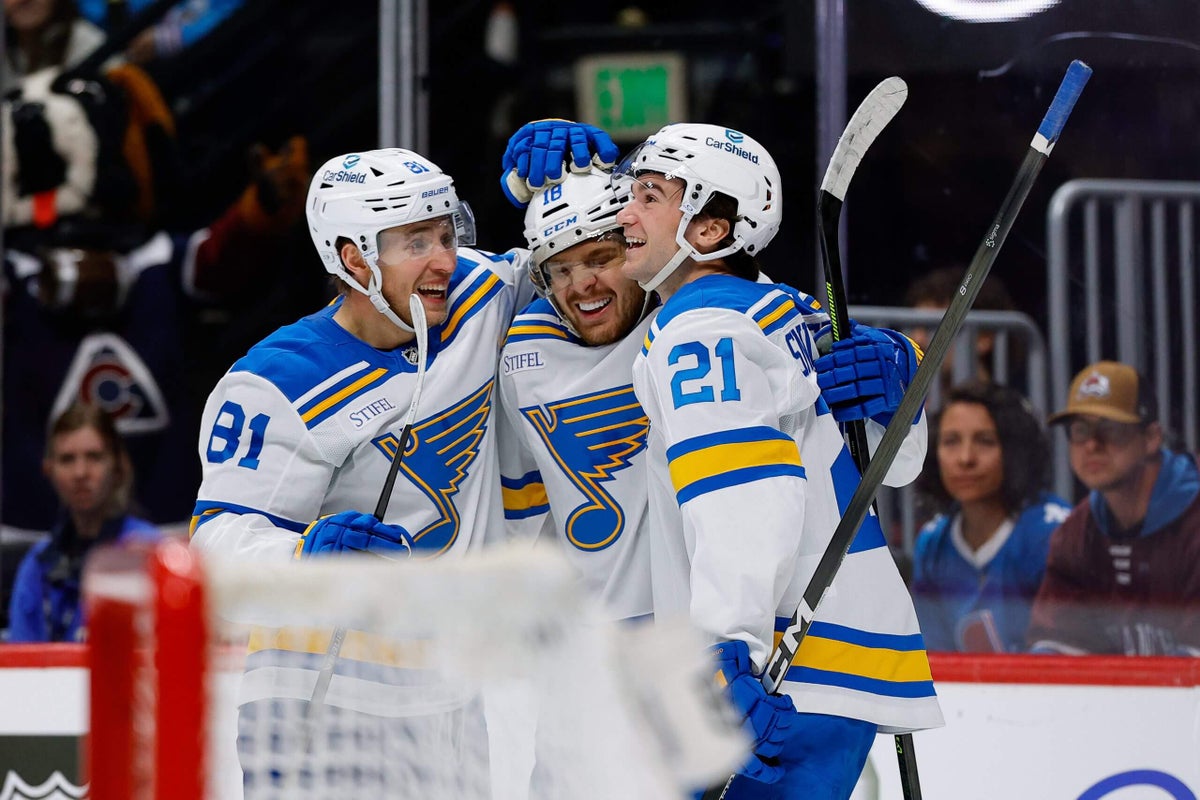
The Blues have announced their broadcast plans for the 2026-27 season, which will be a partnership with the NHL.
1,931 words~9 min read