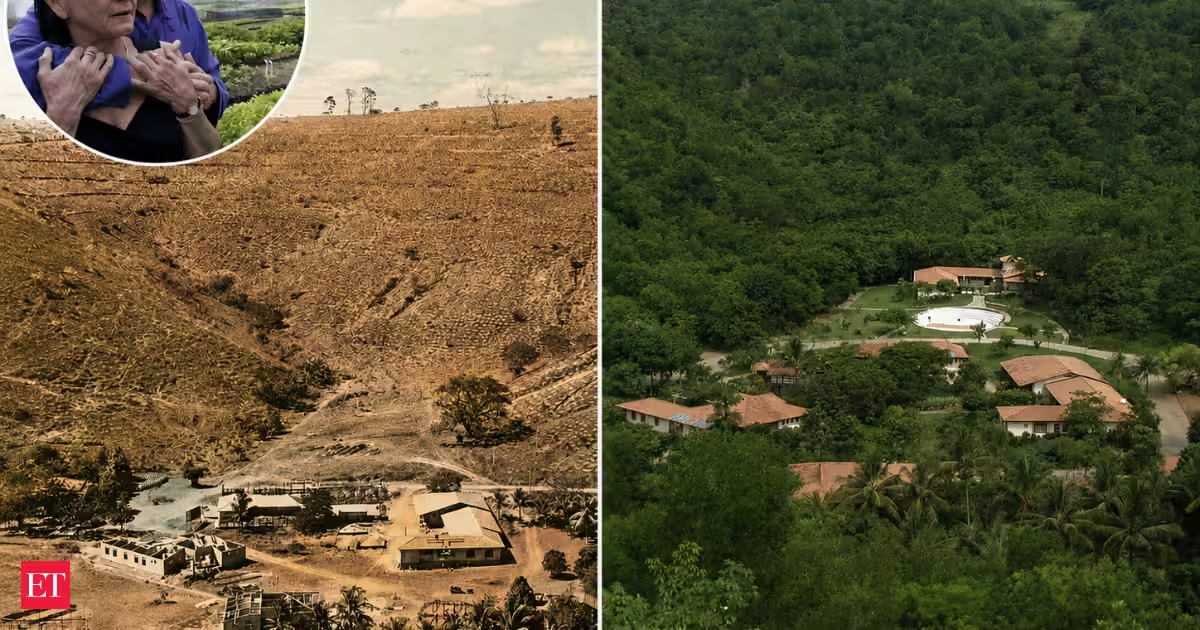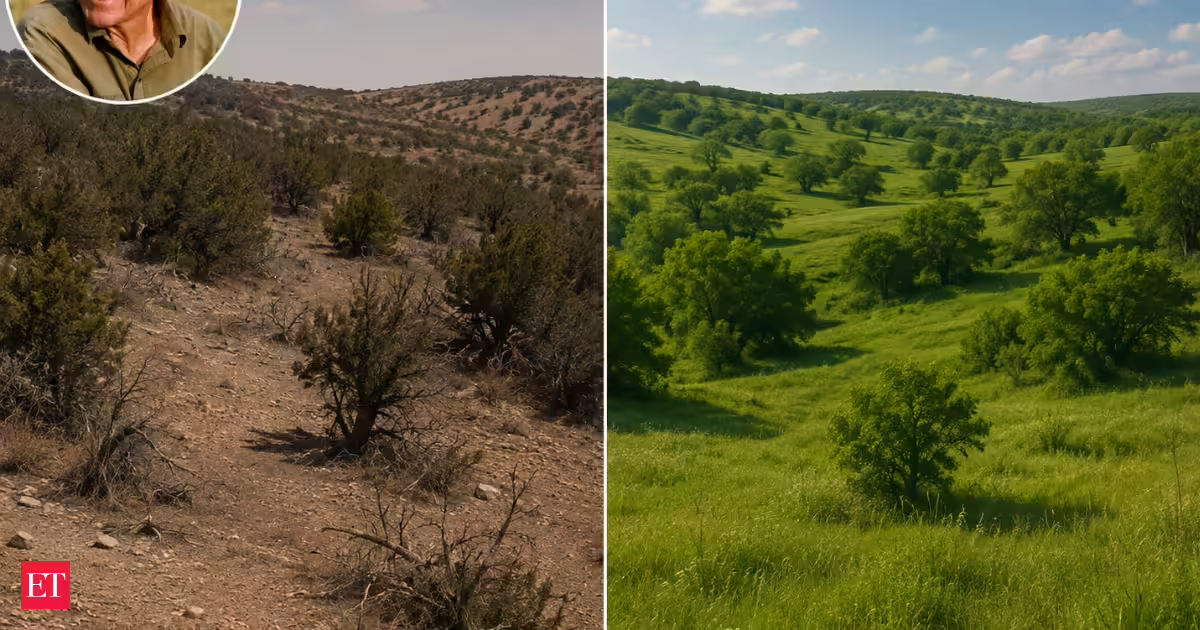
In 1969, a Texas businessman made an unusual request. He asked a soil conservation agent to help him find the worst ranch in the Texas Hill Country. Not the most beautiful. The worst. Texas Highways magazine reports that he got what he asked for: 3,000 dry, cedar-choked acres, with no grass, no ponds, and no working water wells. Today, that same land is a 5,500-acre nature preserve. It has flowing creeks, spring-fed ponds and lakes, and more than 220 bird species, according to Texas Highways.A U.S. Geological Survey study of the nearby Guadalupe River watershed shows that clearing thick, invasive cedar can increase the amount of water that reaches nearby streams. Native grass helps too. It allows more rain to penetrate the ground and reach underground aquifers. That finding helps explain how one man restored damaged land.A fried-chicken fortune looks for a purposeAccording to Texas Highways, the man was J. David Bamberger. He started out as a door-to-door vacuum cleaner salesman. Then he co-founded Church's Fried Chicken. It’s the first Texas-based fast-food chain to go national, according to the magazine. When the company went public, he became rich almost overnight. But by age 40, money no longer meant much to him. He wanted to do something that would last after he was gone.Bamberger, who bought 3,000 acres of dead land in 1969. Image Credits: @bambergerranch/ InstagramBamberger grew up poor in rural Ohio during the Depression. His house had no water, no electricity. His mother, who loved nature, taught him to respect the land. So he steered clear of the fancy ranches the brokers kept trying to sell him, with big houses and airstrips. Instead, he asked a U.S. Department of Agriculture soil conservation agent to locate the worst land in the area. The agent warned him not to plan on raising cattle there. But Bamberger did it anyway. He purchased 3,000 acres near Johnson City, and eventually bought an additional 2,500 acres to reach the current size of 5,500 acres.Why the Hill Country dried up in the first placeAccording to Texas Highways, settlers reached the Texas Hill Country in the 1840s. Back then, rolling grasslands stretched as far as the eye could see. In 30 years, the grass was eaten out by cattle, sheep, and goats. The topsoil washed off the hills without any deep roots to hold it. The bare ground was covered with Ashe juniper, a hardy native tree we call cedar around here. The heavy cedar cover catches the rain before it hits the ground. It is also heavily dependent on shallow moisture. And the springs that fed the region’s creeks quietly gave out over time.Clearing cedar and waiting for the water to returnBamberger recruited a small crew of Texas A&M-trained specialists. For years they used a bulldozer to clear cedar, staying away from steep slopes to avoid erosion. Then they sowed so much native grass seed that local suppliers accused him of cornering the market. Once grass took hold, rain stopped running off the surface. Instead, it seeped into the ground, slowly refilling a shallow aquifer beneath the property.Butterflies are among the many species drawn back by restored habitat. Image Credits: @bambergerranch/ InstagramIt was not an overnight change. It took years of quiet, hard work before the first spring came back. USGS watershed study confirms what Bamberger found out through experience. According to the study, replacing thick juniper with restored grassland increased water yields in all 23 areas the agency examined. The report quantified the change as ranging from 6,370 to 119,000 gallons per acre, helping explain why the restored springs eventually began to reappear. Today, the ranch’s ponds and lakes are fed by natural springs, Texas Highways notes. That water supports five households, all from sources that did not exist when Bamberger bought the land.More birds, and a lesson for landowners everywhereAs water and grass returned, so did wildlife. Texas Highways reported that early surveys of the ranch found fewer than 50 bird species. The ranch itself now has a record of over 220. That type of turnaround fits a larger pattern seen nationally. A 2021 study titled ‘Scaling up private land conservation to meet recovery goals for grassland birds’ in the journal Conservation Biology found that voluntary habitat work on private grassland across the Great Plains increased populations of several at-risk bird species. The study was led by researchers from Colorado State University and the Bird Conservancy of the Rockies.This lesson is important. Private ownership covers much of rural America and most of Texas. The Texas Land Trends report from the Texas A&M Natural Resources Institute says Texas lost nearly 3.7 million acres of working land to development between 1997 and 2022. Researchers attribute this loss to the fragmentation of land ownership and loss of wildlife habitat.In 2002, Bamberger placed the land into the nonprofit Bamberger Ranch Preserve, according to the ranch’s own memorial page, to protect it in perpetuity beyond his own lifetime. He died on January 17, 2026, at Selah at the age of 97, as reported by Texas Monthly. He was a man with the ugliest ranch he could find. Today, the land stands as proof of something simple: damaged land, given time and the right care, can heal itself.
In 1969, a Texas businessman asked a realtor to find him the worst ranch available; decades later, the lifeless land had become a 5,500-acre preserve with flowing springs and 220 bird species
Explore the incredible journey of J. David Bamberger, who turned a barren Texas ranch into a vibrant 5,500-acre nature preserve supporting diverse wildlife and a remarkable ecosystem.
869 words~4 min read