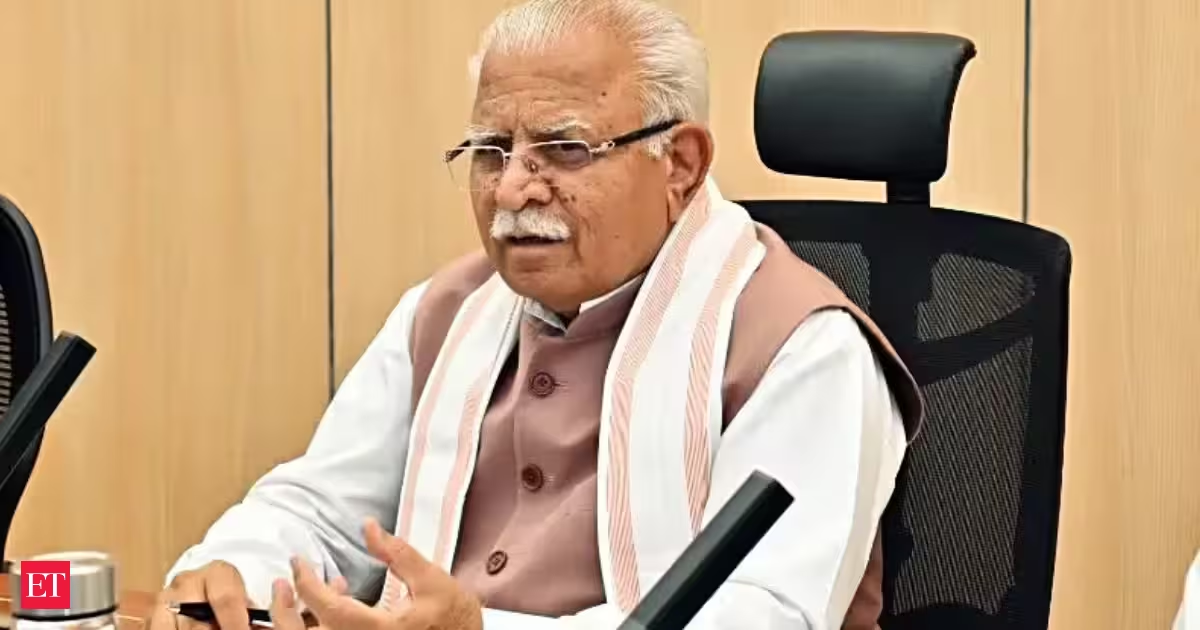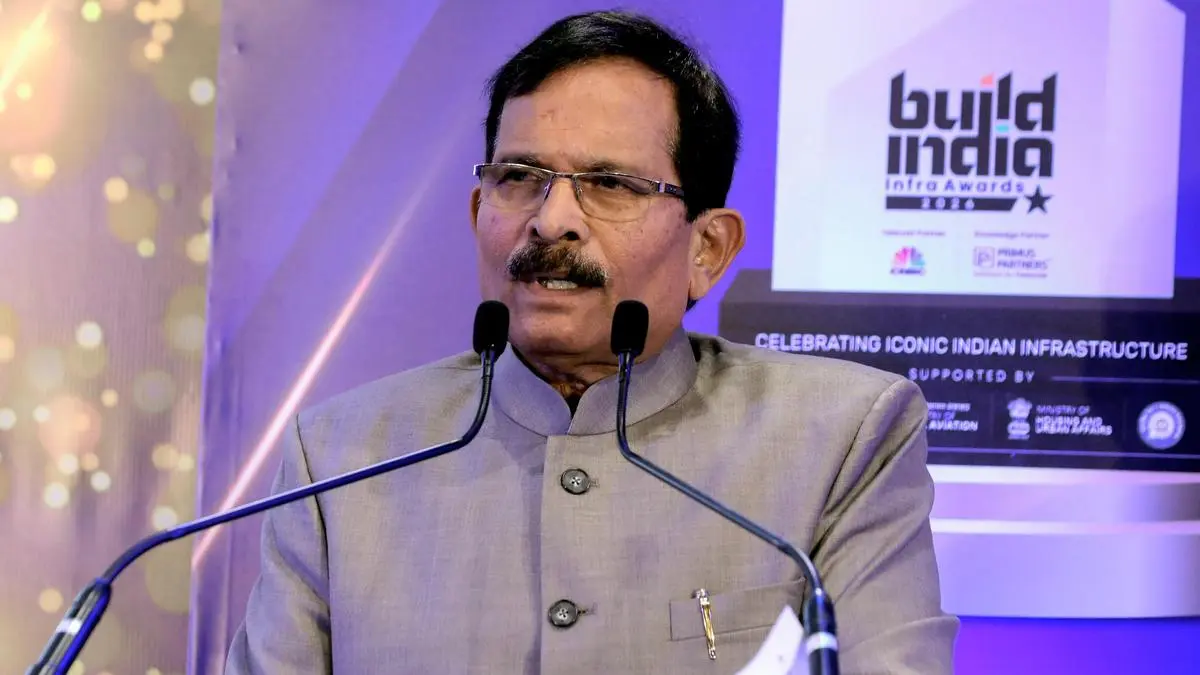
Minister of State for New and Renewable Energy, Shripad Naik
| Photo Credit:
The government has said that allowing Chinese companies to participate in power projects will enhance competition, promote price stability and address supply constraints.The government has recently allowed four entities, having substantial ownership by entities from land border sharing countries, for participation in India in the procurement bids for power projects for two years with effect from June 24, subject to such entities complying with the prescribed domestic content requirements, said Minister of State for Power Shripad Naik.“This would enhance competition, promote price stability, and address supply constraints, while supporting the objectives of the Atmanirbhar Bharat initiative,” Naik was responding to an unstarred question in Rajya Sabha on Monday.The Minister emphasised that products manufactured at such India-based facilities are subject to mandatory BIS/ IS testing and certification by designated certifying agencies. In addition, compliance with applicable Indian cyber security guidelines and standards, including mandatory cyber security testing, as may be required.“Accordingly, adequate safeguards are in place to address potential national security concerns without imposing a blanket exclusion on such entities, thereby ensuring that security interests are protected while facilitating competitive procurement,” the Minister assured the House.Two-year exemptionThe issue relates to the government granting a two-year exemption under the Public Procurement Order to four China-linked power equipment manufacturers with manufacturing operations in India.The exemption enables these companies – TBEA Energy India, Nanjing Electric India, New Northeast Electric India, and Taikai Electric (India) – to participate in public sector procurement for critical power infrastructure projects, particularly in high-voltage transformers and Gas Insulated Switchgear (GIS), where domestic manufacturing capacity remains constrained.Sources said the Power Ministry sought the exemption to avoid project delays while indigenous capabilities continue to scale. For companies across the power, transmission & distribution, renewable energy, industrial automation and infrastructure sectors, the development signals heightened competitive intensity in grid equipment procurement over the next two years.Published on July 21, 2026