In January, Department of Homeland Security (DHS) officers killed at least two people. In both cases, federal agents grasped their guns, aimed them at a peaceful citizen, and shot them dead.
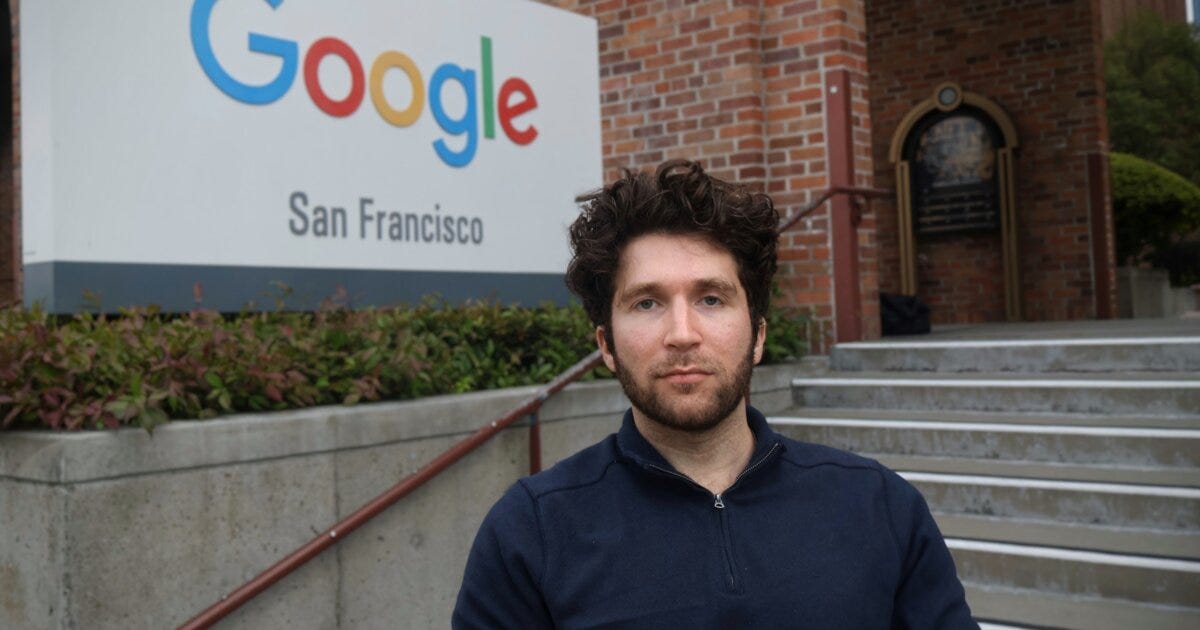
As a research scientist at Google DeepMind, I thought it was wrong that Google sold its Cloud services to the relevant parts of DHS. I set out to find the most effective way to push my company to stop.
In the months following, my campaign broadened into an attempt to prevent Google from signing an unethical military deal with the Pentagon — one with no restrictions against use for killer robots or mass surveillance. I wanted Google DeepMind to stick to its commitment against supporting killer robots.
For months, I worked to stop it. I watched powerful ethicists and institutions choose silence. Then, Google signed the Pentagon deal, so I decided I could no longer remain at the company. Google DeepMind had been, among other things, an experiment in responsible corporate governance. That experiment had finally failed.
When DeepMind’s co-founders sold the company to Google in 2014, the acquisition agreement specified, according to Google DeepMind CEO Demis Hassabis, that “no technology coming out of DeepMind will be used for military or intelligence purposes.” In 2018, the company publicly pledged to “neither participate in nor support the development, manufacture, trade, or use of lethal autonomous weapons.” That same year, Google’s original AI principles said the company would not “design or deploy AI” in weapons “whose principal purpose or implementation is to cause or directly facilitate injury to people,” nor for surveillance “violating internationally accepted norms.”