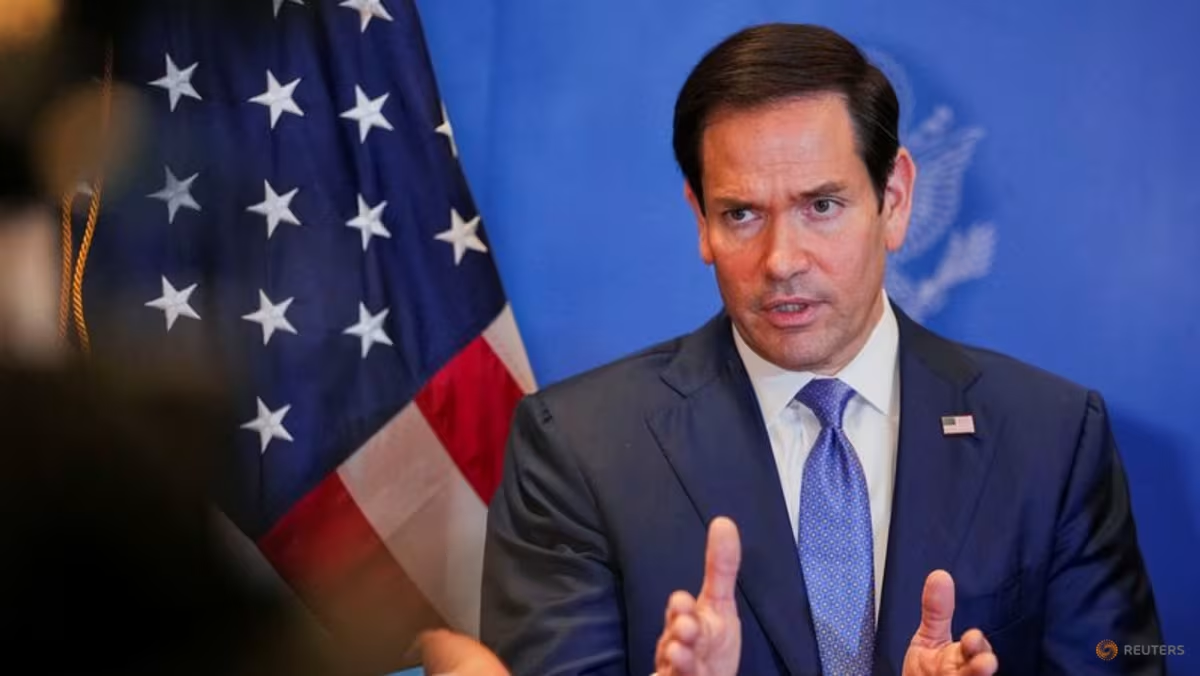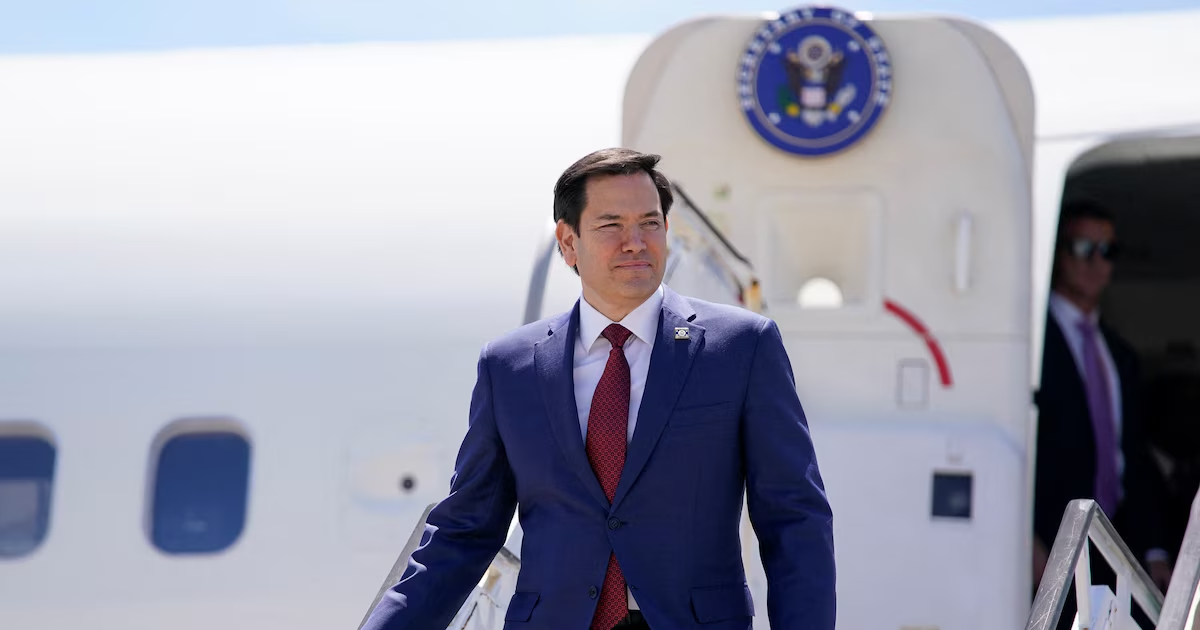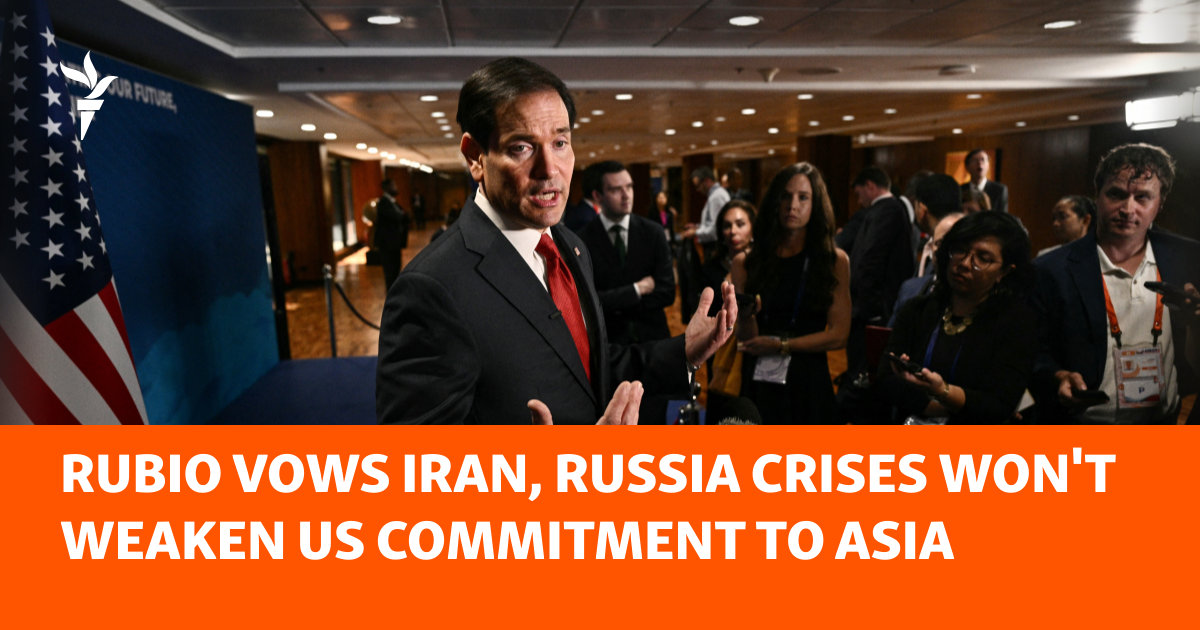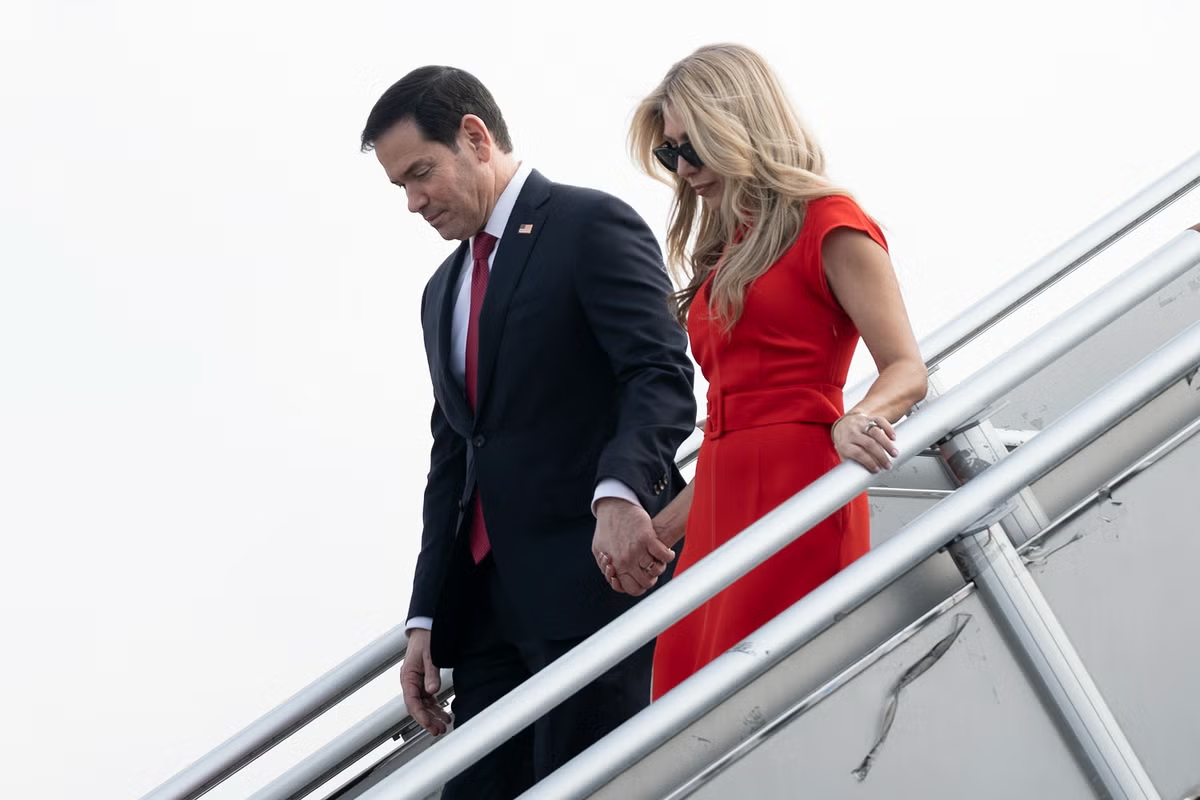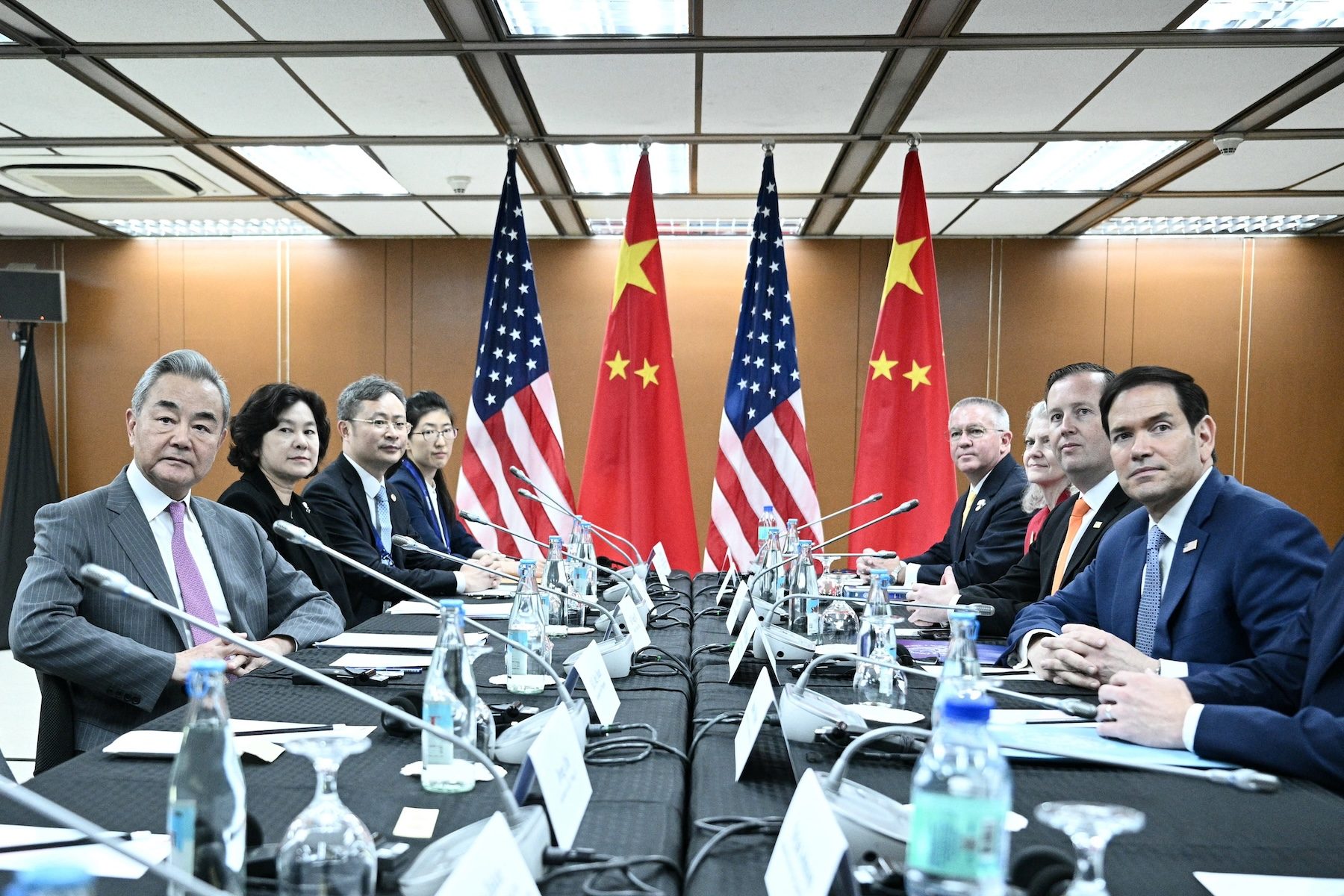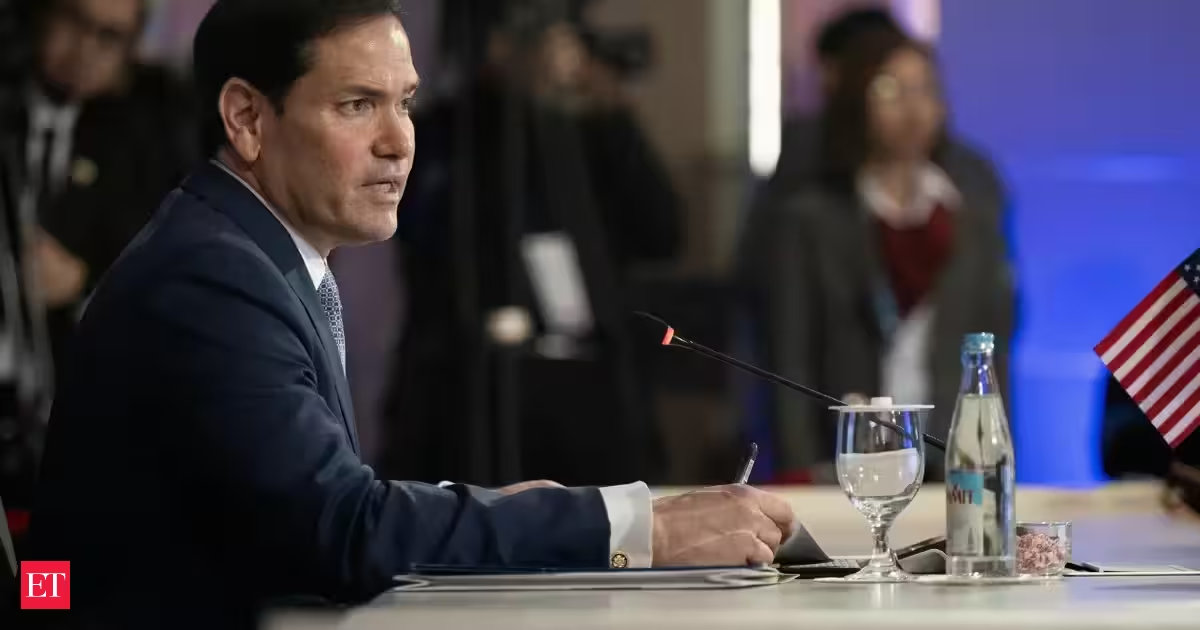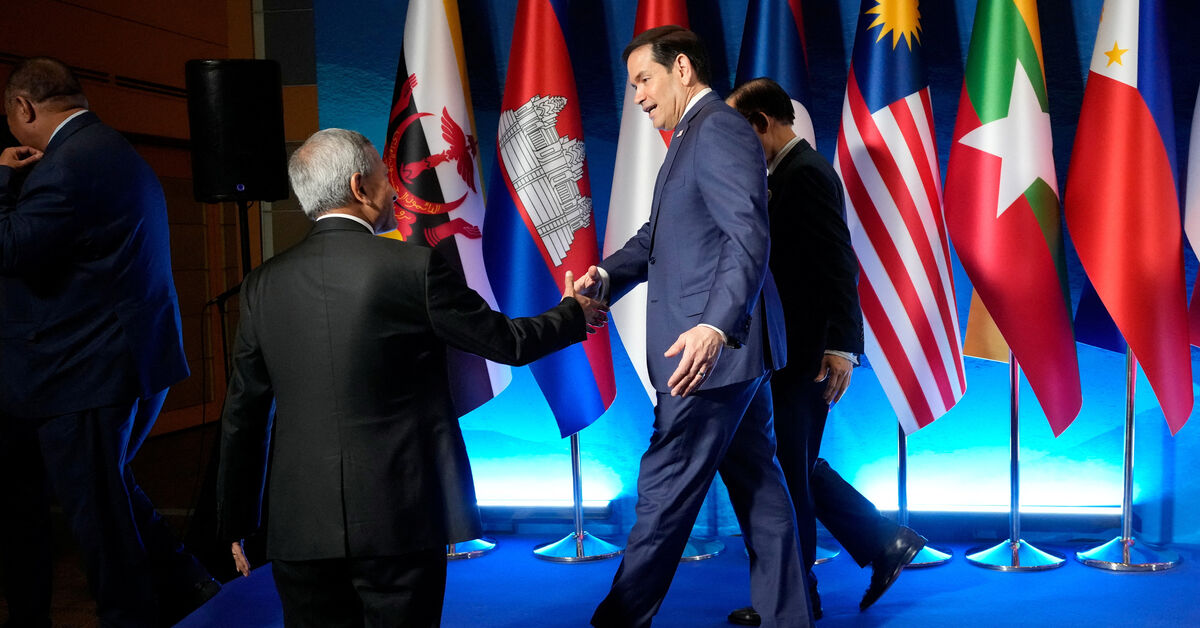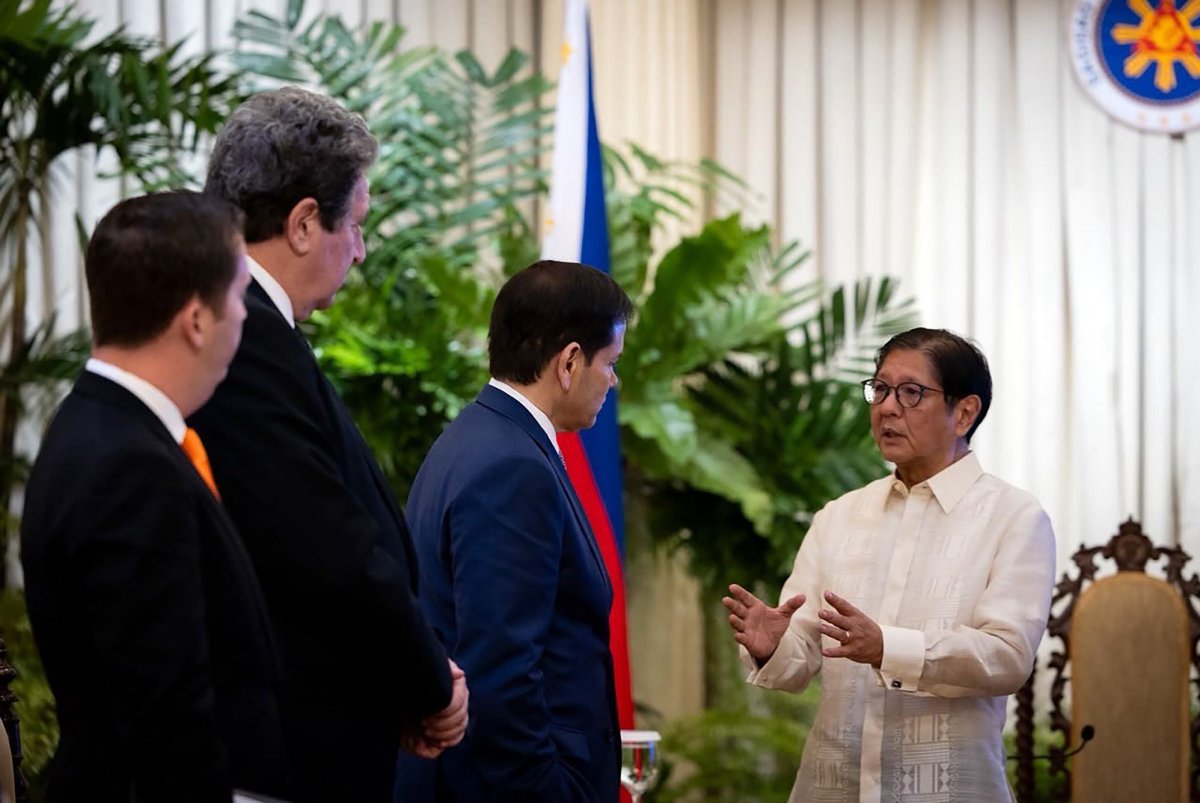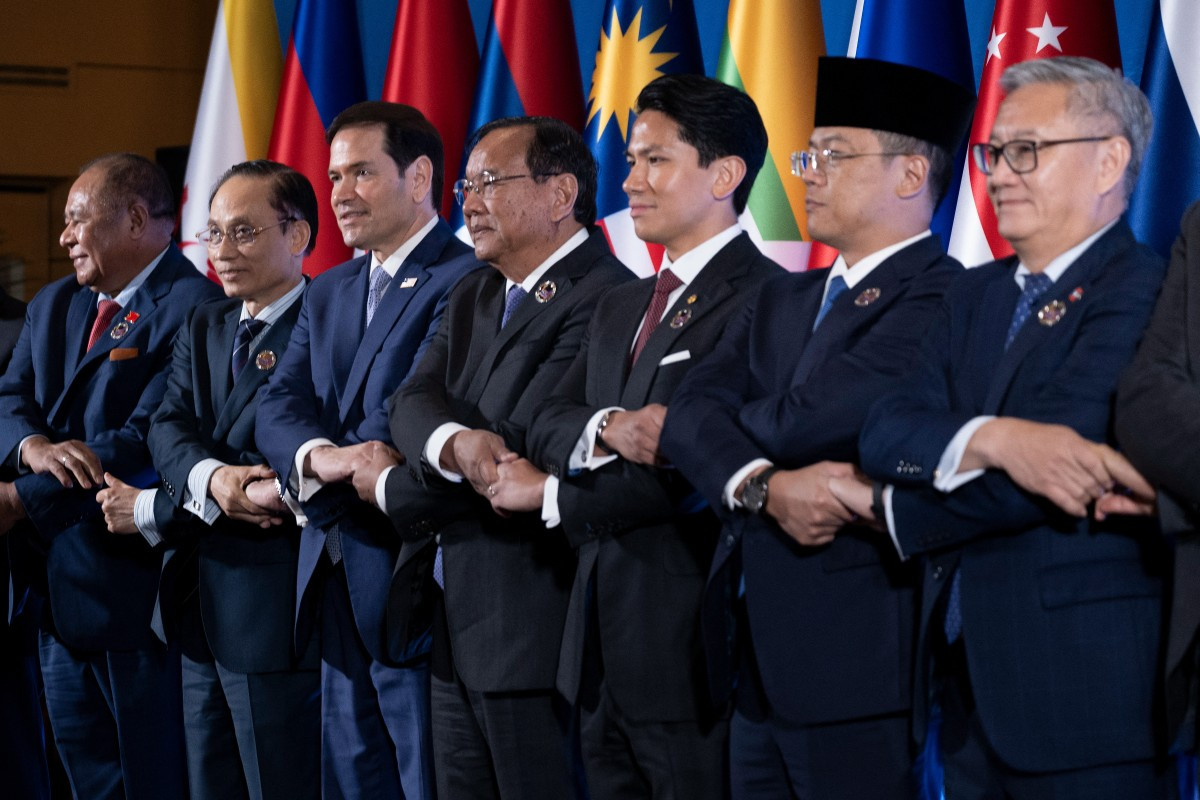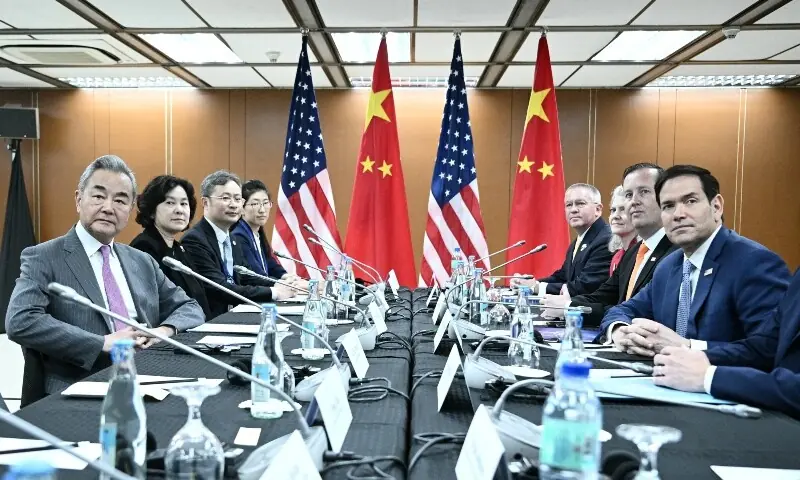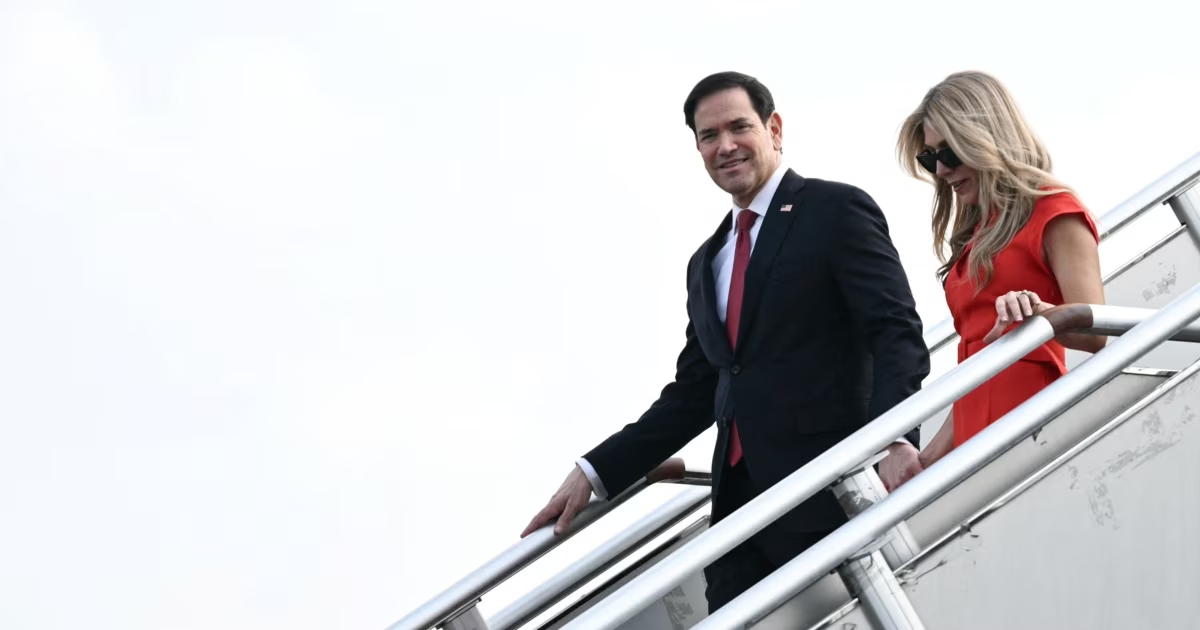
MANILA -- US Secretary of State Marco Rubio arrived in Manila on July 21 for his first visit to the Philippines as America's top diplomat, joining an Association of Southeast Asian Nations (ASEAN) ministerial gathering overshadowed by renewed conflict with Iran and rising tensions in the South China Sea.The visit comes as Washington seeks to reinforce its Indo-Pacific strategy and reassure regional allies amid crises stretching from the Middle East to Russia's war against Ukraine.Rubio said he was open to meeting both Chinese Foreign Minister Wang Yi and Russian Foreign Minister Sergei Lavrov on the sidelines of ASEAN meetings, though no formal discussions had been confirmed before his arrival."I would never tell you guys in a press conference what we would raise in meetings like that. Those are delicate matters," Rubio said before departing for Manila.Shortly after Rubio landed, the US State Department underscored Washington's focus on the South China Sea, issuing a sharply worded statement calling on Beijing to "immediately cease its destabilizing conduct."The statement condemned China's "dangerous and aggressive actions" against Philippine Navy personnel at Second Thomas Shoal, a disputed reef where a confrontation between the China Coast Guard and Philippine sailors on July 20 left a Philippine serviceman injured.Energy SecurityWhile Washington's agenda will likely center on China and the escalating conflict with Iran, the meetings are also taking place against the backdrop of other global crises, including Russia's war on Ukraine.Analysts interviewed by RFE/RL say Southeast Asian governments increasingly view those geopolitical challenges through the lens of energy security rather than military competition alone."The region is not choosing sides, it is diversifying its exposure," Peter Cockcroft, director of the Asia-Pacific Net-Zero Institute and former strategic adviser to Philippine presidents, told RFE/RL. “A chokepoint crisis a thousand miles away has done more to concentrate ASEAN minds on energy security than a decade of US-China rivalry rhetoric.”
Rubio Heads To ASEAN As Iran War Fuels Energy Security Fears
Marco Rubio arrives at ASEAN talks dominated by China tensions and the Iran war, as Southeast Asian governments increasingly weigh strategic partnerships against concerns over energy costs, shipping disruptions, inflation, and economic stability.
932 words~4 min read