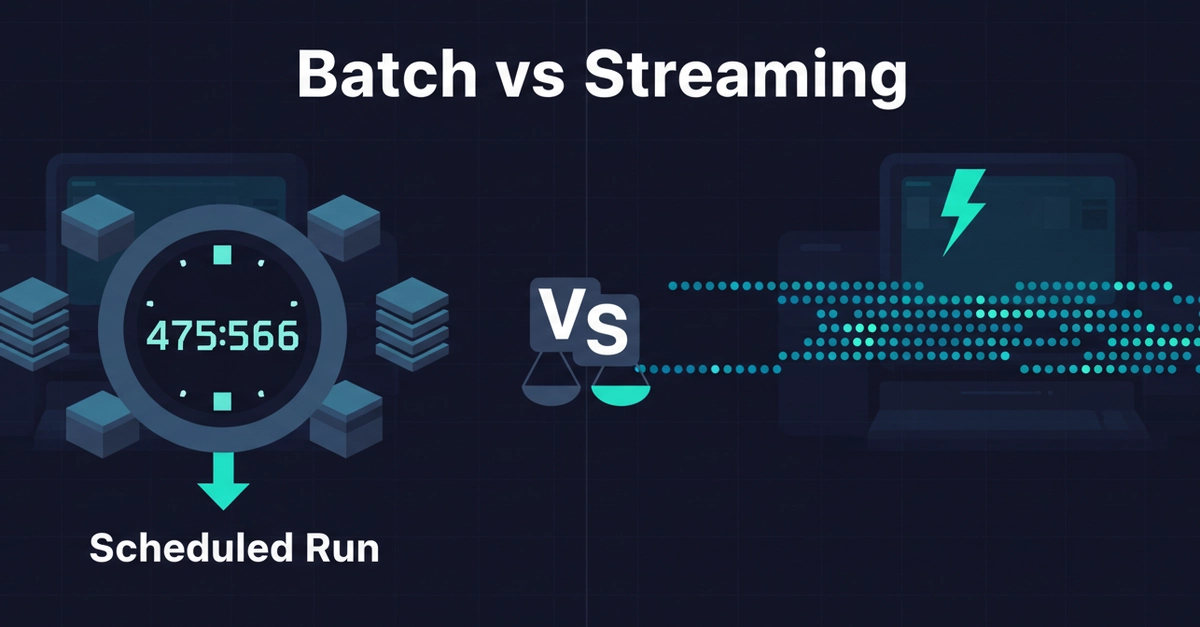
TL;DR — Streaming AI pipelines get evaluated on latency and throughput, but the deeper risk is time semantics: watermarks, allowed lateness, and out-of-order events silently change what a feature means between training and serving. This creates a distribution skew that dashboards never catch because nothing looks broken — the pipeline is fast, the model is scoring, and the numbers are just quietly wrong. The fix is treating watermark lag and replay parity as first-class evaluation metrics, not infra footnotes.
Every write-up about streaming AI infrastructure obsesses over the same numbers: end-to-end latency, events per second, p99 lookup time. Those numbers matter. They are also not where real-time AI systems actually fail. The failure mode that matters is quieter and much harder to see on a dashboard: the moment your Flink job and your training pipeline disagree about what "now" means.
That disagreement is not a bug in the traditional sense. Nothing crashes. No alert fires. The system just starts scoring against a feature distribution that no longer matches the one the model was trained on, and it does this continuously, in production, forever, unless someone goes looking for it.
The Feature That Trains on Perfect History and Serves on Approximate Present