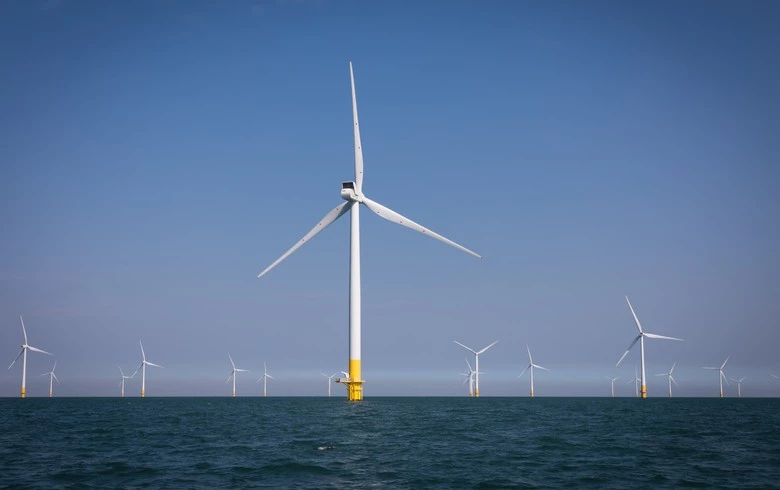
Germany “must fundamentally overhaul” its offshore wind tender design, said industry association BWO as the government prepares a reform of the offshore wind law to get expansion back on track. Offshore wind is a cornerstone of Germany’s path to cleaning its power supply due to its reliability and rapid cost reductions. However, investor confidence has been wavering in Germany, requiring the government to adjust its expansion approach.“The previous system of negative bids has failed and must be replaced immediately by Contracts for Difference,” BWO wrote, adding that the government needs to focus on implementing offshore wind projects awarded between 2023 and 2025. While bidders in offshore auctions in 2023 were ready to pay billions of euros for the right to build new projects rather than receiving subsidies, a subsequent auction round in 2025 failed to attract a single bid. Media reported in May that energy companies TotalEnergies and BP were seeking to quit major offshore wind projects in Germany which they had in 2023 agreed to run without subsidies, with TotalEnergies reportedly arguing that slow grid connections and a deteriorating economic environment prompted the decision.BWO called for the introduction of a two-sided Contract for Difference (CfD) model, where installations receive money if wholesale power prices are low, and have to give some profits back if they are high. “Such a risk-hedging instrument reduces financing risks, increases the likelihood of projects being realised and helps to ensure competitive electricity costs for industry and consumers,” BWO said.Germany connected 84 offshore wind turbines with a combined capacity of just over one gigawatt (GW) to its electricity grid in the first half of the year, bringing total installed capacity past the 10 GW mark, according to BWO data. A further 22 turbines with a capacity of around 300 megawatts are currently under construction in the German North Sea and Baltic Sea, and projects with a combined capacity of 2.6 GW have been awarded permits and have received a final investment decision, the association added. Germany aims to install 30 GW of offshore wind capacity by 2030. Under current plans, the country will not reach the target until 2032, BWO said. Renewable energy sources such as wind, solar and biomass covered 58 percent of Germany’s electricity consumption from January to June 2026, according to preliminary figures by energy industry association BDEW and research institute ZSW.
Industry calls for offshore wind tender overhaul to meet Germany’s expansion targets
Germany “must fundamentally overhaul” its offshore wind tender design, said industry association BWO as the government prepares a reform of the offshore wind law to get expansion back on track. Offshore wind is a cornerstone of Germany’s path to cleaning its power supply due to its reliability and rapid cost reductions. However, investor confidence has been wavering in Germany, requiring the government to adjust its expansion approach.“The previous system of negative bids has failed and must be replaced immediately by Contracts for Difference,” BWO wrote, adding that the government needs to focus on implementing offshore wind projects awarded between 2023 and 2025. While bidders in offshore auctions in 2023 were ready to pay billions of euros for the right to build new projects rather than receiving subsidies, a subsequent auction round in 2025 failed to attract a single bid. Media reported in May that energy companies TotalEnergies and BP were seeking to quit major offshore wind projects in Germany which they had in 2023 agreed to run without subsidies, with TotalEnergies reportedly arguing that slow grid connections and a deteriorating economic environment prompted the decision.BWO called for the introduction of a two-sided Contract for Difference (CfD) model, where installations receive money if wholesale power prices are low, and have to give some profits back if they are high. “Such a risk-hedging instrument reduces financing risks, increases the likelihood of projects being realised and helps to ensure competitive electricity costs for industry and consumers,” BWO said.Germany connected 84 offshore wind turbines with a combined capacity of just over one gigawatt (GW) to its electricity grid in the first half of the year, bringing total installed capacity past the 10 GW mark, according to BWO data. A further 22 turbines with a capacity of around 300 megawatts are currently under construction in the German North Sea and Baltic Sea, and projects with a combined capacity of 2.6 GW have been awarded permits and have received a final investment decision, the association added. Germany aims to install 30 GW of offshore wind capacity by 2030. Under current plans, the country will not reach the target until 2032, BWO said. Renewable energy sources such as wind, solar and biomass covered 58 percent of Germany’s electricity consumption from January to June 2026, according to preliminary figures by energy industry association BDEW and research institute ZSW.