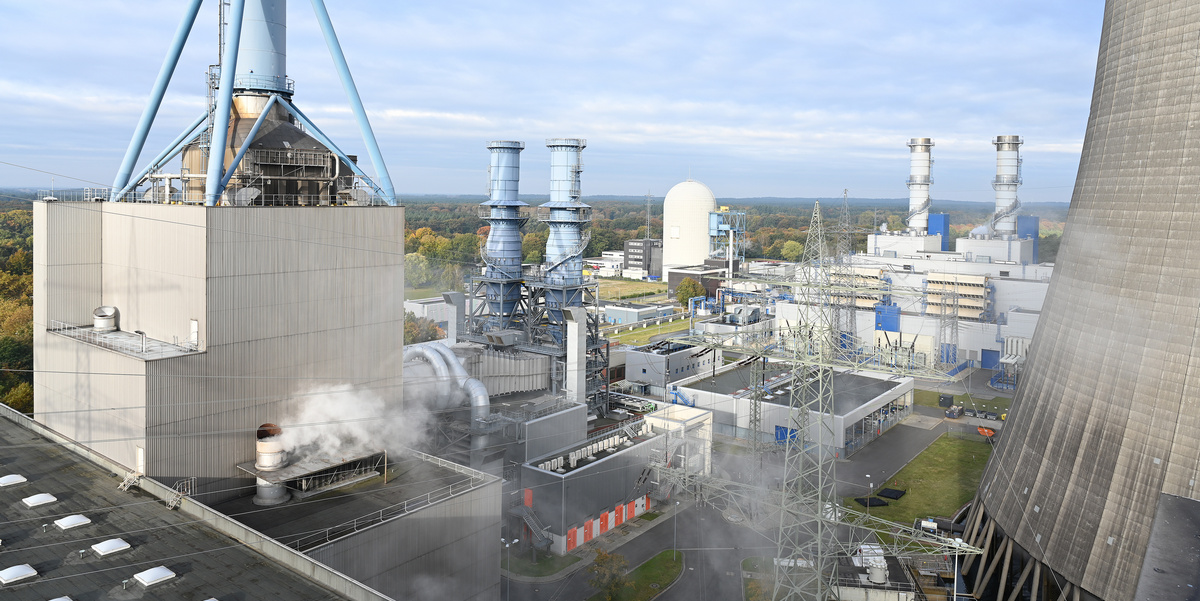
Germany’s grid agency BNetzA has launched the first round of tenders for state support for backup gas power plants designed to secure electricity supply at times when intermittent wind and solar energy is insufficient to meet demand. Power plant operators have until 8 September to submit bids for a total of 4.5 gigawatts (GW) of so-called “controllable capacity” – plants that can be ramped up or down relatively quickly and run continuously over long periods to balance fluctuating renewable output. “Our aim is for the first plants to be built as soon as possible,” said BNetzA head Klaus Müller. Successful bidders receive remuneration for 15 years once their plant is built and available to supply electricity when needed, providing the financial incentive needed to invest in the first place. The maximum subsidy level in this round is 244,000 euros per megawatt of capacity per year, BNetzA said. The results of the auction will be announced by 3 November 2026. The BNetzA will open another round of tenders on 10 November.The new gas plants are seen as crucial for enabling Germany to phase out coal as planned. The country is exiting the most climate-damaging form of fossil fuel electricity generation and rapidly expanding renewable energy as part of its efforts to build a climate-neutral society by 2045. To secure supply, it aims to build up the alternative generation capacity. Germany has decided that gas-fired units will play a major role during a transitional period, to later be converted to run on green hydrogen. Flexibility options such as large-scale batteries or demand management will also play a role. The government also plans to introduce a capacity market by 2027 to ensure supply security from 2032, beyond the earlier auctions.The law to set up the auctions was debated for years, and parliament gave the final green light earlier this month. The government has argued that investment in power plants needed to secure supply has been hesitant – or in recent years, absent altogether – making state support necessary. Plans for auctions were delayed several times, also due to the breakup of Germany’s previous coalition government.
Germany launches first state support auction for backup gas power plants
Germany’s grid agency BNetzA has launched the first round of tenders for state support for backup gas power plants designed to secure electricity supply at times when intermittent wind and solar energy is insufficient to meet demand. Power plant operators have until 8 September to submit bids for a total of 4.5 gigawatts (GW) of so-called “controllable capacity” – plants that can be ramped up or down relatively quickly and run continuously over long periods to balance fluctuating renewable output. “Our aim is for the first plants to be built as soon as possible,” said BNetzA head Klaus Müller. Successful bidders receive remuneration for 15 years once their plant is built and available to supply electricity when needed, providing the financial incentive needed to invest in the first place. The maximum subsidy level in this round is 244,000 euros per megawatt of capacity per year, BNetzA said. The results of the auction will be announced by 3 November 2026. The BNetzA will open another round of tenders on 10 November.The new gas plants are seen as crucial for enabling Germany to phase out coal as planned. The country is exiting the most climate-damaging form of fossil fuel electricity generation and rapidly expanding renewable energy as part of its efforts to build a climate-neutral society by 2045. To secure supply, it aims to build up the alternative generation capacity. Germany has decided that gas-fired units will play a major role during a transitional period, to later be converted to run on green hydrogen. Flexibility options such as large-scale batteries or demand management will also play a role. The government also plans to introduce a capacity market by 2027 to ensure supply security from 2032, beyond the earlier auctions.The law to set up the auctions was debated for years, and parliament gave the final green light earlier this month. The government has argued that investment in power plants needed to secure supply has been hesitant – or in recent years, absent altogether – making state support necessary. Plans for auctions were delayed several times, also due to the breakup of Germany’s previous coalition government.