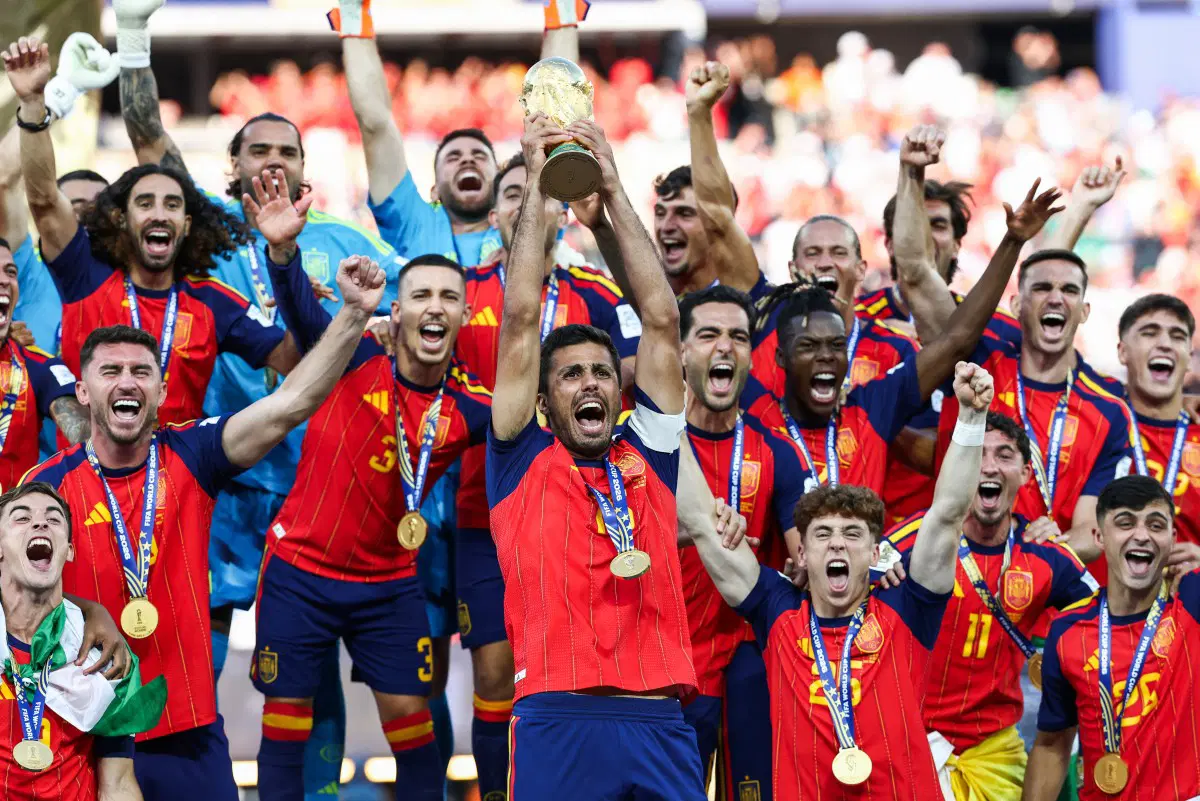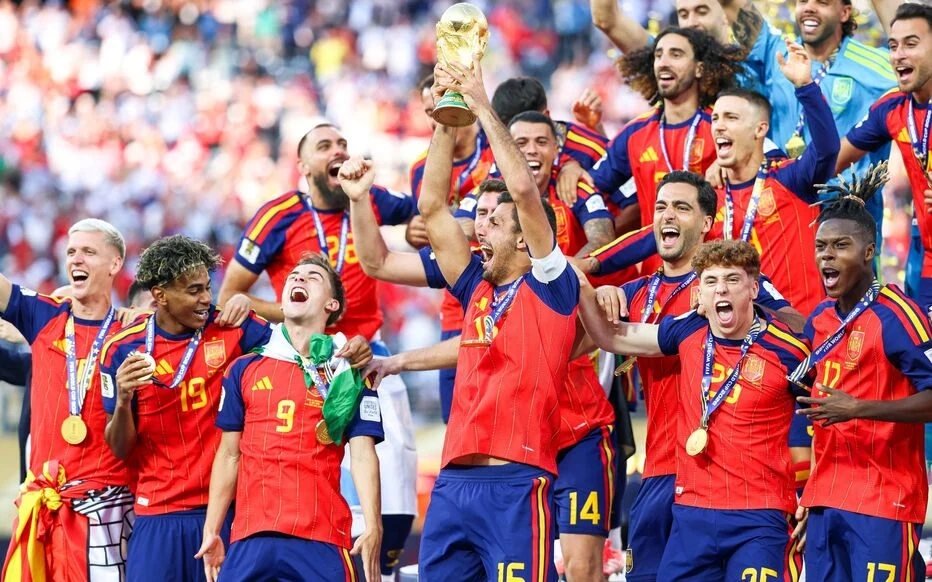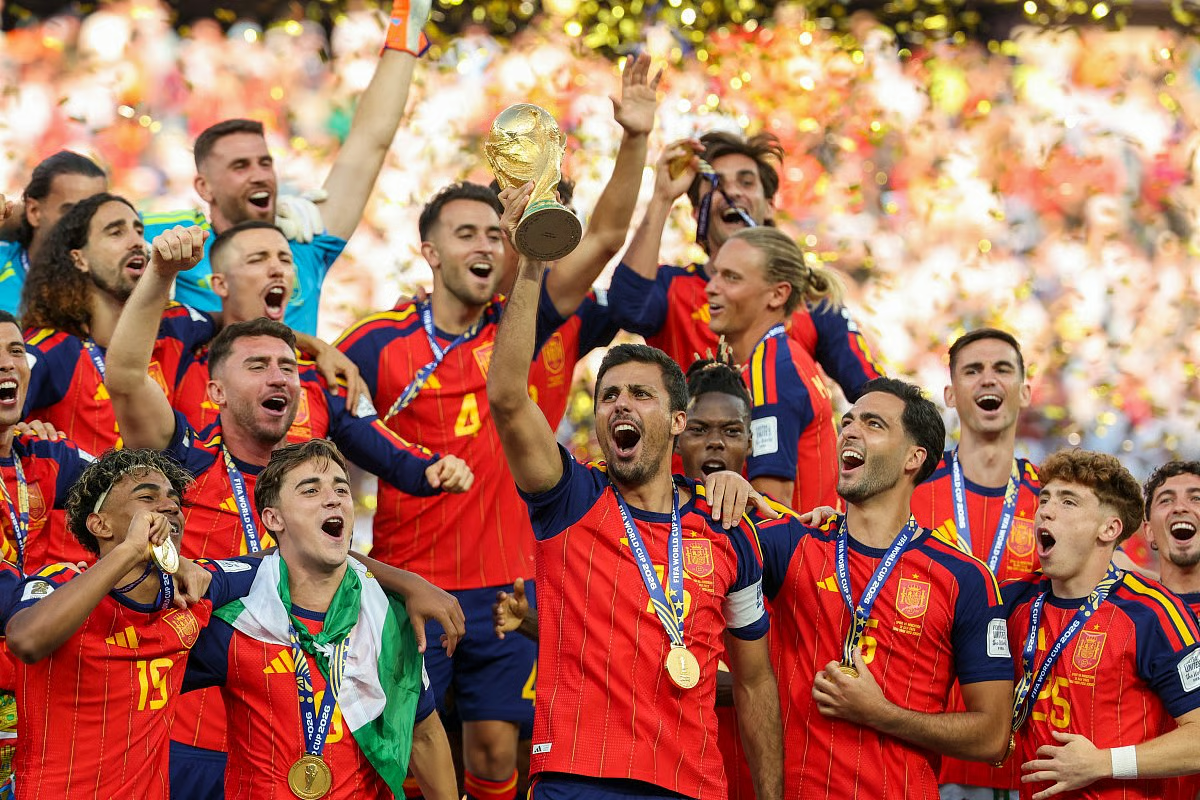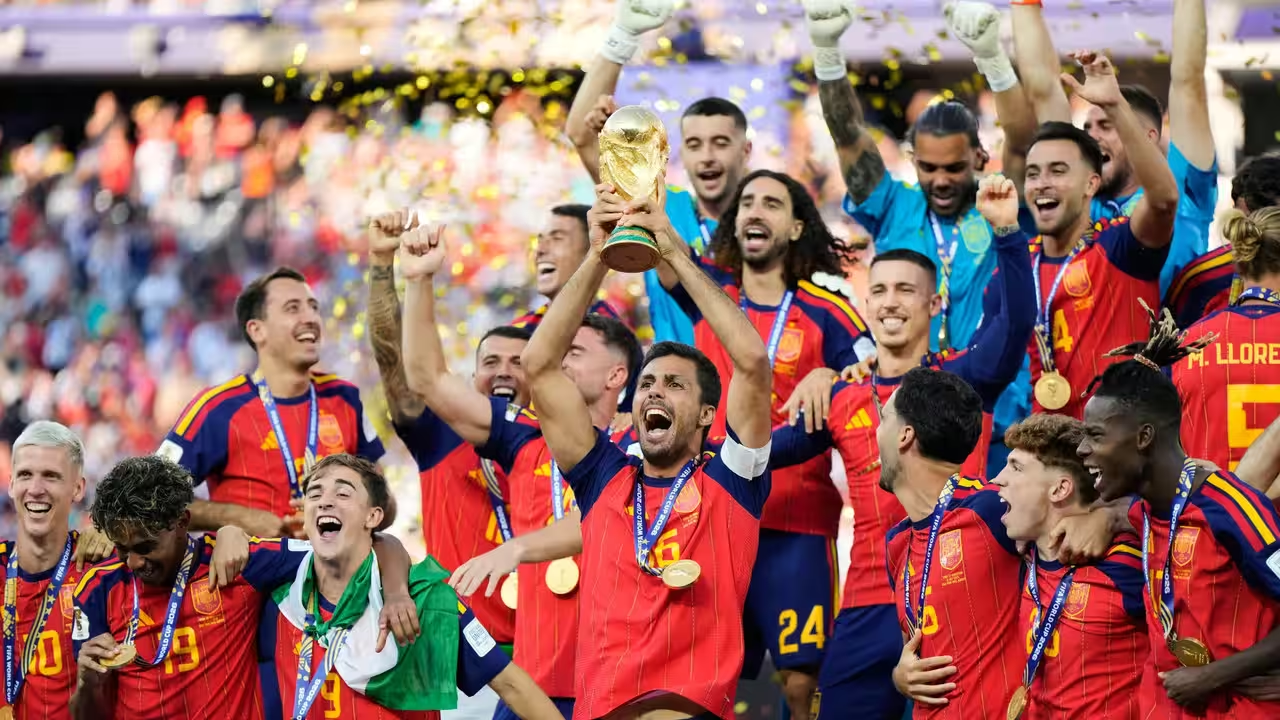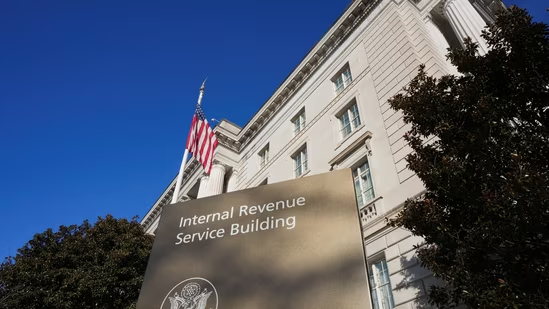
Spain won the FIFA World Cup after beating Argentina 1-0 in the final on Sunday. Spain also won the tournament's first-place prize of $50 million from FIFA. But Spain will not get to keep all of that prize money because the US Internal Revenue Service (IRS) is expected to tax part of it.Spain’s $50 million FIFA World Cup prize could be taxed by the IRS (REUTERS/Ken Cedeno/File Photo) (REUTERS)The reason is simple – the World Cup was co-hosted by the United States, so money earned in the US is generally taxable there. Experts say it does not matter which country wins the World Cup because the IRS will still collect taxes from income earned in the US, as per Robert Raiola, director of the sports and entertainment group at PKF O'Connor Davies, told MarketWatch.IRS taxes World Cup earningsThe IRS is expected to collect taxes not just from players, but also from coaches, team staff and referees who earned money during the tournament in the US. The World Cup offered a total prize pool of $655 million, which was shared among the 48 participating national teams based on how they performed.Besides prize money, many players can also earn extra money through sponsorships, endorsement deals, paid appearances and other commercial activities linked to the World Cup. All of this extra income can also create tax obligations, depending on where the money was earned. Tax experts say the World Cup is one of the most complicated sporting events when it comes to taxes.Why World Cup taxes are complexRob Fagan, senior manager at KPMG's Washington National Tax practice, told MarketWatch that the World Cup's tax complexity was 8 out of 10 because of the many international tax rules involved. Every team that played in the tournament is expected to leave with some kind of tax bill, not just memories of the event. Professional athletes already deal with complicated taxes because they earn money in different countries with different tax laws.Also read: Why SpaceX shares are slumping after a blockbuster IPO: ExplainedPlayers may also receive bonuses for meeting performance targets, making their income harder to calculate than a normal salary. Some players are treated as employees, while others may be considered independent contractors for tax purposes, making the rules even more complex. Many players also earn money from royalties, endorsements and business deals, adding more tax complications.How tax treaties affect playersThe World Cup creates even more challenges because international tax treaties can affect how much tax a player has to pay. These tax treaties are designed to stop people from paying tax twice on the same income. Some tax treaties include special rules for athletes and entertainers that can reduce or remove US taxes in certain cases, Rob Fagan told MarketWatch. However, those benefits may disappear if the amount of money earned crosses certain limits.The United States has a tax treaty with Spain, but it does not have one with Argentina, according to the IRS database. FIFA does not directly pay prize money to players. Instead, it gives the money to each country's football federation. Each national football federation decides how the prize money is shared among players, coaches, managers and support staff. Even if a football federation is tax-exempt, that does not mean the players or staff automatically become tax-free.Fagan said many people wrongly believe that if the federation pays no tax, the players also do not have to pay taxes. Tax rules can even be different for players on the same team because each player may have a different country of residence, club or tax situation, as per Christopher Hall, director of the international tax group at PKF O'Connor Davies, told MarketWatch. Hall said tax experts must examine every player's complete situation, including their support staff, to know exactly how much tax is owed.IRS guide for foreign teamsBefore the tournament, the IRS worked with tax authorities in Canada and Mexico to decide how income would be divided among the three host countries. The three countries agreed on rules to identify which part of the income was earned in the US, Canada and Mexico. The IRS also released a special "tax playbook" for foreign players, coaches, staff, media workers and businesses coming to the World Cup.The guide explained the tax forms and rules participants should follow while working in the US. The IRS ended the guide with one main piece of advice – hire a tax professional because the US tax system is very complicated for international visitors. Federal taxes are only one part of the story because some US states also collect income taxes.What is the jock tax?World Cup matches were played across nine US states and 11 cities. Texas, Florida and Washington do not charge state income tax, but several other host states do. This brings in what tax experts call the "jock tax." A jock tax means athletes may have to pay income tax in the state where they earned the money, even if they live somewhere else. Some taxpayers may later receive tax credits depending on agreements between different states.Raiola said famous athletes are closely watched by state tax authorities because they earn large amounts of money, according to MarketWatch. The World Cup final was played in New Jersey, which charges state income tax. Fagan said New Jersey does not follow international tax treaties when it comes to state income taxes. Raiola said players from both Spain and Argentina will definitely have to pay New Jersey state taxes on income earned from the final.
Why the IRS will take a cut of Spain's $50 million FIFA World Cup prize money: Explained
Spain’s $50 million FIFA World Cup prize could be taxed by the IRS because the tournament was hosted in the US, with players also facing state jock taxes.
914 words~4 min read