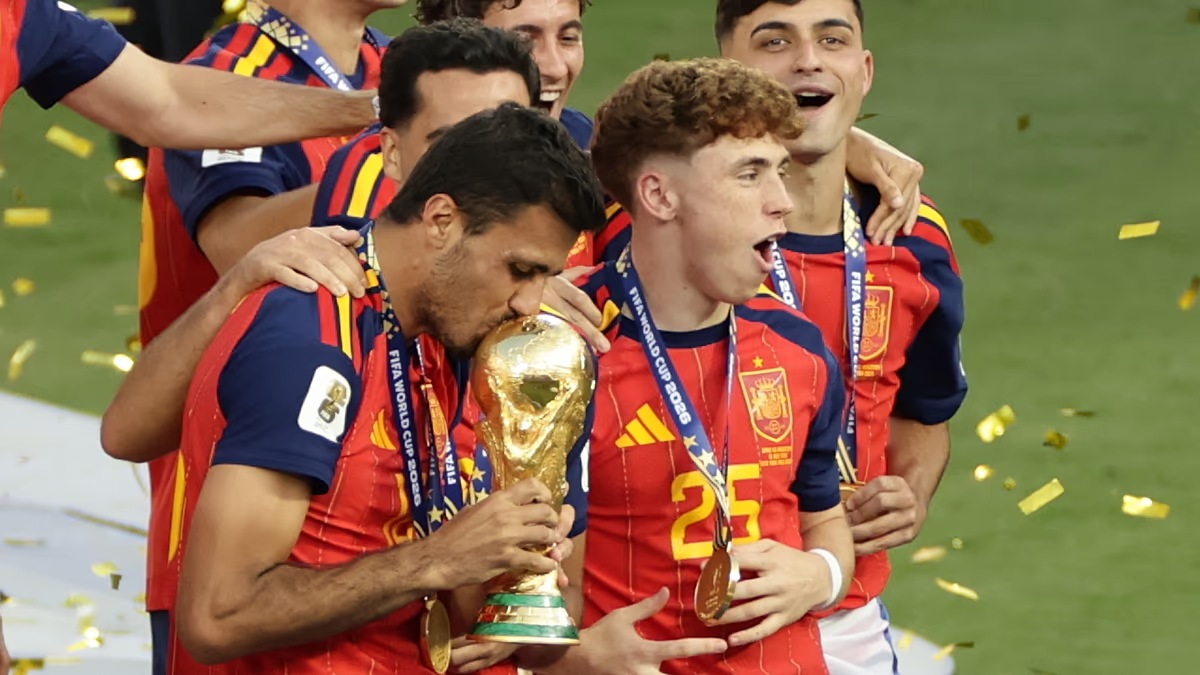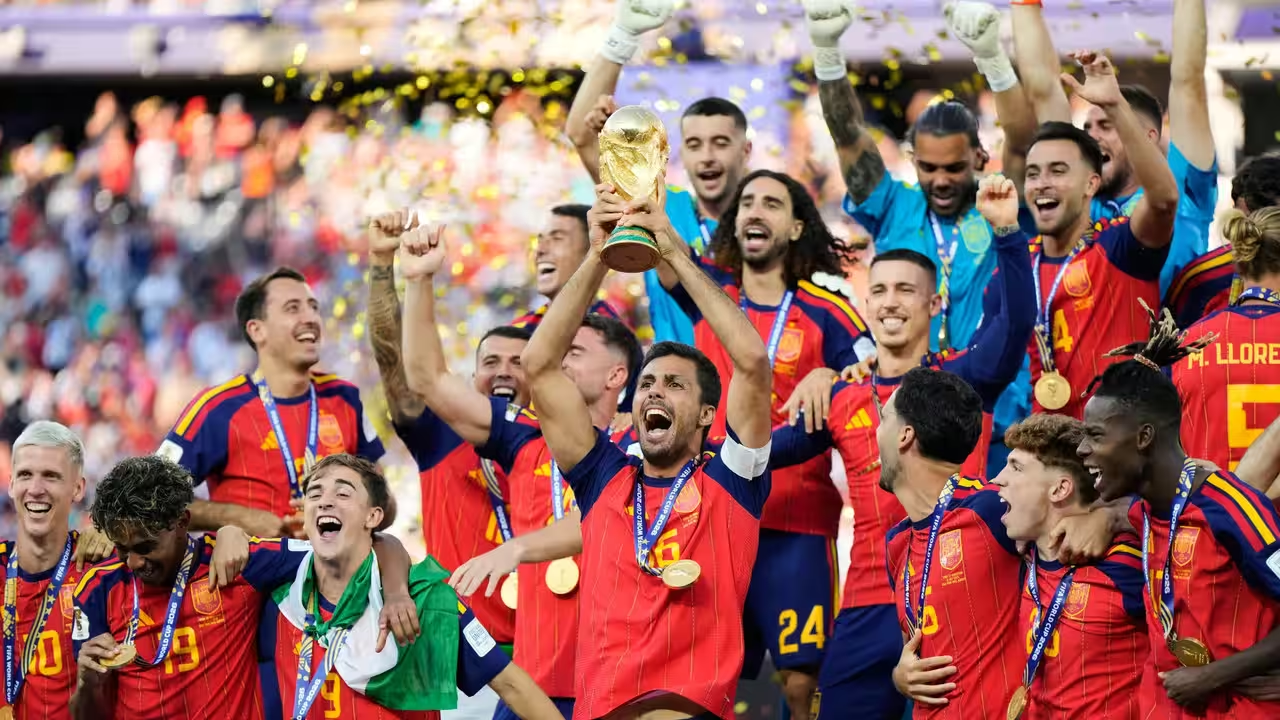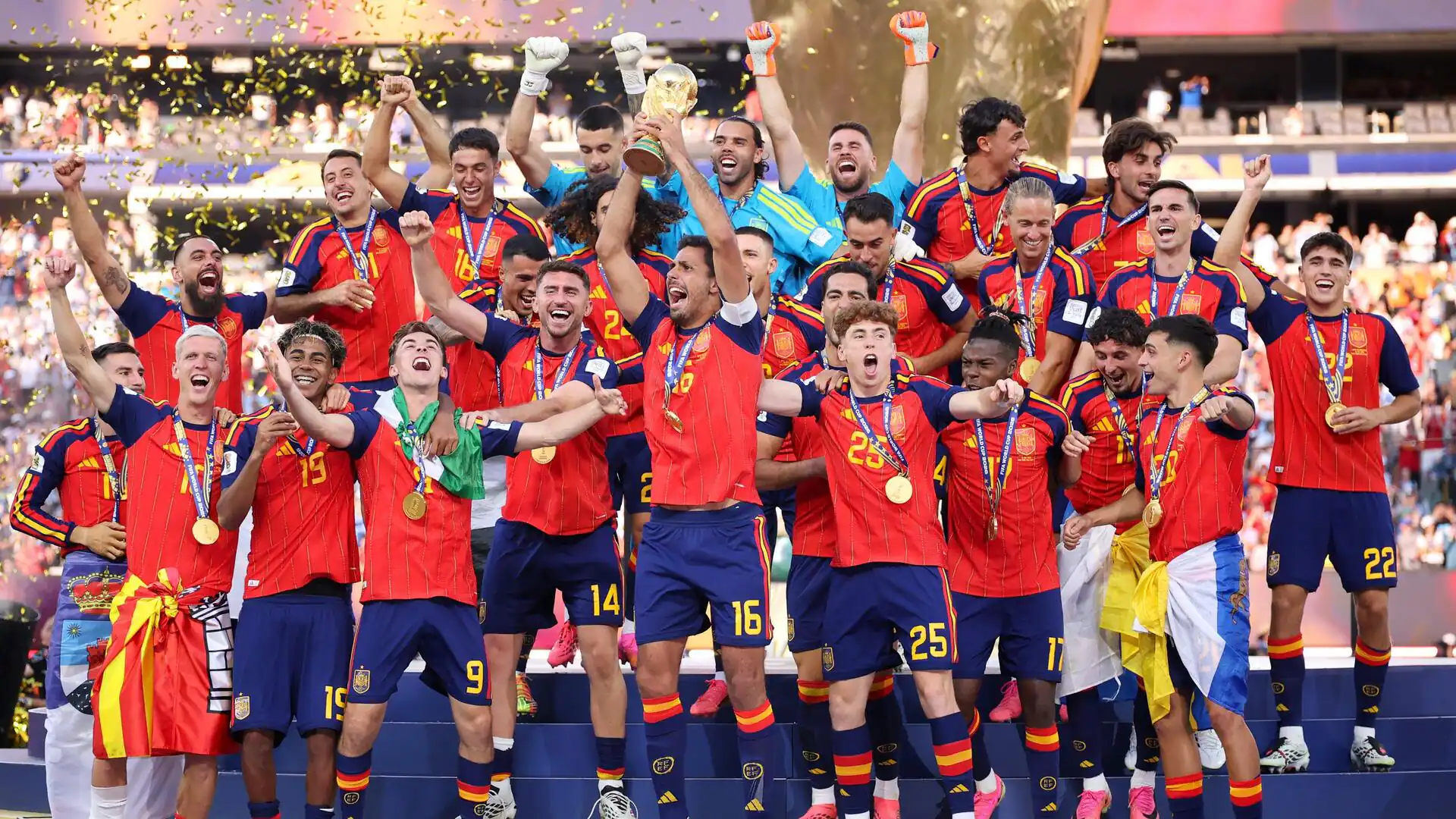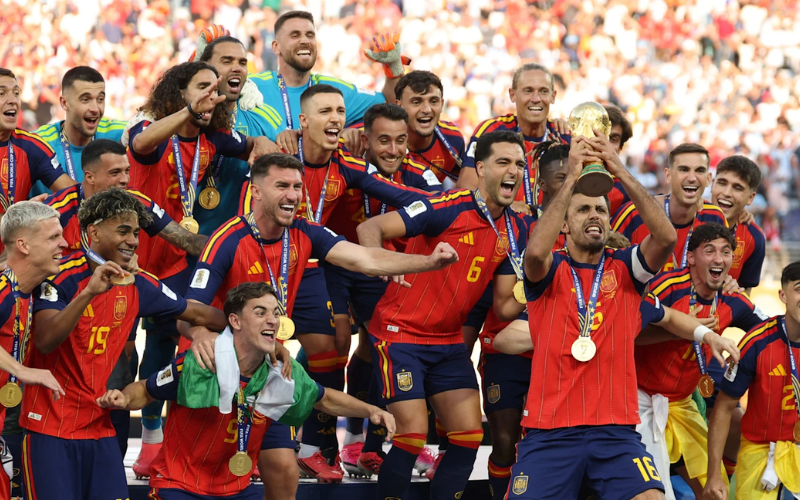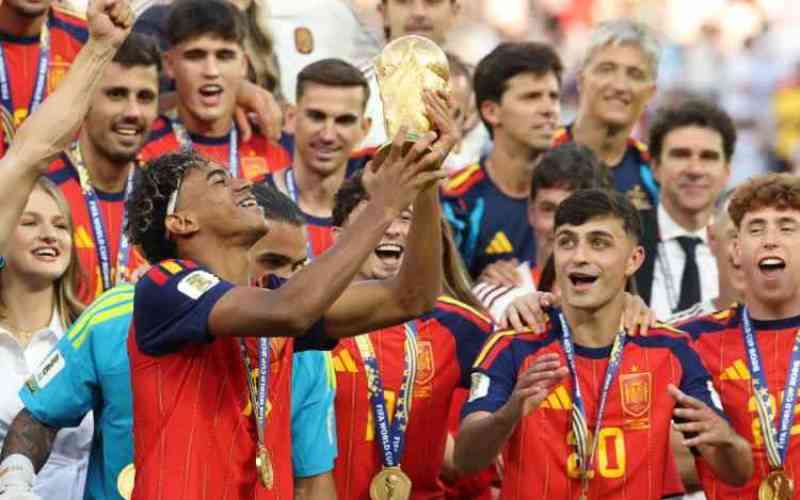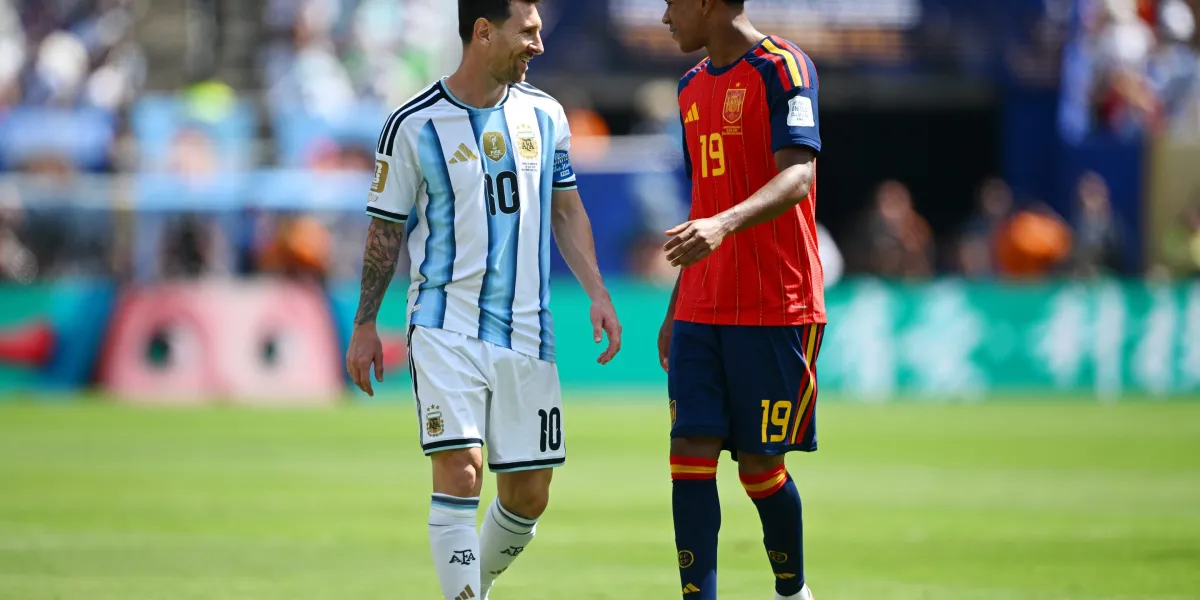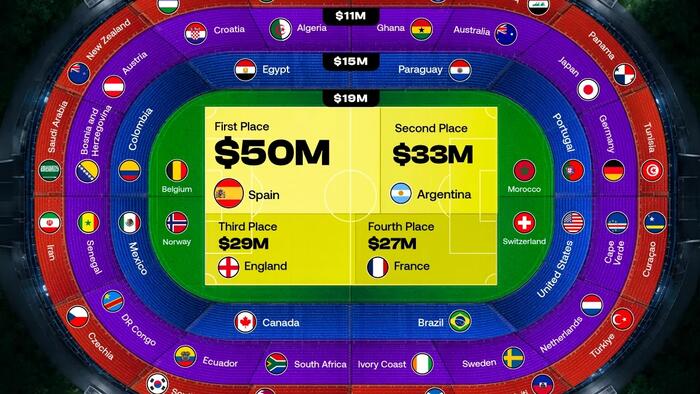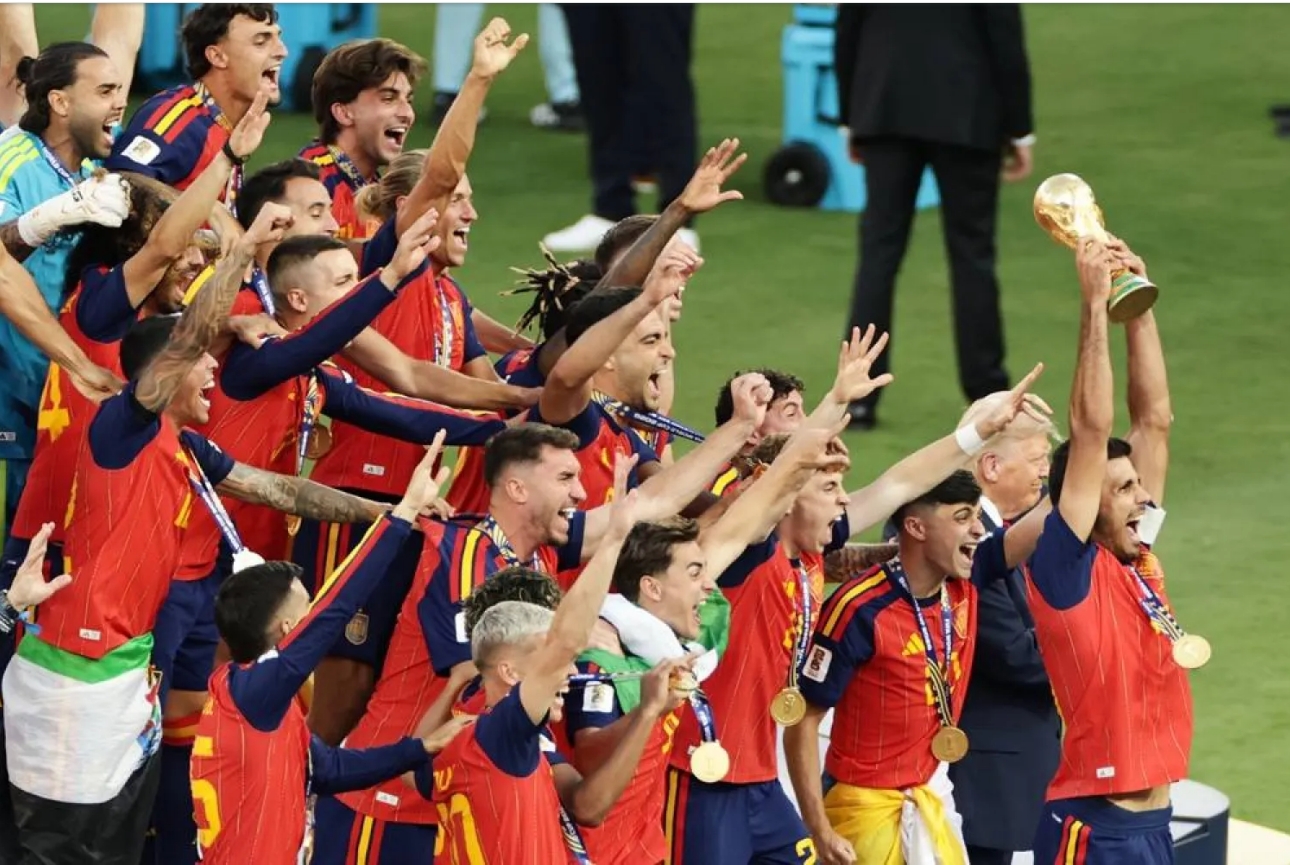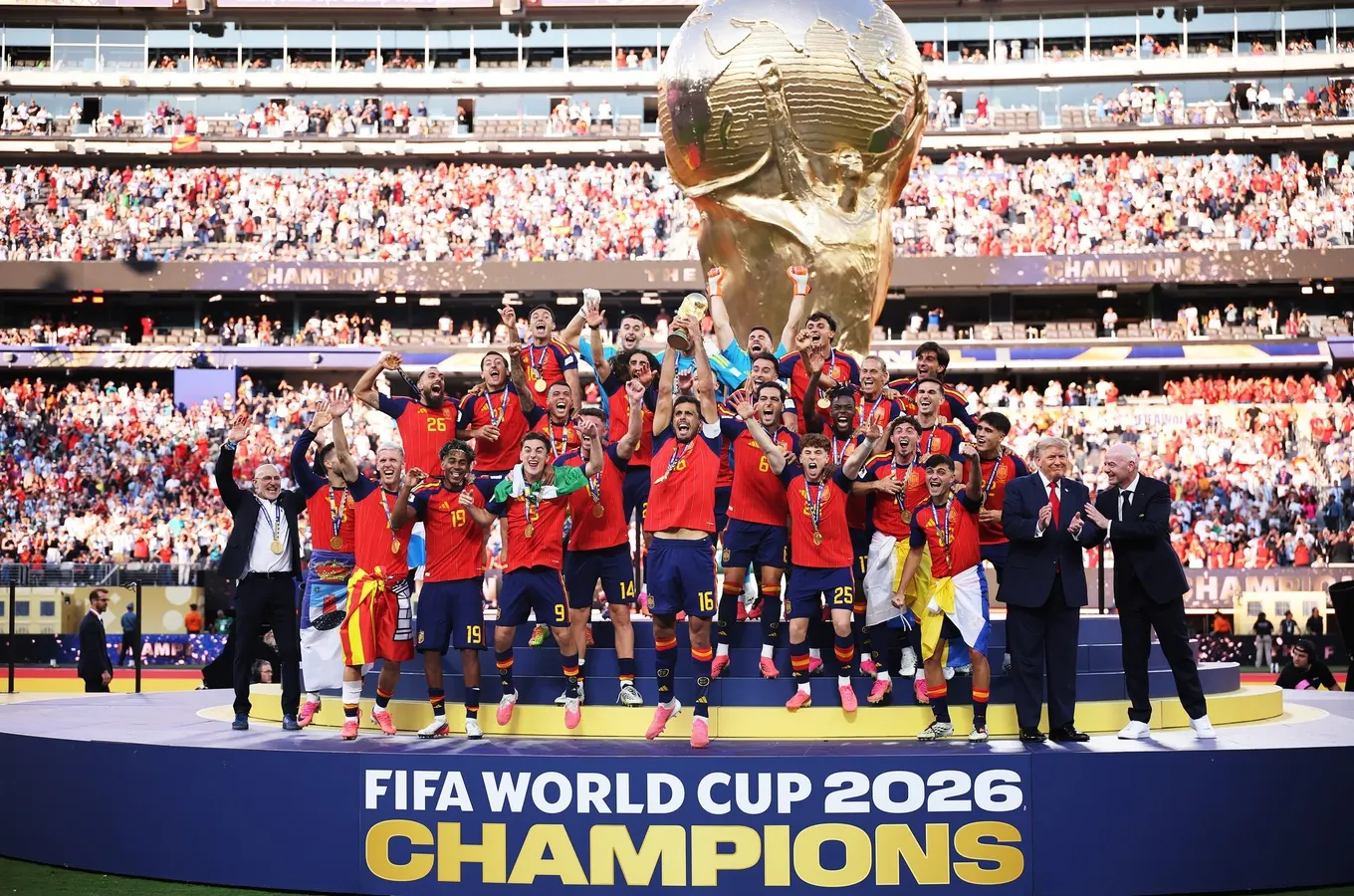
EAST RUTHERFORD, NEW JERSEY - JULY 19: Rodri #16 of Spain lifts the FIFA World Cup Winner’s Trophy after the team’s victory following during the FIFA World Cup 2026 Final match between Spain and Argentina at New York New Jersey Stadium on July 19, 2026 in East Rutherford, New Jersey. (Photo by Hector Vivas - FIFA/FIFA via Getty Images)FIFA via Getty ImagesIt took 106 minutes for Spain to find a breakthrough against a resolute Argentina side, but when Ferran Torres hit a rocket of a shot past Emiliano Martínez, it was a goal worth its weight in gold. Not only did it give Spain the 1-0 win at the MetLife Stadium in New Jersey, but it also gave Spain a second World Cup, 16 years after Andrés Iniesta scored against The Netherlands for La Roja to lift the trophy in South Africa.In addition to sparking wild scenes of celebration across Spain, with many of its 60 million population watching the game in bars and restaurants after buying jerseys, flags and memorabilia, there is a direct financial impact from prize money and sponsorships.For the Royal Spanish Football Federation (RFEF), the win comes with a specific price tag.FIFA prize money for World Cup winnerFIFA confirmed in December 2025 that the winner of the 2026 World Cup would receive $50 million, a record for the tournament and up from the $42 million Argentina collected for winning in Qatar in 2022. That figure is itself up from the $38 million France earned in 2018.The 2026 tournament carries FIFA’s largest prize pool in World Cup history with $655 million split among the 48 qualified nations, with a further $72 million in preparation funding on top, for a total financial contribution of $727 million. Every team that reached the tournament was guaranteed at least $12.5 million before playing a match as even teams eliminated in the group stage still walked away with $9 million.MORE FOR YOUThe jump from 32 to 48 teams in 2026 is the structural reason behind the bigger numbers as more teams involved means more matches, more ticket sales, more broadcast windows, and more sponsorship inventory for FIFA to sell.How Spain shares it $50 millionThe prize money is paid directly to the RFEF not to the players. It is then up to the federation to decide how much of that reward gets distributed among the squad, the coaching staff, and support personnel, with the remainder going toward the federation’s own operations and development budget.Spanish outlet Diario AS reported that around 45% of Spain’s $50 million prize is earmarked for player bonuses, roughly $22.5 million split among the 26-man squad. That works out to about $865,000 gross per player, on top of whatever additional bonuses individual players receive through their personal sponsorship deals tied to the win.The boost to a World Cup winner from sponsorsBeyond the FIFA check, the RFEF’s win reshapes the value of its own commercial portfolio. The federation has built a roster of 35 sponsor companies around the national team.Adidas sits at the top as technical sponsor and kit supplier, a relationship that stretches back more than three decades and was extended through the current cycle after Adidas fought off competition to keep the rights. Below Adidas sit the principal partners, including Mapfre, which signed a deal running through 2030 to become official insurer of the men’s, women’s, and under-21 teams, Iberdrola, Halcón Viajes, Ebro, and Telefónica’s Movistar brand, which renewed through 2030 to cover the men’s, women’s, and youth national teams across a run of tournaments beginning with this World Cup.A World Cup title revalues those partnerships instantly. Massive television audiences and a surge in digital engagement around the final give every associated brand a visibility spike that money alone struggles to buy. It also gives the RFEF new leverage to court additional global partners heading into the next commercial cycle, positioning La Roja as what the federation calls a showcase for incoming sponsors.What makes this particularly unique for Spain is that they have replicated their success in both the men and women’s game. For the first time in history, one nation is the current champion of the World Cup across both genders. That means even greater appeal for sponsors.FIFA’s climbing revenues funding greater prize money FIFA’s original budget for the 2023-26 commercial cycle targeted $11 billion in revenue. That projection has since been revised up to roughly $13 billion, with close to $8.9 billion of that generated by the World Cup itself, a 72% increase over the cycle that ended with Qatar in 2022 and more than double the revenue generated during the 2015-18 cycle.Broadcasting rights remain FIFA’s single largest income stream, projected to bring in close to $4 billion for the 2026 tournament alone. Sponsorship revenue is expected to add roughly $1.8 billion to $2.8 billion depending on the estimate, boosted by new commercial partnerships secured ahead of the tournament. Matchday revenue, driven by ticketing and hospitality, is the fastest-growing segment of all, forecast to jump as much as 220% compared with Qatar on the back of higher ticket volumes and prices.Expanding the field from 32 teams to 48 pushed the match count from 64 to 104, handing FIFA 40 additional games worth of broadcast inventory, ticket sales, and sponsorship placement to sell.Since FIFA began publishing prize figures in 1982, when Italy earned $2.2 million for winning in Spain, the champion’s prize has grown more than twentyfold. Every edition since Russia 2018 has broken the revenue record set before it, and the trajectory shows no sign of flattening ahead of the next World Cup, which Spain will help host in 2030.For Spain, the win closes out a run that also included the 2024 European Championship, giving the federation two major men’s titles in as many years and a fresh case to make to the sponsors lining up for the next cycle.
How Much Is The 2026 World Cup Win Worth To Spain?
Spain clinched their second World Cup title with a 1-0 victory over Argentina, securing a record $50 million prize from FIFA, in addition to sponsorships.
973 words~4 min read