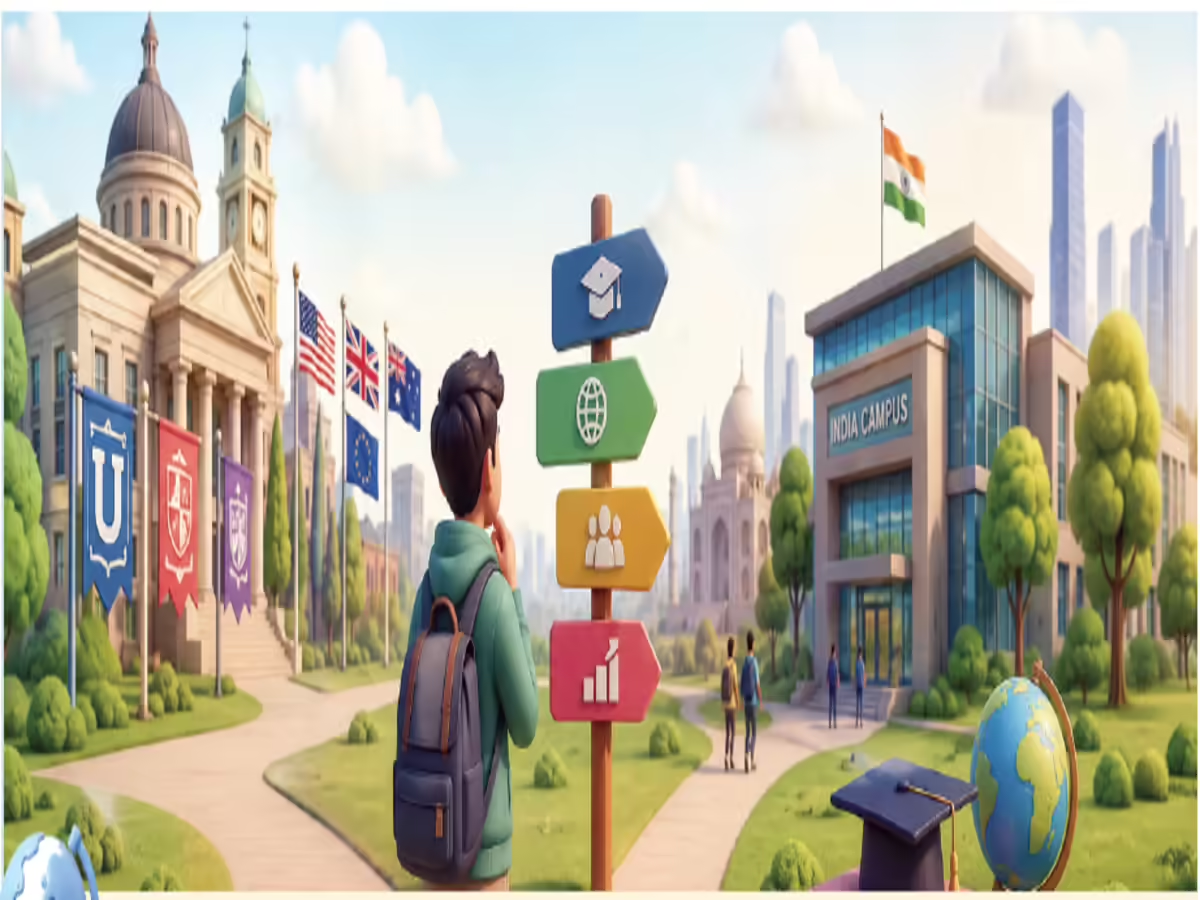
New Delhi: Delhi has emerged as the world’s most affordable student city even as it remains among the weakest globally in attracting international students, highlighting the gap India must bridge in its ambition to become a global education destination, according to Quacquarelli Symonds’ (QS) Best Student Cities 2027 rankings released Tuesday.Delhi ranked first globally for affordability, with average international tuition fees of around $2,700 annually, but placed 146th out of 150 cities on Student Mix, which measures the size and international diversity of a city’s student population. Mumbai ranked 12th on affordability but finished last on Student Mix, indicating that India’s largest student hubs continue to struggle to attract overseas students.Read more: Trump administration opens investigation into Harvard's financial aid for international studentsMumbai emerged as India’s highest-ranked student city overall, climbing seven places to 91st with an overall score of 61.8, while Delhi rose five places to 99th with 60.3. Bangalore slipped six places to joint 114th, and Chennai climbed five places to 123rd.Despite their weak international diversity, both Mumbai and Delhi ranked among the world’s top 35 cities for Employer Activity, reflecting strong demand for graduates. Delhi ranked 29th on the metric, while Mumbai placed 34th.Jessica Turner, chief executive of QS, said India’s cities are “among the most affordable places to study anywhere in the world”, while universities in the country are growing rapidly with employers increasingly valuing the graduates they produce.Read more: Canada halts new parent, grandparent sponsorship applications until further noticeThe same pattern extended across all four Indian cities. While each ranked within the global top 30 for affordability, all four occupied positions between 145th and 150th for Student Mix, per the report.Bangalore also recorded the highest average international tuition fees among the four cities, at about $5,400 a year.India continues to face a structural imbalance in international education. More than 1.3 million Indian students study overseas, while the country hosts only around 50,000 international students, with nearly a third coming from Nepal. The Study in India programme and the National Education Policy 2020 is seeking to improve this scenario by attracting students from South Asia, Africa, the Gulf and Central Asia, alongside permitting foreign universities to open campuses in India.Turner said the “defining challenge is reach”, noting that India sends far more students abroad than it receives. She added that converting India’s strong domestic higher education ecosystem into genuine global appeal would require greater openness, improved quality, and stronger international partnerships.The rankings accompany other recent QS assessments showing India’s higher education system on the rise. India currently has 52 universities in the QS World University Rankings 2027, a more than threefold rise from 14 in 2017, making it the fastest-growing G20 higher education system over the past decade. It also ranks 13th globally for AI economy readiness and fifth for Future of Work in the QS World Future Skills Index 2027, though it continues to lag on skills alignment and human capital quality.The QS Best Student Cities 2027 rankings assessed 150 cities worldwide with populations exceeding 250,000 and at least two universities featured in the QS World University Rankings 2027. Cities were evaluated across six indicators—university rankings, employer activity, affordability, desirability, student mix and student voice—using 23 indicators drawn from QS surveys and third-party datasets.
Delhi tops affordability; lags in attracting global students - The Economic Times
Delhi and Mumbai offer affordable study options, ranking globally for low tuition fees. These Indian cities struggle significantly with international student diversity and attraction. Despite this, both cities show strong employer demand for their graduates. India aims to boost international student numbers through new policies and programs. The nation's higher education system is rapidly improving its global standing.
539 words~2 min read