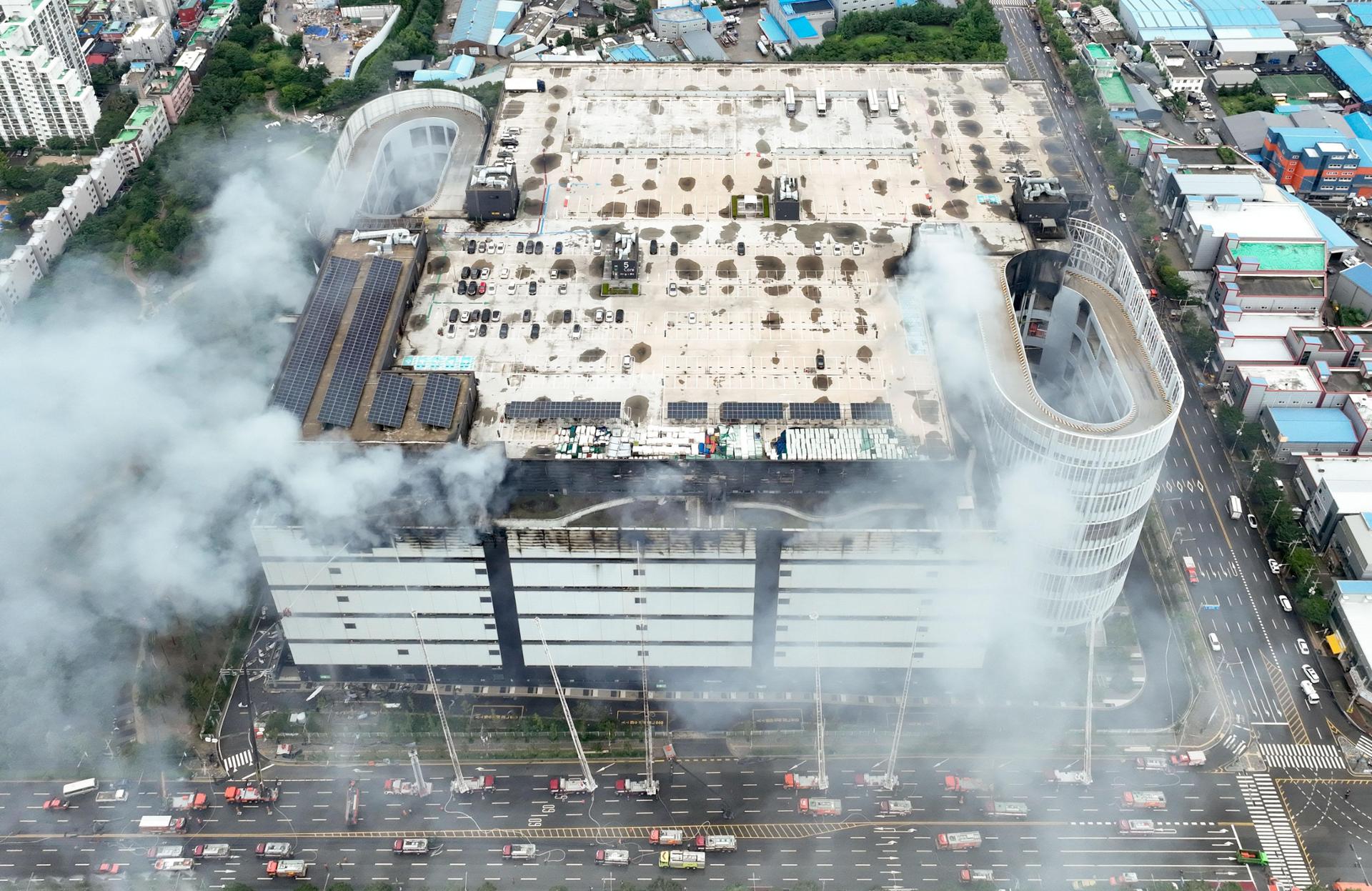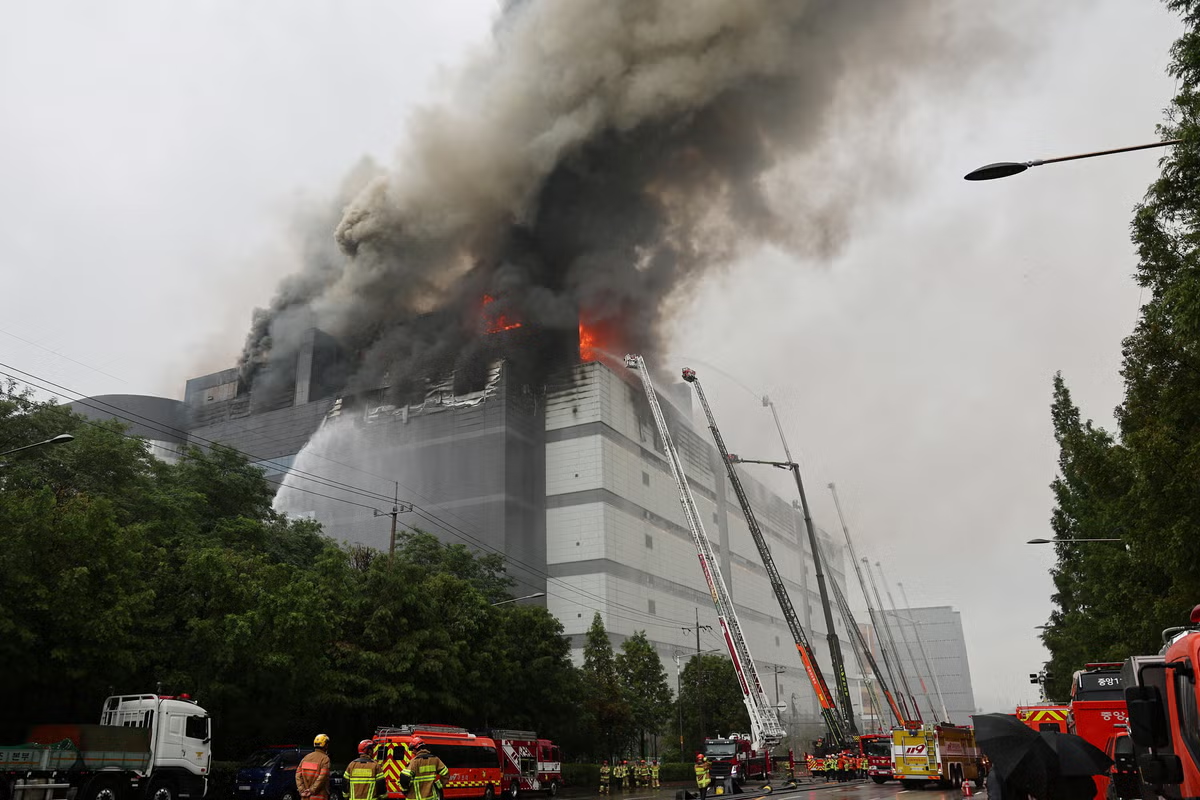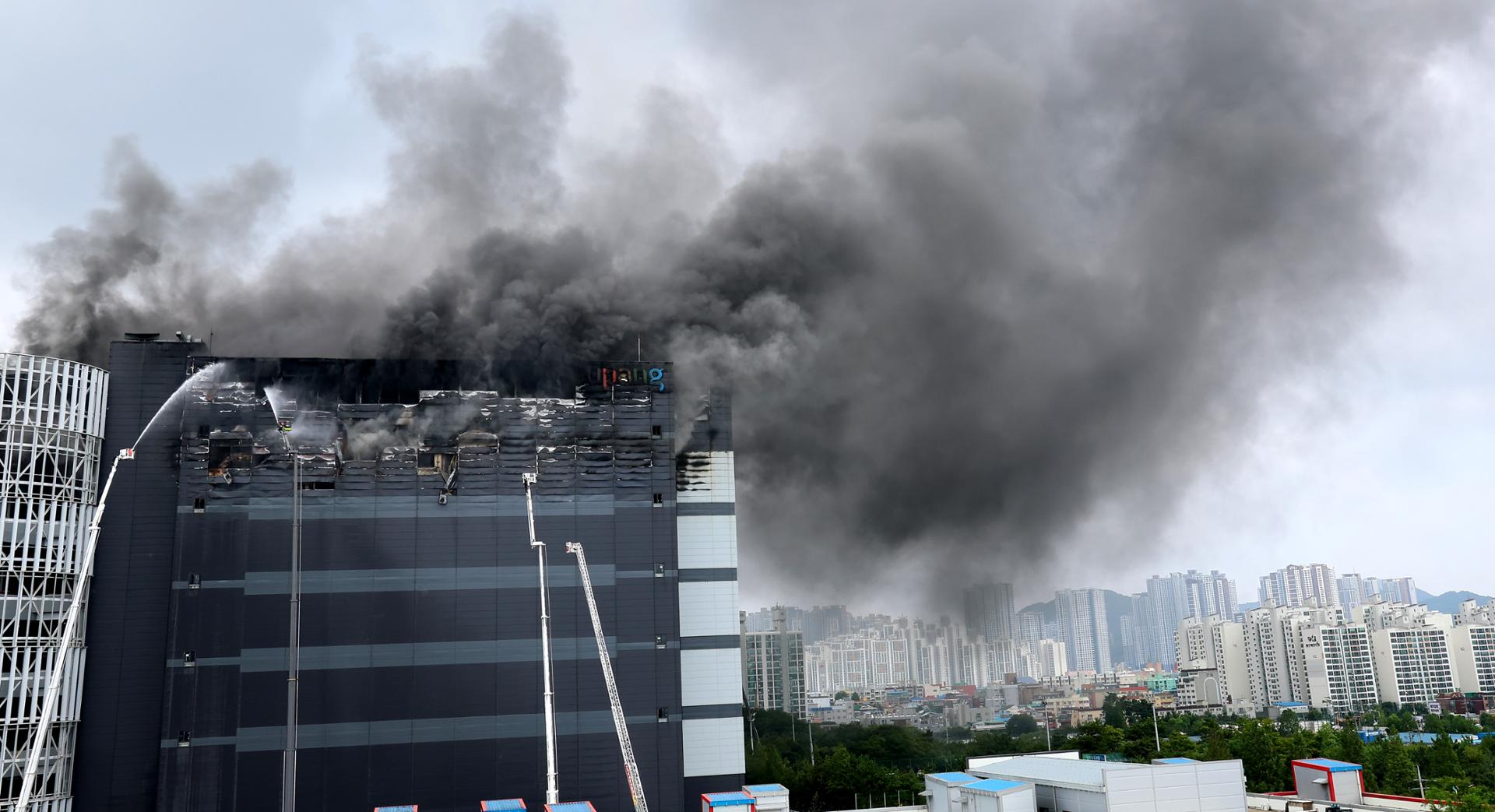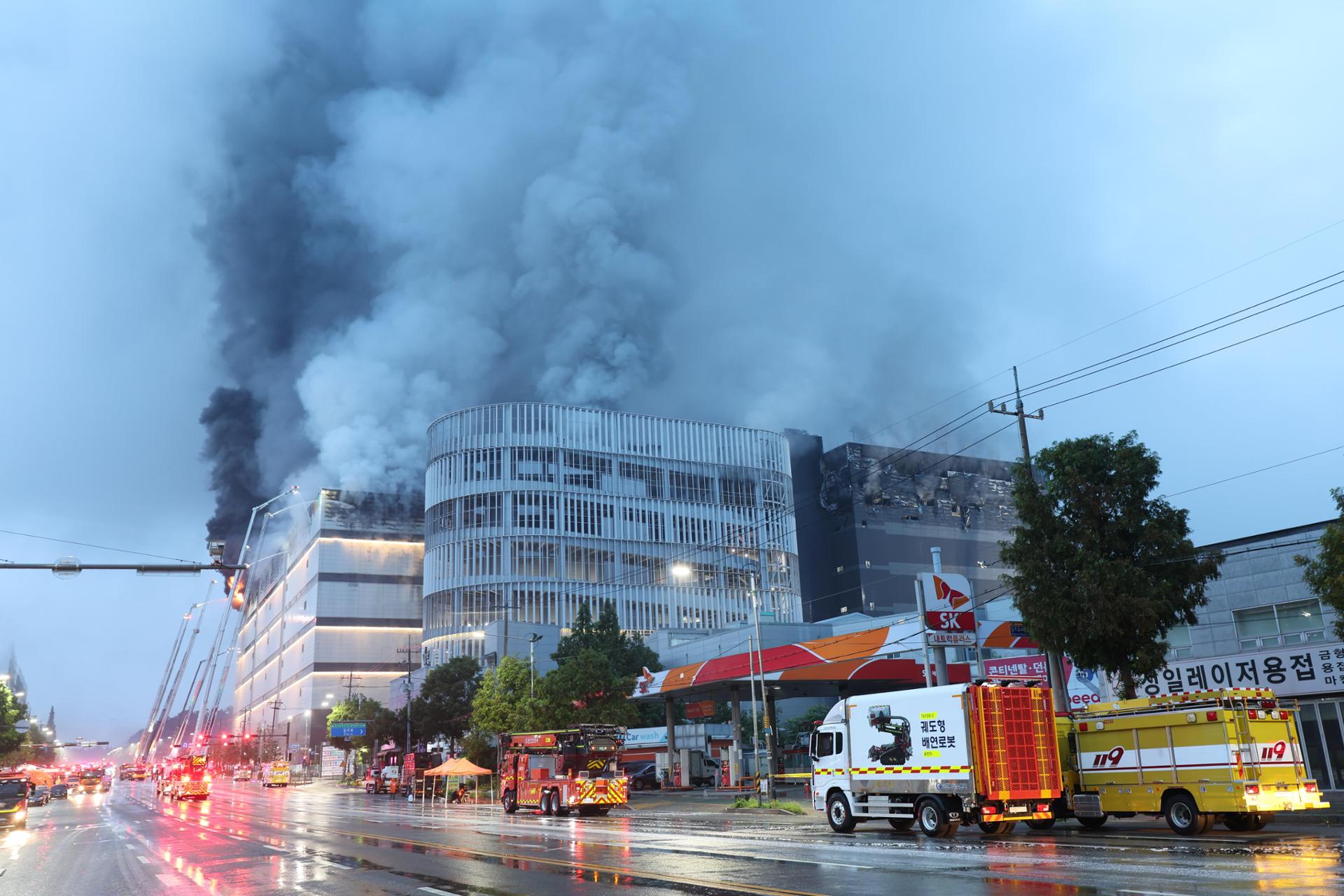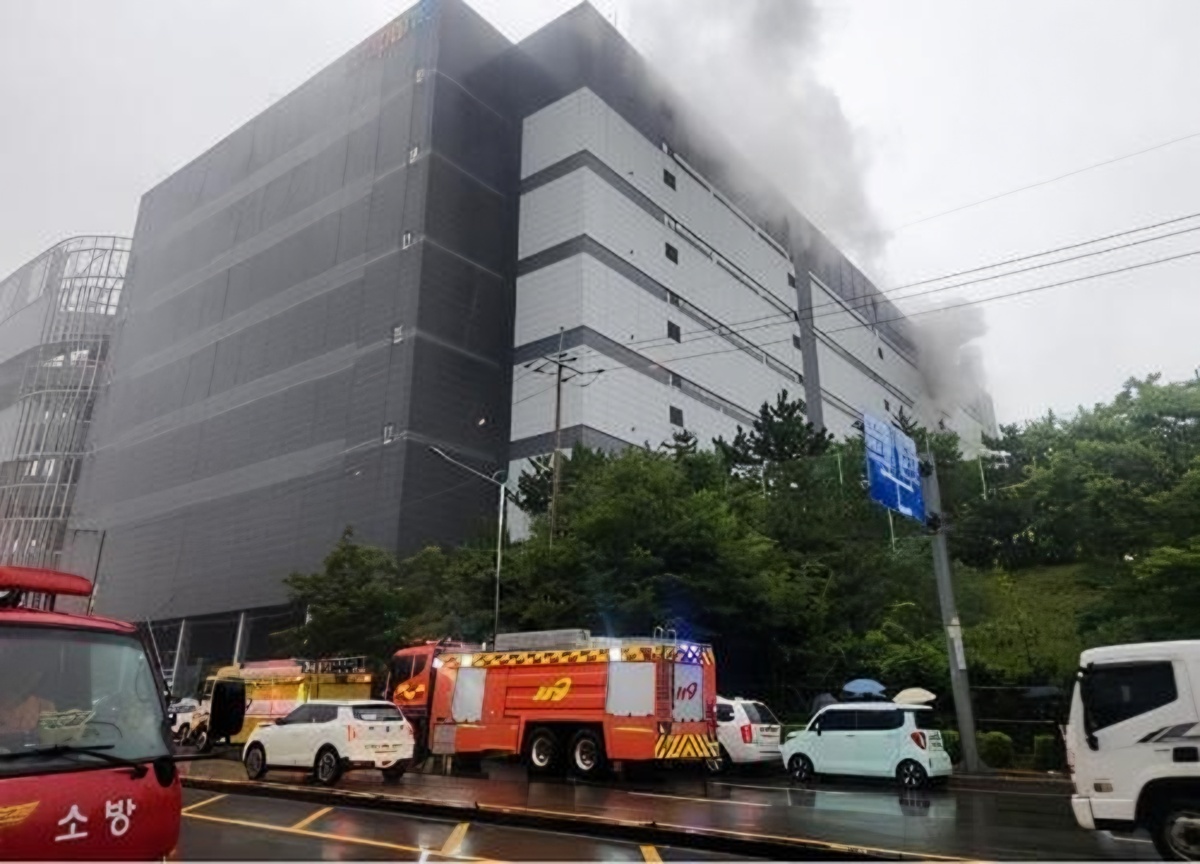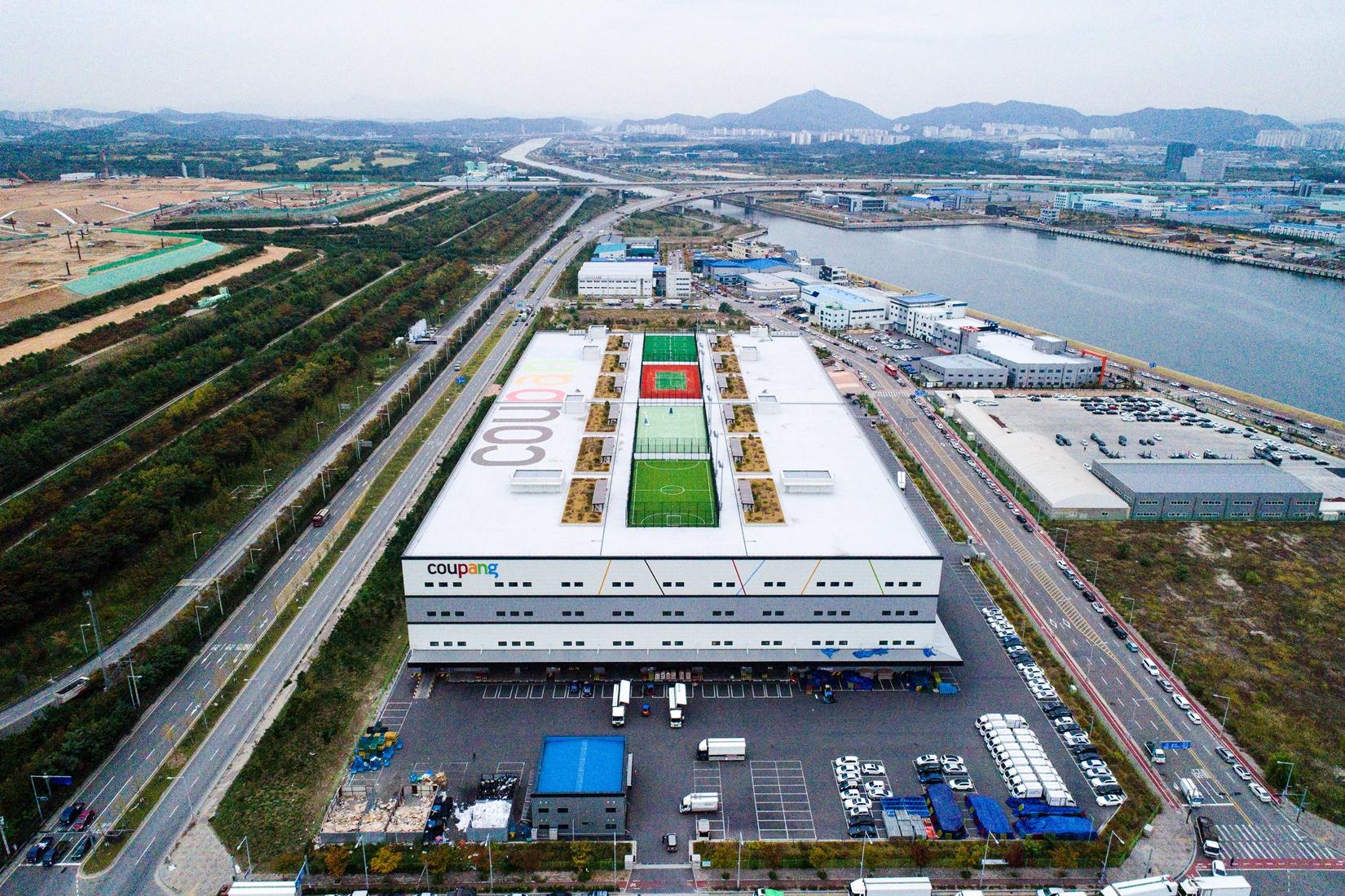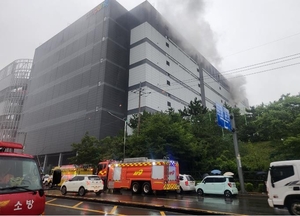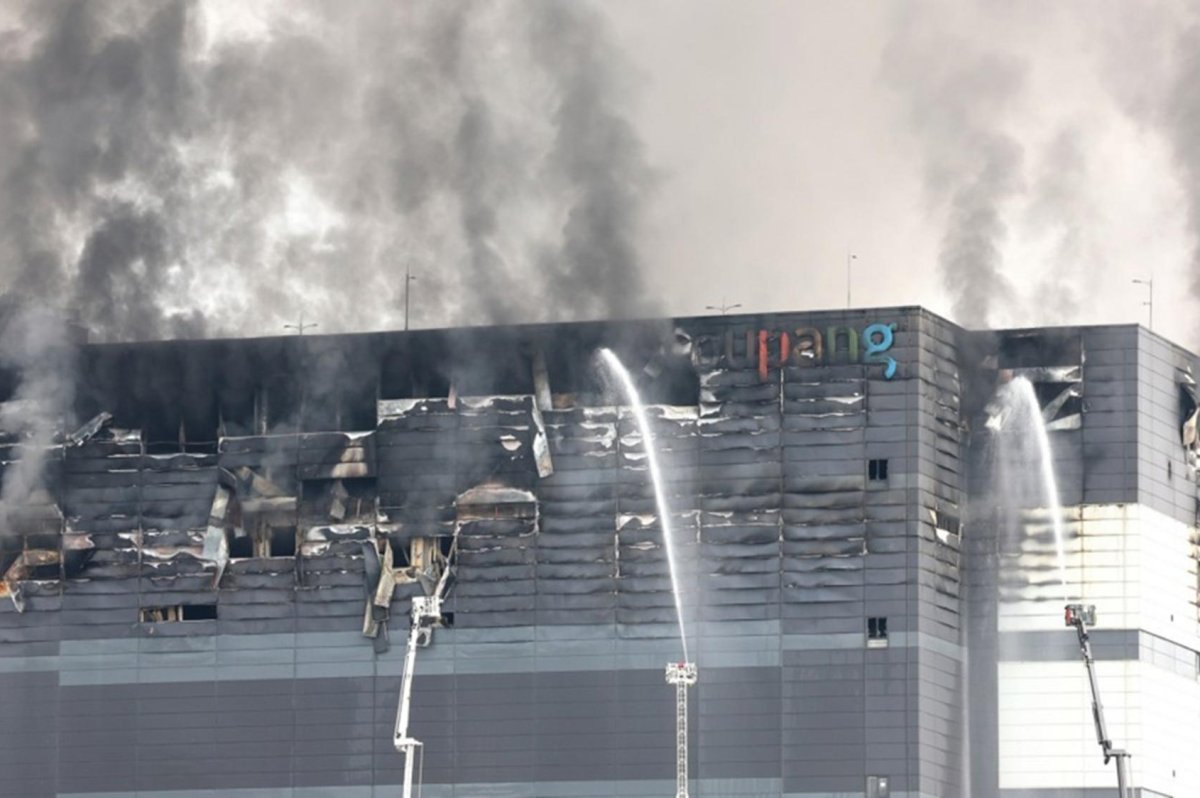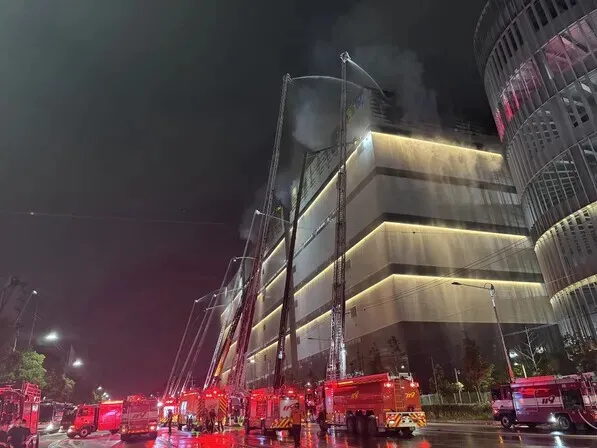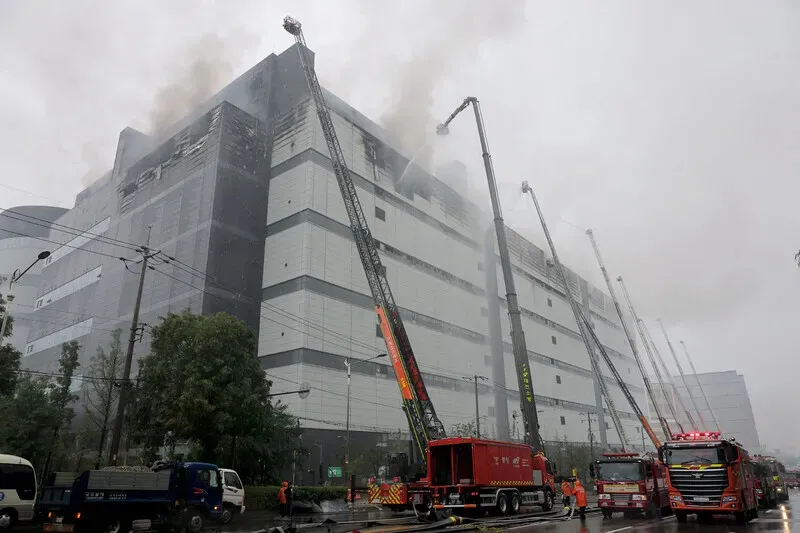
A fire that broke out Saturday at a Coupang logistics center in Incheon entered its third day on Monday, causing widespread inconvenience and distress for nearby residents and businesses. Thankfully, no casualties have been reported, as all 121 workers inside the building were evacuated in the early stages of the fire. The outcome, however, could easily have been far more tragic. The incident in many ways mirrors a devastating 2021 fire at Coupang’s Deokpyeong logistics center, where a firefighter lost his life while battling the blaze.The warehouse’s architectural design was widely cited as a key factor that made the Deokpyeong fire especially dangerous. Five years later, another fire has now broken out in a logistics center constructed with the very same structure. The sixth floor of the Incheon warehouse where the fire started utilized a mezzanine — the same structure that created complications when the fire broke out at the Deokpyeong logistics center in 2021. The floor’s high ceilings and lofted mezzanine block sprinklers and other fire suppression equipment from reaching the deep crevices in between goods and merchandise, which in turn complicates their ability to catch and fully extinguish fires in their early stages. Warehouse workers testified to the fact that boxes full of goods littered the floor, making it almost impossible to walk around, which would have rendered the ceiling’s sprinklers ineffective. To make matters worse, the building’s fifth floor was packed with hundreds of lithium battery robots. Once lithium batteries catch fire, that can lead to thermal runaway, which makes them difficult to suppress with water or fire extinguishers. This also makes lithium fires prone to rapidly spread across an entire building. The latest fire raises questions about whether Coupang truly learned the lessons of the 2021 disaster or continued to prioritize operational efficiency over strengthening its safety measures. A thorough investigation is needed to determine the cause of the fire and, if negligence is found, to hold the company accountable. Fires that break out at logistics centers are not easily suppressed in their early stages, which means that they can evolve into full-blown disasters. The fire that ravaged the E-Land fashion logistics hub last November also followed the exact same pattern as this fire. Firefighters struggled to enter the warehouse as the interior had been divided into levels with large shelves packed with goods to maximize storage. This layout prevented firefighters from extinguishing the fire in its early stages, allowing it to rage for 60 hours, and caused 328 billion won in damage. Despite multiple similar incidents, logistics companies do not seem to have learned their lesson. This inevitably raises suspicions that they have been negligent in implementing measures to prevent fires. The government should have taken proactive measures in response to these repeated warehouse fires, yet the National Fire Agency did not introduce a plan to strengthen safety standards for warehouse facilities until 2024. The latest fire occurred at a Coupang hub completed in 2023, meaning it was not subject to the newly introduced standards. How many more preventable disasters must occur before we stop relying on administrative responses that come only after tragedy strikes? Instead of improving safety standards for new facilities, authorities must swiftly establish institutional measures to enhance the safety of existing warehouses as well.
[Editorial] Regulatory action needed after another preventable warehouse fire
One cannot help but question whether logistics companies have really learned the lesson of previous deadly fires
543 words~2 min read