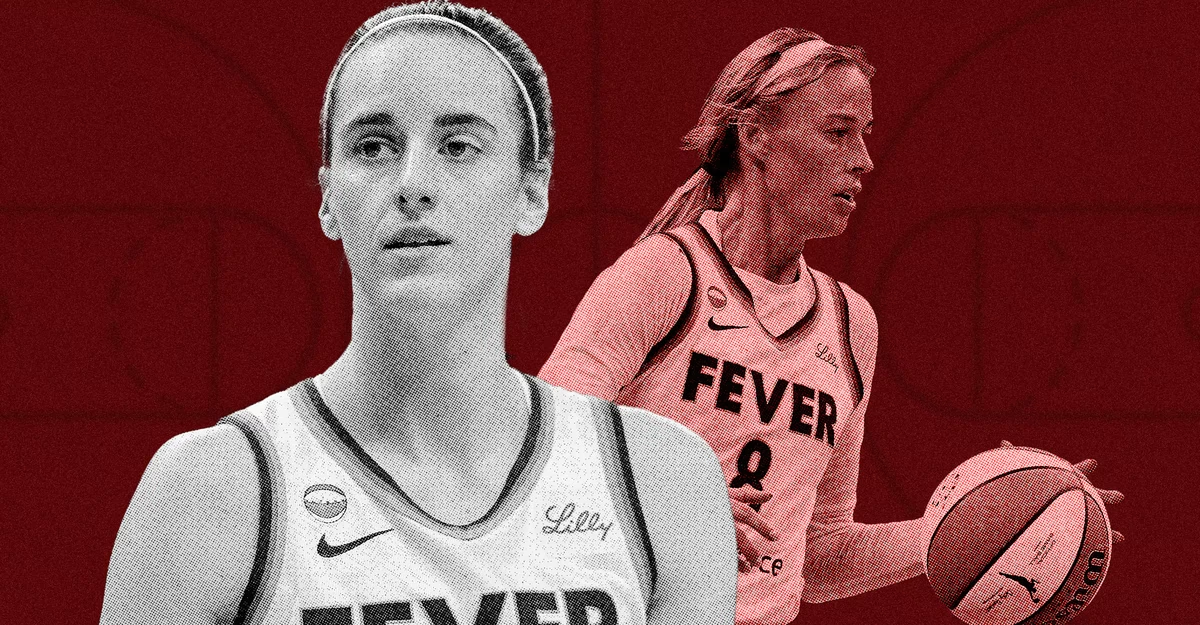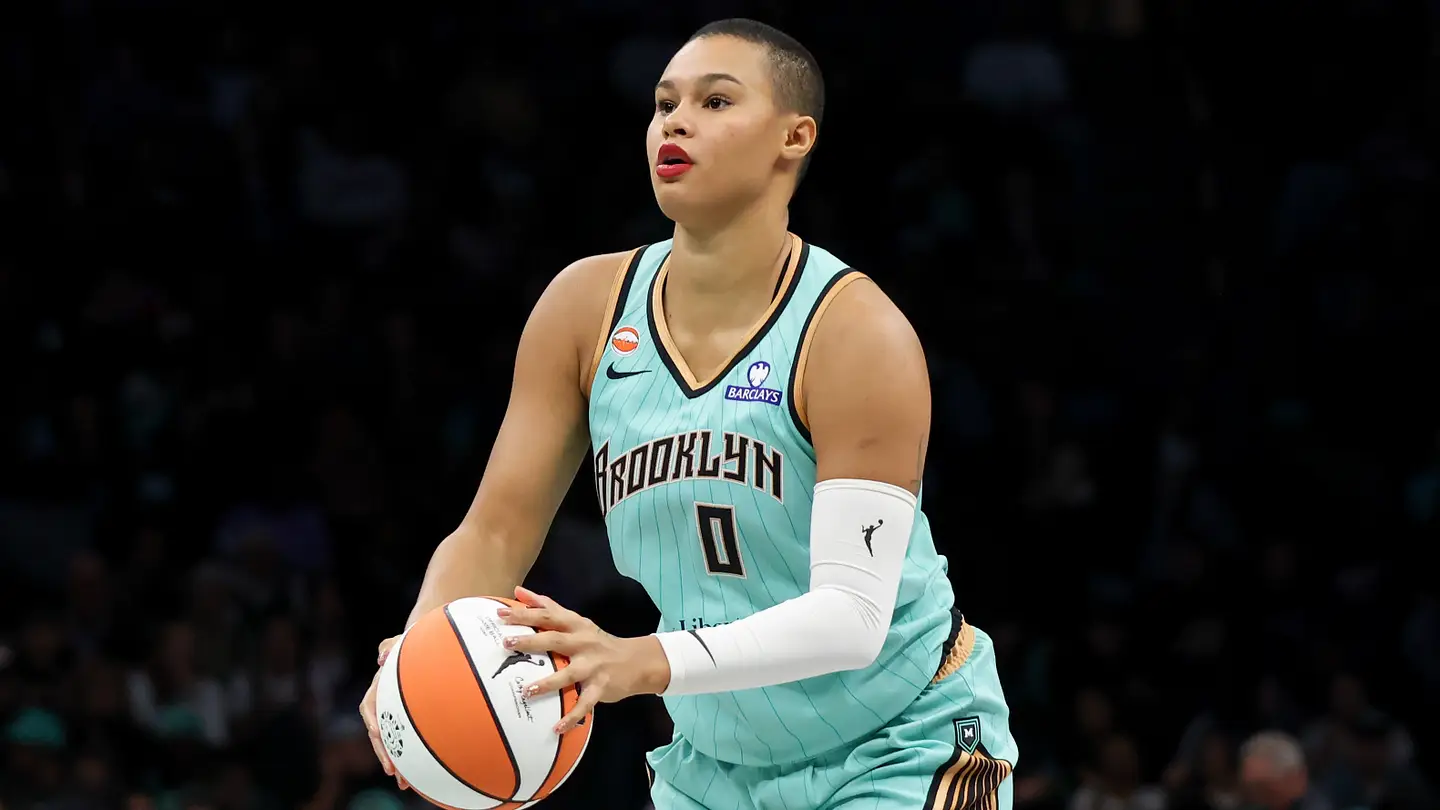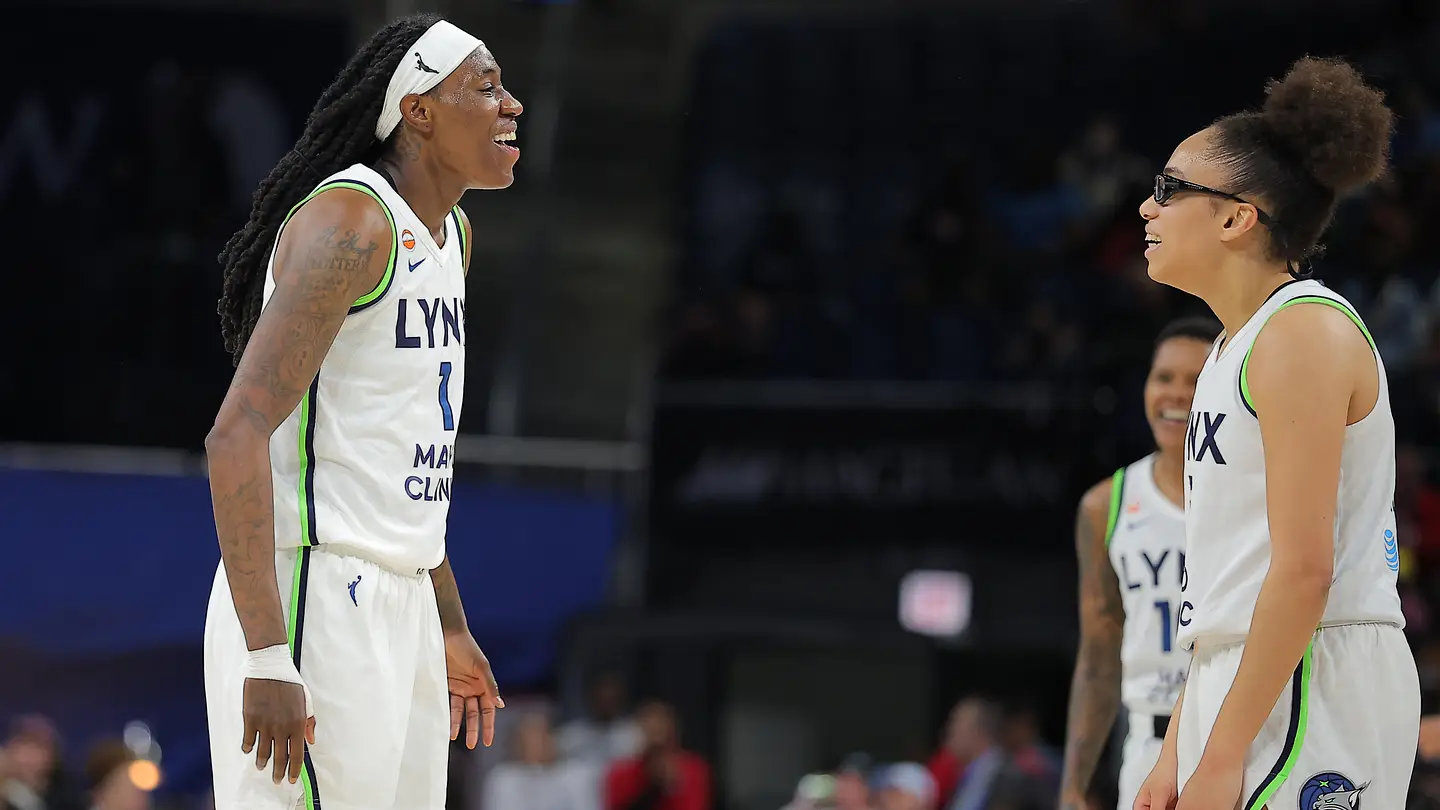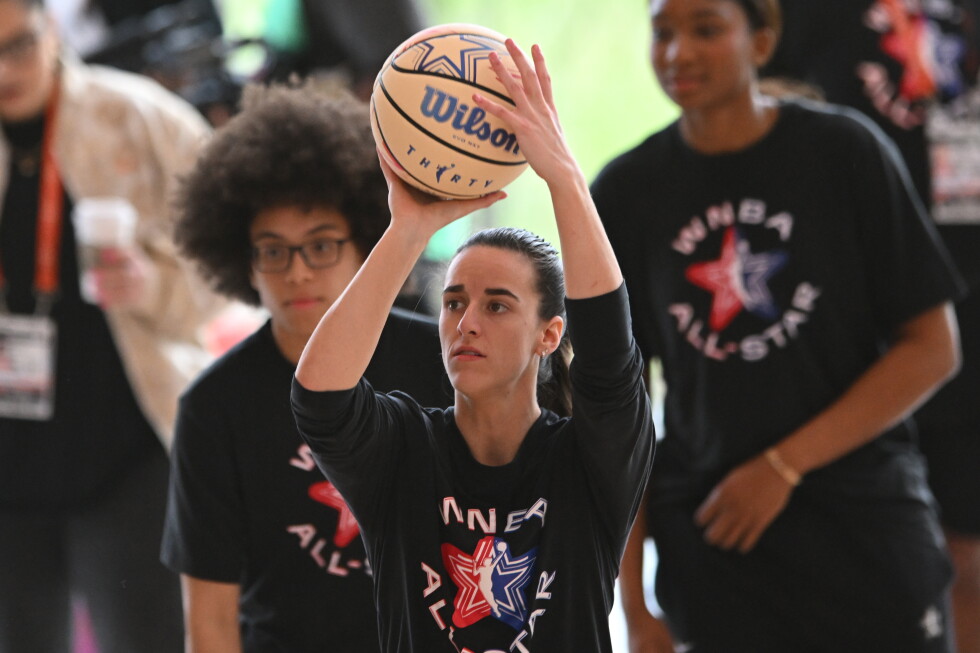
The 2026 WNBA offseason featured an unprecedented amount of personnel movement, made all the more chaotic by the compressed timeline caused by protracted collective bargaining negotiations. Due to the dramatic increase in salaries — the cap rose from about $1.5 million in 2025 to $7 million in 2026 — the decision-making process had higher stakes than at any point in league history.The salary structure was also updated in the new CBA, changing how teams can allot their caps. For instance, the super-maximum salary grew from less than 17 percent of the cap to 20 percent in 2026. The rookie salary for the No. 1 pick increased from about 5 percent to 7 percent. Teams were required to roster 12 players rather than 11.It was a challenging offseason under expected and unexpected constraints, and the ramifications of the transactions that were made will be felt for years to come. But now that the 2026 season is more than halfway over, we can start to evaluate which decisions are delivering the most value and which are falling short.Best decisionsDallas signs Jessica Shepard (two years, $1 million/$1.05 million)Did Dallas get Jessica Shepard at a bargain?The Dallas Wings had an offseason mandate to build a contender around Paige Bueckers after an underwhelming 2025 campaign. That started with the frontcourt, which had been a revolving door of unimpressive options in Bueckers’ rookie season. Dallas nailed the choice of signing Shepard to a two-year deal below the maximum salary of $1.19 million, landing an All-Star starter who currently leads the league in rebounds and win shares.Although Shepard was a reserve with the Minnesota Lynx, the Wings identified her as a player who could thrive in a larger role, and she has succeeded as their starting center. She is one of two WNBA players currently averaging a double-double, at 14.8 points, 11.7 rebounds and 5.2 assists per game. If she maintains those numbers, she’ll become the first player in league history to average at least 10 points, 10 rebounds and five assists for a season. Coach Jose Fernandez said the organization saw Shepard as a player who could initiate the offense, thanks to her overseas experience, and they were comfortable putting the ball in her hands to help create for Bueckers, Arike Ogunbowale and the rest of the team’s scoring options.There are 24 players making more money than Shepard this season. There are not 24 players performing better than Shepard. And the 29-year-old’s production isn’t likely to decline anytime soon.Minnesota signs Natasha Howard (two years, $700,000/$735,000) and Nia Coffey (two years, $350,000/$367,500)The Lynx signed an entire starting frontcourt for less than the price of one max contract — incidentally, less than the amount Alanna Smith commanded in Dallas. (Don’t worry, we’ll get to her later.) Minnesota has done well to target players whom other franchises underused or misused, then optimize them in the Lynx system. They did so with Courtney Williams and Smith two offseasons ago, and both earned maximum deals during the 2026 offseason. With Williams and Kayla McBride on regular-max contracts and Napheesa Collier signing for a super-max, Minnesota had to be more judicious with its other signings but didn’t compromise on quality.Howard is an All-Star starter as the 47th-highest-paid player in the WNBA. She was miscast as a power forward with the Indiana Fever, but has experienced a resurgence at center. Compared to other All-Star bigs like Jonquel Jones ($1.19m), Nneka Ogwumike ($950k) and Aliyah Boston ($1.0m), Howard makes the least money but is the most efficient from the field and leads the group in assists and steals per game. She also has the best defensive rating of that crew.The Lynx used the savings on what Howard makes relative to her production to sign another starting-level forward in Coffey, who fell out of the rotation with the Atlanta Dream. She is one of the most versatile frontcourt defenders in the WNBA and has had a career-best offensive season next to a true point guard in Olivia Miles. Coffey’s contract (which accounts for five percent of the cap) is more in line with a second-round pick than a starter on the league’s best team.I didn’t include drafting Miles as one of the highest-value decisions the Lynx made because the pick almost fell into their lap at No. 2. Miles’ production has far exceeded her rookie contract, but again, Minnesota had no choice in what they could offer Miles.Toronto selecting Marina Mabrey in the expansion draft (signed for two years, $1.2 million each)Each expansion team had the opportunity to select one unrestricted free agent in the expansion draft and then core them. The Portland Fire chose Bridget Carleton first, and the Toronto Tempo went with Marina Mabrey with the sixth pick. Once Carleton was already off the board, the Tempo did well to take Julie Allemand at point guard — a position of need throughout much of the league — before getting Mabrey later, knowing that the Fire couldn’t take another UFA, so Mabrey provided excellent value at her slot. But beyond that, Mabrey has been one of the best guards in the league in Sandy Brondello’s system.She is third in the WNBA in points per game, first in made 3s, 12th in 3-point percentage, fourth in usage rate and 19th in assists per game. There were concerns about whether Mabrey could score efficiently enough to warrant being a No. 1 option, and she has soundly dismissed those, even as injuries have affected Toronto’s roster, most notably 2025 All-Star Brittney Sykes. Instead, Mabrey has played the most composed and disciplined basketball of her eight-year career and produced at her highest rate, well worth a maximum player and an important draw as the expansion Tempo build their fan base and identity.Worst decisionsDallas signs Alanna Smith (three years, maximum contract)Alanna Smith (right), hasn’t provided the defensive value the Dallas Wings hoped for when they signed her in the offseason. (Minas Panagiotakis/Getty Images)Smith was the co-Defensive Player of the Year in 2025, but there were signs that she wasn’t as integral to Minnesota’s success as that honor suggested. The Lynx were 2 points better per 100 possessions with her off the court and 9.2 points per 100 possessions better on defense. The Wings have had an even worse swing, as they are 16.2 points per 100 possessions better with Smith off the court. Injuries have limited Smith’s effectiveness, but the bottom line is she is being paid as a maximum player and barely providing rotation value.The veteran big isn’t finishing well at the rim, and whatever stretch element she had earlier in her career is gone, as she’s making 20 percent of her 3-pointers on limited attempts. Her block percentage is the lowest of her career, and her steal percentage is the second lowest. Smith hasn’t been the defensive anchor she was hyped up to be, and pretty soon, she’ll be an anchor on Dallas’ books.The Wings have a useful window over the next two seasons when Bueckers and Azzi Fudd will both be on rookie contracts that massively underrate their production. That gives Dallas an opportunity to spend elsewhere, as it did on Shepard, for example. However, in 2028, Bueckers will be eligible for the 17 percent max based on the EPIC provision in the new CBA; she might even be eligible for the 20 percent supermax if she earns MVP honors in the next two seasons. (Keep in mind, those potential raises aren’t mandatory, and Bueckers could decide to sign for less than a full max or supermax deal.) Smith will still be in the third year of her max deal in 2028, taking up cap space that her performance has not warranted when the Wings have to negotiate with Bueckers and potentially re-sign Shepard, who will be a free agent.Los Angeles trades for Ariel Atkins and signs her to a three-year dealThe first poor decision the Los Angeles Sparks made regarding Ariel Atkins was trading Rickea Jackson for the veteran guard without receiving additional draft compensation in the transaction. Jackson, a rising young player on a rookie-scale contract, had more value than a veteran free agent who was about to get paid. Los Angeles unnecessarily made its roster older and more expensive, and the team didn’t get much better. Jackson has All-Star potential — which she showcased for the first three games of the season before tearing her ACL — and Atkins has reached a point in her career where she is unlikely to make many more All-Star appearances.The Sparks compounded that error by signing Atkins to a three-year contract that starts at $1.085 million and increases by slightly less than five percent each season. Atkins was supposed to be a 3-and-D player to complement Kelsey Plum in the backcourt. But Atkins is shooting 26 percent on 3s and often looks out of sorts in coach Lynne Roberts’ offense. With Atkins on the court, the Sparks have allowed 108.0 points per 100 possessions. Admittedly, it’s not Atkins’ fault that the Sparks tasked her with singlehandedly propping up a poor perimeter defense, but so far she hasn’t provided the value that L.A. expected when acquiring her and inking her new contract.This is the second straight season that Atkins has been acquired in a win-now move (the Chicago Sky traded the pick that would become Sonia Citron for Atkins in 2025), and Atkins’ teams haven’t done a lot of winning. Los Angeles now has an albatross of a contract on its hands in an offseason when Plum, Ogwumike and Rae Burrell will be free agents. Burrell has been better at the role Atkins was brought in for despite playing on a training camp contract, and she might be priced out of the Sparks’ plans if a rival team targets her in free agency.Chicago trades its 2028 first-round pick for Jacy SheldonThe Sky made one of the best offseason signings in the league by bringing in undrafted rookie Sydney Taylor, who has since entered the starting lineup and looks like an exciting piece of the team’s young core. Of course, Chicago had previously traded their 2028 first-round pick to acquire an off-ball guard in Sheldon. But with Taylor ahead of her in the rotation and rookie Gabriela Jaquez earning time on the wing, Sheldon has only averaged 21.8 minutes off the bench this season; she is putting up 6.8 points and 0.8 steals per game while making 33.3 percent of her 3-pointers. Those aren’t the statistics of a player who’s worth trading away an unprotected first-rounder.Due to the compressed nature of the offseason, Chicago might not have known what it had in Taylor when the team traded for Sheldon. However, the Sky had to know that Jaquez would be on the board for the fifth pick. And they should have known that Sheldon, for all her gifts as a shooter and in transition, wasn’t worth the draft pick they surrendered.With the NCAA’s recently adopted 5-in-5 rule, which would allow players to stay five years in college, the 2028 draft could also be a “double draft” with players who choose to come out after four years and those who use their fifth year of eligibility. The decision to trade away a pick in that draft could age poorly.The Sheldon deal continues a pattern of Chicago not valuing its draft capital. The Sky traded their 2025 pick and a 2027 swap for Atkins. They traded a 2026 swap for Angel Reese (which allowed the Lynx to draft Miles), but then moved Reese for what figures to be two late firsts. Now, they are without their 2028 first in a draft that is likely to include coveted prospects Sarah Strong, Joyce Edwards, Mikayla Blakes and the rest of a deep crop of college juniors.The jury is still outDallas drafts Azzi FuddThe Wings are much better this season, and Fudd is an important piece of that. She’s shooting 38 percent from 3, she’s been an impactful defender and she’s already guarding opposing teams’ best perimeter players as a rookie. Plus, she has an easy chemistry with Bueckers and Shepard. Dallas could be a successful postseason team, with Fudd playing meaningful playoff minutes.But looking at what No. 2 pick Miles has accomplished in Minnesota, it’s hard to say if the Fudd pick was a sound decision. Miles is an outstanding playmaker who has elevated her teammates and succeeded on defense after being almost negligent on that side of the ball in college. Miles and Bueckers would have been an unbelievable duo.If the Wings win a title with Bueckers and Fudd, it won’t really matter that Dallas could have had Miles. But it’s becoming clear that Miles is the better player, and Dallas will need significant team success to overcome that.Seattle gives Ezi Magbegor a three-year, $3.6 million dealThe Seattle Storm didn’t know they would be in position to draft Awa Fam when they signed Magbegor to a three-year contract slightly above the 17 percent max. They signed Magbegor to pair her with second-year center Dominique Malonga, and Magbegor, who turns 27 in August, is young enough to be part of Seattle’s present and future.But with Fam joining Malonga, there is much less room for a veteran center, especially one who hasn’t been healthy enough (Magbegor has only played four games this season) to figure out her fit with the two franchise cornerstones. Plus, if Seattle wants to move Magbegor to create space for the young bigs, then other teams will know the Storm are doing so from a position of weakness.However, Seattle has a decent runway before it has to make any cap-clearing moves. Malonga is only in her second year, and Fam is a rookie, as is Flau’jae Johnson. The Storm aren’t in a rush to contend because Malonga and Fam are both just 20 years old. The timeline of international players is working in Seattle’s favor; if Magbegor’s contract proves to be a mistake, then the team can afford to wait it out, and it’s still possible that she forms a credible three-big rotation with Malonga and Fam once she returns.New York hires Chris DeMarcoWhen DeMarco took over as coach of the New York Liberty, too much was made of his lack of WNBA experience and not enough was made of his lack of head-coaching experience. Coaches can learn the league; Nate Tibbetts (a former G League head coach) got to the finals in his second season with the Phoenix Mercury. But running a team at any level is a challenge, and DeMarco’s lack of executive experience is starting to show.The Liberty haven’t been consistent this season. They don’t play hard night to night. Their rotations can seem to change on a whim. That isn’t exactly unexpected from a first-time head coach. New York has had excellent stretches, such as the team’s undefeated Commissioner’s Cup run, when their offense moves from side to side, their shotmaking reaches elite levels and their length is suffocating on defense. But the team also just went 3-8 since its last Cup group-stage game. Championship teams, which is what New York says it wants to be, typically don’t have dips like that.It’s not just DeMarco who is inexperienced; it’s the entire coaching staff. None of the three lead assistants (Courtney Paris, Addi Walters and Will Sheehey) have head-coaching experience. Only Paris has coached in the W before. Ever since Becky Hammon won a title in her first season with the Las Vegas Aces, it has seemed as if teams are looking for the next Hammon and trying to jump the line for contention. It has become pretty clear that Hammon was an exception, and other coaches usually require more seasoning.New York has so much talent that the Liberty could make a strong second-half push and still start the playoffs with home-court advantage. Their big three is as good as any in the league, and a deep postseason run wouldn’t be totally surprising. However, the early returns suggest New York is going through growing pains after hiring a first-year head coach, and the team’s contention timeline doesn’t allow for that.
How are the WNBA’s offseason moves paying off? Assessing best and worst personnel moves
More than halfway through the season, we evaluate which teams' offseason transactions have delivered and which have fallen short.
2,672 words~12 min read