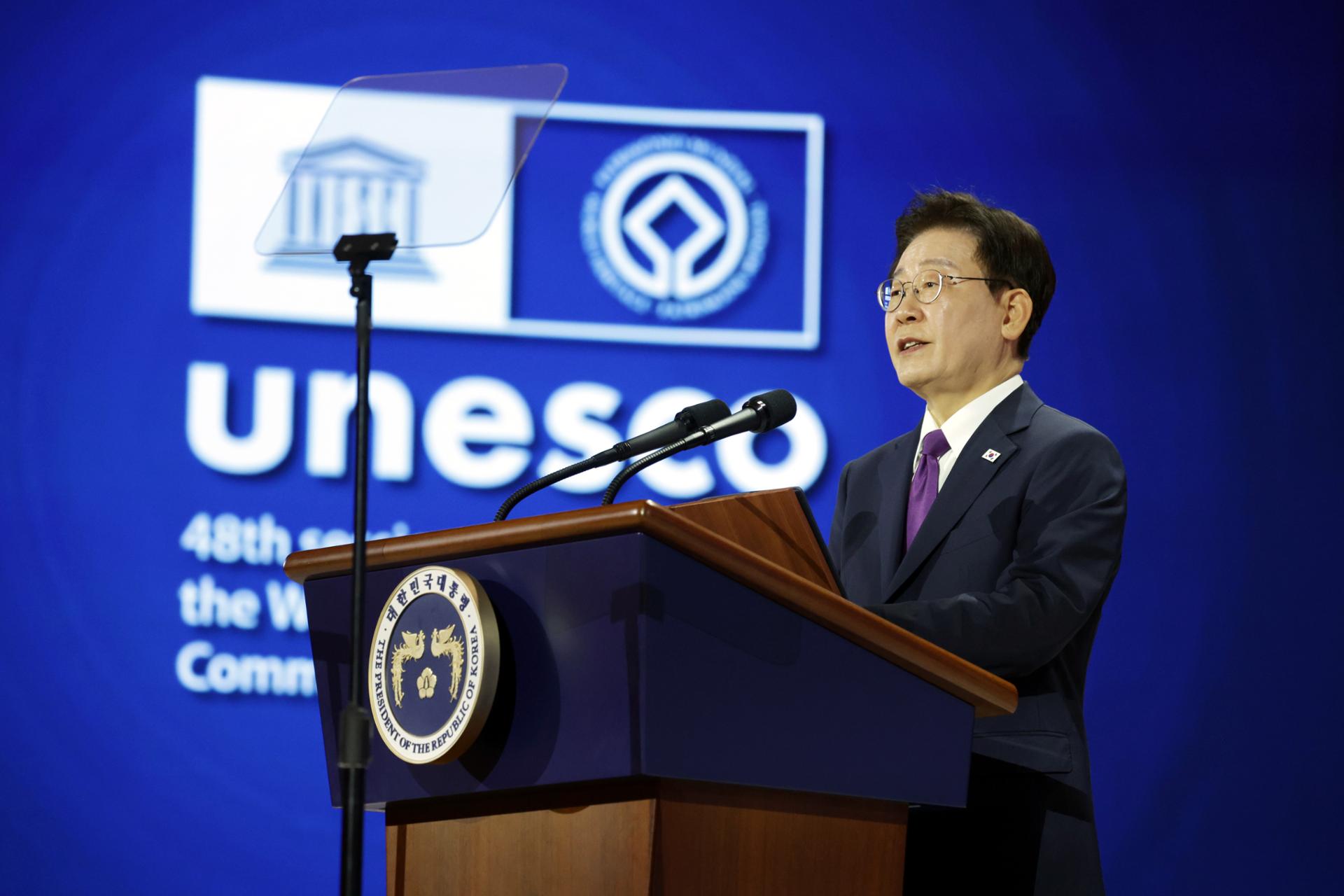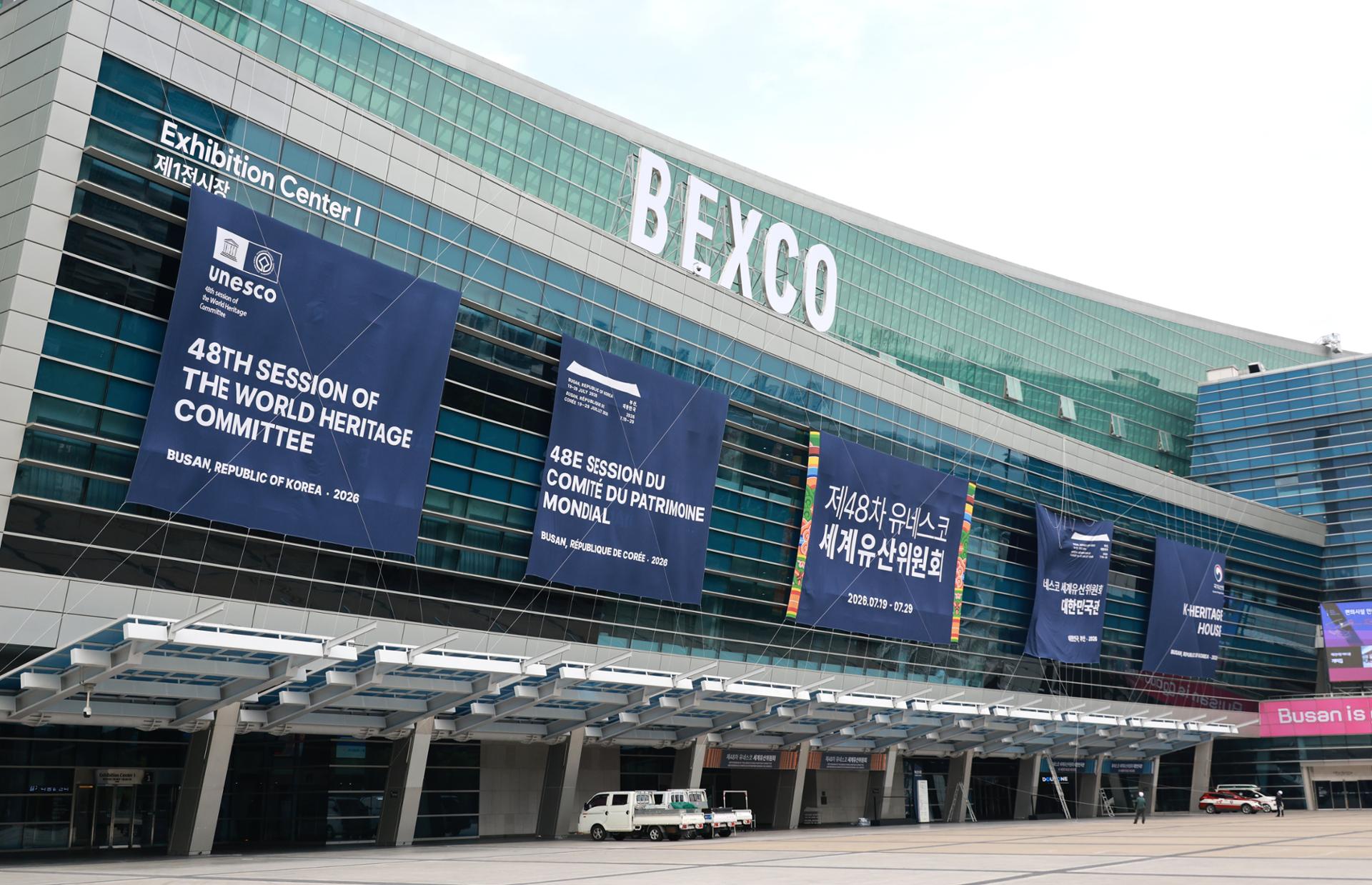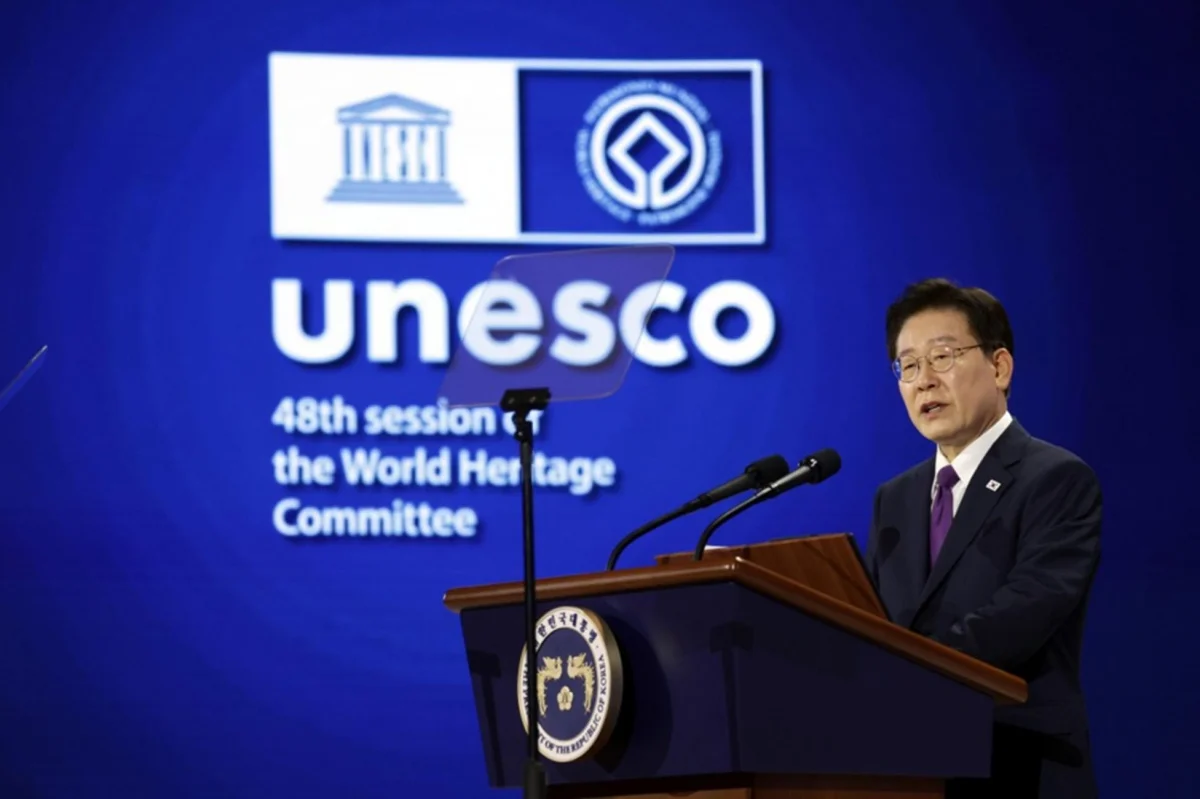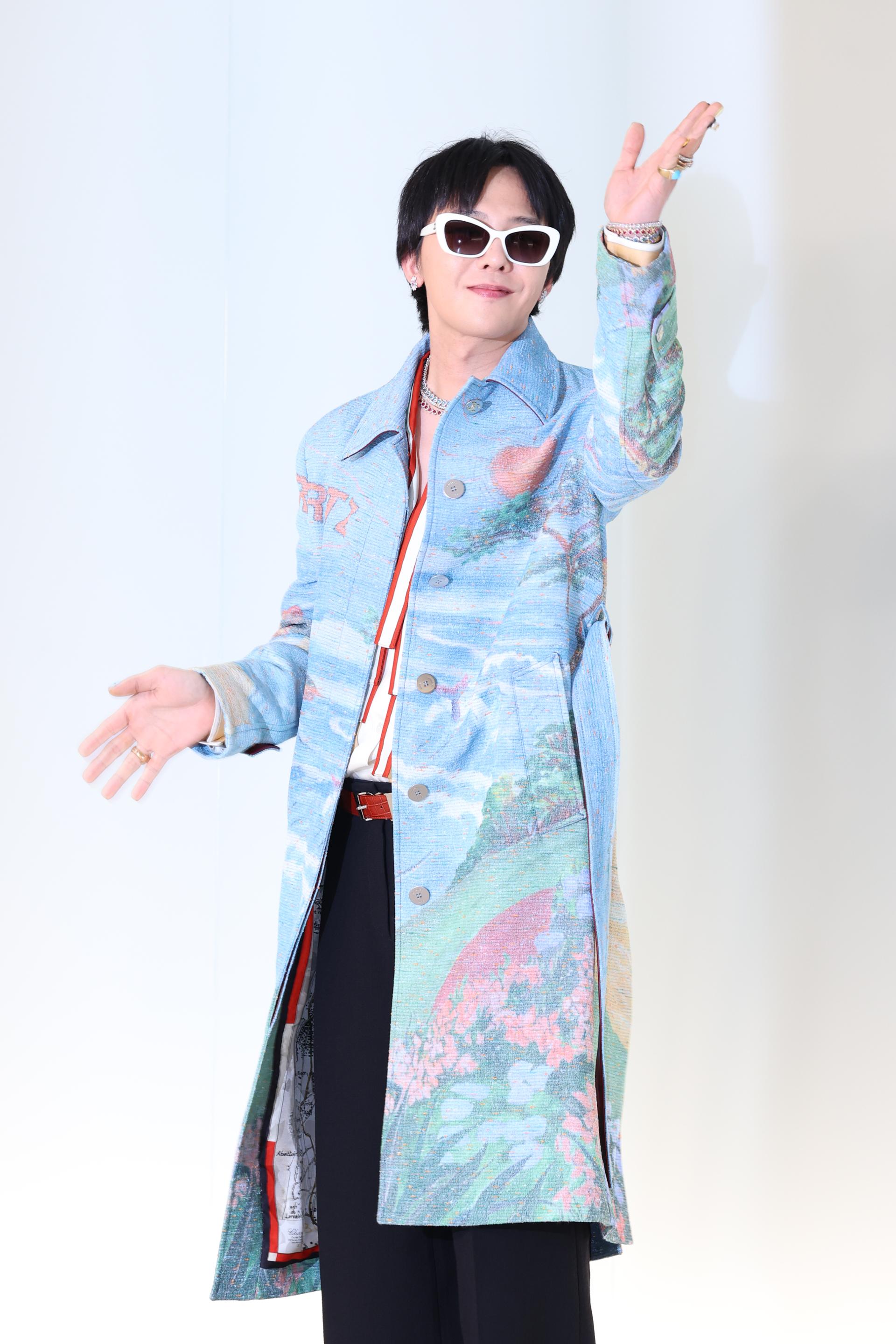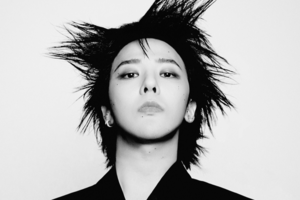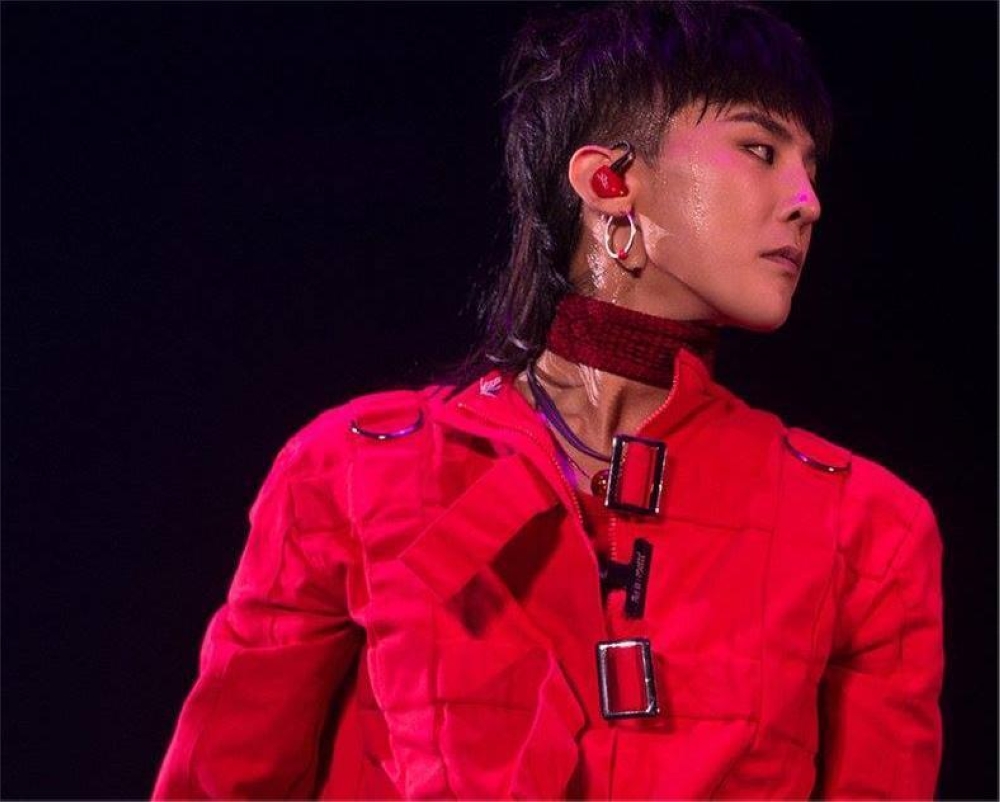
G-Dragon, honorary ambassador for the 48th session of the UNESCO World Heritage Committee, delivers remarks during the opening ceremony on Sunday in Busan. (Yonhap) BUSAN — Three thunderous drumbeats echoed across the stage as royal guards in flowing cheollik robes and ceremonial armor held UNESCO flags while one of them struck a traditional drum.Behind them, a digital rendering of Gwanghwamun Gate, the main entrance to Gyeongbokgung, where the royal guard changing ceremony is traditionally held.For the first time, the actual 42-member royal guard team from Gyeongbokgung, part of the Korea Heritage Service, was not guarding the palace but performing in Busan at the opening of the 48th session of UNESCO's World Heritage Committee, where delegates gathered to discuss the protection of humanity's most significant cultural and natural treasures.For Won Il, a veteran performing arts director and the artistic director behind the opening ceremony, those opening drumbeats carried centuries of history and served as the starting point for the ceremony's storytelling."When the drum sounds, there's something that stirs people instinctively," Won said in a group interview on Monday. "That resonance was where we wanted the entire performance to begin." A celebratory performance takes place during the opening ceremony of the 48th session of the UNESCO World Heritage Committee in Busan on Sunday. (Yonhap) Under the theme "Under the Sacred Roof, Echoes of Continuity and Peace," the artistic director said the ceremony was themed around the sweeping roofline of Jongmyo Shrine's main hall, itself a UNESCO World Heritage site and the inspiration for the committee's official emblem."The roof became a metaphor. It embraces cultures from around the world under one shelter, suggesting that humanity can move beyond conflict toward cooperation and peace."More than 2,900 delegates from 155 countries gathered at Busan's Bexco convention center for the 10-day meeting, where they will discuss how to safeguard humanity's most significant cultural and natural treasures.As this is South Korea's first time hosting UNESCO's World Heritage Committee since joining the World Heritage Convention in 1988, another key motif was the "door," Won said. He wanted the stage to serve as an open gateway "to welcome the world" to Korea.Through a series of symbolic "doors," the performance moved into ilmu munmu, the ritual dance performed during the Jongmyo ancestral rites in which dancers hold traditional ceremonial objects in both hands, followed by the National Dance Company's "New Taepyeongmu," a contemporary retake of Taepyeongmu, the traditional dance praying for peace and prosperity. The National Dance Company of Korea performs during the opening ceremony of the 48th session of the UNESCO World Heritage Committee in Busan on Sunday. (Yonhap) Although Won is known for boldly deconstructing and reinterpreting Korean traditions in his previous works, he said this opening ceremony required a different approach. While the performance still has a creative touch, it was important that it did not depart too far from tradition and instead preserved its dignity."This wasn't a performance meant to fulfill an individual artist's ambitions. People from all over the world came here for the World Heritage Committee, so it was important that historical authenticity and the original traditions were not compromised."In the same spirit, Won noted, some may have expected G-Dragon, the committee's honorary ambassador, to give a music performance, similar to his appearance at the APEC gala dinner in November.Instead, the K-pop star took the stage in a white suit to deliver a message about art and peace."Protecting heritage is not simply about preserving the past, but about building peace for the future," he said. "I believe art can also be a powerful force in protecting what will become the world heritage in the future."Won said what impressed him most was sincerity. Won recalled that G-Dragon felt uncomfortable taking part even in the curtain call because he did not see himself as the main character of the event. Instead, he said, the singer sincerely used his own voice to explain how art can contribute to society and world peace, a moment that he found deeply moving. Pansori singer Kim Yul-hee (right) performs during the opening ceremony of the 48th session of the UNESCO World Heritage Committee in Busan on Sunday. (Yonhap) Following a modern reinterpretation of Seungmu performed to pansori vocalist Kim Yul-hee's traditional vocalizations, the ceremony concluded with a contemporary interpretation of ganggangsullae, in which 25 dancers joined hands to form a giant circle."If we're declaring that collaboration will shape the future and that Busan will become a place where the world comes together," Won said, "then the people expressing that through movement should be the generation that will inherit that future."The director also hinted that the closing ceremony on July 29 will strike a different tone. If the opening was rooted in ritual and solemnity, he said, the finale will be lighter and more celebratory."By the end of a conference, everyone is tired. It's like reaching for a refreshing drink that gives you energy again," he said.While dance anchored the opening ceremony, music will take center stage at the closing event, with performances by the band Ak Dan Gwang Chil (ADG7) and DJ Peggy Gou.
From GD's heartfelt message to music-led finale, Won Il explains vision behind UNESCO's ceremony
BUSAN — Three thunderous drumbeats echoed across the stage as royal guards in flowing cheollik robes and ceremonial armor held UNESCO flags while one of them st
844 words~4 min read