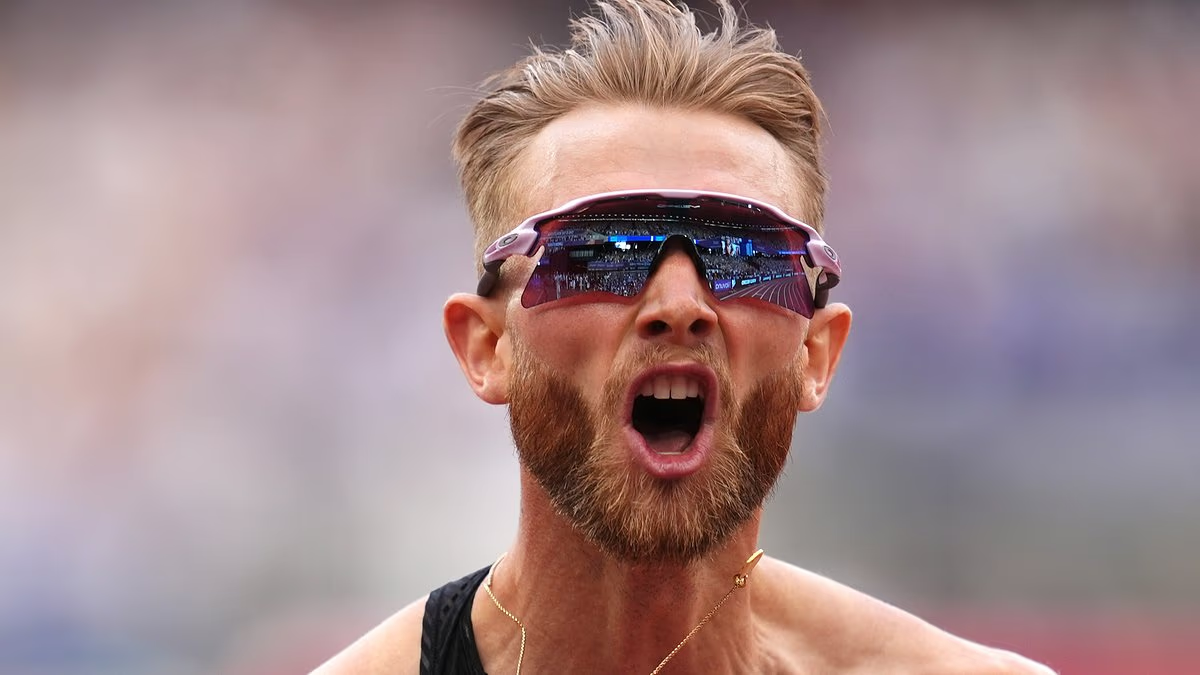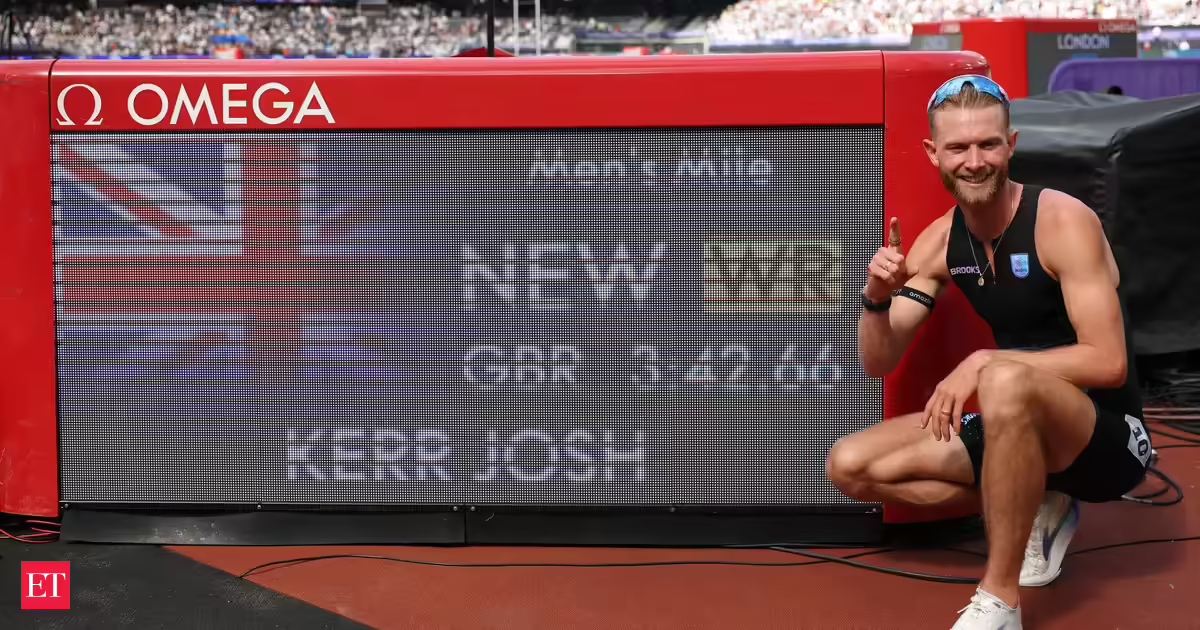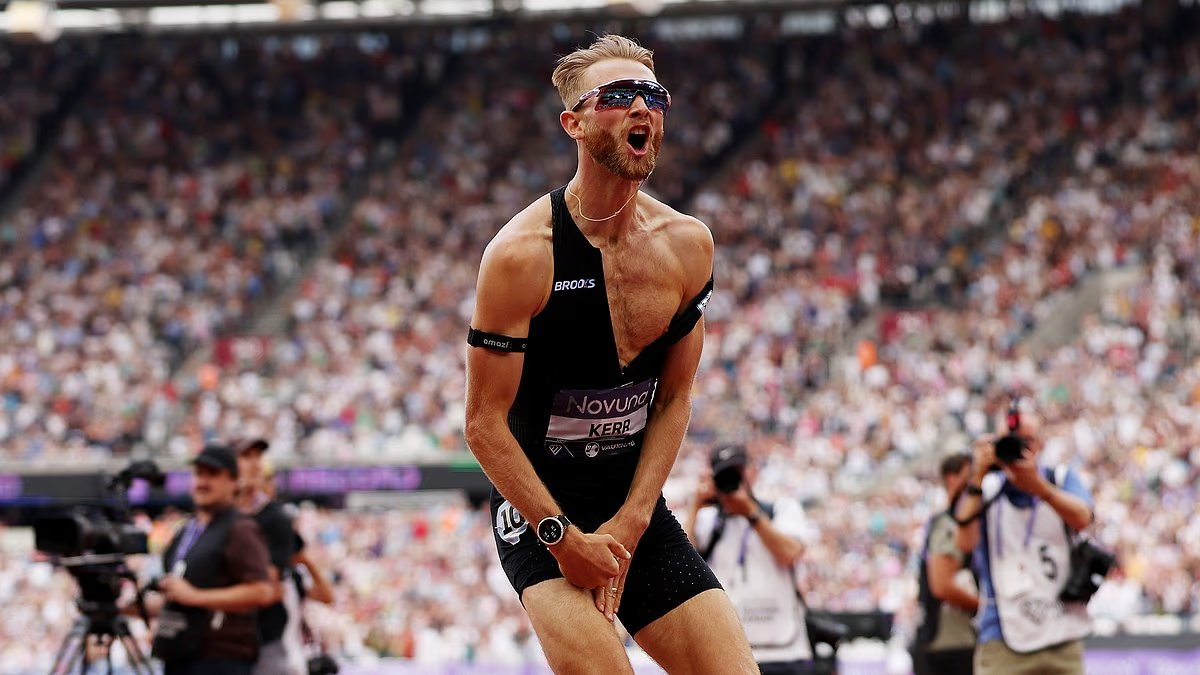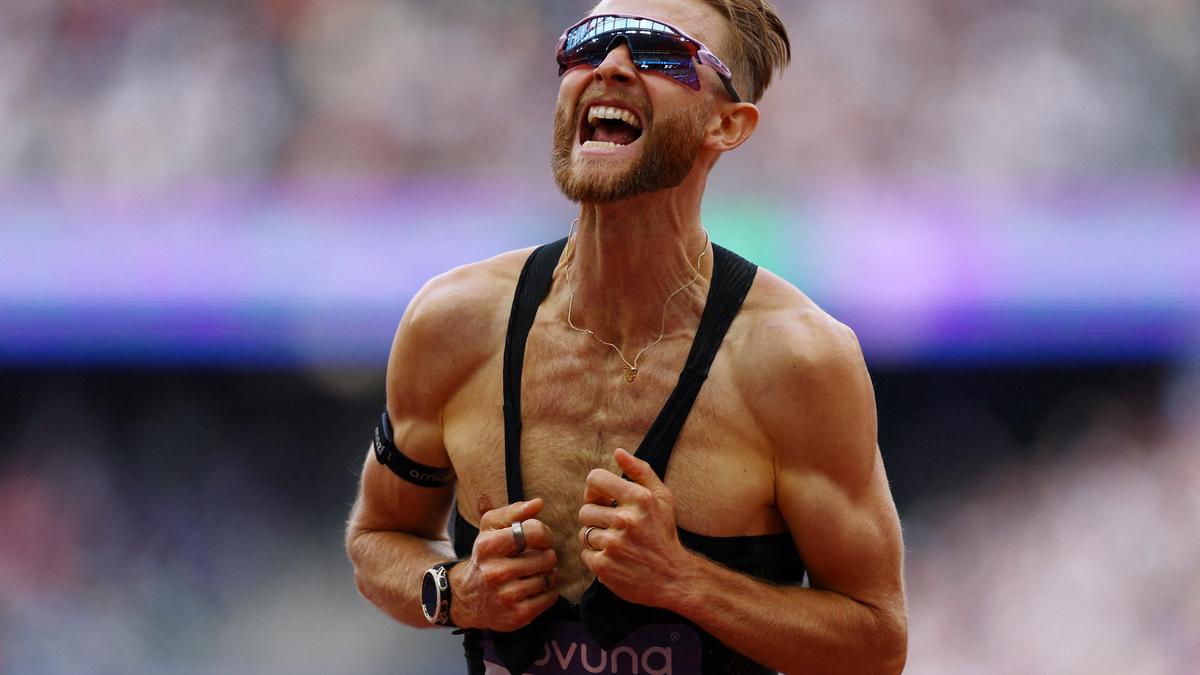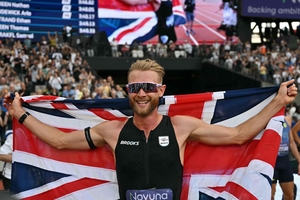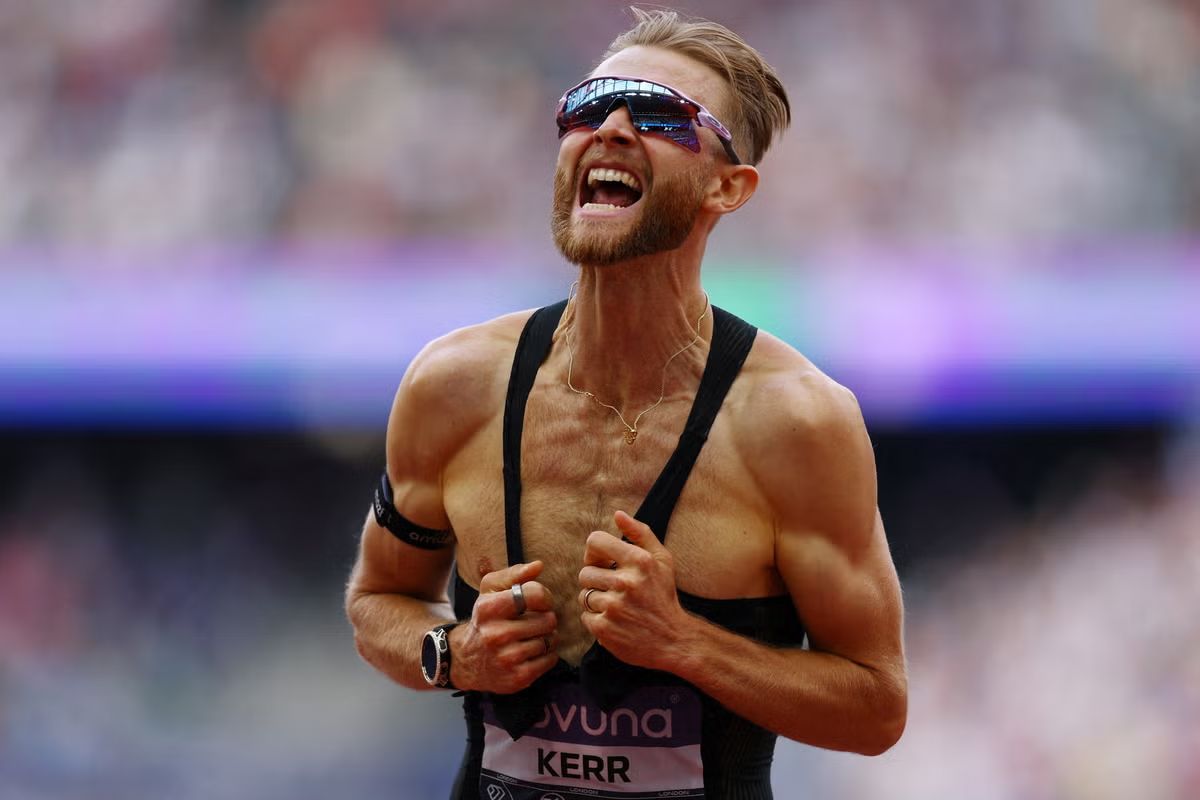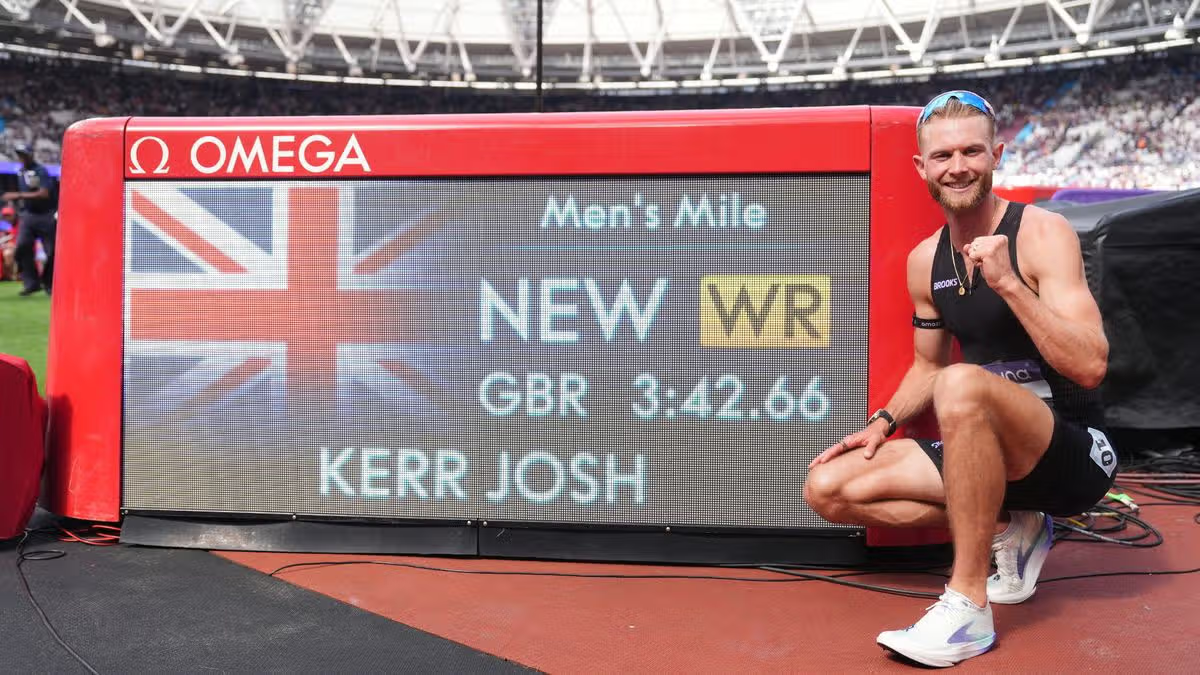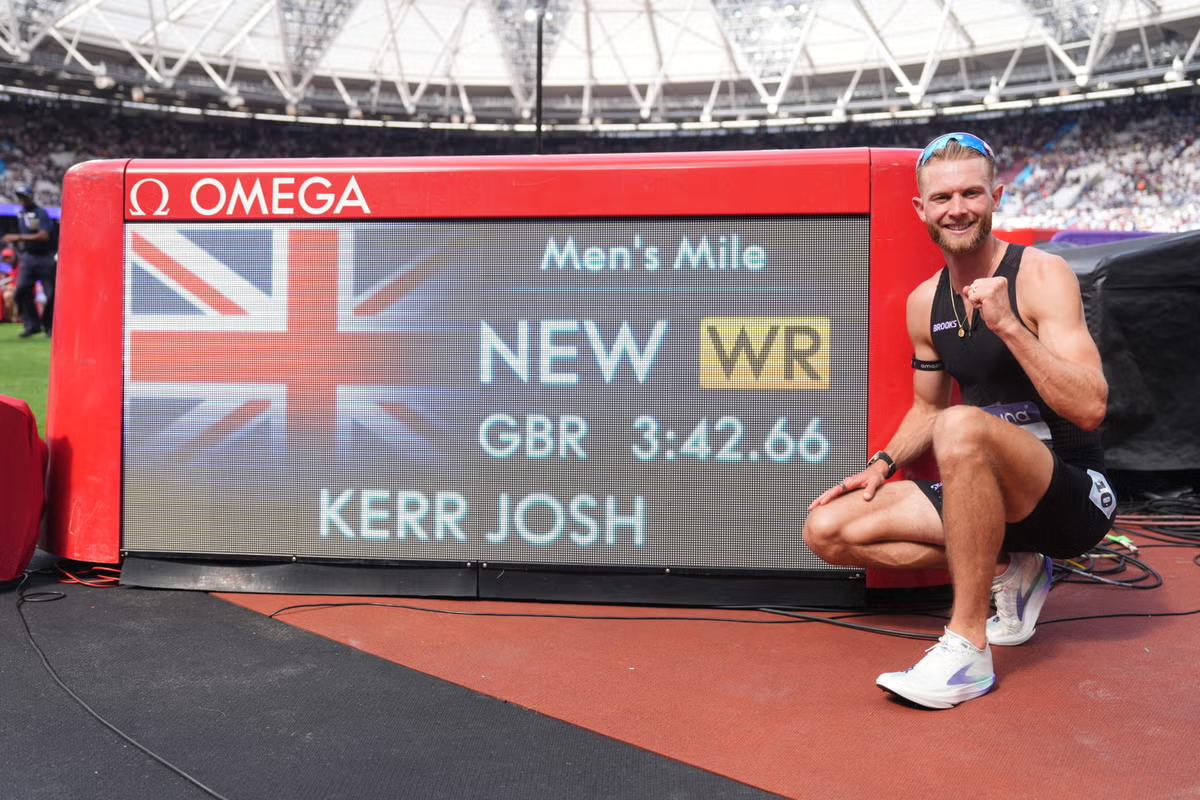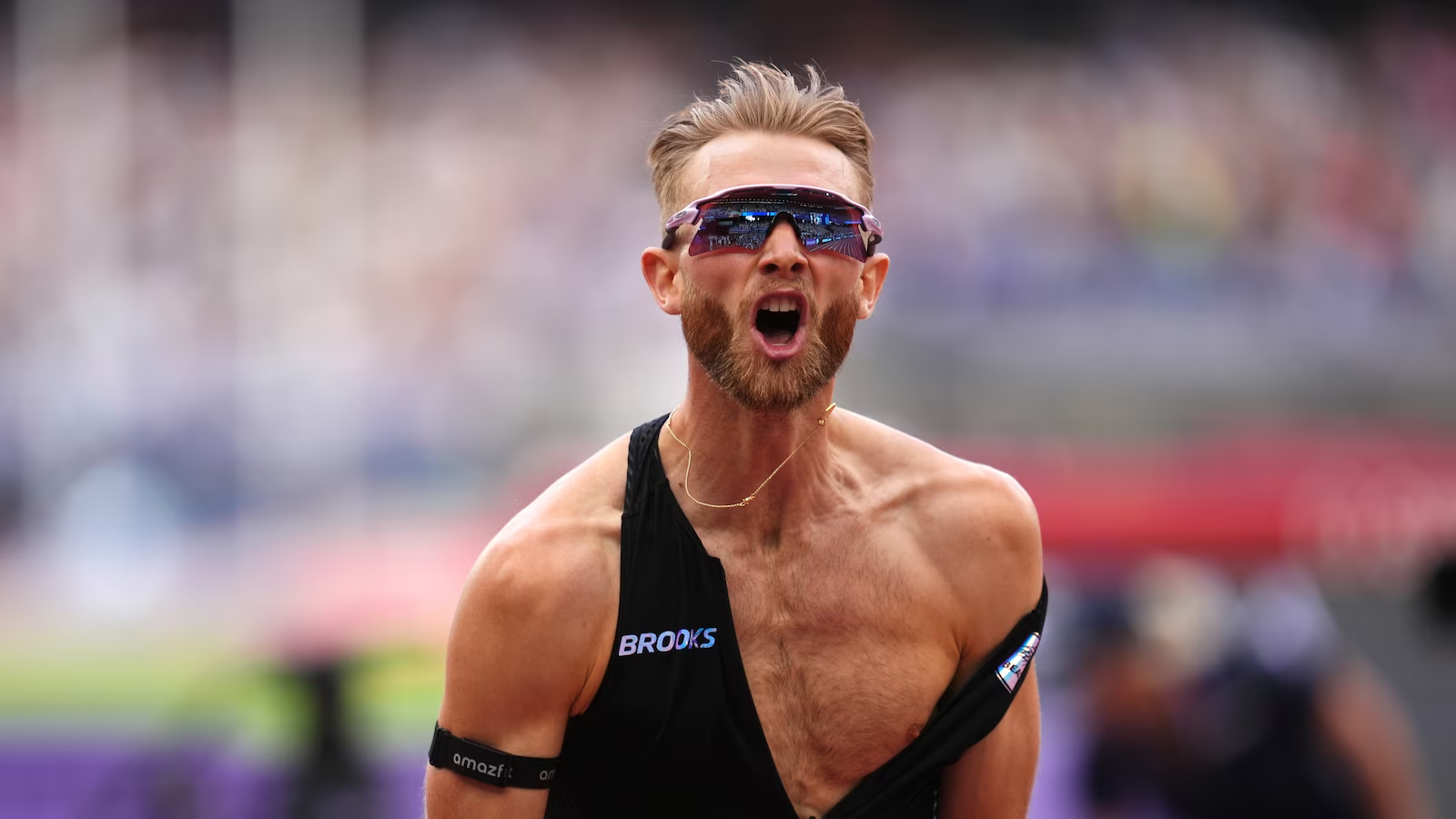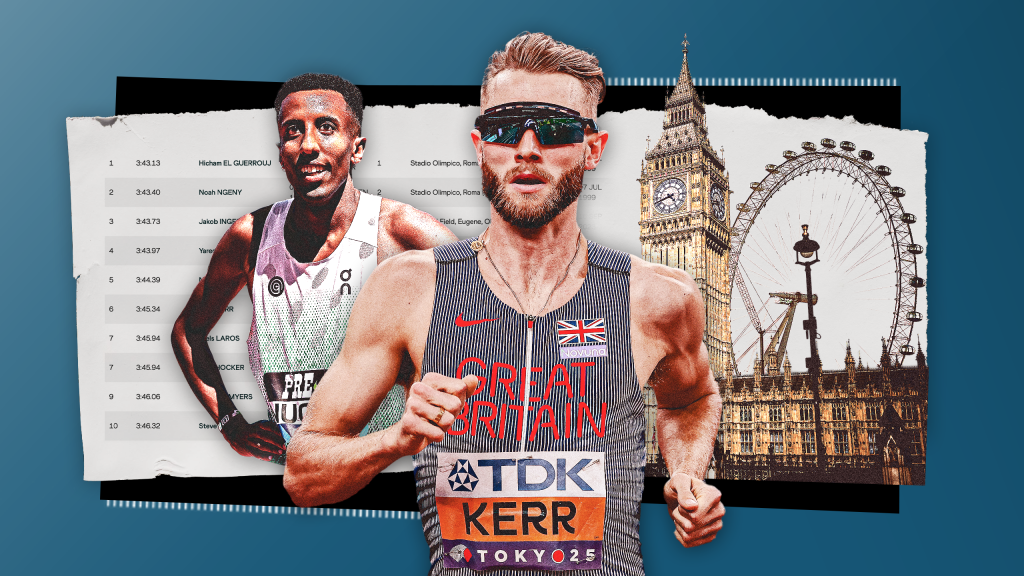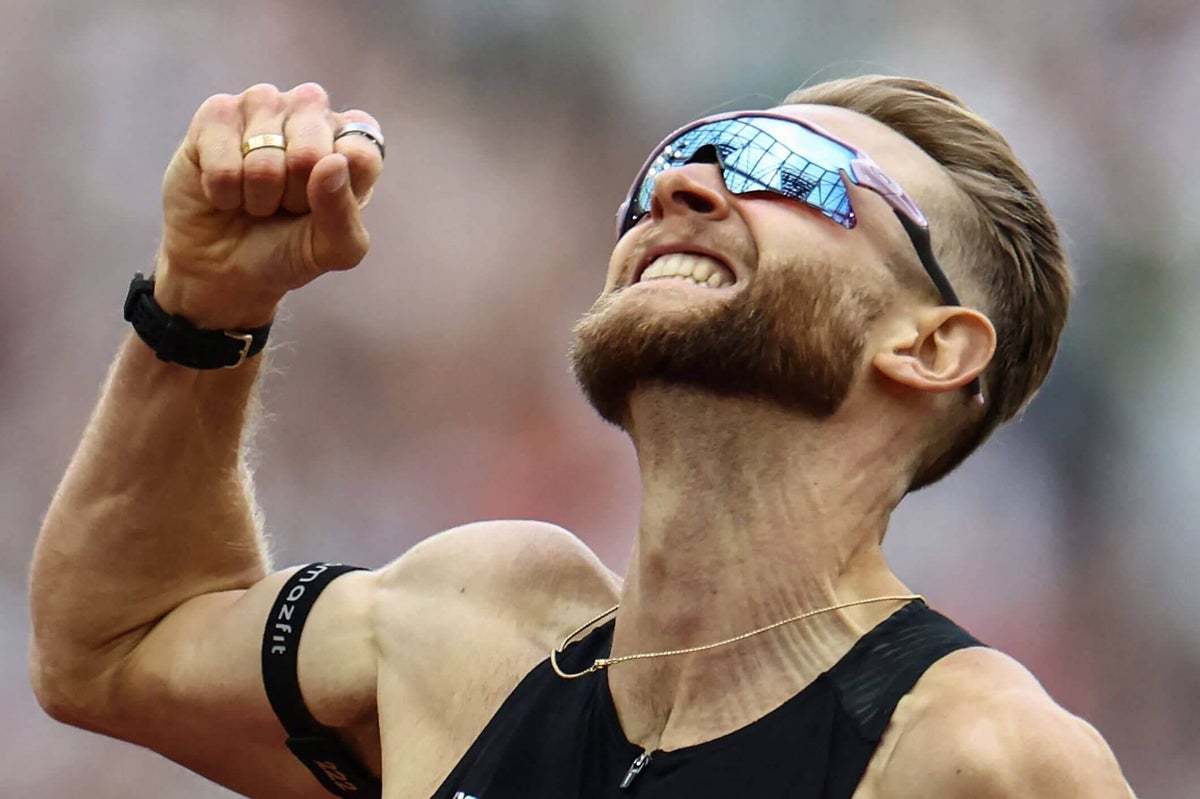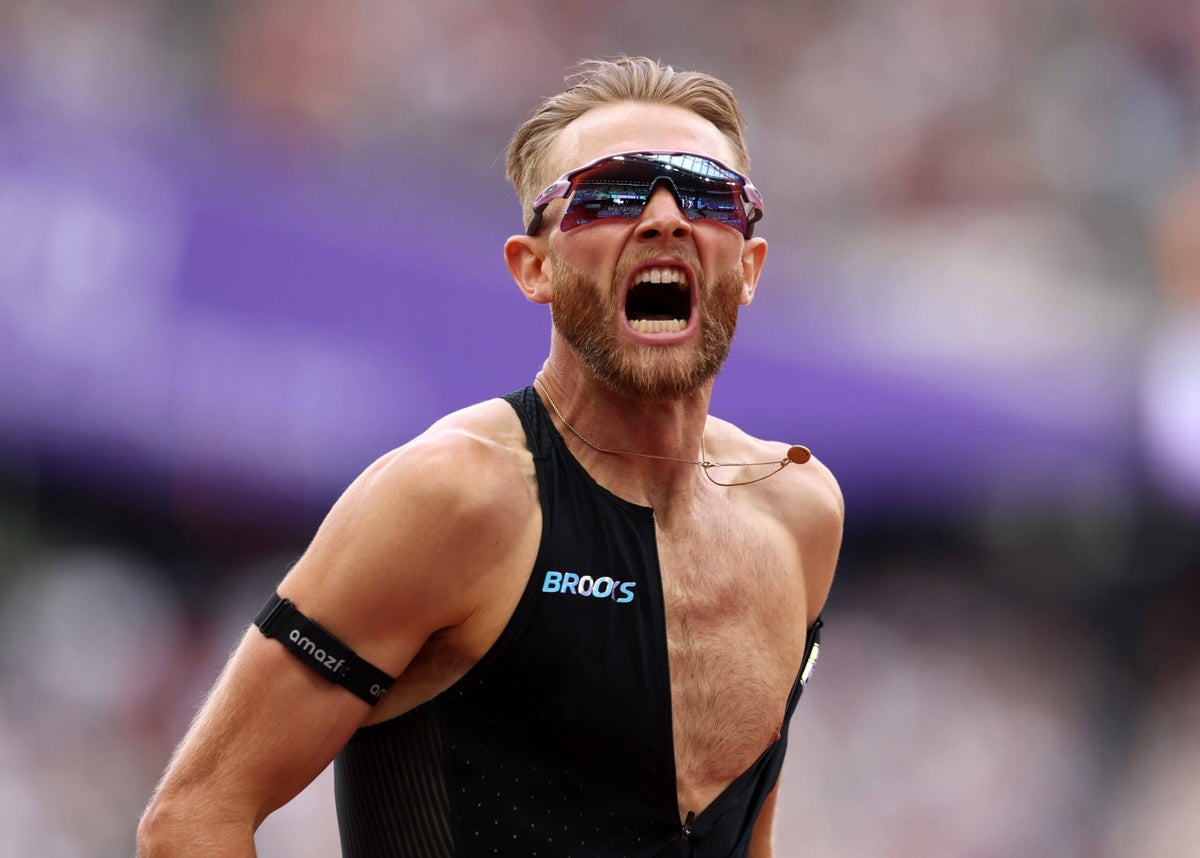
“It’s been a long time coming.”Twenty-four hours after running 3 minutes, 42.66 seconds to break the mile world record, Britain’s Josh Kerr is reflecting on eight months of preparation and a decade in middle-distance running that had been building towards his magnificent performance Saturday in front of a 60,000 sell-out crowd.Relief and elation were his main emotions, the 28-year-old explains from the athlete hotel in Stratford, a short walk from London Stadium, where he had made history the day before.“It was never going to be an easy record,” he says of beating Hicham El Guerrouj’s 3:43.13 run in Rome 27 years ago. “We discussed it so many times.”Josh Kerr with The Athletic’s Liam Tharme and George Edwards (The Athletic)The Athletic shows him a video from his Instagram in May 2024, days before he ran 3:45.34s to topple Steve Cram’s British mile record at the Prefontaine Classic. In the video, he and American coach Danny Mackey are talking about records, as Kerr sips water in rest between reps.“We can get that one,” Kerr said in the video, in reference to Cram’s benchmark, “It’s the other one (the world record), that’s quite difficult.”He can smile about it now. “It was still a bit of a pipe dream at that moment,” the Scot says, looking back rather than forward for the first time in a while.“It’s true, it was always on our minds. There were conversations for a long time, but it took me to start swinging for the fences to make this possible.”As Kerr lined up on the start line Saturday, the stadium fell silent. He had told the world he was attempting the world record. This was the event they had come to see.Kerr and his pacers lined up on the outside, wary of cutting in from wide a year on from Cameron Myers toppling over and out just behind him in the 2025 Diamond League meet, where Kerr finished second in the 1500 meters.He reflected that the group went out a little too hard — “my fault, but I needed to set the rhythm as it was” — and he knew they could rectify early mistakes throughout the race. His biggest goal? “No 56s,” he says, referencing the time in seconds for each lap.“56 is a bad spot to be in, in this race. If you run all of it in 55s, you’ll be able to get the record.”“I trusted my pacers to hit the marks and they did extremely well,” Kerr adds, despite both Slovenian Žan Rudolf (at 1,000m) and longtime American training partner Brannon Kidder (at 800m) dropping out 200m short of their intended targets.Kerr, a two-time world champion, was listening out for code words for four possible race situations to spur him on when Kidder pulled beside him before letting him go. “I couldn’t hear what he said, but I saw his arm pushing me on, and that’s all I needed.“He was a rock for me mentally, right by my side every step of the way and had more confidence in me than I did sometimes.”A sell-out crowd of 60,000 at the London Stadium cheered on Josh Kerr during the race. (Henry Nicholls / AFP via Getty Images)At that point, just over halfway, Kerr was three strides behind Rudolf, who would go on to set a personal best and national record in the 1,000m. “His thing at that moment was to make sure he left me in a momentous position with peace of mind.“That meant he needed to pick it up, because I was not then focused on how far I had to go, just on getting back on his heels. He left early but left me at the right place, and guided me into the next step of my race perfectly.”‘The race is on now,’ Kerr said to himself at that moment. The pacers were gone, the field was close behind and he had 600 meters to deliver on his promises and write his name into track and field history.Going into the final lap, with 2:46.5 on the clock, Kerr says he was “in the promised land.” He could see the blue wavelights below him, meaning his pacing was perfect. “This is where I was at my best and my most flowy,” he says.But there was still also a race to win. Yared Nuguse, the American record holder over the distance, was behind him, having been on his tail since the 200m mark. Kerr wanted Nuguse — who before the weekend had a better mile PB than him — close because he knew the American would push him now that he was running solo.As the bell rang to indicate 400m remaining, Kerr says he made his most “defining” decision of the race.“There was a lot of negotiation with my own body and my mind,” Kerr says. “I wanted to go, but I knew it was not the right time to push, because I was running fast enough.”Mackey had told Kerr to resist giving his all until the final 150 meters. As he crossed the 1,300m mark, he did not even look at the split, such was the flow he had found, increasing the gap to a tiring Nuguse with every stride.“Once I saw my 1500m split (3:27.7), I knew I had it. It was just about getting my a** to the line.“It was like an out-of-body experience. You’ll see me start to lean towards the last 50m. I saw the clock ticking and didn’t think I would get there as quickly as I wanted.”The crowd, fully engaged throughout, roared him to the line. Not that Kerr knew it — his hearing went with 110m to go.“It happened in the first 300 meters at the (Paris 2024) Olympics (where he claimed silver in the 1500m final, behind American Cole Hocker), so for it to occur then, in one of the hardest races I’d ever run, it cannot be physical,” he says. “It is mental and emotional. A lot of it has to do with the atmosphere and occasion.”Runner Josh Kerr on how he approached the race from 1000m onLiam TharmeOccasionally it happens in training, too, though only when he pushes his body to the limit.“It’s a very calming sensation, a trigger,” Kerr says. “As soon as it happens, it is my body telling me everything I don’t need is shutting off, and I’m going to get to the line as quickly as possible.”Kerr called this back in March, when he went public with ‘Project 222,’ named after the number of seconds in a 3:42 mile.In late 2025, his teammates and staff knew about his desire to break the mile world record. Kidder paced him in training at altitude in Albuquerque, New Mexico (1,626m; 5,335ft), his main residence for training, and his sponsor Brooks supported him with bespoke spikes and an aerodynamically tested speed suit for London.Project 222 could be viewed through the lens of one perfect race, but the flow he exuded on the closing lap was forged in weeks of relentless routine.“I’ve got some good videos on my phone that I wish I could show you,” Kerr says. “The sessions were not hard, but the week-to-week was very difficult. The structure of getting to bed and eating on time, nutrition, meetings — it’s all very mundane.“Everything accumulates. There were some distinct moments that I’m just, ‘F*** this’. I’m 16 miles into a day and I’m sitting here eating a salad and a couple of grains of rice, like, what are we doing?“But then the reflection comes on what an honor it is to sit here and to complain about a job that is my dream, going after something that no one’s ever done before.”Josh Kerr crosses the finish line to break the men’s mile world record. (Henry Nicholls / AFP via Getty Images)By the final week of training, Kerr’s confidence had become impossible to hide. He had spent months documenting his progress on YouTube, and the final workout he posted, a 1,200m time trial, would have convinced even his skeptics that the world record was within reach.The original video, published on July 13, cut away after 800 meters, the clock reading 1:50.6. Only on the eve of the race did Kerr reveal the full effort: 2:42.45, more than five seconds quicker than El Guerrouj had split 1,200m in his 1999 record run — and at altitude.There are no certainties in sport. But this showed he was more than capable.“The full trial was supposed to go six days before raceday, but I didn’t want to give that much time for people to stew with it. I was wary of how it looked because of how much easier the 1,200m is mentally — at 600m, when things get tough, you are over halfway.”
Josh Kerr temporarily lost hearing and ‘negotiated’ with his mind during mile world record
Twenty-four hours after breaking the men's mile world record, Josh Kerr reflects on his achievement with The Athletic
1,645 words~7 min read