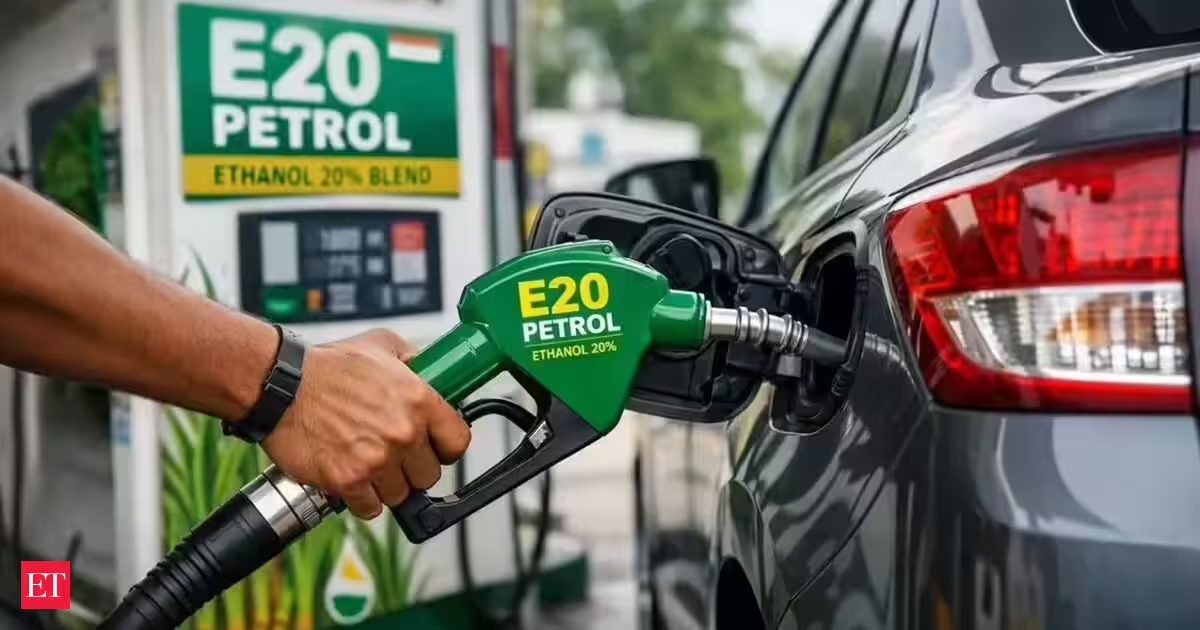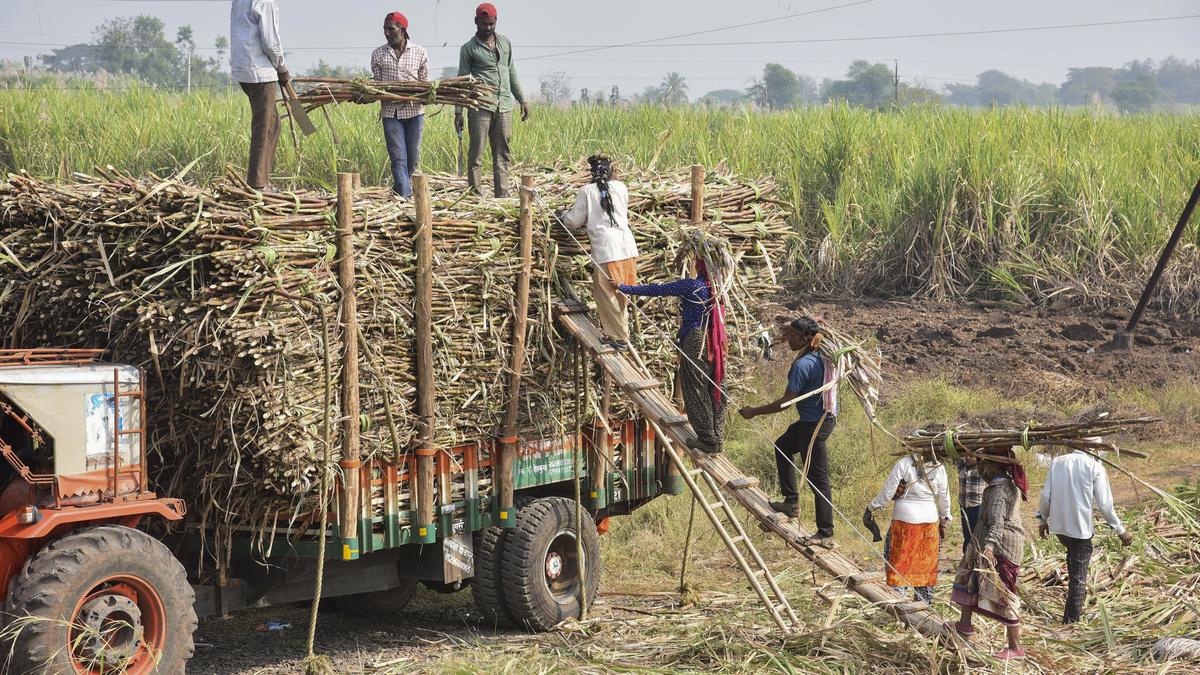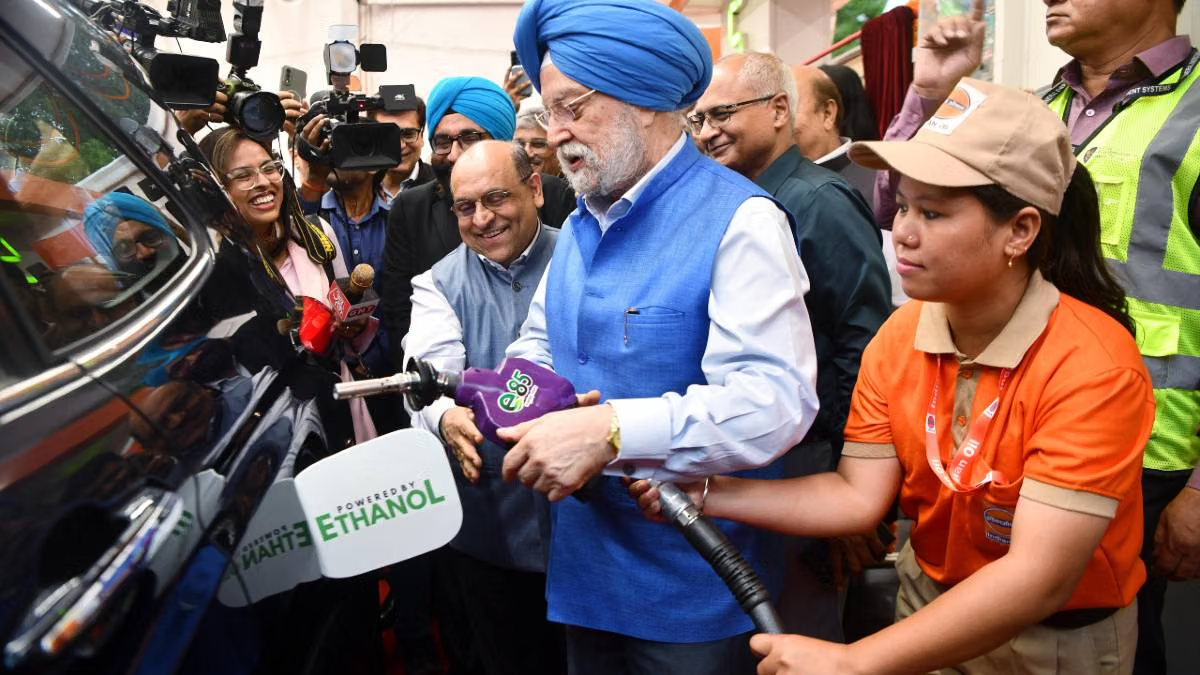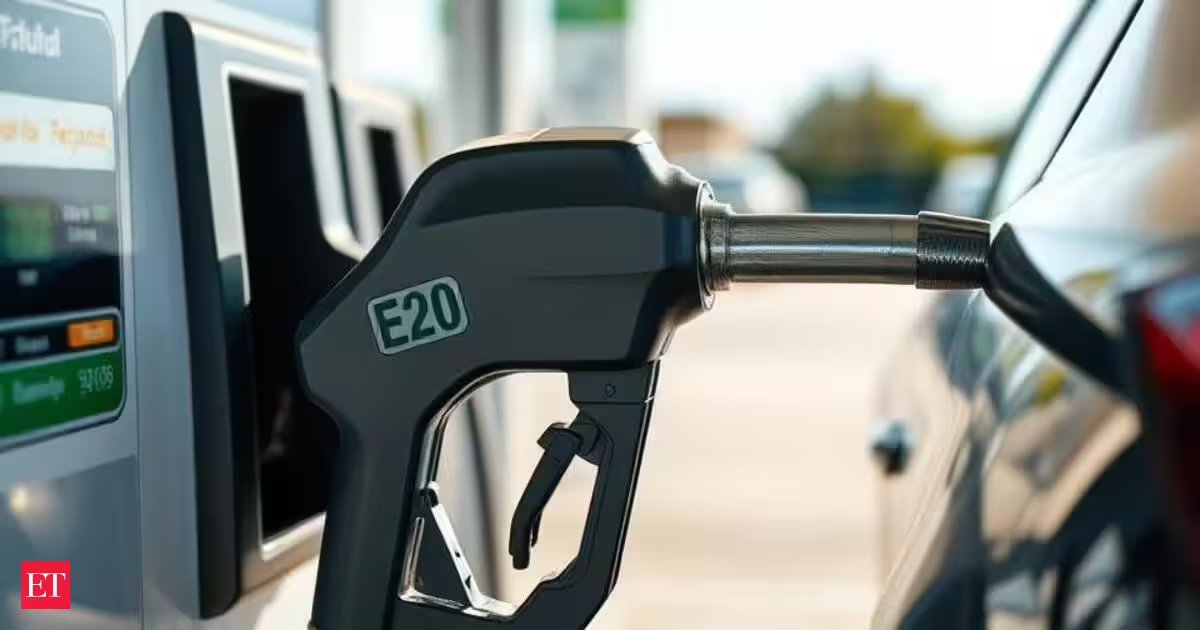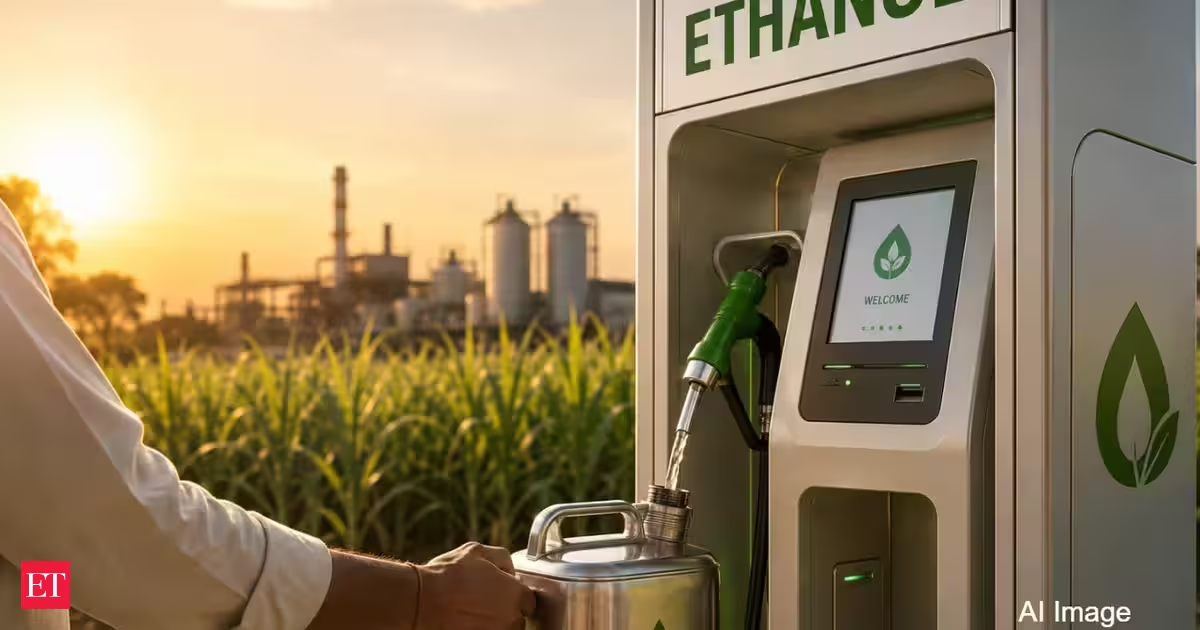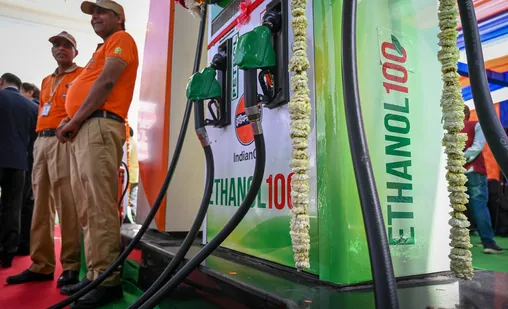
India’s ethanol blending programme (EBP) has become one of the country’s more visible energy security interventions. Launched in 2014 to cut crude oil imports, the programme has scaled rapidly since 2021 by incrementally blending ethanol produced from sugarcane, rice, and maize with petrol, reaching a milestone of 20% blending (E20) in 2025, five years ahead of the original target.India should support second-generation biofuel production from agricultural, municipal and other organic waste. (HT archive)The next phase of the programme cannot be guided by narrow blending and petrol substitution targets alone. India now needs a more transparent way to account for ethanol’s rising fiscal and sustainability implications, especially the pressure it places on land, water, and food systems.Since 2014, official estimates credit the programme with foreign exchange savings of more than ₹1.9 lakh crore and additional farmer incomes of more than ₹1.6 lakh crore. In 2025, ethanol blending offset crude imports by close to 3.5%, amounting to savings of nearly ₹42,000 crore. These are significant gains for a country that imports most of its crude oil. Yet, as India considers higher blends such as E22, E25, and E27, and explores blending diesel with isobutanol at up to 15% in the coming years, policy must ask a hard question: What is the full cost of scaling this domestic fuel, and who bears it?Also read: Ethanol blending won't lower fuel rates: Ex-HPCL chief busts ‘myth’This matters because the ethanol economy is now structurally embedded. To support the programme, the central and several state governments provide incentives for setting up distilleries. Capacity has grown rapidly. While demand was nearly 12 billion litres in 2026, production capacity stood at around 20 billion litres. The investments in this capacity, the dependence of farmers’ incomes on ethanol-linked procurement, and the rural economy built around distilleries are now important realities that make the stakes in governing the expansion of further ethanol blending crucial. This comes with two notable challenges.Fiscal implicationsOil marketing companies (OMCs) procure ethanol at a fixed price depending on feedstock. However, this price does not capture the full public cost of the programme. Electricity and fertiliser subsidies support crop cultivation. In addition, rice is procured at the minimum support price, while broken or damaged grains are sold to ethanol distilleries at a loss. The GST on ethanol meant for blending was also reduced from 18% to 5% in 2021.Also read: From sugar to biofuel: How ethanol transformed Maharashtra’s sugar economyWhen these implicit costs to the exchequer are aggregated, the true cost of ethanol procurement in the ethanol supply year (ESY, Nov–Oct) 2024–25 was close to ₹87,390 crore, against an OMC procurement cost of ₹62,566 crore. This gap of ₹24,824 crore in one year represents additional public expenditure or foregone revenue. Fertiliser and electricity subsidies alone account for ~46% of this gap. If ethanol demand rises to 16 billion litres by 2028 — assuming E20 demand continues to grow and adoption of E85-compliant new petrol cars becomes substantive — this gap could grow to ₹38,226 crore.In addition, a recent Union government notification exempts E22, E25, E27, and E30 blends from central excise duty, which amounts to close to 20% of the retail price. For comparison, the excise duty on petrol would have contributed over ₹45,000 crore to the Centre in 2024-25, based on demand and prevailing duty rates. As blending levels rise, these foregone revenues must be counted as part of the programme’s public cost.Food, land, and water nexusEthanol feedstocks are agricultural commodities produced with land, water, fertilisers, and electricity. Sugarcane and maize require around 210 litres and 500 litres of water per kilogramme of feedstock, respectively. Rice cultivation is already a leading driver of groundwater depletion in Punjab and Haryana, or parts of Maharashtra, where sugarcane acreage is expanding. Spring maize cultivation also worsened water stress in Punjab ahead of the monsoons. Scaling up ethanol from these feedstocks could deepen scarcity in already water-stressed districts.Also read: ‘No widespread issues’: On E20, govt faces question in Parliament, minister say this in replyFood security is linked to this resource question. In ESY 2024–25, the government released close to 52 lakh tonnes of surplus Food Corporation of India rice for ethanol production. This may be manageable when stocks are comfortable. But rice remains a staple for lower-income households, and such diversions could become harder to justify if ethanol demand grows substantially.Growing ethanol production is also drawing farmers towards maize and away from pulses and oilseeds, whose acreage has declined correspondingly. Such a shift away from pulses and oilseeds deepens India’s 60% import dependence on edible oils, weakening the government’s own crop diversification objectives.India needs a second-generation governance framework going forward.First, the government should publish annual estimates and projections of the total public expenditure of the programme. These should include not only OMC procurement costs but also implicit subsidies, tax concessions, foregone revenue and the cost of feedstock support. This must be followed by periodic reviews by an expert committee composed of stakeholders from the government, financial institutions, research institutions, ethanol producers, farmer cooperatives, automobile manufacturers, and consumer groups. Further expansion of the programme should be based on detailed analyses and recommendations made by the committee.Second, India should support second-generation biofuel production from agricultural, municipal and other organic waste. This would help reduce resource-use concerns associated with existing first-generation feedstocks. Subsidies should instead be redirected towards R&D for second-generation and advanced biofuels, especially cellulosic conversion technology and supply-chain infrastructure for biomass aggregation, storage and transport. This could also help India take a lead in servicing other developing countries which have significant biomass endowment, and help reduce solid fuel dependence.The EBP has delivered real energy security and rural economy gains. However, its success should be measured not only by declining crude imports and improved farmer incomes, but also the overall fiscal costs, the opportunity costs of not using surplus crop residues and wastes, and the land, water and wider resource footprints of biofuel production.Karthik Ganesan is fellow and director-Strategic Partnerships at the Council on Energy, Environment and Water (CEEW) and Ramya Natarajan is research scientist and group head (mitigation) at the Centre for Science, Technology and Policy (CSTEP). The views expressed are personal
Real markers of success for ethanol blending: What it entails, why and how much it costs
Oil marketing companies procure ethanol at a fixed price depending on feedstock. However, this price does not capture the full public cost of the programme.
1,021 words~5 min read