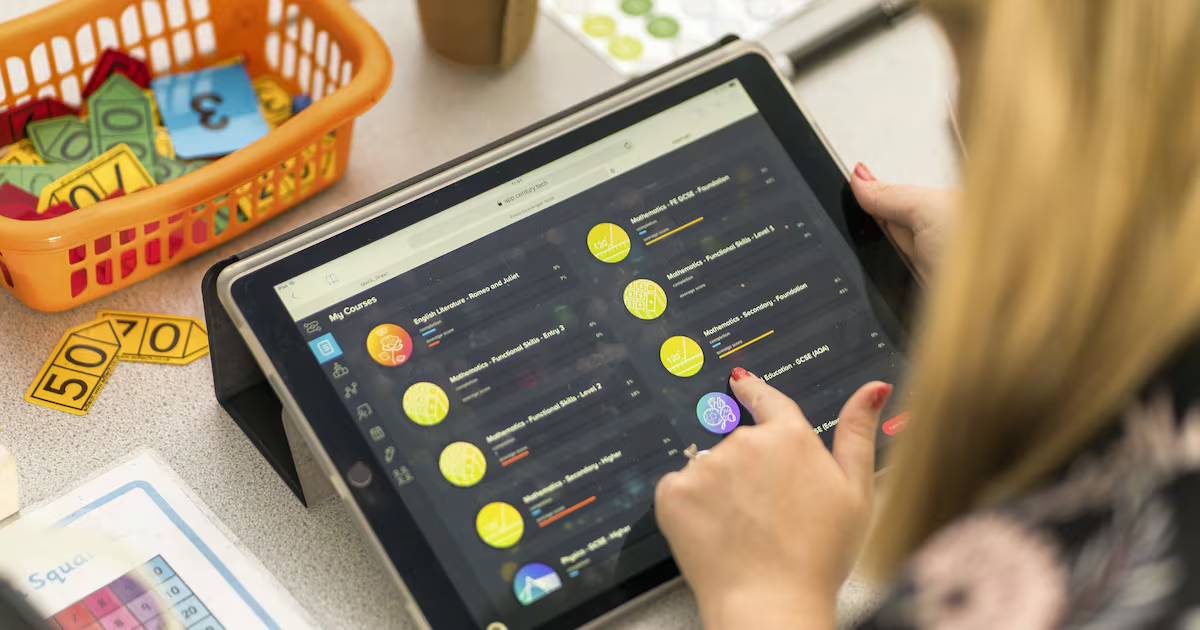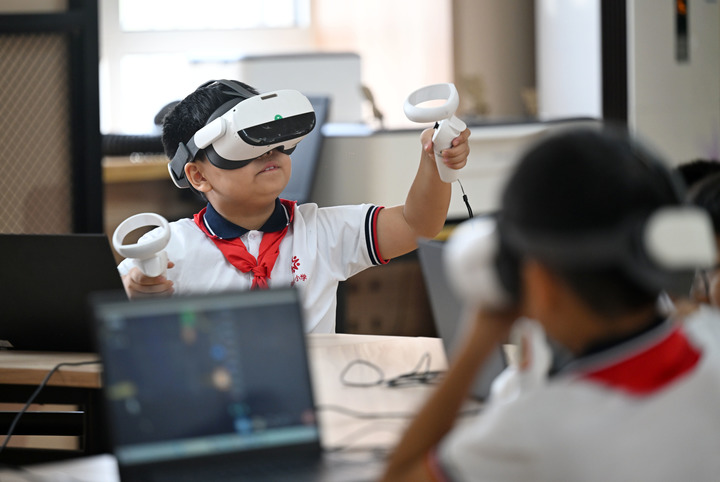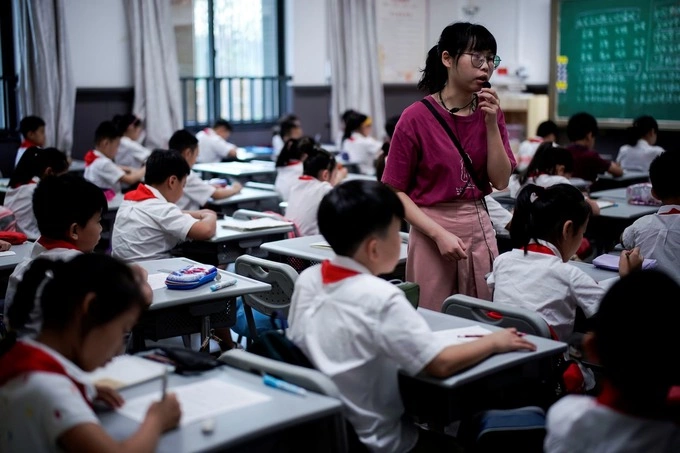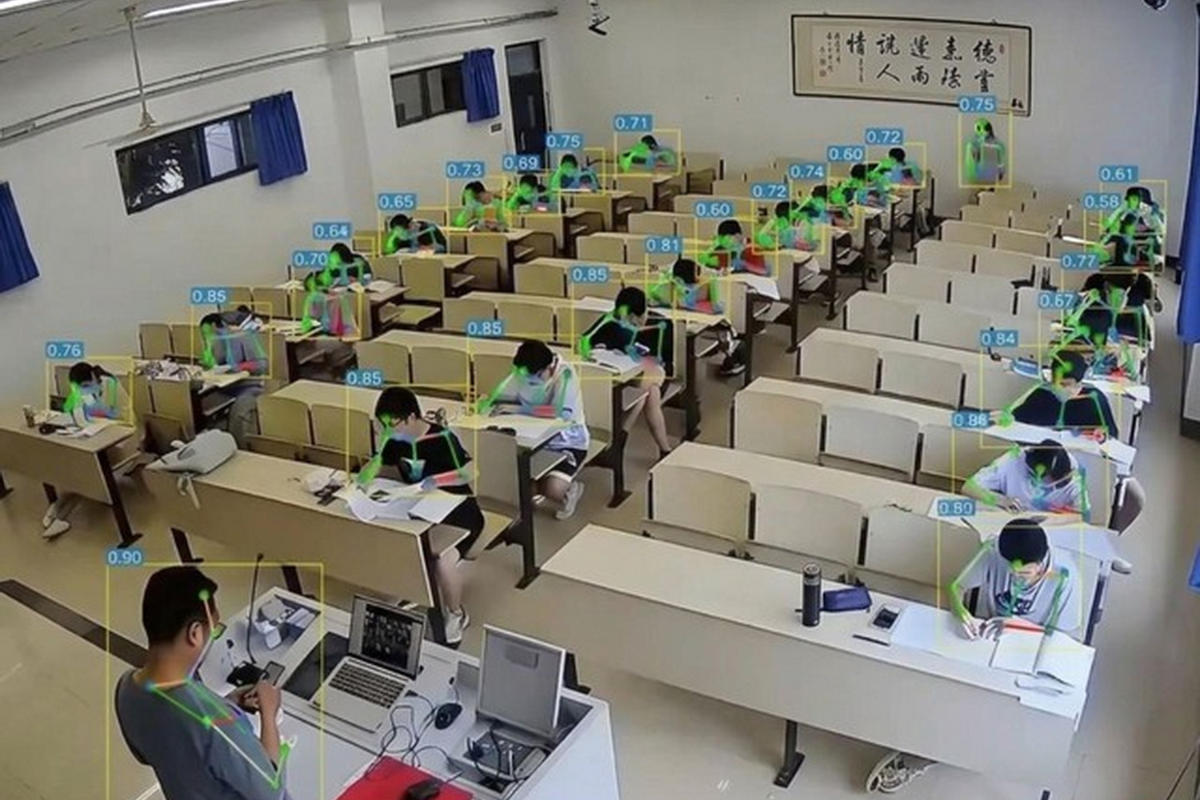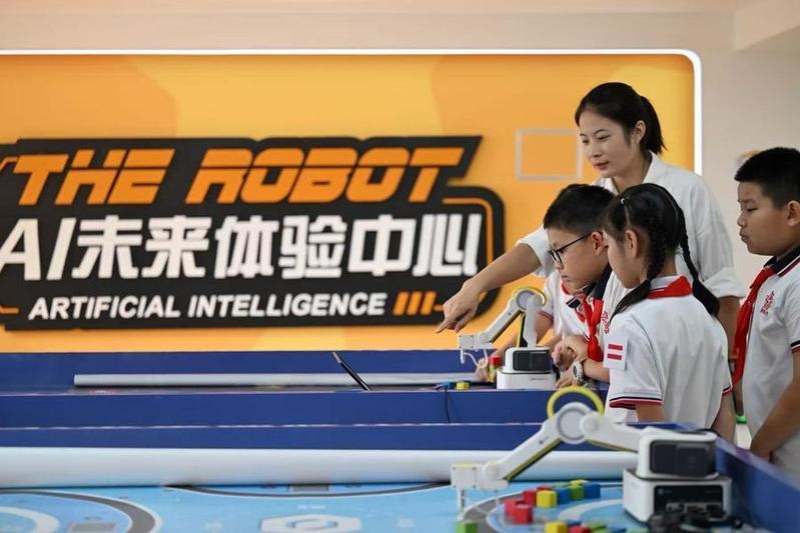
Students control a simulated robotic arm at an AI experience center of a primary school in North China's Tianjin, Sept 4, 2025. [Photo/Xinhua]
BEIJING - By the time the math class kicked off at Beijing No. 13 Secondary School, an artificial intelligence (AI)-powered "agent" had already crunched weeks of student data, analyzing each student's recent classroom participation, homework and quiz results.
Within minutes, it generated tailored question sequences for students at different learning levels and personalized after-class assignments, while teachers reviewed and refined the AI-generated content before putting it into use.
This scene reflects a broader transformation taking place in the world's largest basic education system — which serves more than 220 million students — as China turns to AI to improve the quality of basic education and better meet the needs of individual learners, following decades of expanding access to education and narrowing regional disparities.
Having largely achieved universal enrollment in compulsory education, China is shifting its focus from ensuring every child's access to schooling toward providing every child with higher-quality, more personalized education.