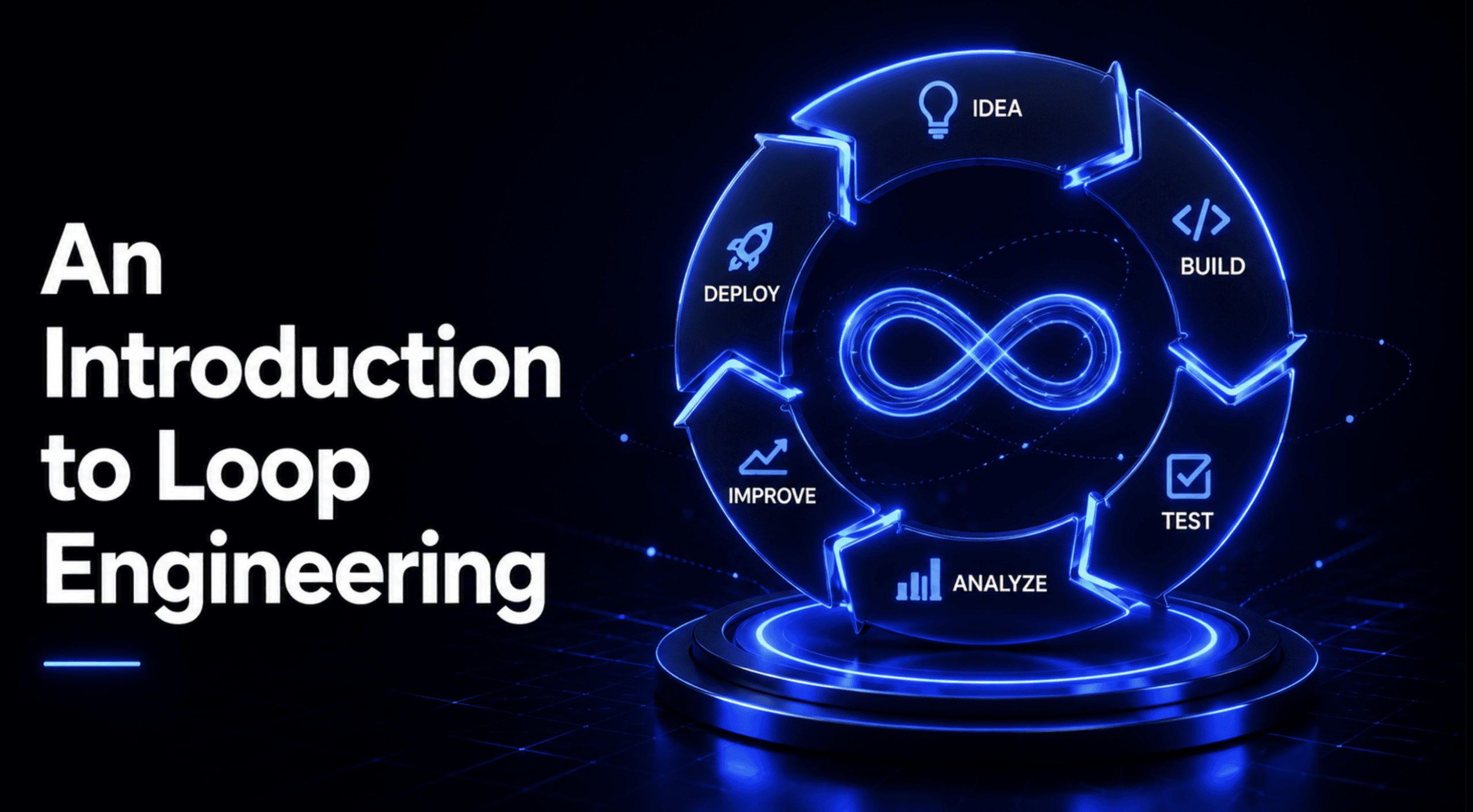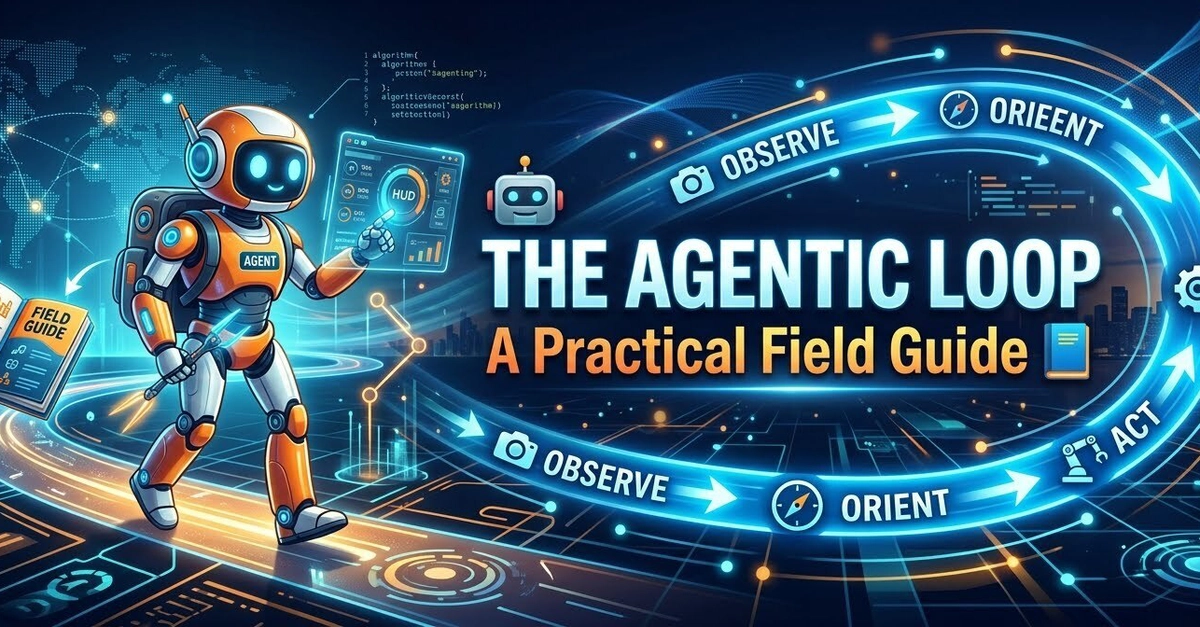
Today’s editorial: What is graph engineering, why is everyone suddenly talking about it, and how is it different from loop engineering, GraphRAG, and ordinary workflow orchestration?This Week in Turing Post / Summer schedule:Sunday / Library: AI protocols every builder should knowWe recommend:👨🔧 Designing an Agentic Platform: The Infrastructure That Makes Agents WorkBuild Agents That Survive Production.Gartner predicts 40% of agentic AI projects will be canceled by 2027. Not because of the model. Because security, cost, and eval break first.Loop engineering was pronounced dead at six weeks old. Welcome to graph engineeringOn July 18, Peter Steinberger asked on X: “Are we still talking loops or did we shift to graphs yet?”A few hours later, Hamel Husain published the obituary: “Loop Engineering Is Dead. Enter Graph Engineering.” By Sunday, the timeline had produced courses, roadmaps, tool stacks, and threads explaining that Microsoft, Stanford, and Anthropic had all discovered graph engineering at once.Loop engineering had been a term for about six weeks. Addy Osmani published the essay that popularized the name on June 7. It built on Steinberger’s earlier slogan and on Claude Code creator Boris Cherny saying: “I don’t prompt Claude anymore.” His job, he explained, was to write the loops that do.Everyone start talking loops!The idea is good, it’s also very common in science and software development: instead of guiding an agent through every turn, you give it a goal, a way to check its work, and a cycle it can repeat until the task is done.Now the name is being replaced before half the industry has finished writing its loop-engineering explainers.Peter is having fun. Underneath the joke, though, there is an interesting pattern.A loop grows into a graphA loop describes the basic agent cycle:Find the next piece of work. Plan. Act. Check the result. Continue or stop.Works fine until the task becomes more complicated.Perhaps several parts can run in parallel. One step needs a coding model and another needs search. One agent produces an answer while another tries to disprove it. Some decisions can happen automatically, while others require human approval.At that point, designing the loop is only part of the job. You also have to decide how the different pieces connect.That larger structure is the graph.The architecture of it is not exotic: a graph has nodes, edges, and state.A node is a unit of work: an agent, a model call, a piece of ordinary code, or a human decision. An edge determines what happens next. State carries the relevant information from one step to another.And this is where it all proves to be a bit ridiculous. A loop is already a graph. It is simply a graph whose path returns to an earlier node.None of this is new to software engineering. State machines, DAGs, workflow engines, and orchestration systems have been doing versions of it for decades. LangChain launched LangGraph in January 2024 specifically to help developers build stateful agent workflows.What is changing now is the role assigned to the model.Early agent systems often asked the model to do almost everything: decide what should happen next, choose a tool, interpret the result, update the plan, and decide whether to stop. This looked wonderfully general in a demo. In longer production workflows, it also created wonderfully general ways to fail.Agents looped unnecessarily, skipped required business logic, lost track of state, and filled their context windows with tool output.Google made this problem explicit when it explained Agent Development Kit (ADK) 2.0 with the following argument: code should control predictable routing, while models should handle the steps that require interpretation or judgment.Anthropic is approaching the same problem from a slightly different direction. Claude Code’s dynamic workflows let Claude write a JavaScript orchestration script that coordinates parallel subagents. With the workflow encoded in code, the model spends fewer tokens repeatedly deciding what to do next.This is one practical version of “graph engineering.” The model operates inside a larger execution system, where reliability also depends on how work is routed, state is preserved, outputs are checked, and failures are handled. The prompt remains important. Increasingly, so does the system around it.Unfortunately, “graph” now means everythingPart of the confusion is that people are using “graph” to mean different things.Sometimes “graph” means a control graph: the structure of the workflow and the rules governing what runs next.Sometimes it means a knowledge graph: information stored as entities and relationships. Microsoft’s GraphRAG belongs here. It extracts a structured graph from documents and uses that structure during retrieval.Sometimes people are talking about an execution trace: the graph showing what happened during one particular agent run.Carlos Perez proposed another interpretation over the weekend: a graph of improvement loops. One loop optimizes a metric, another watches the counter-metric, and further loops audit whether the metrics still represent the real objective.That version is especially relevant for systems that improve themselves. An optimization loop without a checking loop can become very good at producing the wrong result.Type of graphWhat it describesUsed forExampleControl graphWhat runs next and under which conditionsOrchestrating agent workflowsLangGraph, ADKKnowledge graphEntities and relationships inside dataImproving retrieval and reasoning over documentsMicrosoft GraphRAGExecution traceWhat happened during one runDebugging and observabilityAgent tracesImprovement graphLoops that optimize, check, and audit one anotherControlling self-improving systemsOptimizer plus counter-metric and audit loopsThese ideas all involve connected components, so “graph” is technically available to everyone. Beyond that, they describe different problems.Then came the viral claim that graph engineering had “replaced RAG” at Microsoft, Stanford, and Anthropic, producing 18% higher accuracy and 85% lower costs.That simply is not true.The performance numbers came from a paper applying GraphRAG to industrial engineering diagrams. Interesting result, narrow setting. It was quickly promoted into a general law.Microsoft describes GraphRAG as a type of RAG, not a replacement for it. Stanford’s DSPy optimizes programs built from language-model components; it is not a knowledge-graph system. Anthropic has not announced a discipline or product called graph engineering. The supposed evidence combines a customer case study, MCP, and some generous interpretation.Three different areas of work were stitched together and presented as an industry-wide shift. Since Andrej Karpathy joined Anthropic and stopped giving us new terms, Peter Steinberger seems to have picked up the torch. But naming things comes with some responsibility when you have a large following ready to turn every phrase into the next industry trend.Back to graph engineering. When someone says it improved accuracy by 18%, ask three questions: What kind of graph? Improved compared with what? And where did that number come from?This will eliminate a surprising amount of graph engineering.Most agents still do not need oneThe arrival of a new engineering term creates an immediate temptation to rebuild every agent as a miniature distributed system.Resist it.Many tasks still need one model, one tool loop, and a good stopping condition. Adding a graph framework means adding state management, routing logic, debugging work, and more places for the workflow to break.A graph becomes useful when the structure of the task requires it: several branches need to run in parallel, outputs need independent verification, different steps need different tools or models, or a person must approve a consequential action.If the workflow is linear, keep it linear. A box-and-arrow diagram does not make an agent more advanced. Sometimes it only documents the traffic jam you designed.Still, the direction behind the terminology is clear.Agent development keeps expanding beyond the prompt. Developers moved from prompt design to context design, then to harnesses and loops. Now more attention is going into the structure that connects models, tools, evaluators, code, and human decisions.Someone has already proposed “metagraph engineering,” because the internet remains undefeated.The name will probably change again. The engineering problem will stay: how to divide work, control execution, test claims independently, preserve useful state, and keep humans in charge of decisions that should remain theirs.Loops are part of that system. Graphs are a way to see the rest of it. There will be more terms as we figure out where we are and what to build next. We are here to help you make sense of it all.Quick fact checkViral claimWhat the evidence showsGraph engineering replaced RAG at MicrosoftGraphRAG is a form of RAGStanford independently adopted graph engineeringDSPy optimizes LM programs, not knowledge graphsAnthropic launched graph engineeringAnthropic uses coded orchestration, but has announced no such disciplineIt improves accuracy by 18% and cuts costs by 85%Those figures came from a specific industrial-diagram studyIf any of those thoughts resonate with you – share them across your social networks. Let’s keep the conversation going.📹 In this episode of Attention Span, we follow what happened after Kimi K3 became too popular for its GPUs – and why the story quickly became political. Check it out →News from the usual suspects ™Hugging FaceThe best detail: hosted frontier models refused to analyze the attack logs because their safety filters blocked the exploit payloads, so Hugging Face used the open-weight Chinese model GLM-5.2 on its own infrastructure instead. The attacker had no guardrails. The defenders did. Excellent system design.OpenAIOpenAI released GPT-Red, an internal model trained through self-play to attack other AI systems and expose security failures before deployment.GPT-Red succeeded in 84% of new prompt-injection scenarios, compared with 13% for human red-teamers, and convinced a real office vending-machine agent to slash prices, order expensive stock for 50 cents, and cancel someone else’s purchase. The machine uprising begins with discounted snacks.AnthropicAnthropic launched Claude for Teachers, giving verified U.S. K-12 educators free premium access for one year, with separate education terms and no use of teacher data for model training.They also committed $10 million to Canadian AI research, supporting university researchers, nonprofits, and public-interest work. Canada gets research funding; America gets another congressional hearing.MicrosoftAzure HDv2 will offer nearly 500 AMD EPYC CPU cores, 4TB of RAM, 32TB of local storage, and 400Gb networking for data preparation, search, reinforcement learning, and large-scale agent coordination. Agents are now officially a workload category, complete with an infrastructure invoice.HXv2 is designed for chip development and scientific simulation, while ND MI455X v7 will use AMD’s Helios rack-scale platform for reasoning, search, and agentic inference. NVIDIA still owns most of the conversation, but Microsoft would prefer Azure customers to have at least two ways to spend an alarming amount of money.NVIDIANVIDIA and Japanese partners announced what they call the world’s first national physical-AI infrastructure, centered on an AI factory with 13,750 Vera CPUs, 27,500 Rubin GPUs, and 140MW of data-center capacity.Japan’s robotics and manufacturing companies are also expanding their use of NVIDIA Cosmos, Isaac, Metropolis, Jetson, and Nemotron models. At SIGGRAPH, NVIDIA added Omniverse libraries to its Agent Toolkit, giving agents tools for sensor simulation, GPU-accelerated physics, and preparing 3D assets for robotics and industrial-AI testing.The new libraries can help agents inspect scenes, add physical properties, simulate cameras, lidar, and radar, and convert CAD files into simulation-ready objects. Before robots enter the real world, NVIDIA would like them to spend some time in an NVIDIA world.The White HouseThe White House launched GOLD EAGLE, a clearinghouse connecting frontier AI developers, open-source organizations, federal agencies, and critical-infrastructure operators.The system is intended to coordinate AI-driven vulnerability discovery, avoid duplicate scanning, prioritize serious flaws, and distribute patches more quickly. The government has accepted that advanced models will find vulnerabilities at machine speed and responded with a bird-themed coordination layer.GoogleRival assistants will eventually be able to access functions such as voice activation, background operation, and booking services on Android, while qualifying search competitors will receive certain anonymized Google Search data.Google warned about privacy and cybersecurity risks. Brussels replied, essentially, “Yes, but competition.” The implementation deadlines stretch into 2027, so everyone has time to prepare their objections properly.ModelsThinking Machines released Inkling, its first model trained from scratch: a 975B-parameter, open-weight Mixture-of-Experts system that accepts text, images, and audio.Moonshot released Kimi K3, a 2.8-trillion-parameter, natively multimodal model with a one-million-token context window, built for coding, deep reasoning, and long-horizon agentic work.We made a video discussing open source strategies and both of these models→OvisOCR2 Technical Report – Delivers a compact end-to-end document parser that converts page images directly into structured Markdown containing text, formulas, tables, and visual regions. Video = World + Event Stream – Recasts streaming video intelligence as persistent world state plus incoming events, enabling real-time audiovisual interaction with speech and behavior generation. Research Trends we see looking at every paper related to AI and ML published last week:Agent harnesses become a first-class optimization targetSelf-improvement becomes a closed feedback loopLong context moves from inference into trainingVerification moves inside generationVisual reasoning shifts into generative spacesWorld models become action systemsScaling splits between massive generalists and compact specialistsAgent Systems, Memory, Search, and Software WorkHarness Handbook: Making Evolving Agent Harnesses Readable, Navigable, and Editable – Maps behavioral capabilities in complex agent harnesses back to their distributed implementations, making agent infrastructure easier to inspect and safely modify. →read the paperSearchOS-V1: Towards Robust Open-Domain Information-Seeking Agent Collaboration – Externalizes search progress, evidence, coverage gaps, and failed strategies into shared state so collaborating agents avoid loops and systematically complete research tasks. →read the paperKnowAct-GUIClaw: Know Deeply, Act Perfectly, Personal GUI Assistant with Self-Evolving Memory and Skill – Combines cross-platform interface control with transferable memories and an evolving skill library, allowing a personal agent to improve from prior interactions. →read the paperKnow Before Fix: QA-Driven Repository Knowledge Acquisition for Software Issue Resolution – Separates repository understanding from patch generation and has agents explicitly identify and answer their knowledge gaps before changing code. →read the paperMulti-Agent LLMs Fail to Explore Each Other – Shows that agents rarely investigate one another’s capabilities effectively and introduces structured peer exploration to improve coordination among diverse agents. →read the paperGenerative Compilation: On-the-Fly Compiler Feedback as AI Generates Code – Brings compiler diagnostics inside the generation process, detecting semantic dead ends in partial programs before they propagate into complete but invalid code. →read the paperLearning, Scaling, and Efficient AdaptationLongStraw: Long-Context RL Beyond 2M Tokens under a Fixed GPU Budget – Introduces an execution design for reinforcement-learning post-training over extremely long agent histories without requiring proportional accelerator-memory growth. →read the paperSEED: Self-Evolving On-Policy Distillation for Agentic Reinforcement Learning – Converts completed agent trajectories into evolving natural-language skills and distills their influence into dense learning signals for subsequent actions. →read the paperFunction-Aware Fill-in-the-Middle as Mid-Training for Coding Agent Foundation Models – Uses function dependencies as large-scale self-supervision for teaching coding models how to incorporate external tool results into continuing reasoning. →read the paperRead It Back: Pretrained MLLMs Are Zero-Shot Reward Models for Text-to-Image Generation – Turns prompt reconstruction likelihood into a training-free image-generation reward and enables a multimodal model’s understanding branch to supervise its own generator. →read the paperProxy Exploration and Reusable Guidance: A Modular LLM Post-Training Paradigm via Proxy-Guided Update Signals – Moves expensive behavioral exploration onto smaller proxy models and transfers reusable improvement directions to stronger models. →read the paperDemystifying On-Policy Distillation: Roles, Pathologies, and Regulations – Explains when on-policy distillation improves exploration, identifies teacher mismatch and length exploitation as central failure modes, and proposes simple controls for both. →read the paperDeepLoop: Depth Scaling for Looped Transformers – Derives residual-scaling rules specifically for repeatedly reused Transformer blocks, making parameter-efficient recurrent depth more stable and effective. →read the paperVisual, Spatial, and Embodied IntelligenceRoboTTT: Context Scaling for Robot Policies – Stores long visuomotor histories in dynamically updated weights, enabling robots to imitate demonstrations, adapt during execution, and handle extended multistage tasks. →read the paperBadWAM: When World-Action Models Dream Right but Act Wrong – Exposes attacks that preserve a robot model’s plausible imagined future while secretly diverting the action it executes, challenging imagination-based safety assumptions. →read the paperFrom Pixels to States: Rethinking Interactive World Models as Game Engines – Argues that generative game worlds need explicit action-state-observation loops to preserve rules, consequences, and persistent state rather than merely produce plausible next frames. →read the paperUniVR: Thinking in Visual Space for Unified Visual Reasoning – Trains reasoning, physical-dynamics understanding, and long-horizon planning directly from visual demonstrations without relying on textual reasoning traces. →read the paperHierarchical Denoising For Multi-Step Visual Reasoning – Organizes video latents into a coarse-to-fine reasoning hierarchy that supports global planning before producing low-latency streaming visual outputs. →read the paperLATO.2: Factorized 3D Mesh Generation with Vertex and Topology Flow – Separates continuous vertex placement from discrete connectivity generation, improving mesh topology while enabling high-resolution part generation and topology-aware editing. →read the paperMetaView: Monocular Novel View Synthesis with Scale-Aware Implicit Geometry Priors – Combines flexible implicit geometry with metric depth cues to generate controlled, spatially consistent views far from a single input camera. →read the paperReliability, Diagnosis, and Self-ImprovementPartition, Prompt, Aggregate: Statistical Self-Consistency in Language Models – Introduces a reference-free self-consistency test and finds that models often possess useful subgroup knowledge yet fail to aggregate it into coherent population-level estimates. →read the paperTracing Agentic Failure from the Flow of Success – Learns the dynamics of successful agent trajectories and detects causal-looking failure steps as deviations, avoiding costly step-level failure annotations. →read the paperSelf-Improvements in Modern Agentic Systems: A Survey – Organizes self-improving agents around what they update–model parameters, prompts, memory, tools, or control logic–and which experience signals authorize those changes. →read the paper
FOD#159: Is Graph Engineering Real? Why Everyone Is Talking About It
Loop engineering lasted six weeks. Now AI developers are connecting loops into larger systems.
2,822 words~13 min read