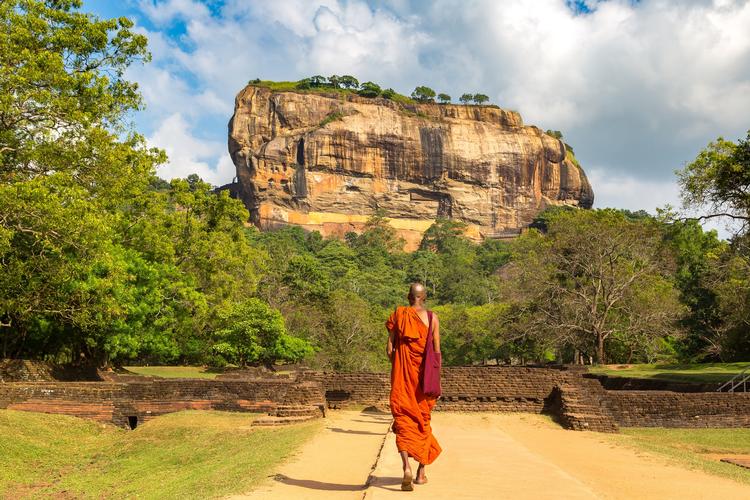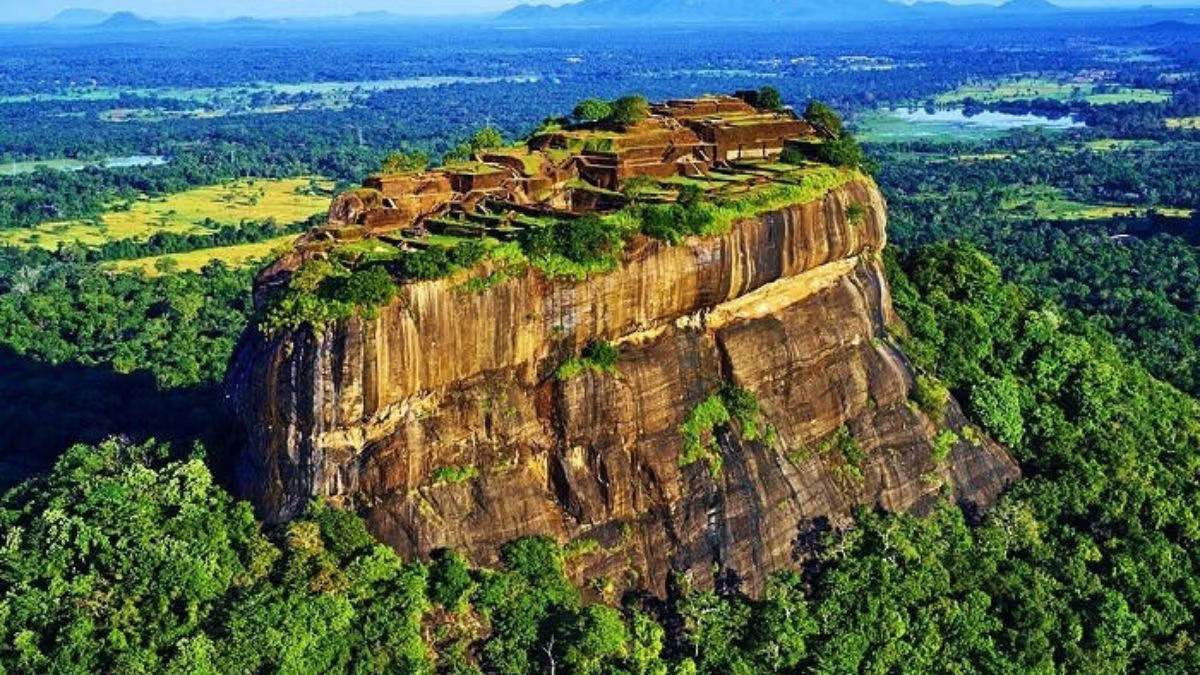
Deep in the heart of Sri Lanka’s dry zone and its undulating plains, rises the extraordinary site of Sigiriya. It was inscribed as a UNESCO World Heritage Site in 1982 not only for its dramatic history, but for the ingenuity of the engineers. They built a compelling fortress surrounded by water gardens in the 5th century CE. Positioned at the centre of the country’s Cultural Triangle, the 200-metre rock fortress draws millions of visitors who scale its heights each year, yet its origins remain hard to grasp. It’s unfathomable how the fortress came into existence and then went back into oblivion until mid-1800s, when British officers pushed through the surrounding jungle and local superstitions to explore it.
Indian travellers who visit Sri Lanka and ascend the rock fortress should set aside the version of its history pushed by social media influencers. This is not the mythical palace of Ravana from the epic Ramayana, nor the garden where Sita was supposedly held captive; it is the fortress built by King Kassapa I, after a brutal and calculated struggle for succession. But to understand why a king would build something this ambitious, fortified on a geological marvel, you have to trace back its history, and the archaeology that eventually brought it back to light.A royal rumble