view more
Many fractures are early-warning signs of osteoporosis. Yet in everyday clinical care they often go unrecognized and undocumented as warning signs, according to a new nationwide Austrian study by the Complexity Science Hub (CSH) and the Ludwig Boltzmann Institute for Osteology (LBI Osteology). Men are affected more often.
Osteoporosis, a disease in which bones lose density and stability, is among the most common conditions of old age and substantially increases the risk of fractures. Yet it is often diagnosed only after a first, typical "osteoporotic fracture," such as a hip fracture.
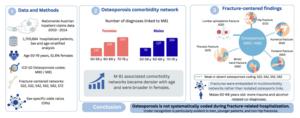
The new study by the Complexity Science Hub and LBI Osteology published in the journal Bone provides the first comprehensive, nationwide look at how osteoporosis and various fracture types co-occur in Austrian hospital records. Its results show that fractures are usually part of a complex pattern of multiple conditions – underscoring the need for consistent osteoporosis screening at the time of a fracture.
Bone fractures rarely have a single cause. Bone mineral density is only part of the picture – comorbidities, the risk of falling, and overall health status also play an important role.