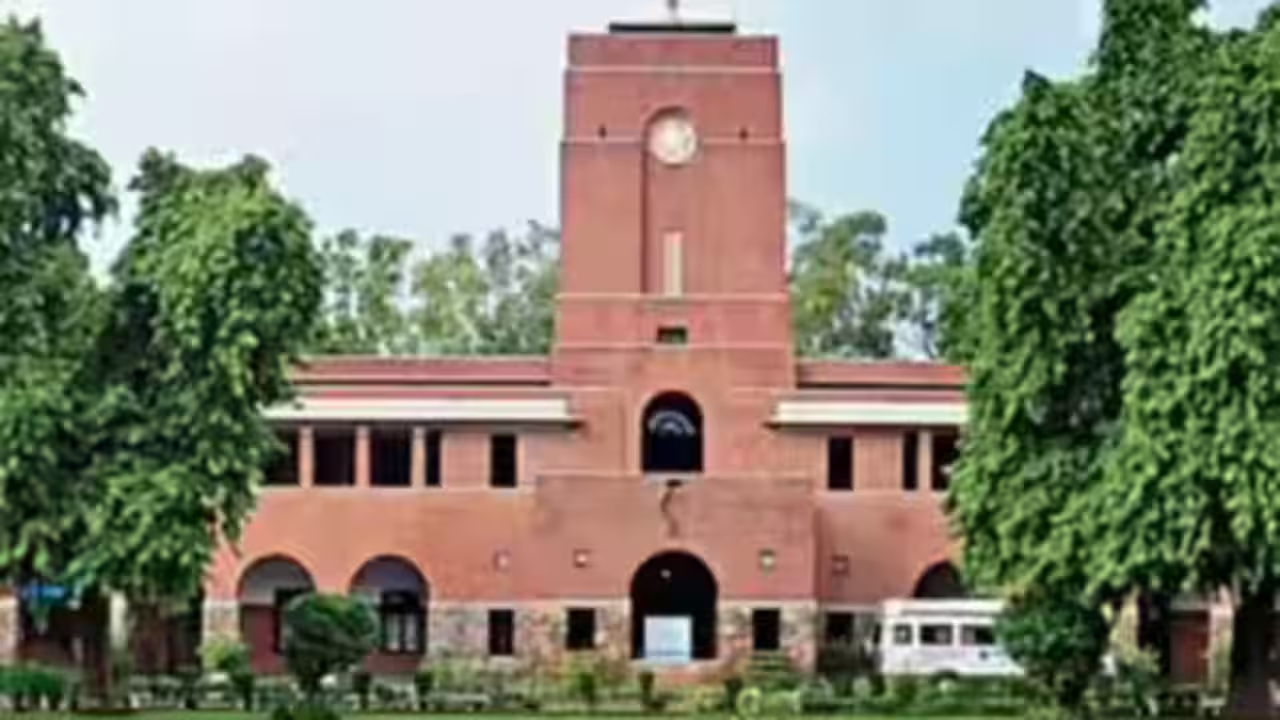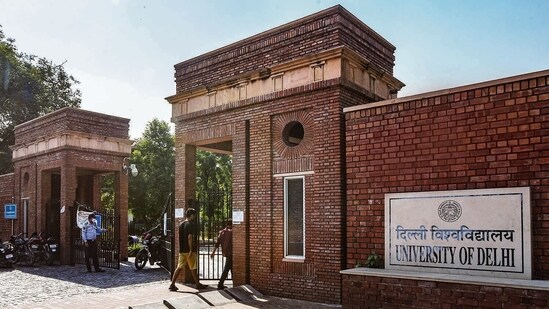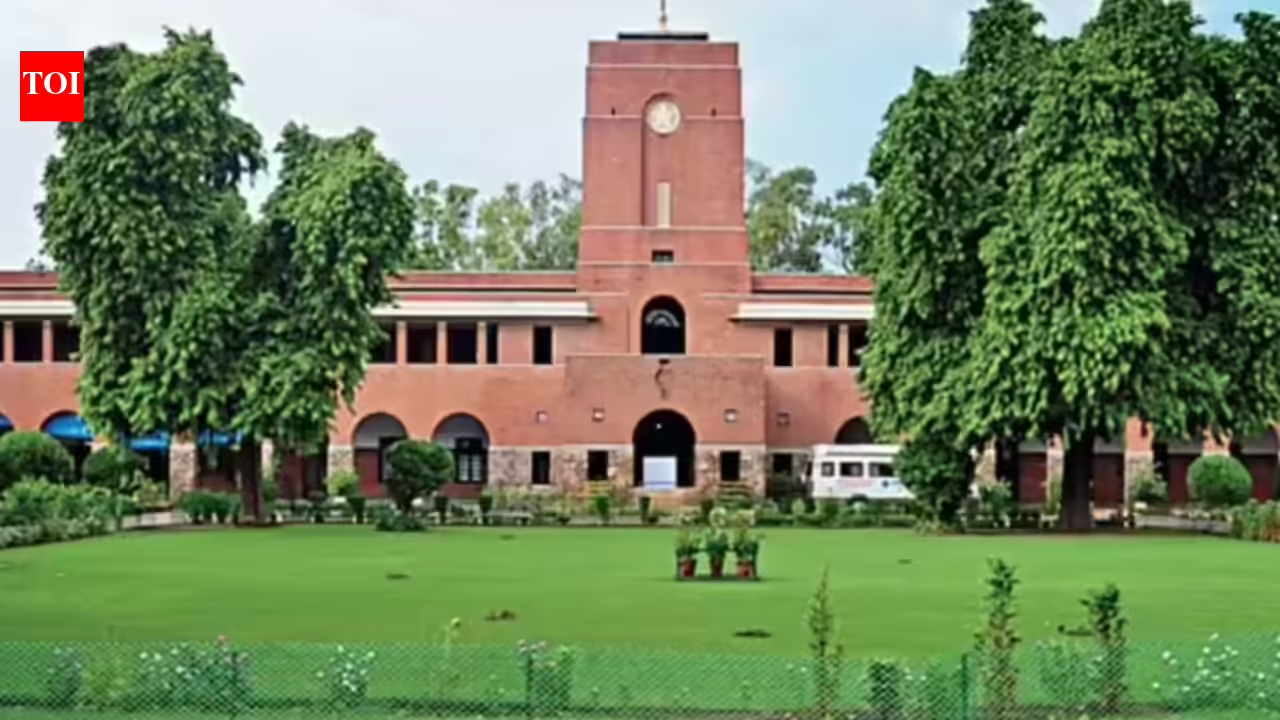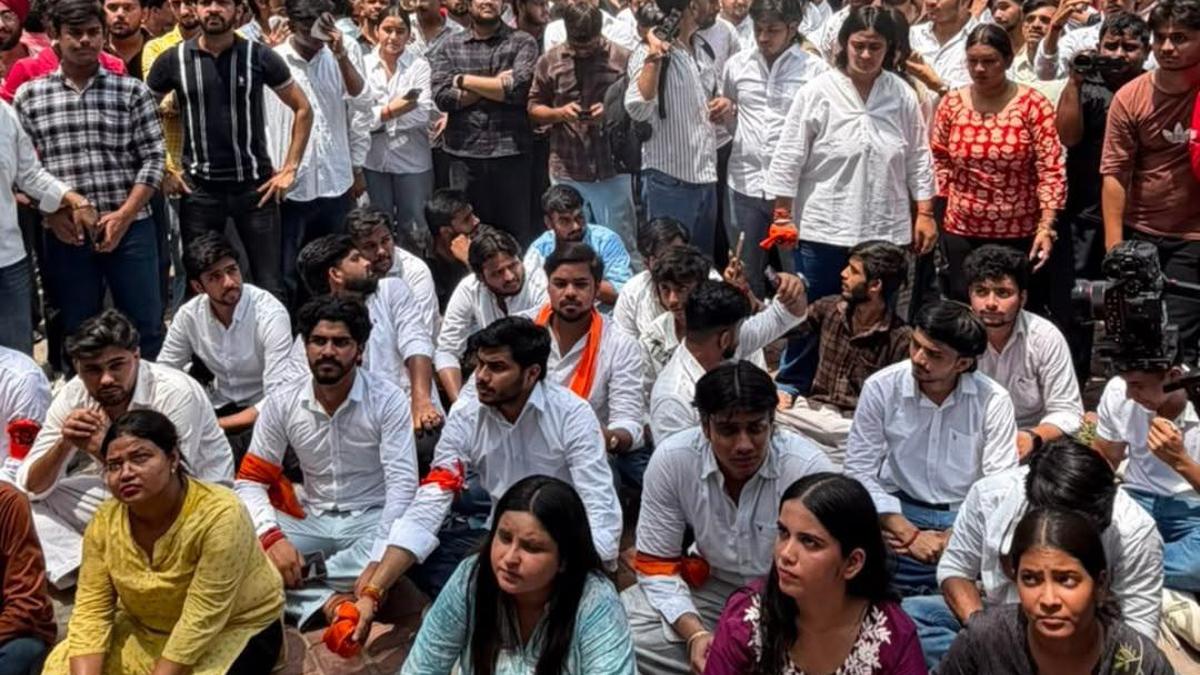
With more than 30,000 students graduating from Delhi University’s (DU) inaugural four-year undergraduate cohort and only a little over 1,100 seats on offer across 46 one-year postgraduate programmes, several students contend that the promised progression from the undergraduate degree to a one-year master’s has not been matched by adequate postgraduate capacity, despite having invested an additional year in pursuit of the pathway.Introduced for the 2026-27 academic session under the National Education Policy (NEP) 2020, the pathway allows students who have completed DU’s Four-Year Undergraduate Programme (FYUP) under the Undergraduate Curriculum Framework (UGCF) 2022 to pursue a master’s degree in one year instead of the conventional two-year programme.The FYUP is intended to provide greater research exposure, including the option of a bachelor’s degree with honours with research, align Indian degree structures with global higher education frameworks and create a route for eligible students to pursue a one-year master’s degree.Several central, State and private universities have since adopted similar four-year undergraduate programmes, although implementation timelines vary.The pathway has been introduced in addition to DU’s existing two-year postgraduate programmes, which offer around 13,500 seats across 74 disciplines.According to the university’s information bulletin, the one-year postgraduate programmes together offer just over 1,100 seats across 46 disciplines, taking the total postgraduate intake to around 14,600 seats. Students, however, argue that the intake for the one-year pathway remains disproportionately small compared with the size of the first FYUP graduating cohort.Protests eruptThe issue prompted student organisations to stage protests on campus, demanding an increase in the number of seats.The Akhil Bharatiya Vidyarthi Parishad (ABVP) on Friday staged a protest at the university campus (please check), demanding an increase in the intake of one-year postgraduate programmes.ABVP Delhi secretary Sarthak Sharma said, “The university administration must immediately enhance the number of seats to ensure that no deserving student is denied access to higher education because of seat constraints.”Aanchal Nainawat, a fourth-year student at Hansraj College, said the possibility of pursuing a one-year master’s programme was among the primary reasons she opted for the additional year.“We spent an additional year, along with our time, money and trust, expecting the one-year master’s programme to be a genuine opportunity. Instead, we found ourselves competing for a handful of seats, and the promise we relied on simply was not matched in its implementation,” she said.According to the information bulletin released on July 5, the one-year M.A. in English programme offers 45 seats across all reservation categories.Aastha Upadhyay, a fourth-year B.A. English (Hons.) student at Atma Ram Sanatan Dharma College, said, “When the information bulletin was released, the scale of the mismatch became clear. Hundreds of students had opted for the fourth year, but the M.A. in English had only 45 seats. It fundamentally altered how we viewed the one-year master’s programme.”Navigating uncertaintyFaculty members said that while the policy itself had merit, its implementation was marked by inadequate planning, frequent procedural changes and unclear communication, leaving both teachers and students navigating uncertainty.Priyanka Kulhari, Assistant Professor at Atma Ram Sanatan Dharma College, said, “On paper, the idea is excellent. The problem began with its implementation. We were receiving new guidelines every week, and faculty members themselves were often unsure of the procedures.”Sanchita Das, a fourth-year B.A. English (Hons.) student at Miranda House, questioned whether the university had adequately planned the transition.“If Delhi University encouraged thousands of students to opt for the fourth year, it should have simultaneously expanded the one-year master’s programmes. The restricted intake raises serious questions about whether the rollout was planned to accommodate the students it encouraged,” she said.Prateek Arsh, a fourth-year student at Hansraj College, questioned the transparency of the admission process.“The issue is not just the limited number of seats, but also the lack of transparency. We were informed about important admission criteria only in the eighth semester. If the university had communicated these guidelines before students opted for the fourth year, many would have made a more informed decision,” he said.In response to the issue, the university has constituted a six-member committee to examine requests for expanding the intake in its one-year postgraduate programmes.A notification issued by the DU’s Registrar’s Office on Friday stated: “The university has received requests for an increase in the number of seats in the one-year postgraduate programmes being offered in various departments of the university for the academic session. The competent authority has constituted the following committee to consider the request and suggest measures for its implementation. The committee may submit its recommendations within ten days.”
30,000 students, 1,100 seats: Delhi University’s one-year PG rollout hits a roadblock
Delhi University's one-year PG programme faces criticism as 30,000 students compete for just 1,100 available seats.
742 words~3 min read