If you follow the world of Artificial Intelligence, it is easy to assume that scaling up is the only path forward. Large Language Models (LLMs) have dominated the conversation by scaling to hundreds of billions of parameters, acting as massive, discrete reasoning engines.
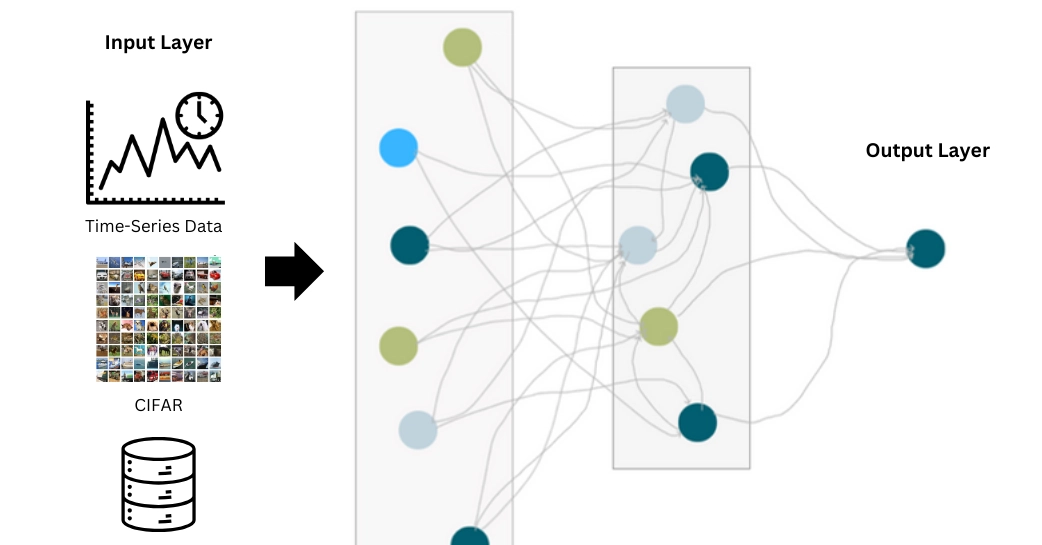
But not all problems require a massive library of tokens. In the world of robotics, physical sensors, and continuous time, a different architectural philosophy is thriving: Liquid Neural Networks (LNNs).
LLMs process static, discrete symbols, LNNs use highly expressive fluid equations to navigate the chaotic, continuous flow of the physical world. To understand why an LNN can solve complex physics tasks with just a fraction of the compute of an LLM, we have to look at the actual mathematics.
The Common Misconception About "Liquid" Adaptation
People often state that LNNs "adapt" according to the input they receive. In the context of LLMs, we usually think of adaptation as shifting attention weights across discrete tokens. When people hear that LNNs adapt dynamically, a common misconception arises: Do LNNs actually change their weights or biases during the forward pass?