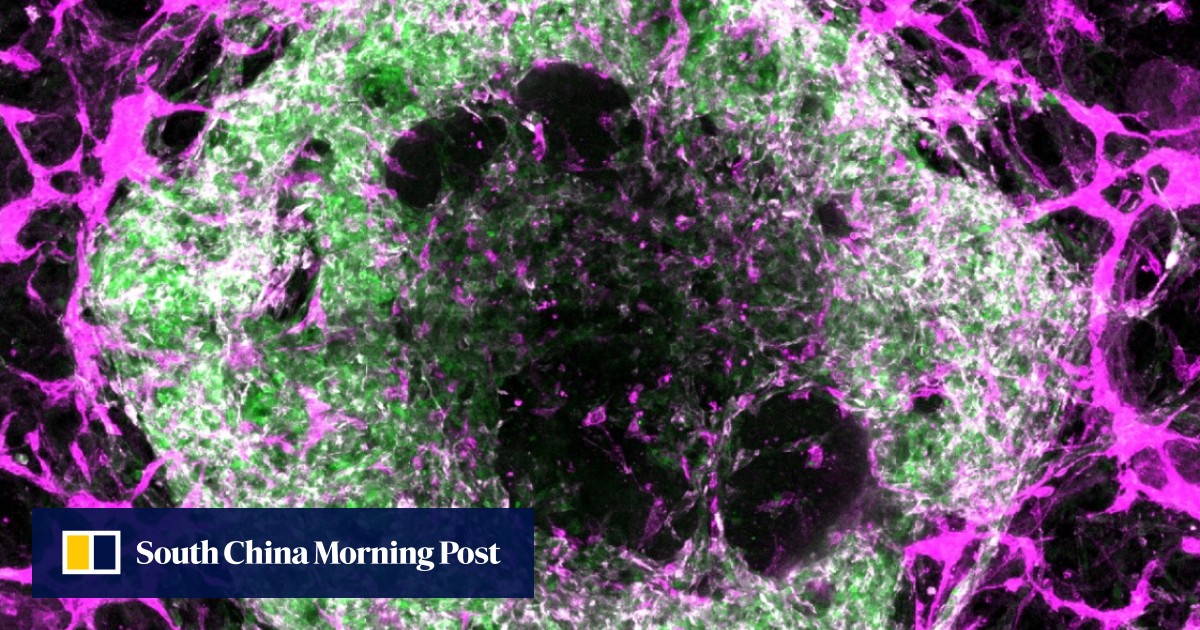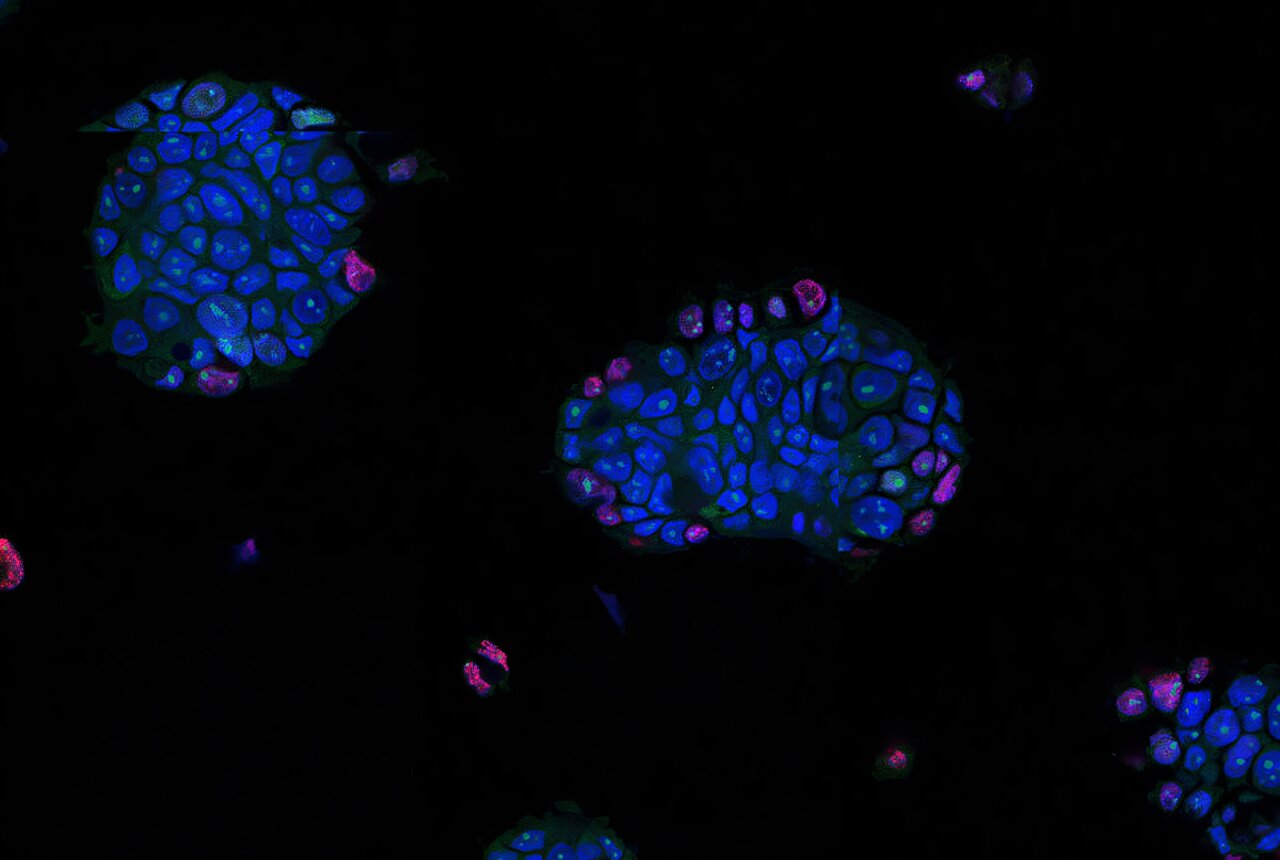
Immunofluorescent image of colorectal cancer organoids. The nuclei are stained blue, along with staining for γ-H2AX (red), which shows where DNA has been damaged, and geminin (green), which marks proliferating cells. Credit: Dr. Helen Kuo
Significant advances have been made in the development of patient-derived tumor "organoids" for preclinical research in two new studies led by Weill Cornell Medicine investigators. Organoids are three-dimensional clumps of cells that mimic structural and functional features of an organ, tumor or other tissue. The advances represent progress in precision medicine and point to the more routine use of tumor organoids as models for evaluating and optimizing cancer treatments.
In one of the new studies, published June 26 in Science Advances, researchers from the Englander Institute for Precision Medicine at Weill Cornell developed a library of 220 organoids grown from patients' tumors obtained with informed consent. They demonstrated that these tumor organoids retained key characteristics of the parent tumors over extended periods and showed promise in screens to identify unrecognized treatment candidates.
In the other study, published May 13 in Cell Reports Methods, the investigators developed lung tumor organoids that include T cells and other elements of the tumor's immune environment—which is known to be a major factor in treatment responses.