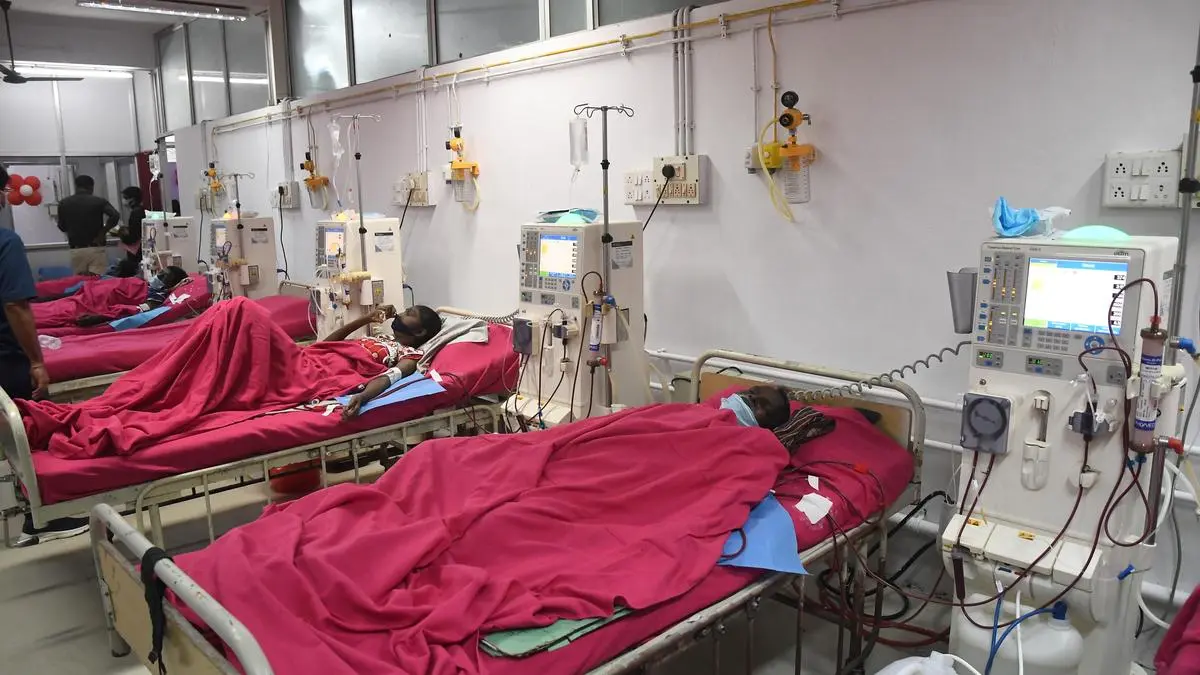
Haemodialysis has emerged as the most frequently performed procedure under the Ayushman Bharat Pradhan Mantri Jan Arogya Yojana (AB-PMJAY), accounting for 14.1 per cent of all treatments provided since the scheme’s launch, according to the National Health Authority’s (NHA) 2025–26 Annual Report. Multiple-package treatments (8.4 per cent) and cataract and related procedures (6.3 per cent) followed, highlighting the growing burden of chronic kidney disease and vision-related ailments among beneficiaries.Besides haemodialysis, the most commonly availed procedures included acute febrile illness (4.2 per cent), animal bite management excluding snake bites (3.4 per cent), and moderate-to-severe acute gastroenteritis (2.9 per cent).Maternal healthcare also featured prominently, with caesarean deliveries accounting for 2.1 per cent of all procedures and normal deliveries for 1.7 per cent. Other frequently accessed treatments included enteric fever (1.8 per cent), severe anaemia (1.8 per cent), laparoscopic cholecystectomy without common bile duct exploration (1.1 per cent), percutaneous transluminal coronary angioplasty (PTCA), including diagnostic angiogram (1.0 per cent), pyrexia of unknown origin (0.9 per cent), urinary tract infection (0.9 per cent) and pneumonia (0.5 per cent), reflecting the scheme’s significant role in financing care for chronic diseases, infectious illnesses, maternal health and emergency conditions.The report states that the flagship health insurance scheme has facilitated 11.93 crore hospital admissions since its inception. Of these, private hospitals accounted for 52 per cent of admissions, while public hospitals handled the remaining 48 per cent. As of March 31, 2026, the scheme had 35,908 empanelled hospitals across the country, with 54 per cent in the public sector and 46 per cent in the private sector.Despite having fewer empanelled hospitals, the private sector accounted for 67 per cent of the total claim amount under the scheme, receiving ₹1.78 lakh crore, while public hospitals accounted for the remaining 33 per cent.The National Health Authority (NHA), in its Annual Report 2025–26, said that a growing number of states and Union Territories are opting for the Trust model to implement the Ayushman Bharat Pradhan Mantri Jan Arogya Yojana (AB PM-JAY), reflecting increased administrative capacity and confidence in managing the scheme directly.As of March 31, 2025, 27 States and UTs had adopted the Trust model, under which state governments directly manage the scheme and bear the financial risk instead of outsourcing it to insurance companies. The report notes that this approach has steadily gained traction over the years as states strengthen their institutional and operational capabilities.According to the NHA, five States and UTs continue to follow the Insurance model, where insurers handle claims and assume financial risk in exchange for a fixed premium. Another three States and UTs have adopted a Hybrid model, combining elements of both systems to suit local administrative and healthcare needs.The report adds that States and UTs have been given the flexibility to choose the implementation model that best fits their governance and health infrastructure. It also notes that West Bengal is yet to join the AB PM-JAY scheme, while the overall shift towards the Trust model aligns with India’s broader goal of expanding Universal Health Coverage. Published on July 20, 2026
Haemodialysis tops most performed procedure under Ayushman scheme
Haemodialysis is the most common procedure under the Ayushman Bharat scheme, highlighting rising healthcare needs in India.
505 words~2 min read