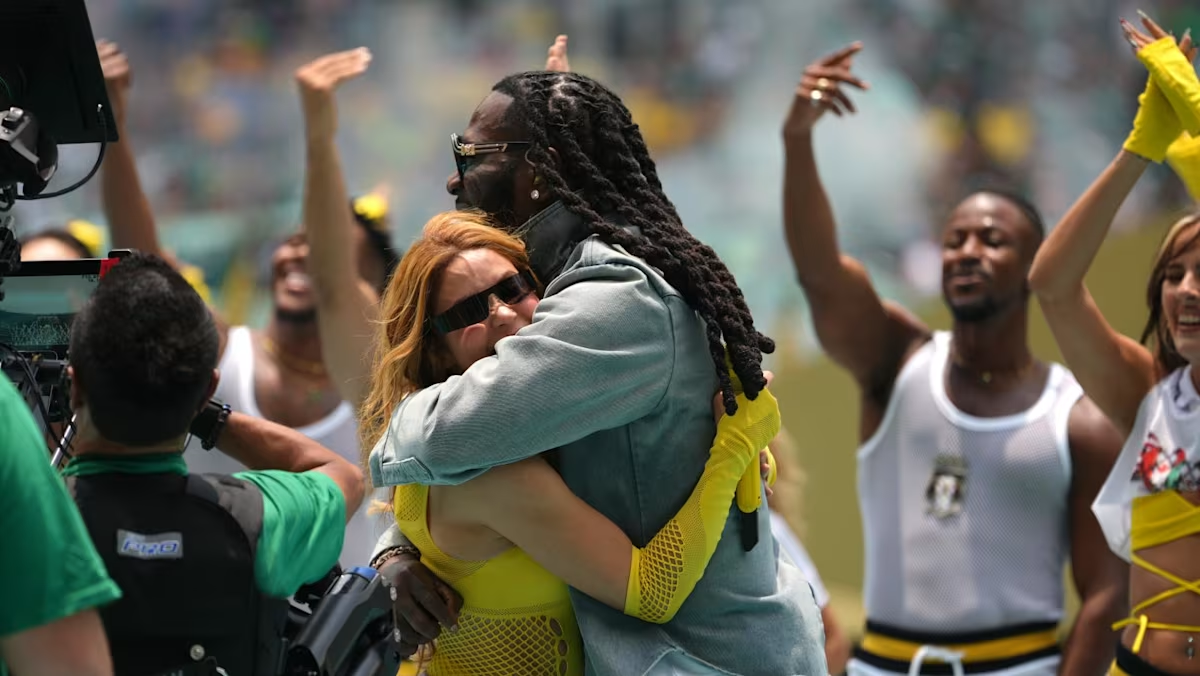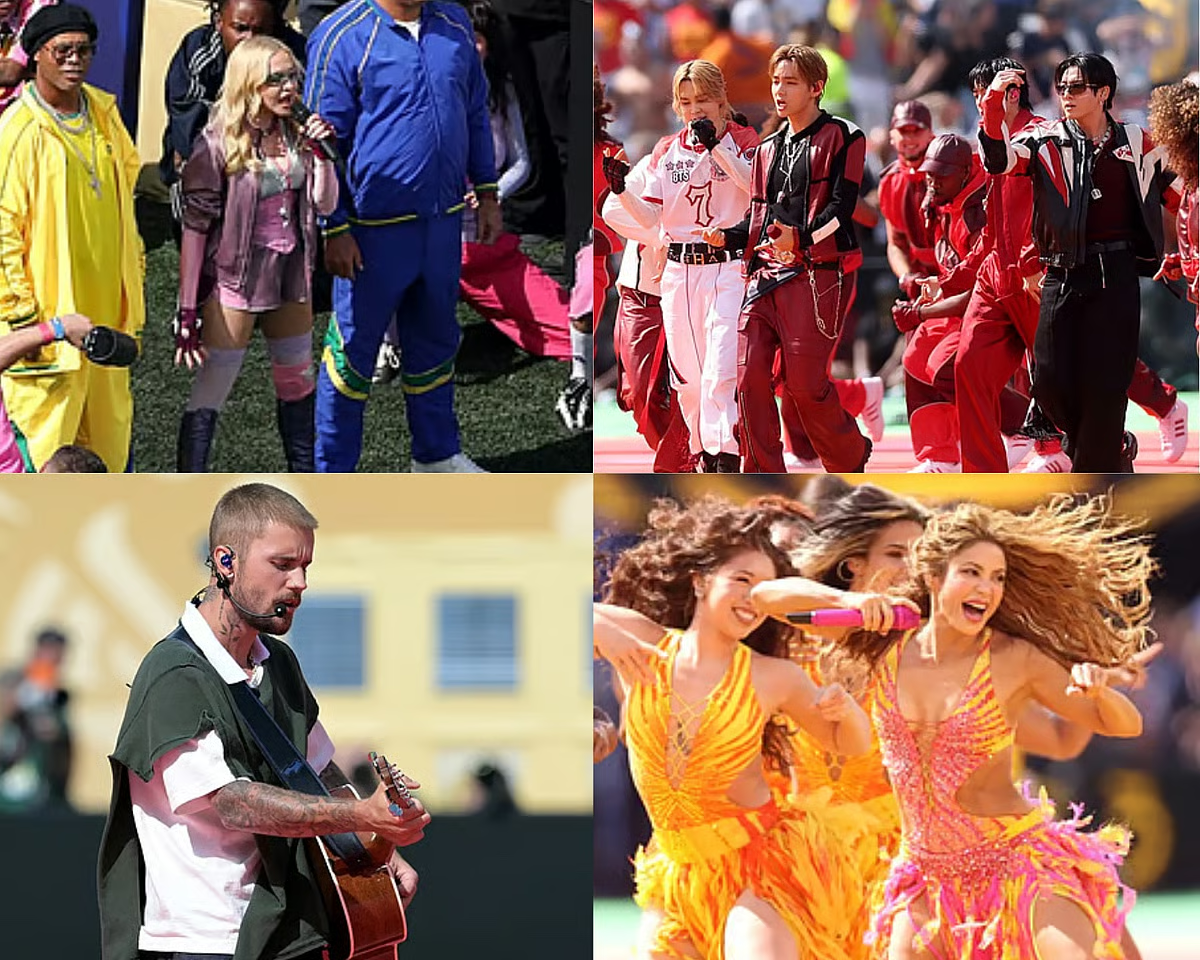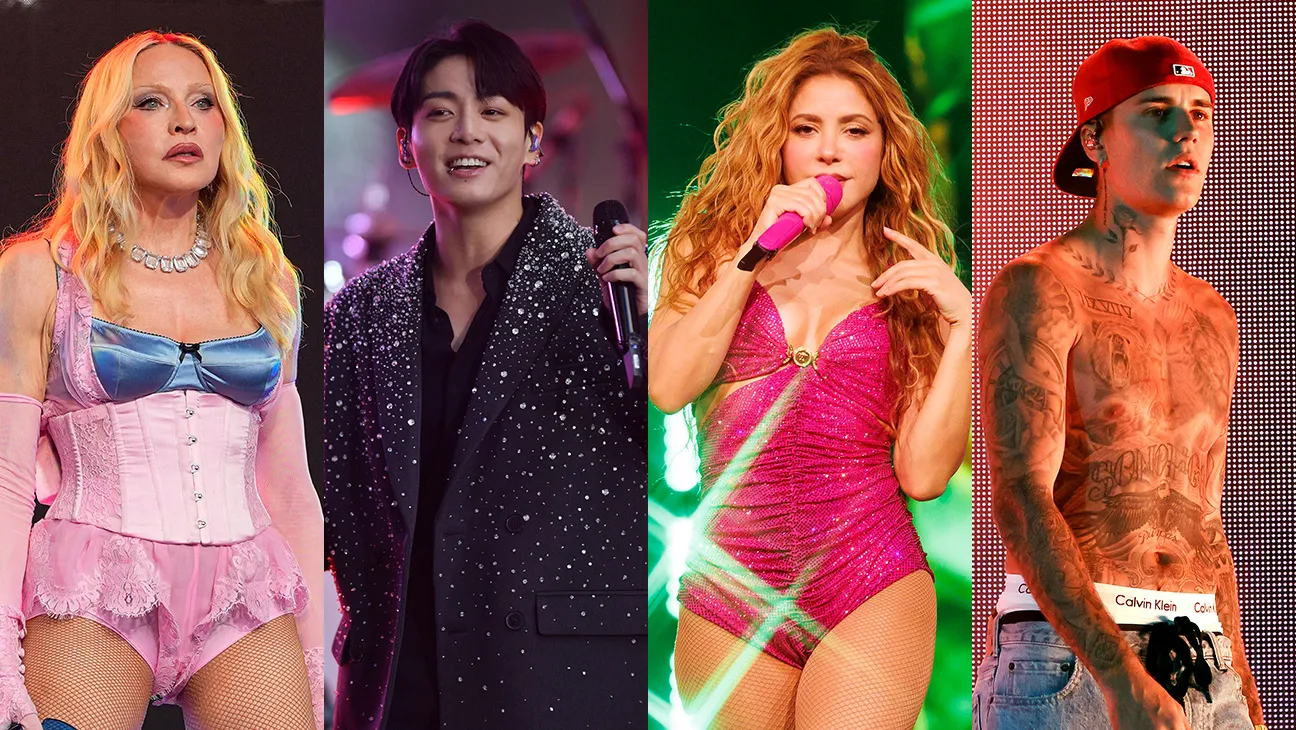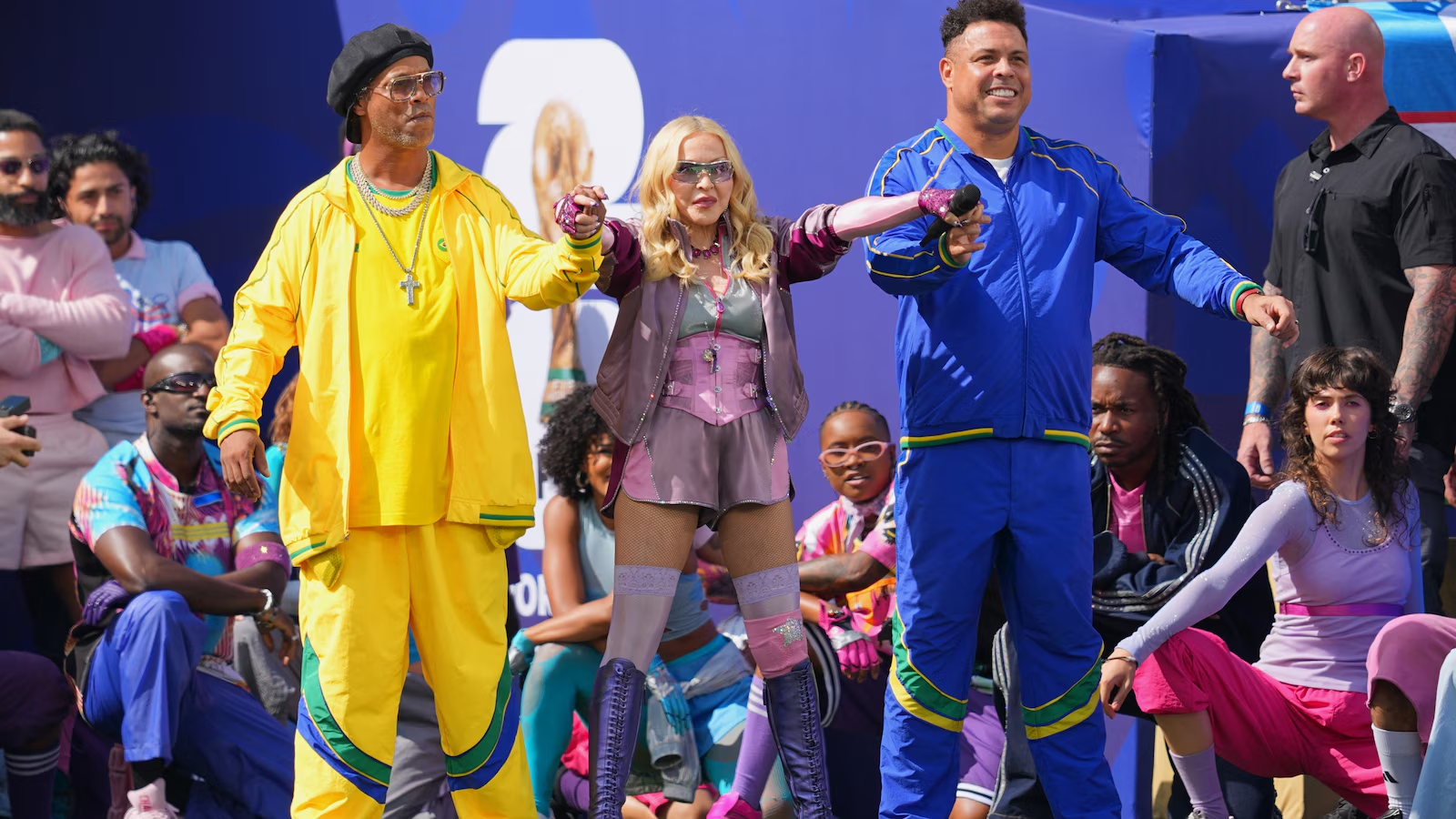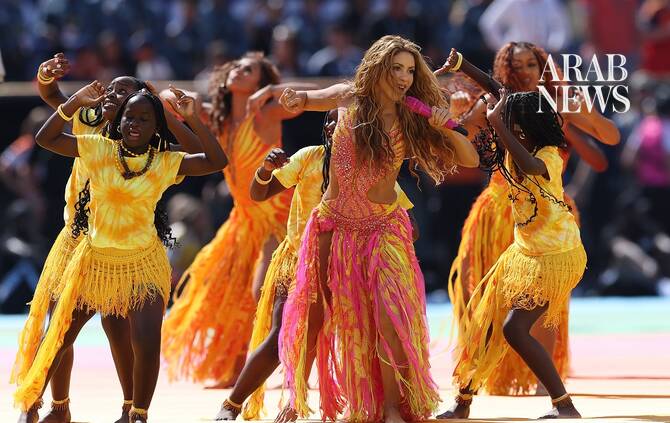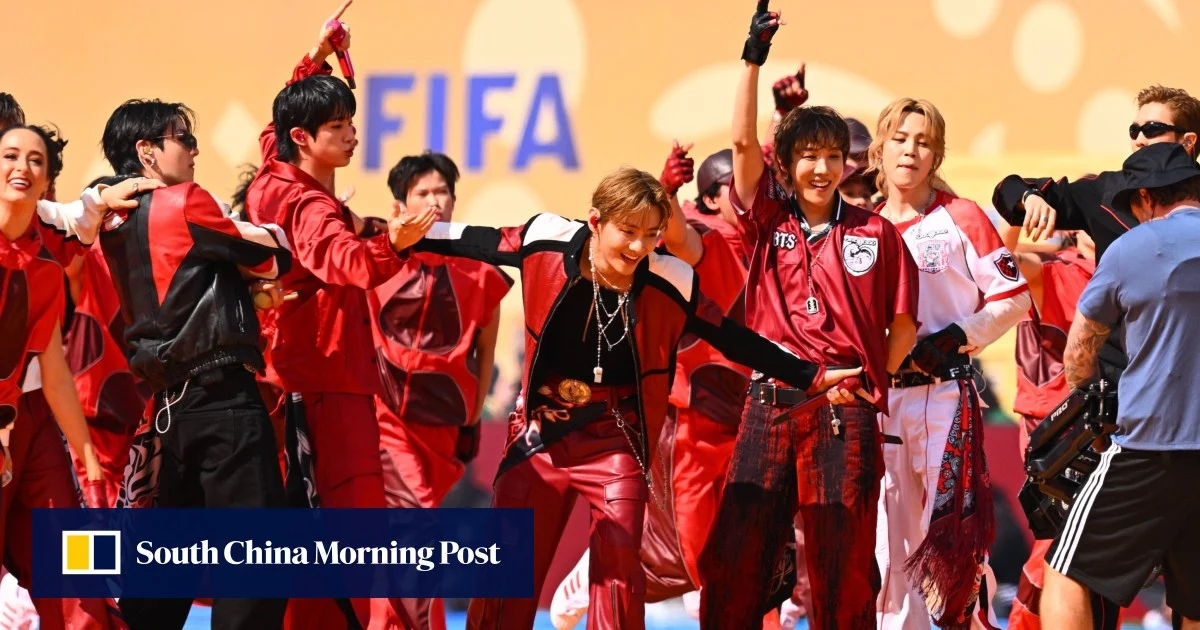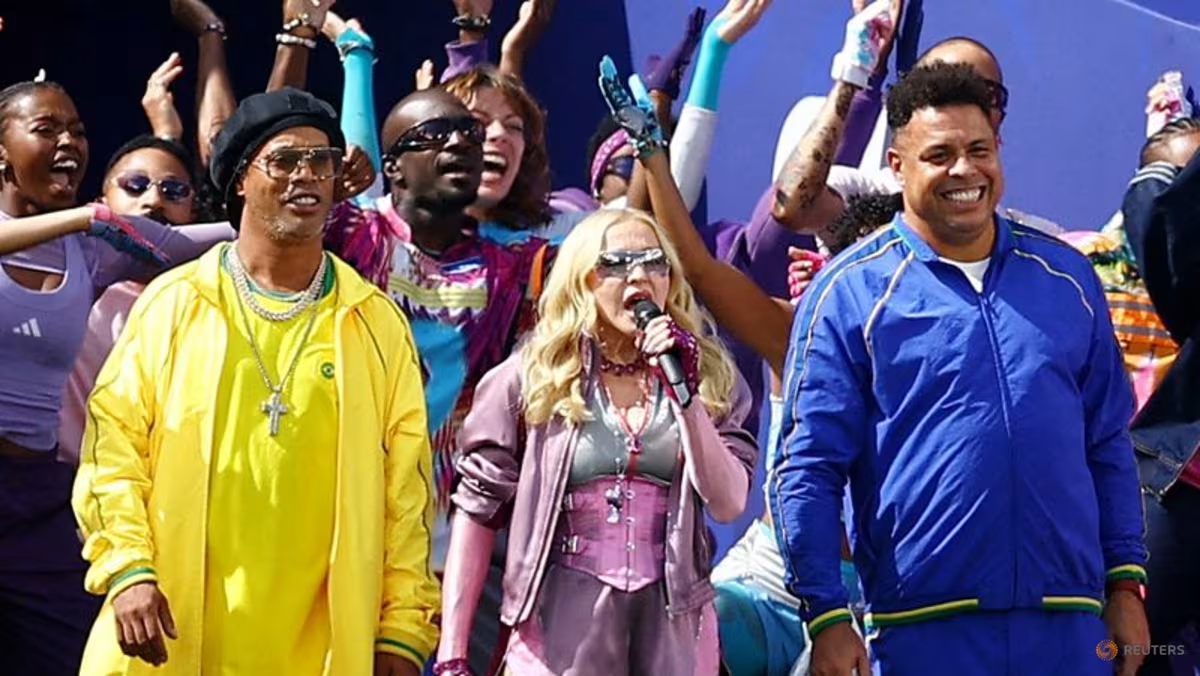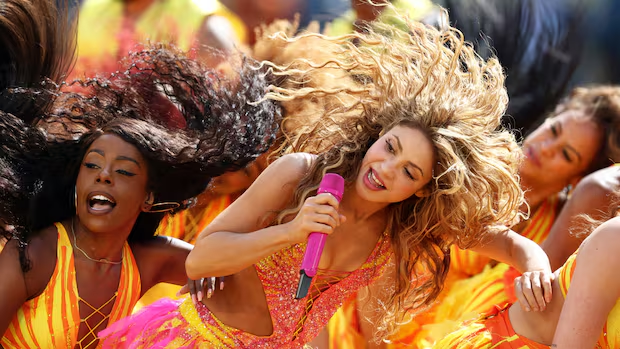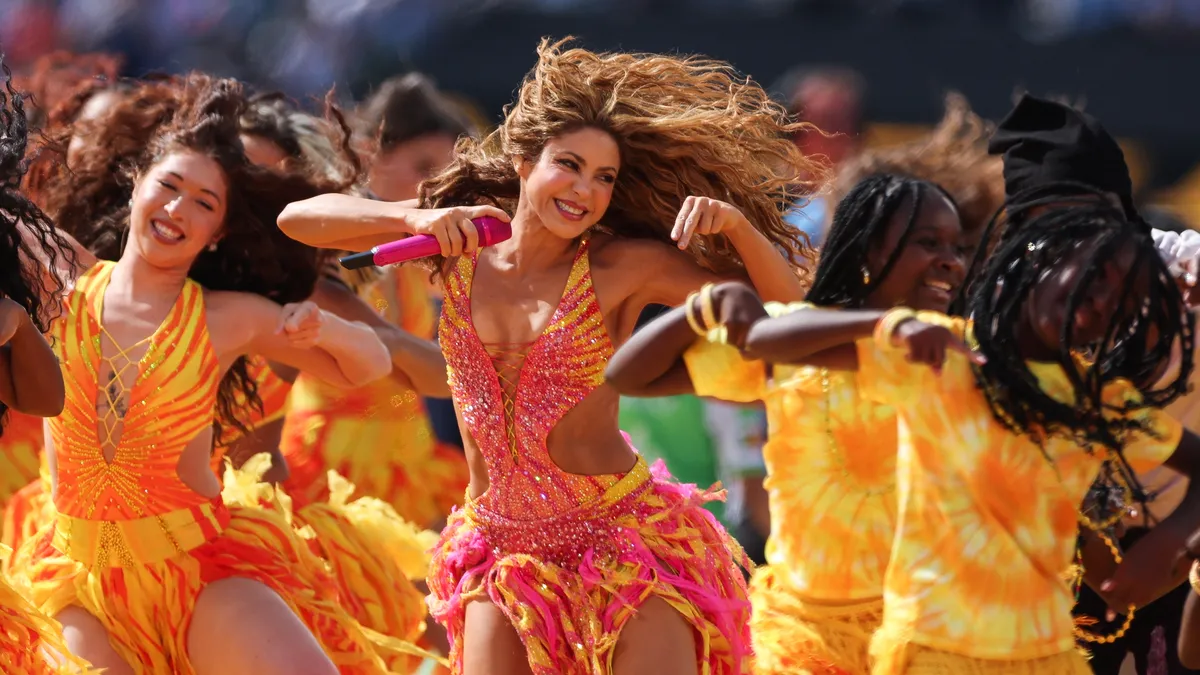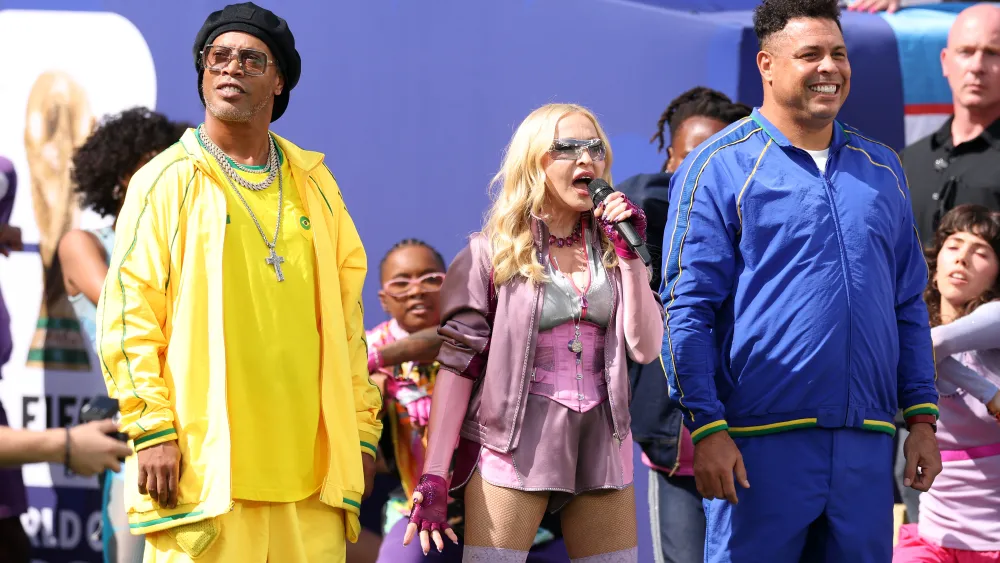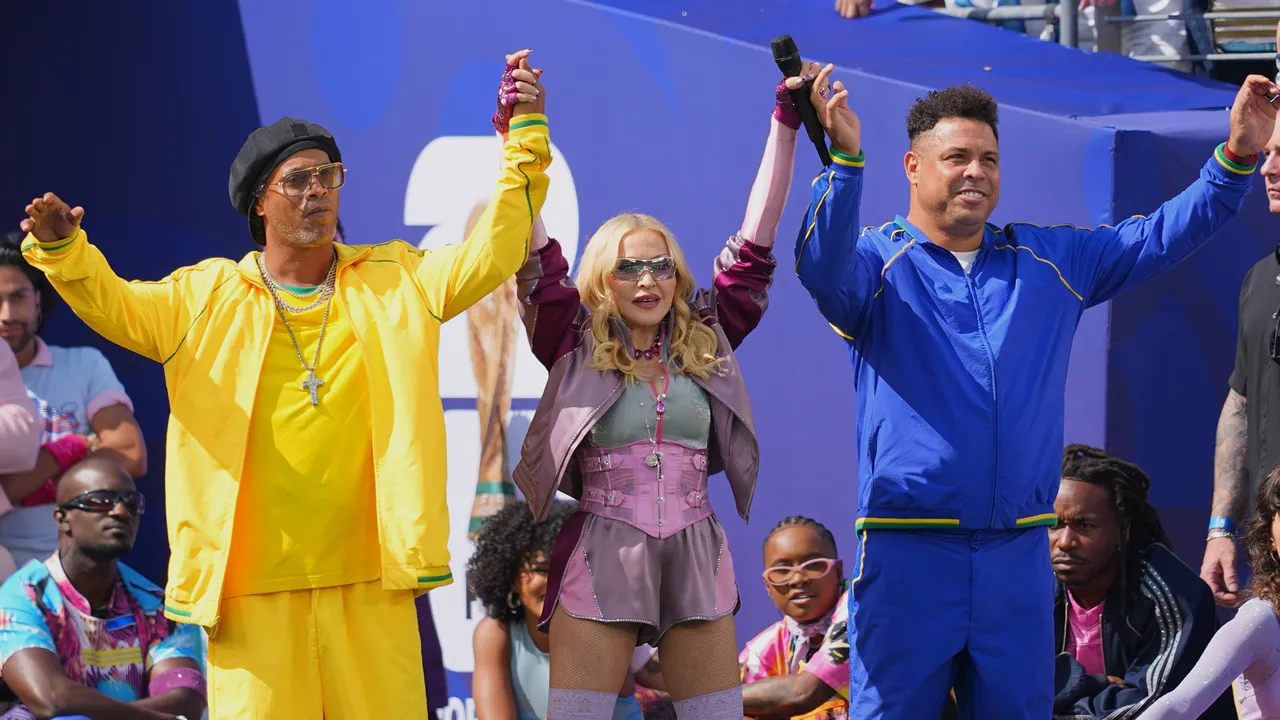
This year, for the first time ever, the FIFA World Cup final featured an eleven-minute halftime hullabaloo, co-headlined by four megastar acts: Madonna, Shakira, Justin Bieber, and BTS. The lineup—theoretically a diverse parade of talent, with two of the three host nations represented—was curated by Chris Martin, of Coldplay, a self-appointed apostle of good vibes, whose anti-poverty platform Global Citizen helped produce the event. “It’s a chance to show how amazing all different kinds of humans are,” a grinning Martin explained to Elmo in a short clip promoting the show. (One presumes that his choices had something to do with showcasing diversity, though all four artists have traded fairly heavily in Western pop tropes, and each is indebted, in ways both explicit and coded, to Black American idioms such as R. & B., dance music, and hip-hop.) The video also featured a cameo from the Muppets’ balding erstwhile critics, Statler and Waldorf, who once again spoke for all of us: “Well, that doesn’t sound half bad,” Waldorf said. “Well, it doesn’t sound half good either!” Statler responded.The show opened with Madonna, whose fifteenth album, “Confessions II,” recently débuted at No. 1 on the Billboard 200. At sixty-seven, Madonna has not backed off her signature sound: carnal, throbbing, come-and-get-it electronica. (On “Danceteria,” a new single, she sings, “This is how we start the party / Face to face, bodies all around.”) She performed “Music,” a hit from the summer of 2000, surrounded by neon lights and roller skaters, before being carted toward the field in a “Mad Max”-style dune buggy with a license plate reading MAESTRO; the front seat was occupied by the Brazilian soccer legends Ronaldo and Ronaldinho. She wore a pink-and-lavender corset ensemble, fingerless gloves, a silver whistle, knee-high purple boots, and a pair of those sunglasses that make a person sort of resemble a wasp.Madonna was followed by Dr. Teeth and the Electric Mayhem, a band composed of Muppets, and the New York Philharmonic with the Simón Bolívar Symphony Orchestra, of Venezuela, conducted by Gustavo Dudamel in a bespoke jersey suit; together, they thrashed through a rousing instrumental version of the White Stripes’ “Seven Nation Army.” (My favorite part was when Animal, the best puppet drummer of all time, looking sharp in a sleeveless tee, hollered, “Sing!”) Then came BTS, enviably relaxed and strutting through “Dynamite,” the group’s first song fully recorded in English. Justin Bieber, who was introduced by Jason Sudeikis, appearing as the fictional soccer coach Ted Lasso, performed “Everything Hallelujah,” an earnest song about ordinary gratitude, which was, regrettably, turned into a meme earlier this year, and used by the White House in a schlocky TikTok video. I found Bieber’s seriousness strangely endearing: a solemn acoustic ballad was not the obvious choice for an eighty-thousand-person arena, but he performed it with impressive restraint. A barefoot Shakira—heels surely would have compromised the field—was accompanied by the Nigerian singer Burna Boy; they did a joyful version of “Dai Dai,” this year’s World Cup anthem. A children’s chorus from P.S. 22, in Staten Island, sang “We Dance,” a mawkish new Coldplay song, while plumes of rainbow-colored smoke rose from the edges of the stadium. The field was covered with a tarp that read “LOVE.” Digital banners advertised something called believeinlove.org. (I found the URL vaguely chilling; it directs visitors to a site where they can enter their e-mail and receive updates from Global Citizen.)“Music makes the people come together,” Madonna promised at the top of the show. This was, of course, the premise of the entire enterprise: that music (and, significantly, celebrity) can serve as a kind of cross-cultural panacea, bridging, or at least briefly alleviating, ideological gaps. Love—“LOVE”—as a blanket corrective for evil has been the central focus of Martin’s work with Coldplay in recent years, for better or worse. Martin seems to have pure intentions, and perhaps he’s right that we could all really use a ten-minute break from thinking about the air-quality index and traffic-stopping diarrhea. But is it true? Did it fix us? None of the individual pieces of the show were flawed in any identifiable way—it was fine, whatever, superstars operating on this level don’t really screw up—but by the end I felt sort of nuts: spiritually rattled, existentially adrift, namelessly sad. It reminded me of a mike-drop scene from “Mad Men,” in which the advertising visionary Don Draper delivers a caustic mini-monologue about the ways in which our notions of love have been corrupted by corporations: “What you call love was invented by guys like me to sell nylons,” Draper seethes.The very existence of a halftime show was met with vexation and recalcitrance from fans. It extended the halftime period in a way that has historically been forbidden: per the Laws of the Game, intervals should not last more than fifteen minutes. (In 2021, the International Football Association Board rejected a proposal from CONMEBOL, the South American confederation, requesting that the maximum length of halftime be extended to twenty-five minutes; in its decision, the board cited “negative impact on player welfare and safety resulting from a longer period of inactivity.”) Purists intimated that the event is part of the ongoing “Americanization” of soccer, which, of course, they mean pejoratively. To a degree, this characterization feels unfair—America, for all its absurdity, did not invent spectacle—but I get it. An elegant and high-stakes game is at risk of being sullied with ostentatious nonsense, namely an unnecessary star-studded extravaganza to sell ads against, engineered in the image of the Super Bowl halftime show. (It also feels noteworthy that, this year, the winning team will receive bejewelled rings.) The Super Bowl show is currently the closest thing we have in the U.S. to an all-hands-on-deck monoculture event, and it is beloved, at least in part, because it is so corny and extra: an unrelenting medley of hits, performed at an utterly deranged pace, for a massive audience that is possibly hammered. (Cue the pyro!) Yet, given the way American politics are already perverted, daily, by pageantry and bluster, it’s not surprising that the change might make the rest of the world a little queasy.I, too, found the show unsettling, not for its Americanness but for its too-much-ness, which only reinforced how people everywhere have started to consume art. Music has become a thing we encounter incidentally, on social media, in bizarre little bursts, free of context, untethered from itself, and unrelated to whatever comes next. The whole debacle left me shaking my head like a Waldorf and Statler-style old-timey crank, openly nostalgic for a time in which music took up more space, demanded more of us, and didn’t have to be so uplifting. Even if we are accepting optimism as the mandate, Martin should know that what really brings people together is not perfection, or abundance, but vulnerability and passion. More Animal; less LOVE. ♦
Madonna and the Muppets Made the Case for Love
The World Cup halftime show, which also featured Justin Bieber, BTS, and Shakira, was premised on the idea that music—and celebrity—can serve as a cross-cultural panacea.
1,139 words~5 min read