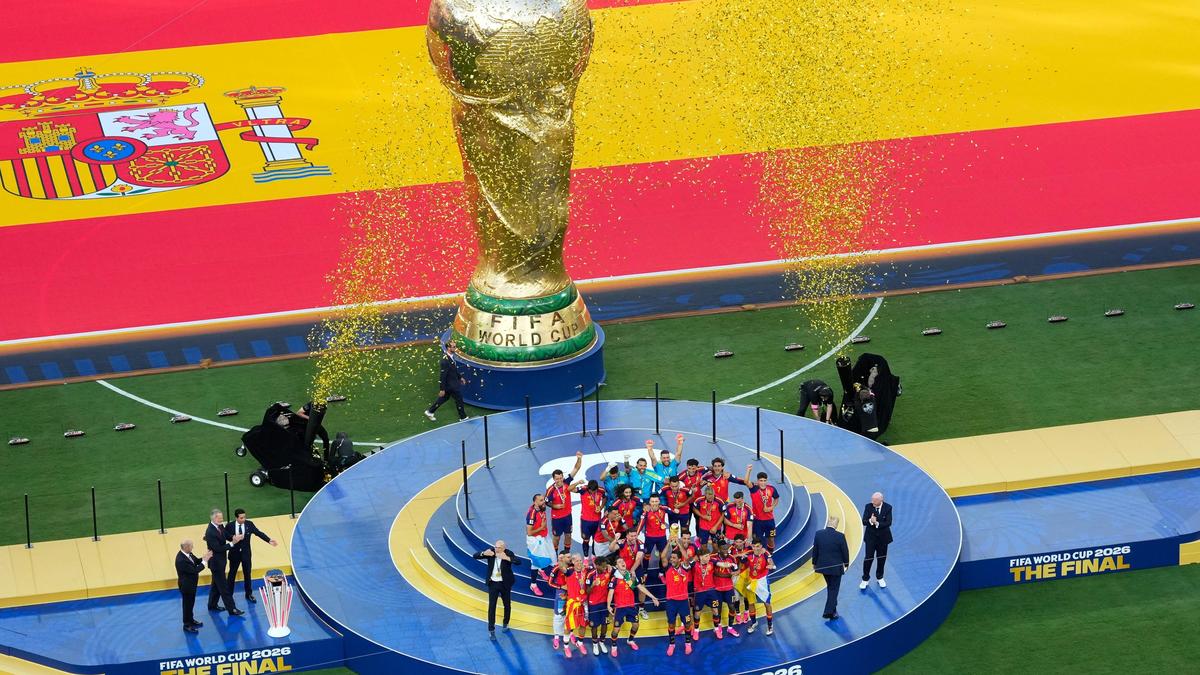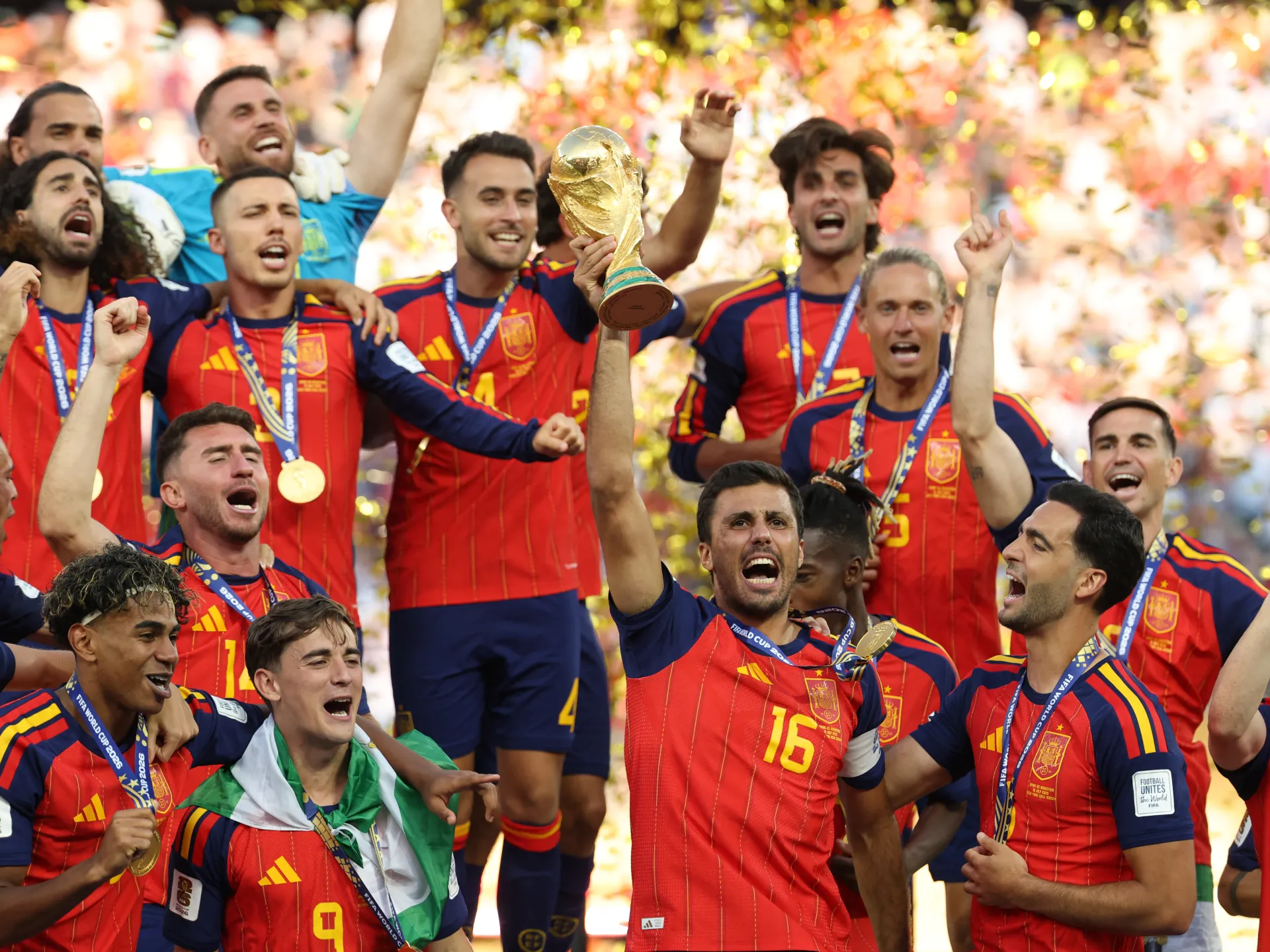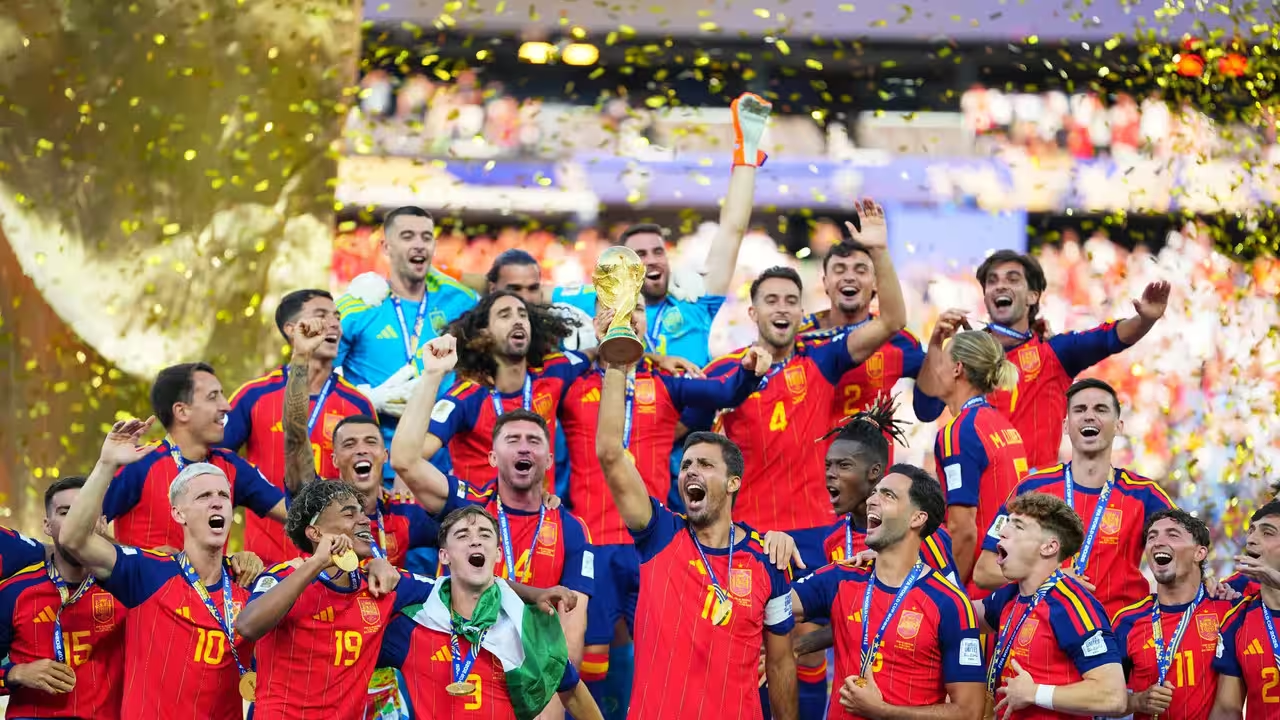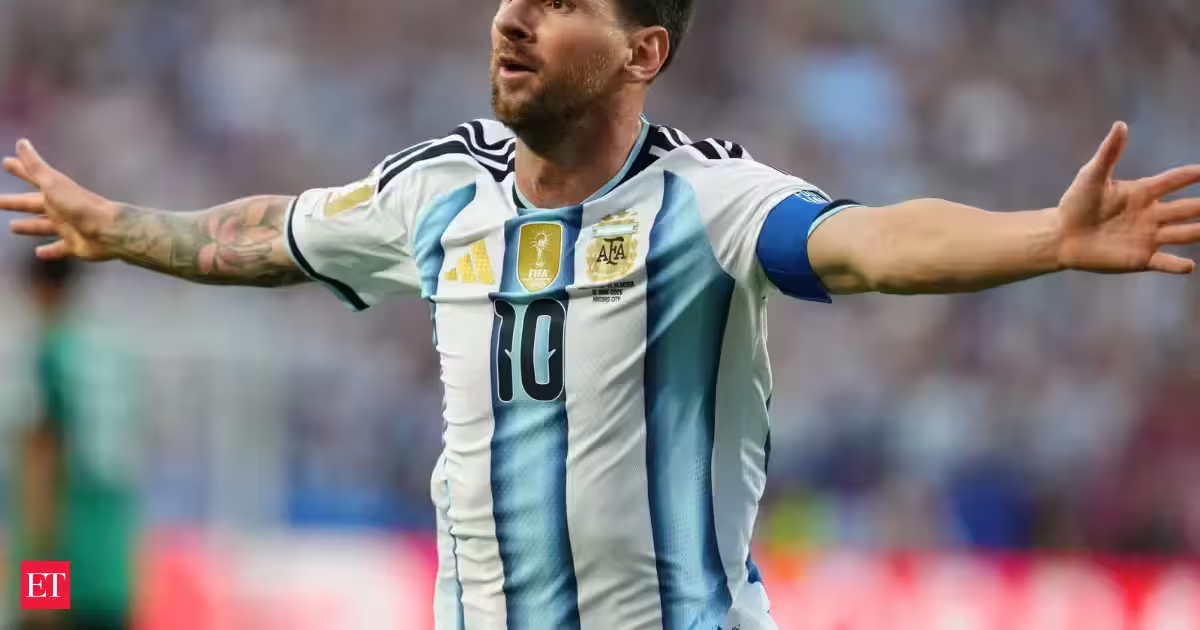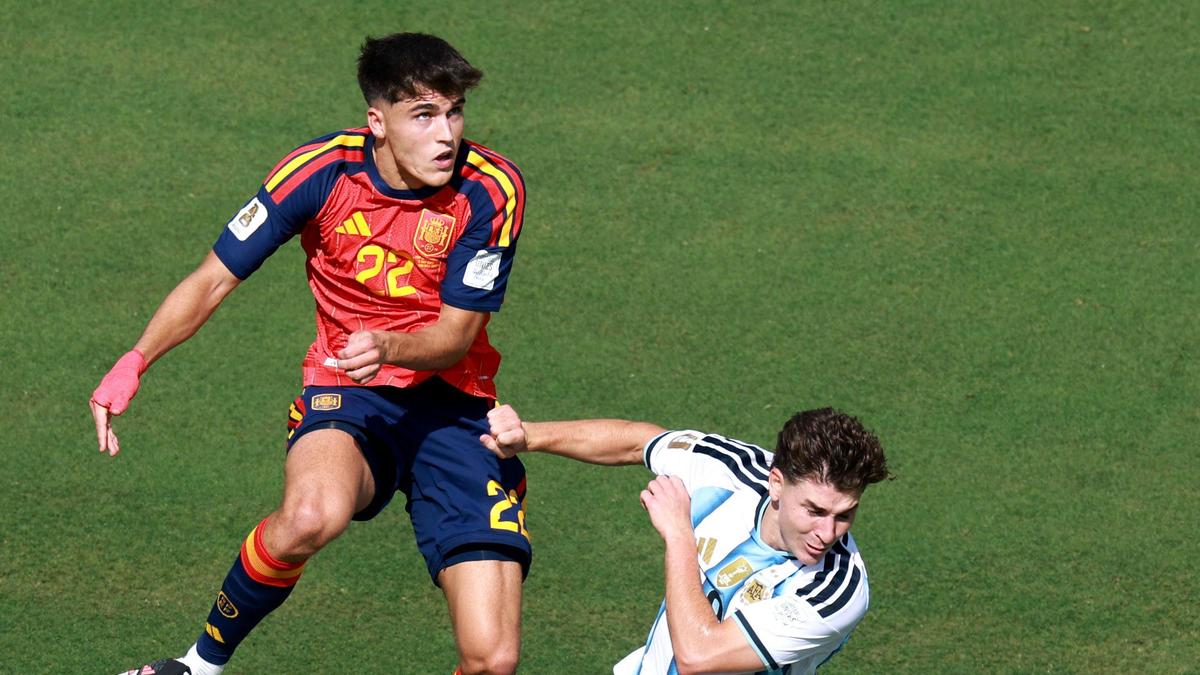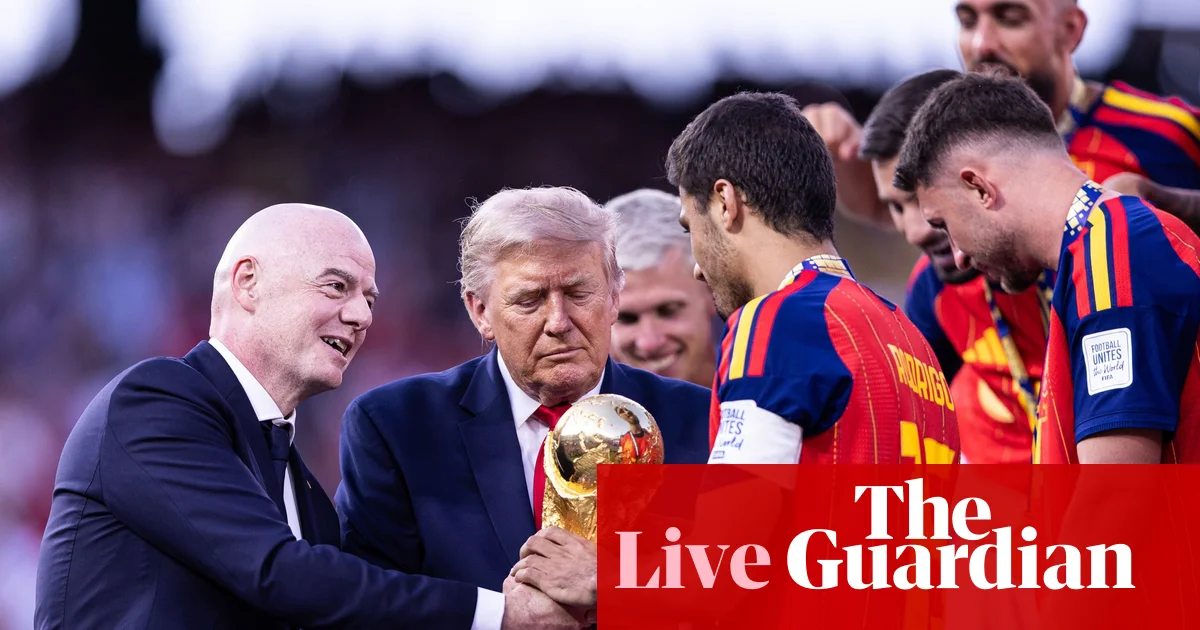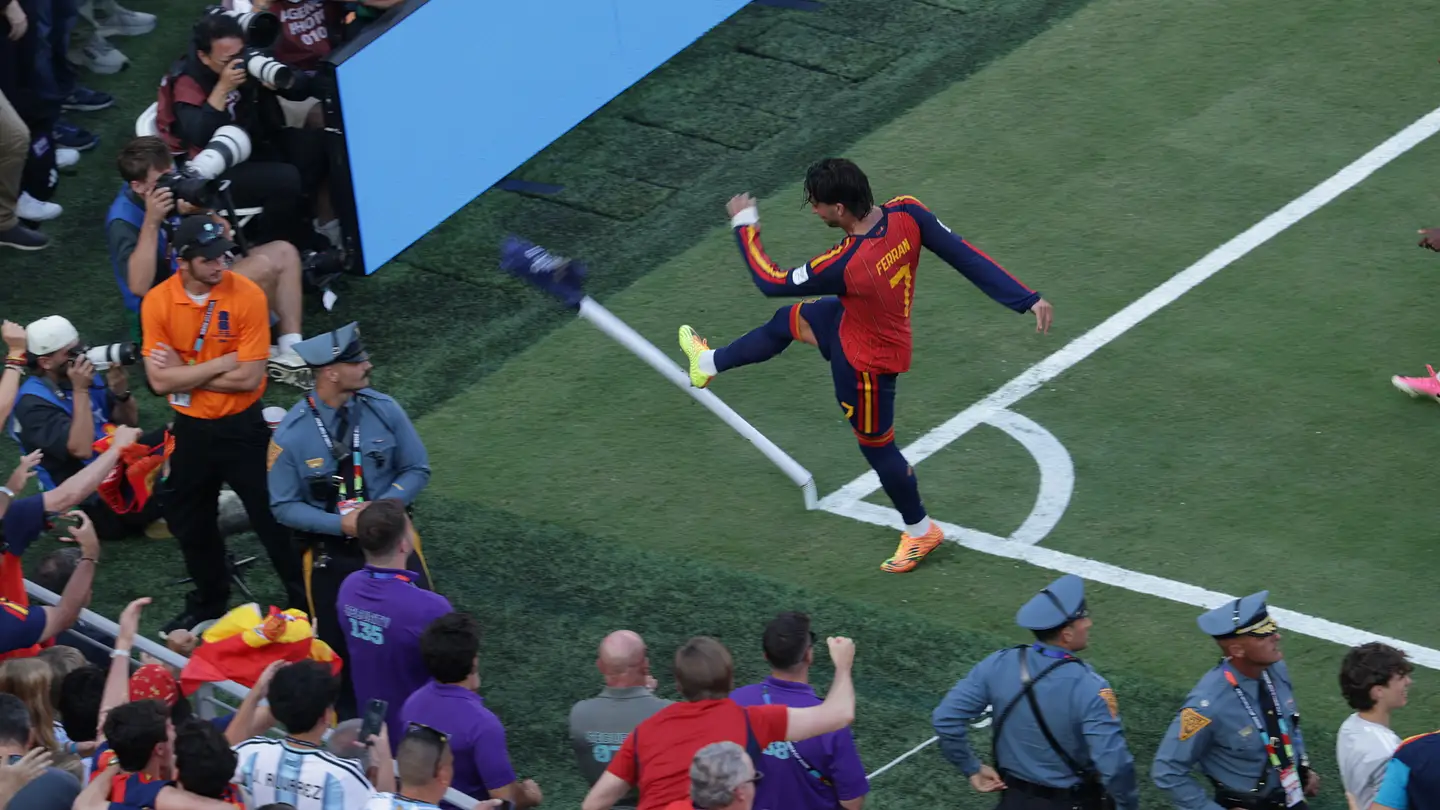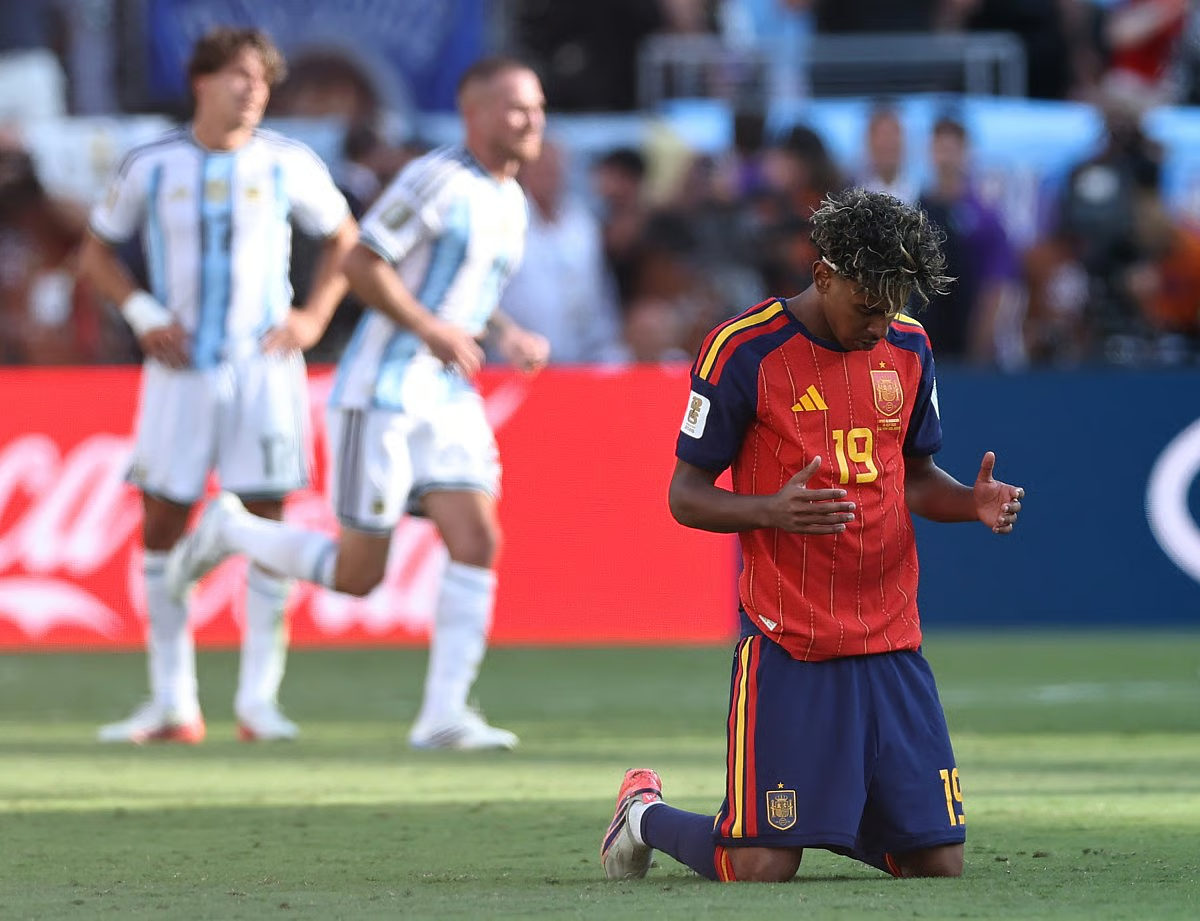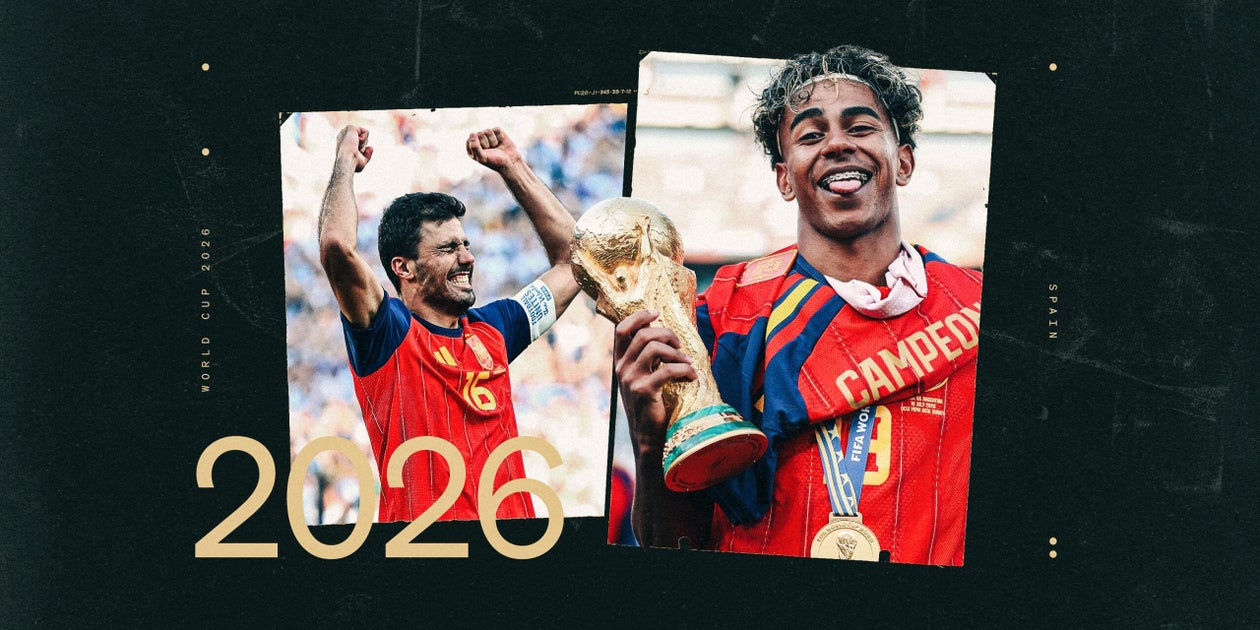
Over the past 18 months, we’ve looked at each World Cup-winning side in turn, right back from the first winners, Uruguay in 1930.Since then, there has been Italy in 1934 and again in 1938, Uruguay in 1950 and West Germany in 1954, before Brazil recorded back-to-back successes in 1958 and 1962.Then came an England win in 1966, another Brazil title in 1970, a second West Germany triumph in 1974, Argentina’s first in 1978, Italy’s third in 1982, Argentina’s second in 1986, West Germany’s third in 1990 and Brazil’s fourth World Cup in 1994, before France joined the party on home soil in 1998.In the 21st century, Brazil celebrated an unprecedented fifth title in 2002, Italy won a fourth in 2006, Spain got involved in 2010, Germany won their fourth in 2014 and France won their second in 2018, before Argentina’s third in 2022.Now it’s time for Spain to join France and Uruguay on two World Cup wins.President Donald Trump booed at World Cup final | World Cup Daily Briefing Megan Feringa and Laura WilliamsonIntroductionThey might not boast the superstar attackers such as Brazil in 1970, they didn’t provide the legendary moments of Argentina in 1986, and they didn’t win the final as comfortably as France in 1998.But Spain’s World Cup-winning side of 2026 should be considered among the most convincing winners in the history of this competition. In eight games, they only conceded one goal, never trailed at any stage, and controlled matches in midfield without being negative or unambitious.By the end — partly thanks to Argentina’s primitive approach in the final — they were overwhelmingly popular winners.The managerIn a tournament with more ‘star name’ managers than usual — Mauricio Pochettino, Carlo Ancelotti, Thomas Tuchel — the final was a clash between federation men who have achieved almost nothing at club level: Luis de la Fuente’s Spain overcame Lionel Scaloni’s Argentina.As a player, De la Fuente was a workmanlike left-back who played a role in Athletic Club winning back-to-back La Liga titles in the early 1980s. As a coach, he spent four years with the club’s youth teams, had a forgettable spell in charge of Alaves and then started to work for Spain, leading them to under-19 success in 2015, under-21 success in 2019 and the Olympic silver medal the following year.Appointed after the 2022 World Cup, De la Fuente won the Nations League in 2023, the European Championship in 2024 and now the World Cup in 2026. He’s basically won the lot, and it’s still somewhat difficult to characterise him as a coach or point to any key tenets of his philosophy.Luis de la Fuente gets his hands on the World Cup trophy (Reuters/Dylan Martinez)But he is 100 per cent Spain, and knows the quality at his disposal. “In my opinion, and I say this with the greatest of respect to everyone, we have the best midfield in the world,” he told the Guardian midway through this World Cup win.“We have two players per position who are the best players.”Star playerIn an era where there has never been greater focus on individuals, and in a tournament where all the star names — Lionel Messi, Erling Haaland, Kylian Mbappe — seemed to dominate their sides’ attack to a staggering extent and produced a great battle for the Golden Boot, Spain were defined by their teamwork rather than their individualism. In attack, Mikel Oyarzabal and Alex Baena understood the system well but were not recognised as truly world-class operators.On the right, Lamine Yamal (who turned 19 midway through the World Cup) was heralded as the new Messi, but came into the tournament still recovering from injury. There were moments of magic, but only one goal and no assists to show for his quality.
How Spain won the 2026 World Cup: Conquering Messi, an incredible defence and the ‘world’s best midfield’
By the end — partly thanks to Argentina's primitive approach in the final — Luis de la Fuente's Spain were overwhelmingly popular winners
1,763 words~8 min read