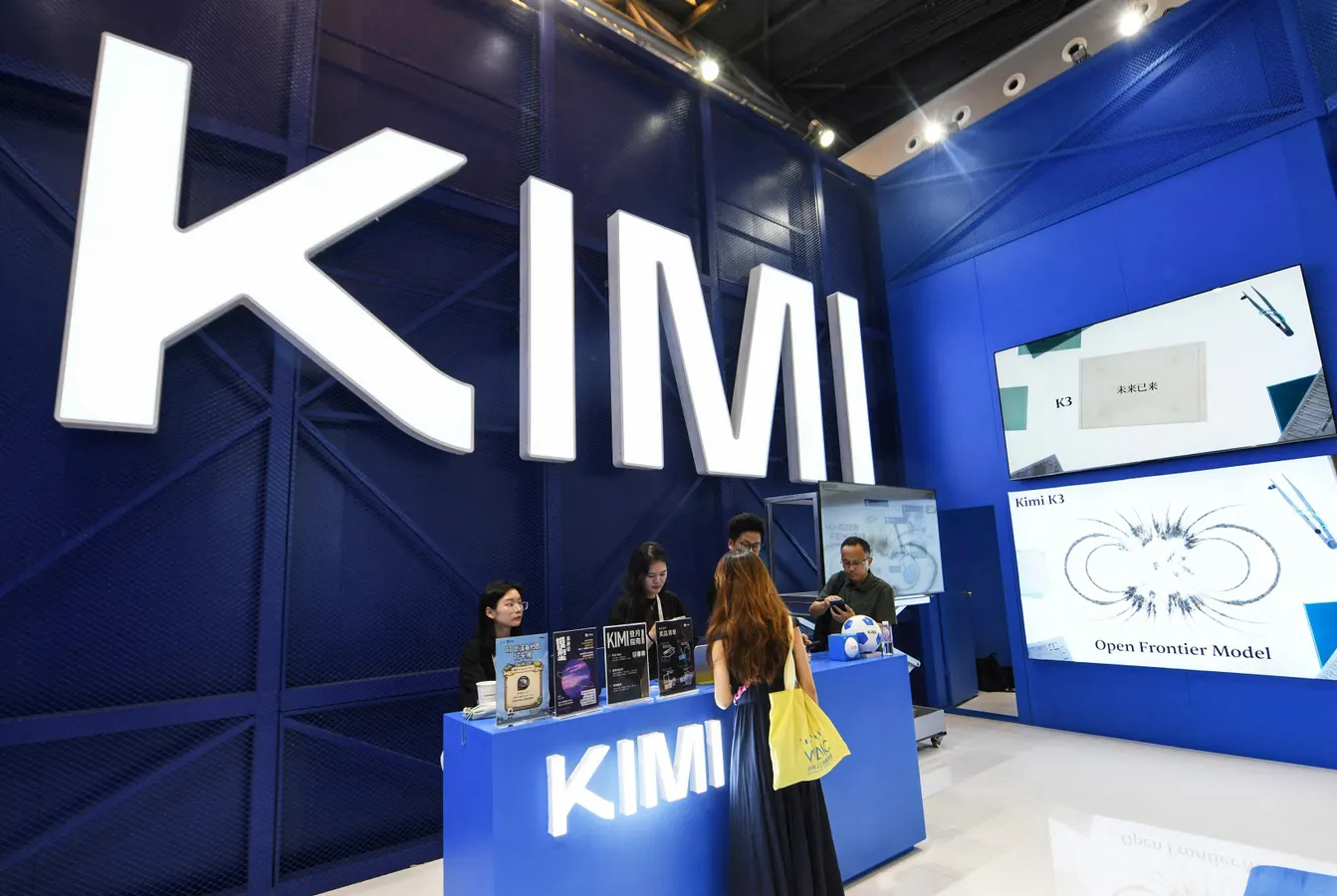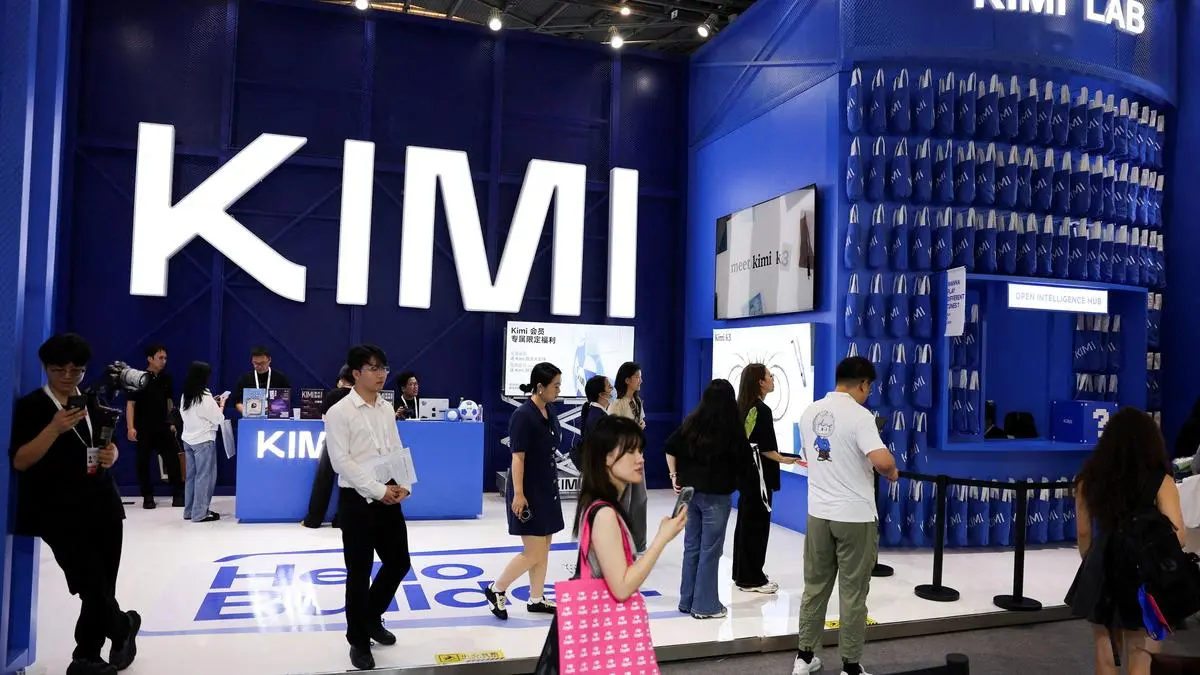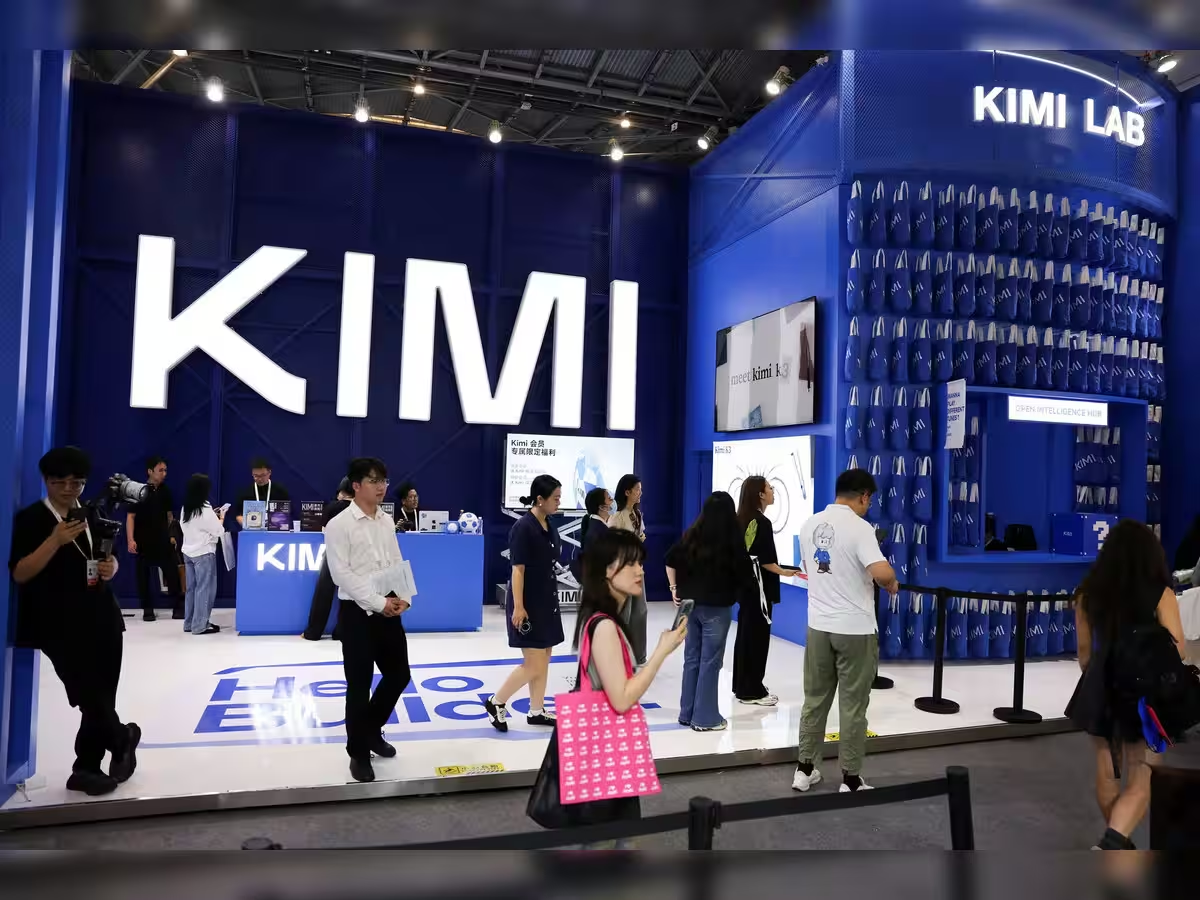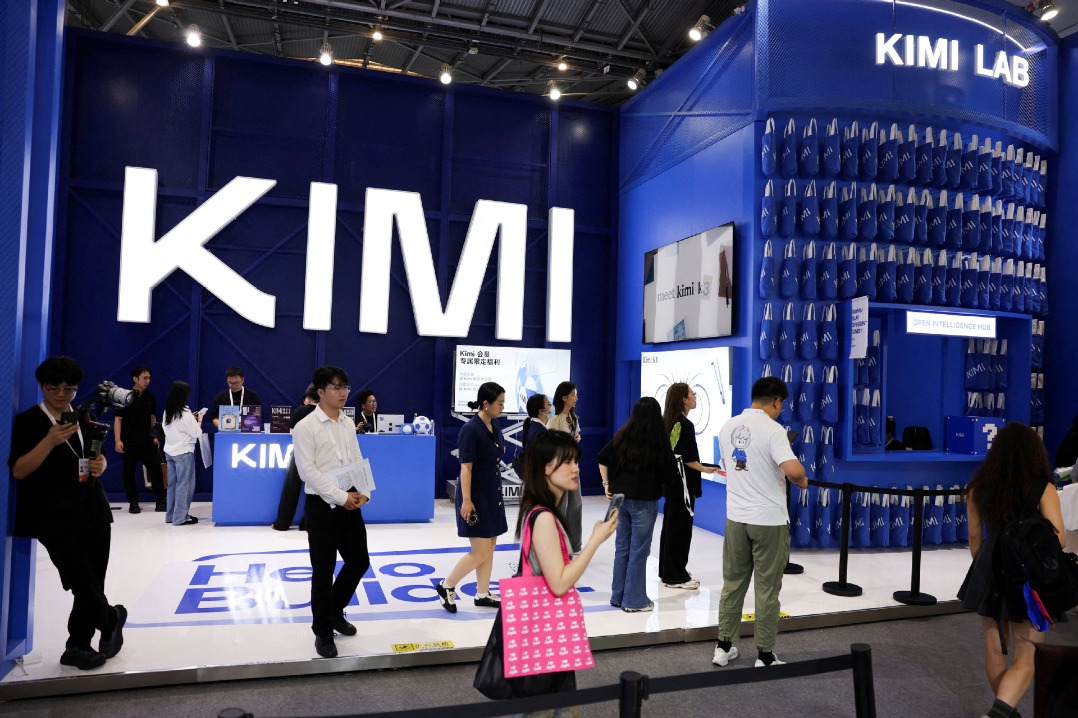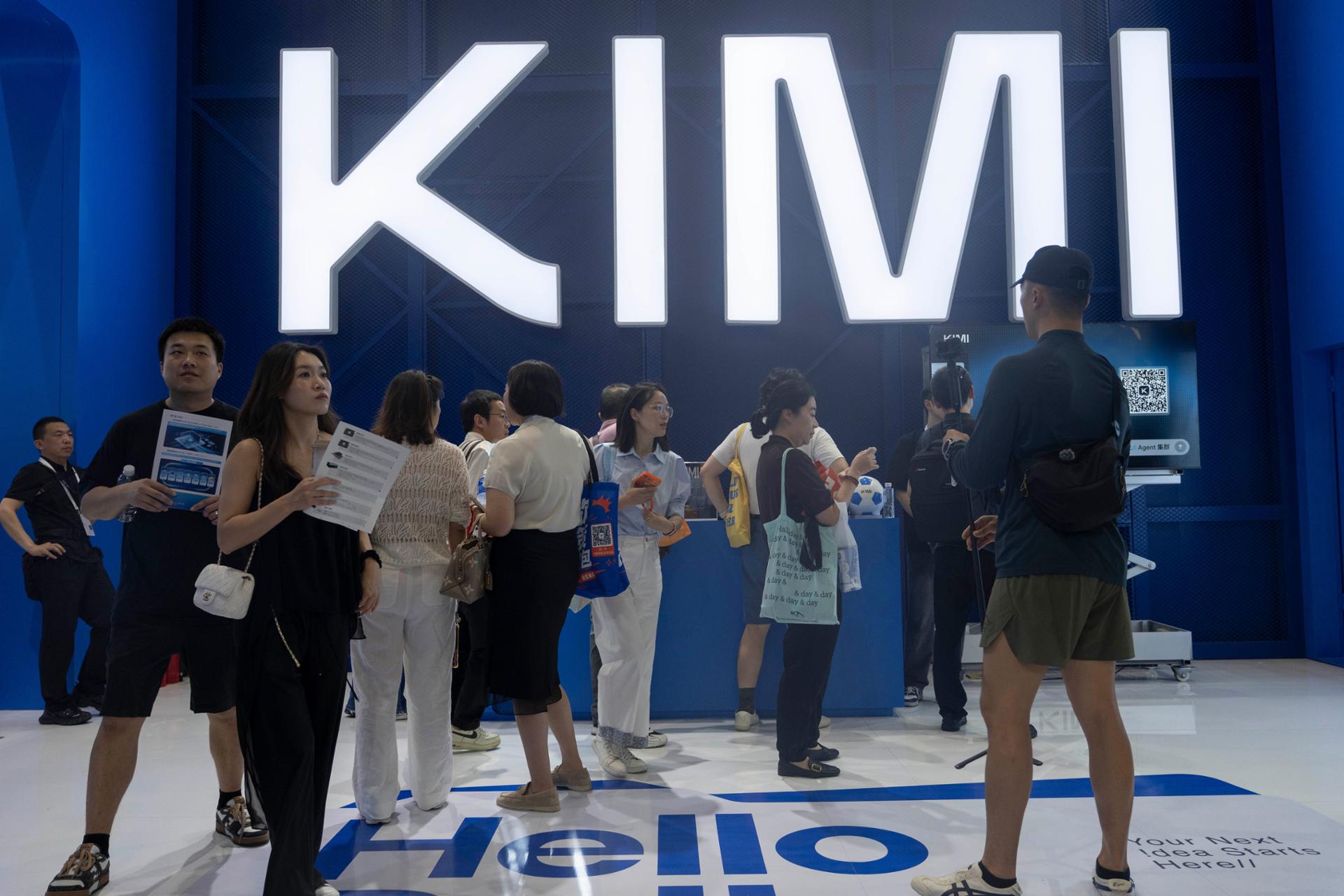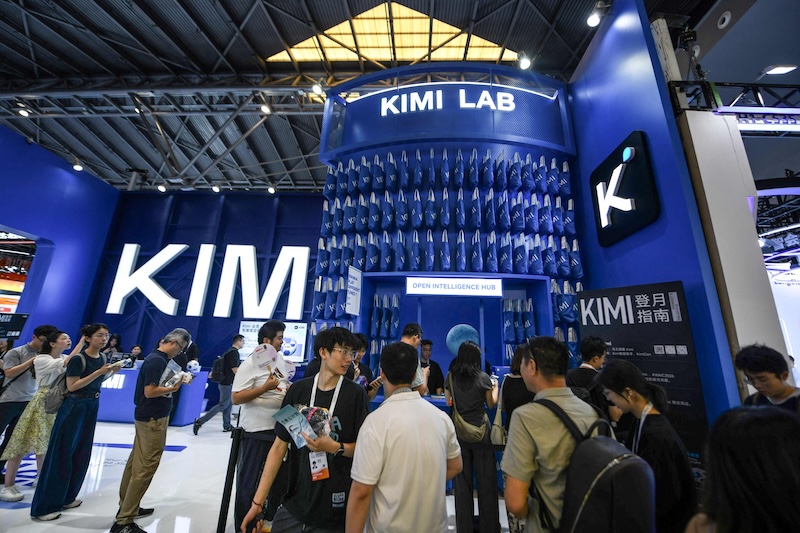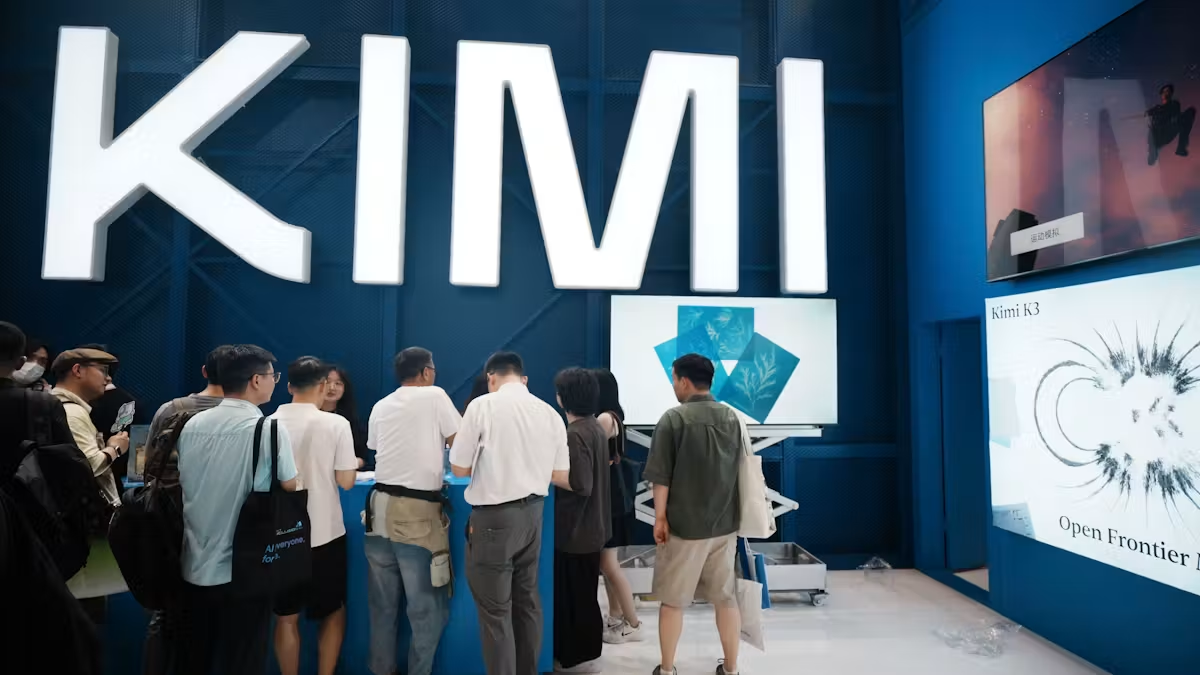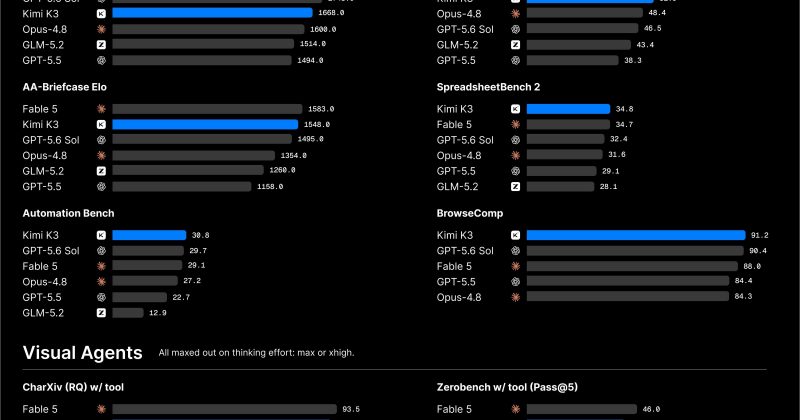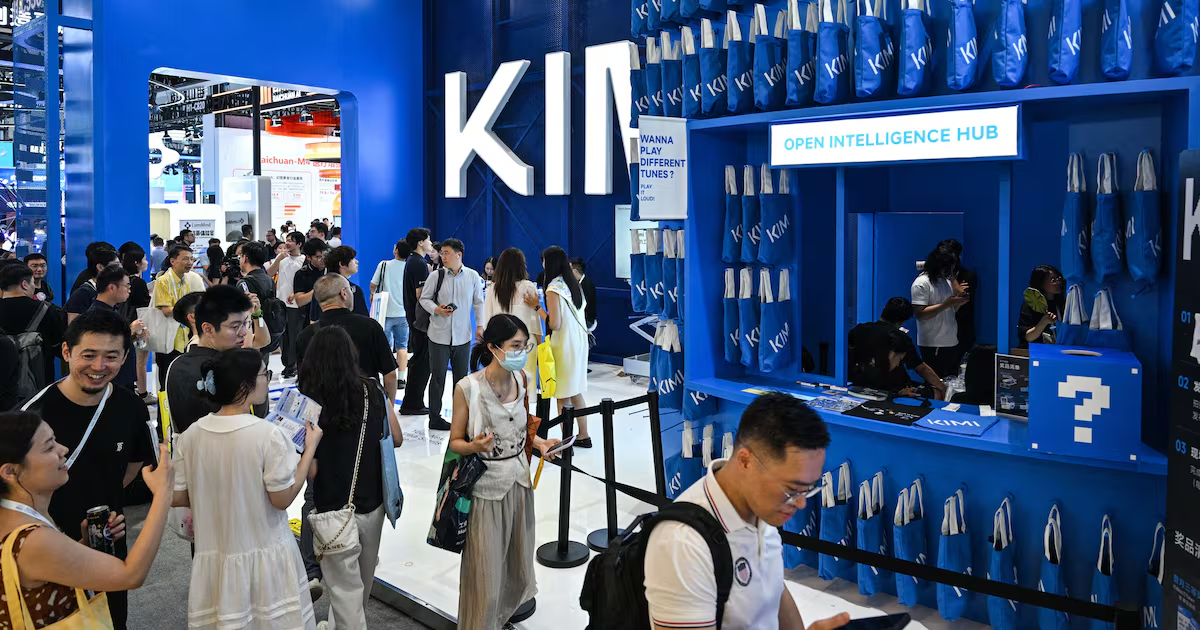
Kimi K3 has sharpened a contest with the US over technological leadership and rules governing artificial intelligenceThe Moonshot AI stand, featuring the Kimi K3 model, during the World Artificial Intelligence Conference in Shanghai. Photograph: Hector Retamal/AFP/Getty Images Mon Jul 20 2026 - 16:08 • 4 MIN READThe World Artificial Intelligence Conference in Shanghai boasted big displays by China’s technology giants Tencent and Alibaba and an entire floor of humanoid robots ironing shirts, handing out drinks and posing for selfies. But much of the attention was on a modest stand dominated by a wall of blue tote bags, each bearing the single word Kimi.Within hours of the conference opening last Friday, Beijing-based start-up Moonshot AI launched Kimi K3, the world’s largest open-weight AI model – whose underlying parameters can be downloaded and modified – shaking the global markets. The company said the model outperformed all but the very top proprietary systems from Open AI and Anthropic, although some industry rankings were even more positive.Arena, a platform that evaluates AI systems, found that Kimi K3 beat Fable, Claude’s most advanced model released just six weeks ago, at front-end coding.“This may be the single biggest release of the year, and marks the moment that [open source] Chinese models have surpassed US models,” Arena’s chief executive Anastasios Angelopoulos said.“The implications of this, whether on the closed-source AI business models or the larger capital ecosystem in the US, are enormous.”A logo of the Kimi K3 model at the World Artificial Intelligence Conference. Photograph: Hector Retamal/AFP/Getty Images The immediate impact of Kimi K3’s launch, which had echoes of last year’s introduction of Chinese AI model DeepSeek, was to knock billions off the value of shares in semiconductor companies. The market calculated that if lower-cost Chinese competitors lure customers away from OpenAI and Anthropic, the American AI firms will not need as many chips.Although they are often described as open source, Chinese AI models such as DeepSeek and Kimi are more precisely open-weight, which means that anyone can download the model and use and adapt it without having access to the underlying training data behind the model. Proprietary models such as ChatGPT, Claude and Gemini stay on the company’s servers and the company controls access and pricing and can make the system unavailable at any time.[ China makes its latest play to become dominant player in AIOpens in new window ]When Xi Jinping addressed the conference in Shanghai, he highlighted the distinction between Beijing’s approach to AI and Washington’s, presenting China’s open-weight models as a global public good. He announced the provision of 5,000 training places in AI-focused programmes for developing countries and promised more co-operation on AI with ASEAN, the League of Arab States, the African Union, the Community of Latin American and Caribbean States, the Shanghai Co-operation Organization, and Brics countries.“The faster AI technology develops, the more firmly we must keep it anchored to the right direction – toward the good and for the benefit of humanity; the more precisely we must calibrate the scope of regulation and governance; and the more promptly we must improve measures to prevent loss of control,” he said.“China is willing, with a more open posture, more practical actions, and a longer-term vision, to work with all parties to grasp and respond to the opportunities and challenges brought by AI development.”The World Artificial Intelligence Conference in Shanghai. Photograph: Hector Retamal/AFP via Getty Images A Kimi logo is seen on a screen at the Moonshot AI stand at the World Artificial Intelligence Conference in Shanghai. Photograph: Hector Retamal/AFP/Getty Images Friday also saw the formation of the World Artificial Intelligence Co-operation Organization (WAICO), an international organisation headquartered in Shanghai to promote AI governance. This follows Washington’s launch last year of the Pax Silica, an effort to strengthen co-operation on AI supply chains with the European Union, Britain, Japan, India, the Philippines and others.The moves by Washington and Beijing are part of a contest to shape the global governance of AI which is breaking down along geopolitical lines. While the Pax Silica is dominated by the US and other G7 economies, WAICO tilts towards Brics countries and others in the Global South.The European Union hoped to influence global AI regulation when it passed an AI Act in 2024 but while some non-European firms agreed to adopt the EU’s rules, the Trump administration has rejected them while Beijing has ignored them. This contrasts with GDPR, which was mirrored in data-protection rules across dozens of jurisdictions, including some US states.Although China is determined to influence the global governance of AI, the extent to which it is engaged in a race with the US is limited by the fact that the two countries are using the technology differently. Beijing’s emphasis is on AI as infrastructure and its official AI+ policy encourages public services as well as industry to find ways to use AI to improve their efficiency.Nearly 40 per cent of the population lives in rural areas where healthcare and education are usually far inferior to what is available in the cities. Chinese provinces are already using AI to improve diagnostics and predictive healthcare and it is has improved remote access to treatment in rural areas.AI is also central to the remarkable efficiency gains in China’s vast ecommerce industry and to the growing use of facial recognition and other biometric data for everything from shopping to public transport. Although Chinese AI is dominated by private companies, the Communist Party ensures that the pursuit of private profit is subordinated to its broader policy goals.Meanwhile, interest in Kimi K3 has been so great that Moonshot AI has temporarily suspended new consumer subscriptions. The company said user requests in the first 48 hours of its launch were so far beyond its expectations that its computing resources were pushed close to their limit.IN THIS SECTION
Amid a wall of blue tote bags, China’s vaulting AI ambitions come into view
Kimi K3 has sharpened a contest with the US over technological leadership and rules governing artificial intelligence
965 words~4 min read