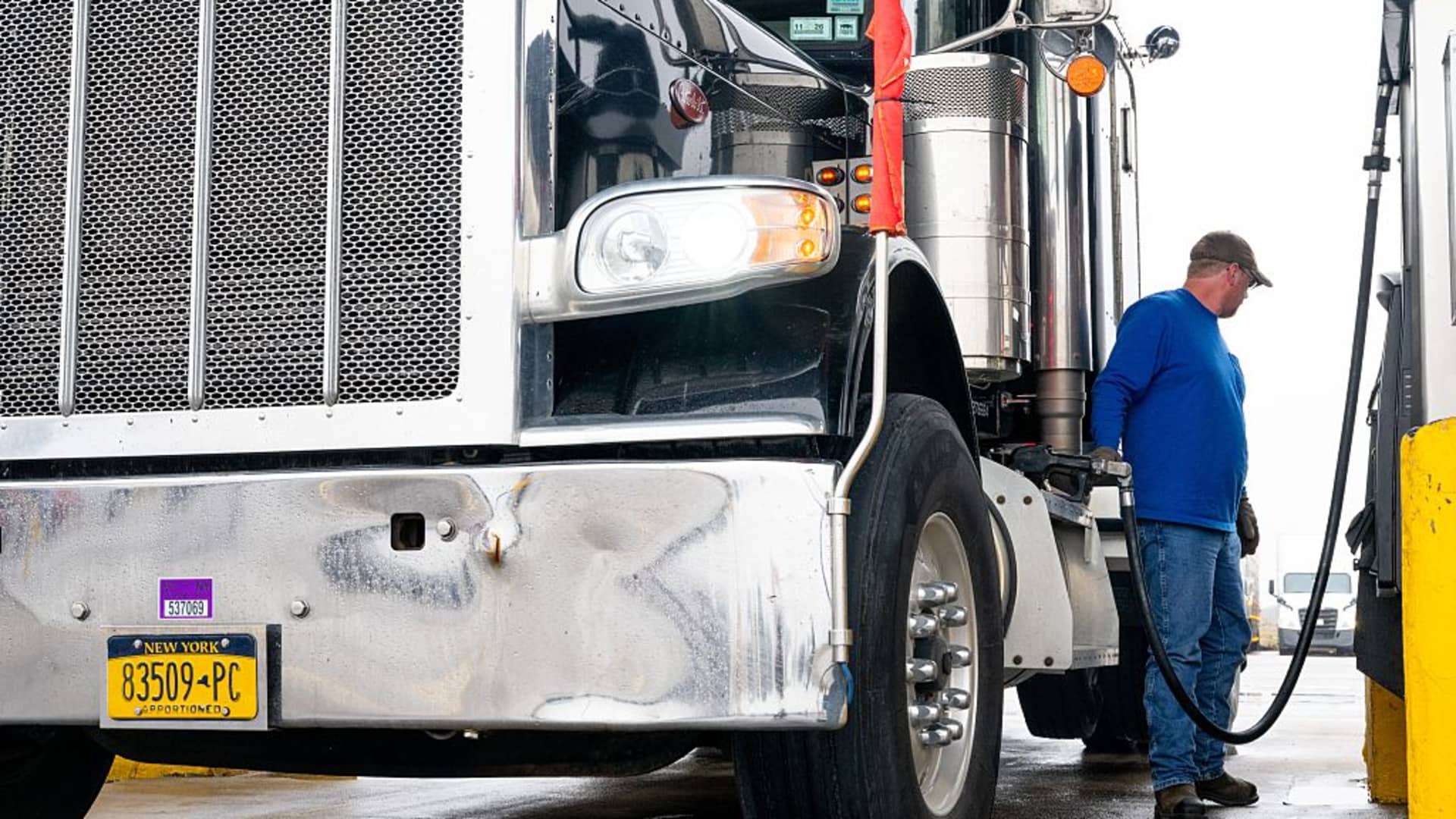
ByHILLEL FRISCHJULY 20, 2026 18:00Contrary to what the BBC or CNN would have us believe, the US is clearly winning the war of attrition against Iran.How much drivers in the US are paying at the pump is probably the most important test in measuring who is winning in the contest. The Iranians thought that US consumers would rise to protest against the war.This is not happening because, after peaking in the early stages of the war, prices at the pump have since declined.Fluctuations in the price of oil between periods of negotiation have also declined, and bouts of violence have leveled. The routinization of war is working in favor of the Trump administration rather than in favor of the Iranians.Economically, the war has hardly had a negative impact on the US economy.Gas prices are displayed at a Shell gas station as an airplane approaches San Diego International Airport for a landing on April 24, 2026 in San Diego, California. (credit: Kevin Carter/Getty Images)The stock market is once again bullish; the New York Stock Exchange Composite has risen by 320 points, 1,5%, since its high point on the eve of the war, the NASDAQ Composite by a whopping 13%, and the S&P 500 Index by an impressive 8.8%.Annual inflation declined from 2.9% the previous year to an annualized 2.6% in 2026, below the forecast of 2.8% despite the increase in energy prices.The US unemployment rate stands at 4.2% as of June 2026, the same as for 2025 as a whole and considerably below the long-term historical average of 5.66%. One can safely say that the US economy has fared well in the US-Iranian war.However, this is hardly the case for Iran, as important proxy variables (in the absence of macro data and certainly data that is credible) show the depth of Iran’s crisis.A good start to gauge Iran’s economic decline is the reduction of ships entering and exiting Iran’s major port in Bandar Abbas, which accounts for over 50% of Iran’s total shipping and over 80% of its container trade. Container trade refers to imported and exported finished goods that make the difference between comfortable modern life and subsistence.Data on shipping movement since the mass protests in early January of this year show over a 50% decline in the movement of ships from the port compared with levels prevailing before the war.If 12 to 22 ships on average entered and exited the port in 2023, that number has been reduced to six to eight freight ships and, of course, was substantially lower during the US-imposed blockade in the first six weeks of the war.Air travel data paint an even more gruesome pictureThe Tehran megalopolis is serviced by two of the country’s major airports: the Mehrabad International Airport – which, despite its name, is almost exclusively devoted to domestic flights – and the newer Imam Khomeini International Airport, which is Iran’s major gateway to the outside world. Whereas in 2017, the Imam Khomeini International Airport reported an average of 300 flights a day, that figure has since declined to less than 20 flights a day, meaning that the airport is operating at around 5% capacity.At Mehrabad airport, which boasted 340 flights at its peak in 2017, flights have almost ceased altogether, with a recent average of four flights a day.The difference between air activity in the two airports might be due to a scarcity of imported aviation parts and the regime’s policy of favoring contact with the outside world over domestic concerns.In any event, the data from both indicate the sorry state of the Iranian economy.One would think that intercity bus activity would make up for the absence of domestic air travel in a huge country over twice the size of France.There are indications that this is hardly the case. A sophisticated travel site in Iran today, Orient Tours, provides information on the 69 buses that ply the route on July 15 between Tehran and Isfahan, Iran’s two major cities.A 2019 comment in a travel log responding to a foreign traveler’s question about bus travel between the two cities indicated that at least 126 buses operated from Tehran’s major bus terminal, not counting additional buses to Isfahan from two other major terminals in the city.Looking at reviews appearing on the Tripadvisor site for two luxury hotels in Tehran, one gets the same impression of economic downturn and near collapse.For the leading hotel on the list, there were nine reviews for the first six and a half months of this year as opposed to 28 reviews in December 2025 alone (before the outbreak of protests and war).In a profile of another leading hotel, there were four reviews in 2026 (up to July 15), compared to 49 reviews in the last six months of 2025.US President Donald Trump is even dashing the hopes the Iranian regime has of imposing tolls on the Strait of Hormuz to offset, however partially, the costs of the economic downturn since the protests and the outbreak of war.In many wars of attrition, the weaker side indeed prevailed. Vietnam and, more recently, the Afghanistan debacle haunt the United States. In this war of attrition, it looks like the weaker side, Iran, acting tough, is heading toward defeat.The writer is a senior researcher at the Jerusalem Institute for Strategy and Security and professor emeritus of Bar-Ilan University.Follow us on Google
The US-Iran war of attrition is taking a growing toll on Iran's economy | The Jerusalem Post
Fluctuations in the price of oil between periods of negotiation have also declined, and bouts of violence have leveled. The routinization of war is working in favor of the Trump administration.
889 words~4 min read