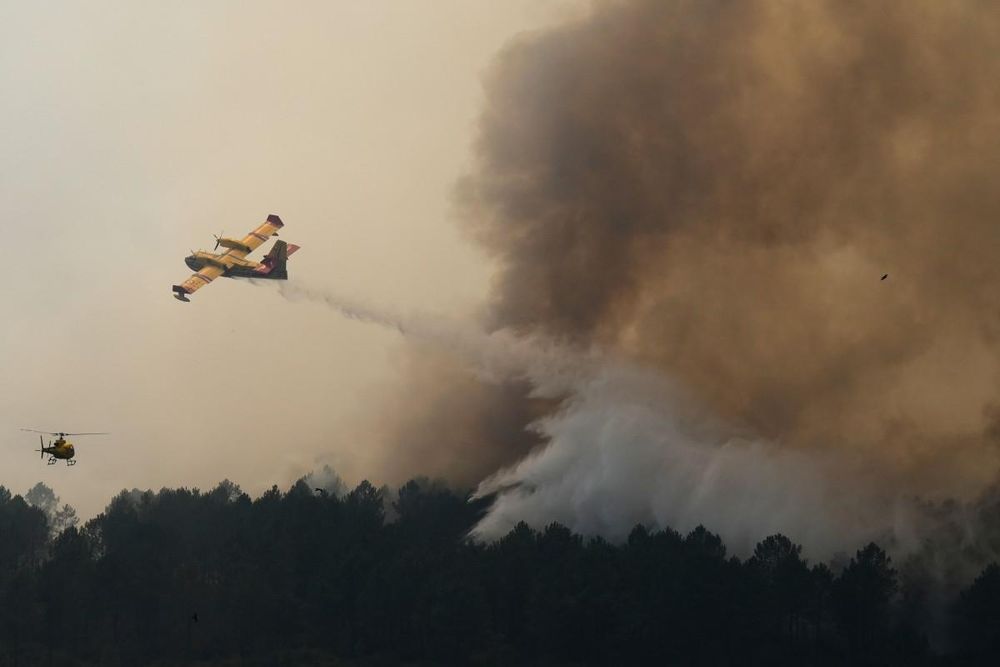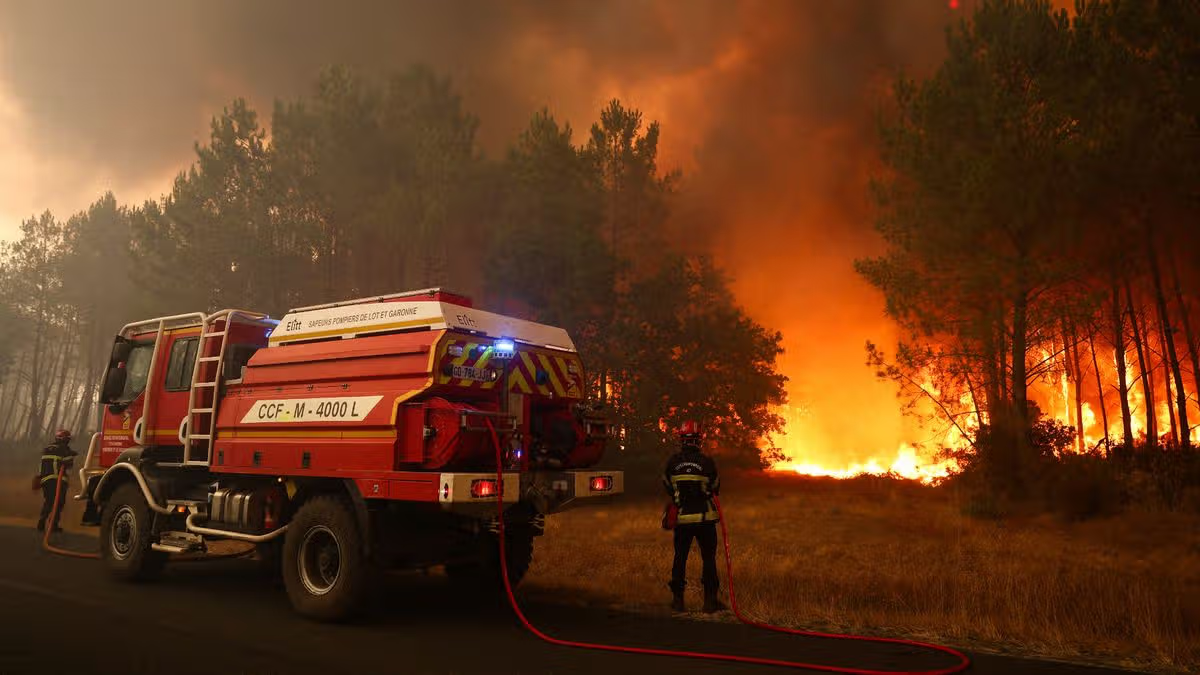
The number of heatwaves is on the rise in France, which endured its third major heatwave in mid-July. Climate disinformation is on the rise, too – as exemplified by this tweet, which insinuates that heatwaves in Europe may have been triggered by work done by the American scientific endeavour HAARP (High-frequency Active Auroral Research Program), based at the University of Alaska-Fairbanks.
This tweet insinuates that the US program to study the ionosphere, HAARP, might be causing heatwaves in Europe. © X
It refers to an old conspiracy theory that the antennae used by HAARP – a scientific project that aims to study the ionosphere, the layer of atmosphere located at an altitude of between 80 and 640 kilometres – are actually being used to manipulate the global climate. There is no scientific basis for this theory. And yet this disinformation, which is being spread by a pro-Russian account called @camille_moscow, is far from the only fake narrative about the climate being pushed by a foreign actor. Mathilde Jourde, a researcher at French think tank IRIS, explains: "Information warfare latches onto issues that are polarising within societies. Climate change is becoming an increasingly central issue within our societies, especially in Europe. So foreign actors are starting to use the climate as a tool for destabilisation, as a strategic lever." The United States and Russia, two state actors spreading climate disinformation in Europe The researcher, who is head of the Climate, Environment and Security programme at IRIS, is the co-author of the report “Climate Disinformation and Information Warfare: State Interference and Security Implications”, published in May 2026. The study focuses on climate disinformation spread by two state actors in particular: Russia and the United States. "The data we have shows that these are actors targeting Europe,” Jourde says. Jourde says that much of the disinformation centres on European climate and energy policy, like the European Green Deal, a roadmap launched in late 2019 to make Europe the first carbon-neutral continent by 2050. The United States and Russia are both fossil fuel exporters, which means they could benefit from a reduction in the EU’s decarbonisation goals, the IRIS report says. But Jourde says the aims of this kind of disinformation could be much wider: "The disinformation itself might not be the main objective. For Russia, for example, this could serve as a strategic objective amid ongoing tensions in Europe surrounding the war in Ukraine." ‘Participation in the chaos’: the example of the 2024 floods in Valencia, Spain In this context, foreign actors are increasingly taking advantage of climate events, like, for example, the 2024 floods that killed more than 200 people in Valencia, Spain. "Some of the disinformation around the event came from Russian sources,” the researcher says. The campaign was focused on amplifying false content already circulating online: "Many false emergency numbers circulated online. There were also fake reports of the number of people killed by these floods. That sowed a type of mistrust in the authorities among the population, which added to the chaos and, in the long term, perhaps weakened people’s support for Europe’s position regarding Ukraine.” Why severe climate events are a 'blessing’ for those carrying out the information wars In 2023, a Russian disinformation campaign spread the false narrative that the US government was prioritising spending money on Ukraine instead of on those affected by the wildfires that raged across Maui, Hawaii. Extreme weather events are a “precious blessing for those who perpetrate information warfare because you can play on people’s fears with very little effort. Things take off quickly,” Jourde says. Russian disinformation is certainly spread by state media outlets like Russia Today, which has been banned by the European Union since 2022, but it is often concealed, according to the report. It is often spread by channels aligned with the state such as Portal Kombat, a vast network of disinformation sites discovered in 2024 by Viginum, the French service combating foreign digital interference.