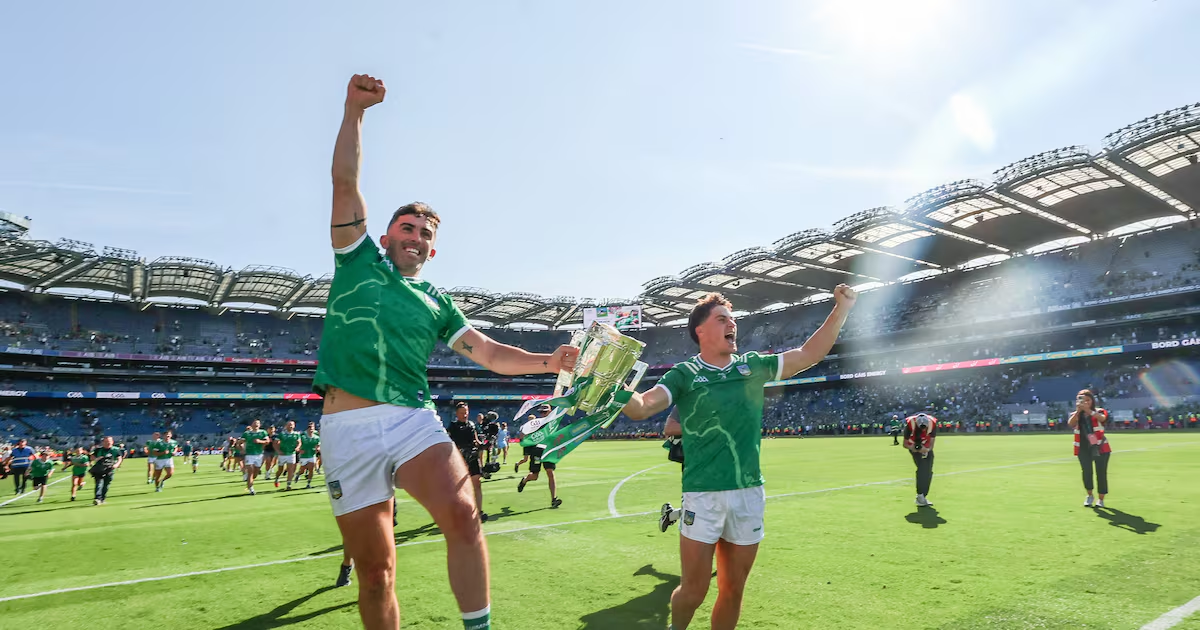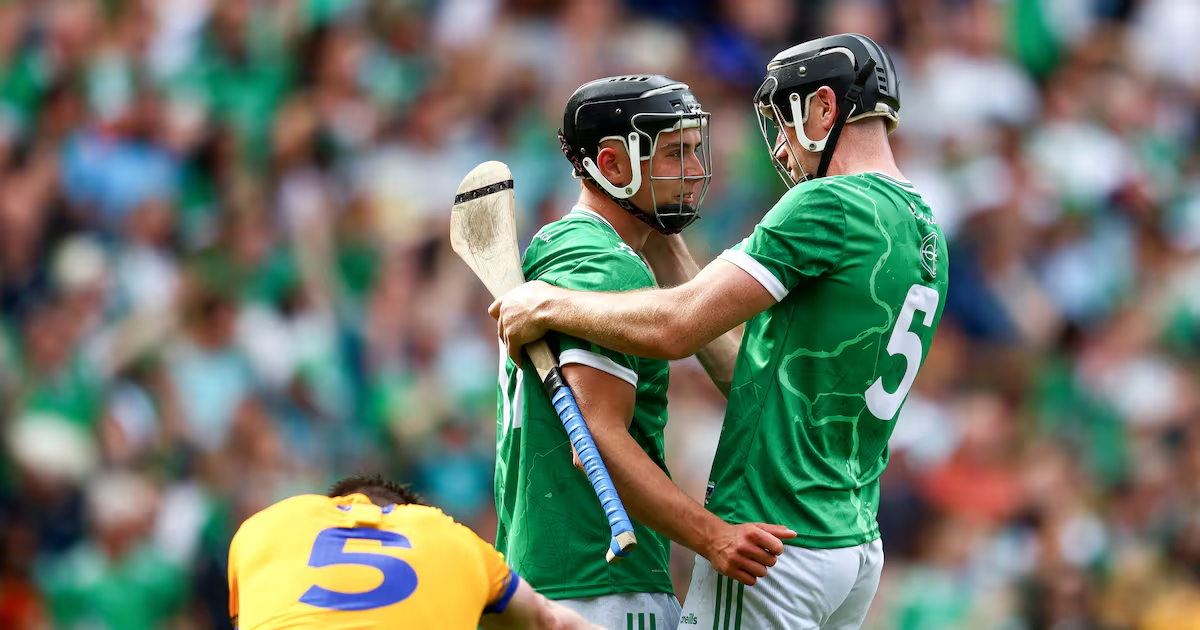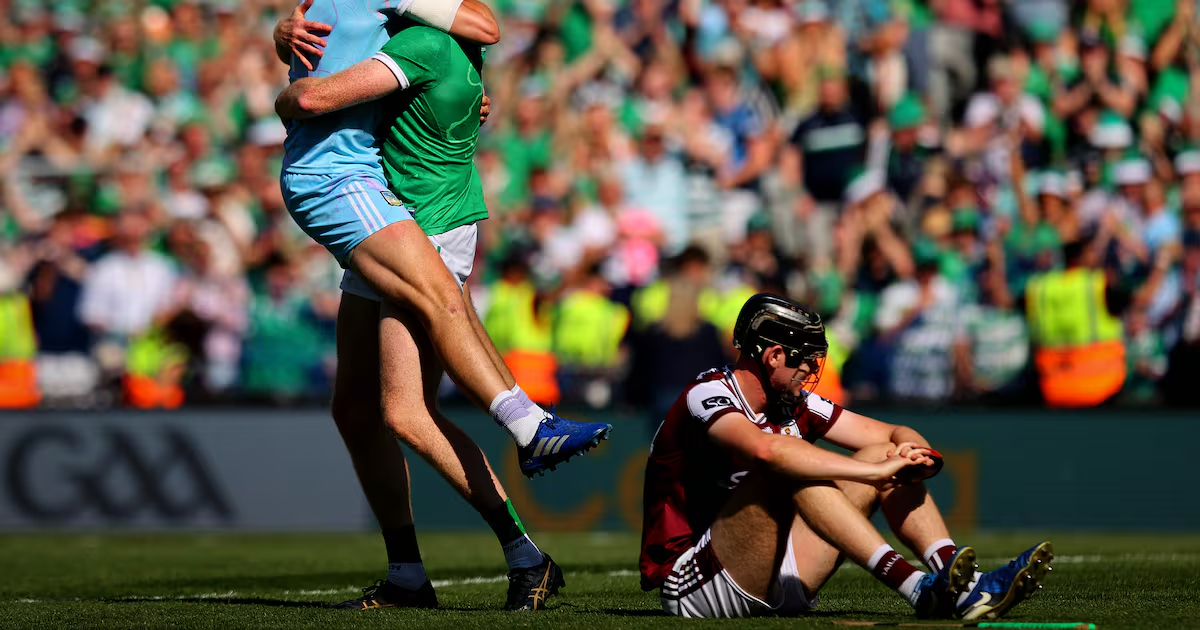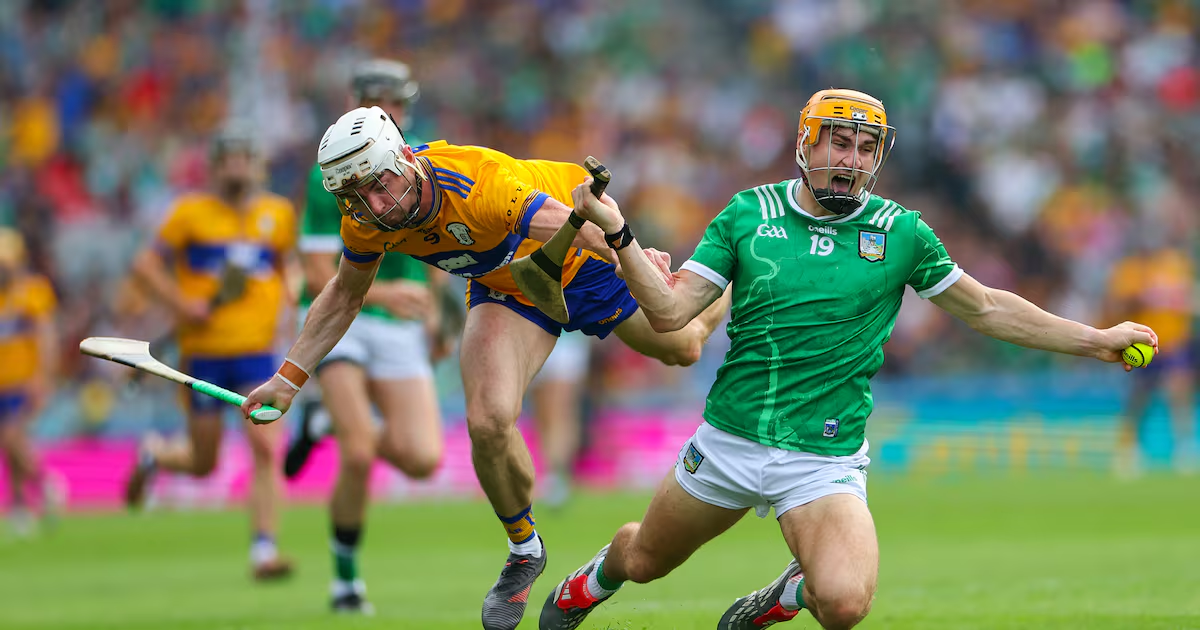
When Caroline Currid started working with the Limerick players, she used an instrument she called a “Bullshit Board”. On the Tuesday before a big match she would ask all the players to tell her things that they had heard around the place about the upcoming match or about how things were going, however ludicrous they might sound.And then, one by one, they would be exploded. Nothing was buried or left to fester quietly: as a group they confronted everything, openly. All that mattered was their reality.Currid was not part of the set-up for 2024 and 2025, when Limerick didn’t always recognise their reflection in the mirror. They lost games down the stretch, they lost games by conceding goals in clusters, they lost games by having fewer shots than their opponents, stuff that, in their eyes, would have been poor performance hygiene.When Kiely spent a few weeks last winter conducting 63 interviews with players and everybody else involved, it was a massive roadshow for Currid’s “Bullshit Board”. To go forward, they needed to strip everything back. They needed to flush their minds of the toxins that had invaded their system and their identity. They needed to remember who they were.It wasn’t a faultless summer: in the round-robin game in Cork, they blew a seven-point lead and were on the end of a nine-point swing even before Cian Lynch was sent off; against Waterford they were flat for an hour; in the Munster final they were the opposite of ruthless and clinical; in the All-Ireland semi-final they were knocked sideways by Clare’s aggression and want – their conversion rate that day was just 52 per cent, probably their worst ever numbers in a big game.But their performance in the final was a glorious crystallisation of everything essential about them: nobody makes chaos better than Limerick, nobody controls it like they do.All year, Galway’s daringly new way of playing had been rolled out in temperate climates; on Sunday it met a tropical storm. They couldn’t make it stick without gaining some kind of traction in the middle third and that is where Limerick cut Galway’s throat. Of the 40 turnovers that Galway conceded, 27 of them were in that sector.Over the years Limerick have encountered many opponents with a plan, but Paul Kinnerk is not just a creative genius, he is also a master of destruction. Cork in 2024 is the only test he has failed twice. The sense that Galway might have the legs to somehow disturb Limerick was predicated on the belief that Galway would be able to drill through the rock of Limerick’s middle third and carve out some running lanes. Limerick have seen other versions of that movie.The precision and volume of their tackling was extraordinary. Just like Kilkenny years ago, Limerick are not squeamish about getting things wrong in the contact zone and committing acts of calculated cynicism, but this was a whirlwind of body hits and whiplash flicks and turnovers.Galway's Darragh Neary with Cian Lynch of Limerick. Photograph: Tom O’Hanlon/Inpho It was led by Lynch, which in an important sense exemplifies Limerick’s values. Henry Shefflin is one of the greatest players the game has ever seen, but for Kilkenny he was also the player that headlined their aggression. Nobody could look at Shefflin’s output without the ball and believe that they were doing enough.That is what Lynch brought on Sunday: the most gifted Limerick player was also the fire starter and the ornery yard dog, barking at everything that moved. The acid in Limerick’s attitude was expressed in him.Lynch’s performance was a glorious symphony of tackles and quick passes and selfless facilitation. The point he scored before half-time came after a familiar surge down the middle, all poise and balance; but it had started with a turnover. He had dug the ball out. Nobody handed it to him.Lynch’s year wasn’t straightforward either: sent off against Cork, suspended for the game in Ennis, unfit to start the All-Ireland semi-final. But just like in 2021 and 2023, he produced his best performance of the year in the final. It is a thumbnail observation that cuts to his essence.Afterwards John Kiely spoke briefly about the Under-21 team that he managed to win the 2015 All-Ireland title. “Back in those days we just had a projector, my laptop and some very flimsy software that was free,” said Kiely. “[For] those video sessions [they] were sitting on a concrete floor upstairs in the dressingroom area. [But] they are an incredibly intelligent bunch of men when it comes to taking a tactical awareness piece and applying it consistently and under the most duress. That is a quality this group has that is very rare in elite sport, to apply things consistently for years and years.”From that group, Lynch was the first to play senior championship for Limerick, but 12 others followed over the years; nine of them are still there. That group has been the foundation for everything Limerick have achieved over the last 10 years. Their mental stamina and their renewable ambition has defined them and propelled them.So, how much longer can it last? Are they so far ahead of the chasing pack again that they can budget for some natural depreciation and still win next year’s All-Ireland?The 20 players that took the field on Sunday have now made 928 championship appearances between them, more than any other hurling team in the history of the game. Twelve of them have made 50 championship appearances or more.It is not a like-for-like comparison because the championship system was much different when Brian Cody’s Kilkenny were in their pomp, but when Kilkenny completed four-in-a-row in 2009, only five of the Kilkenny team had made more than 30 championship appearances by that stage of their careers. The institutional knowledge in the Limerick dressingroom is an unquantifiable power.Athletes sometimes fantasise about going out at the top, but very few of them do. On Sunday Limerick climbed back to a place above the clouds. They’re not looking down.
Limerick recover their identity to be the best version of themselves
After their sixth title in nine years, the champions show no signs of stopping
1,000 words~5 min read