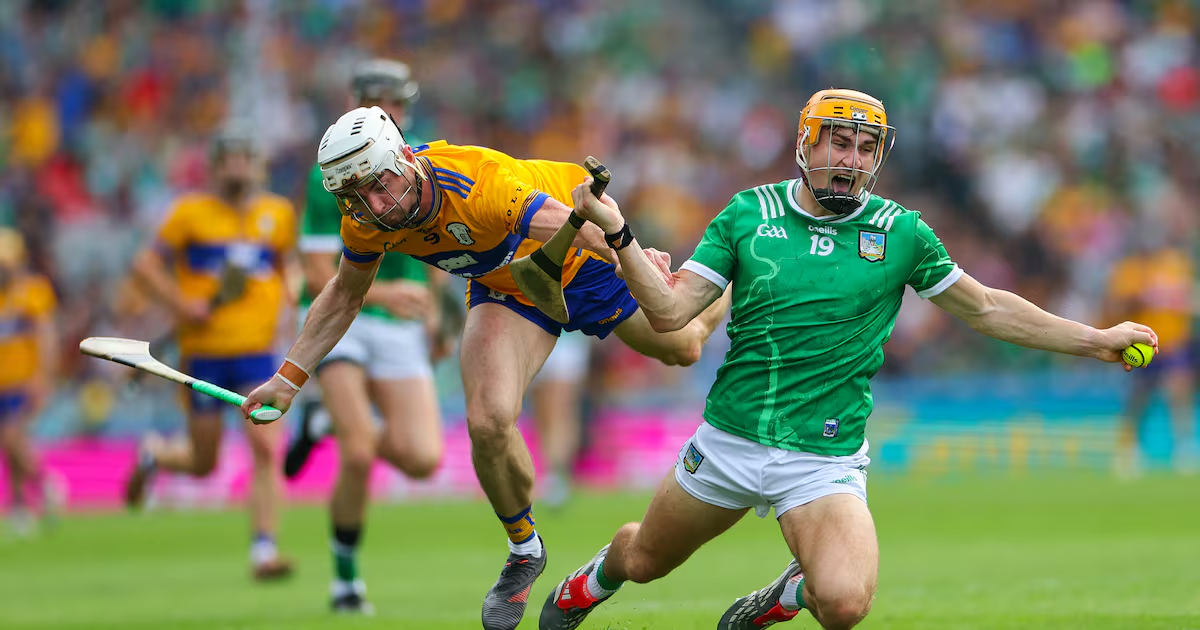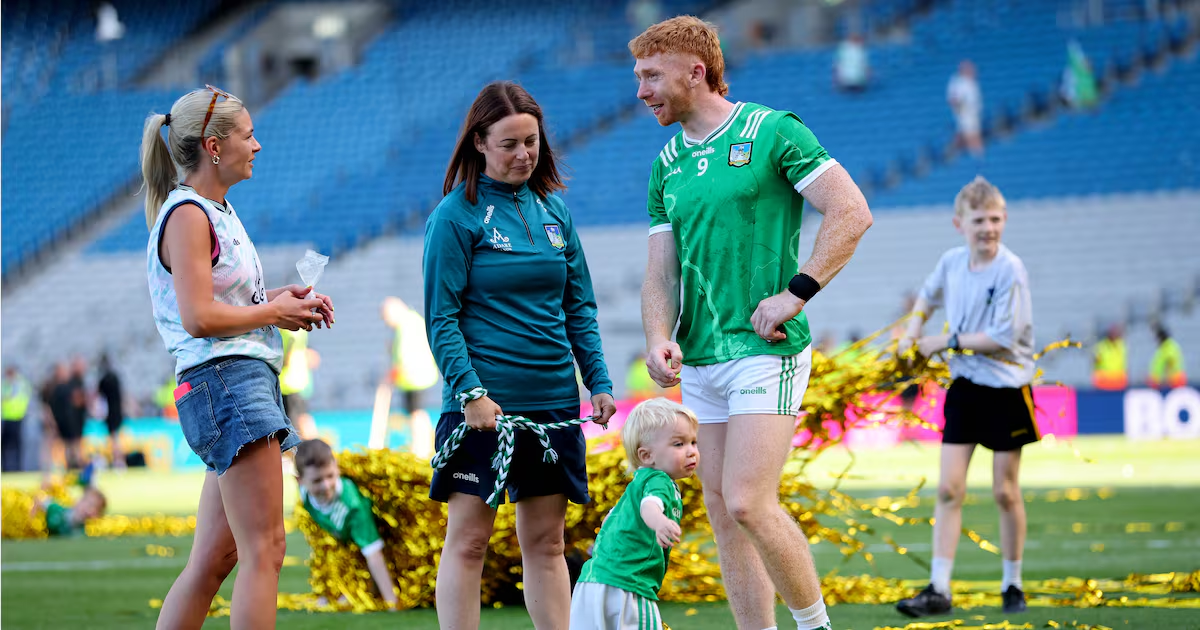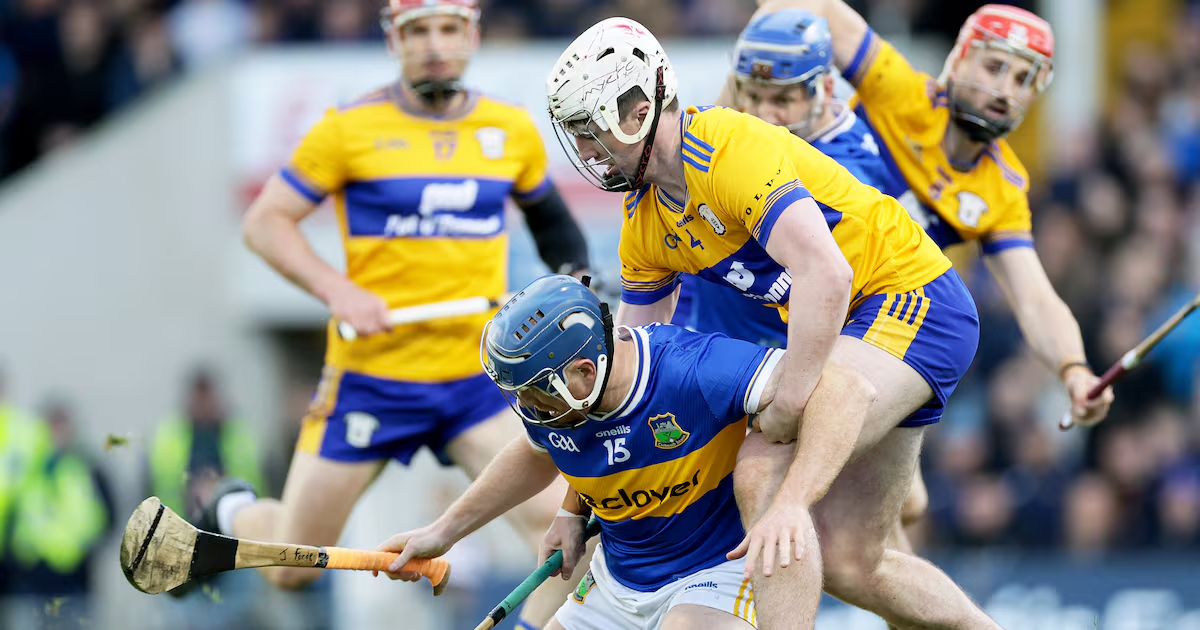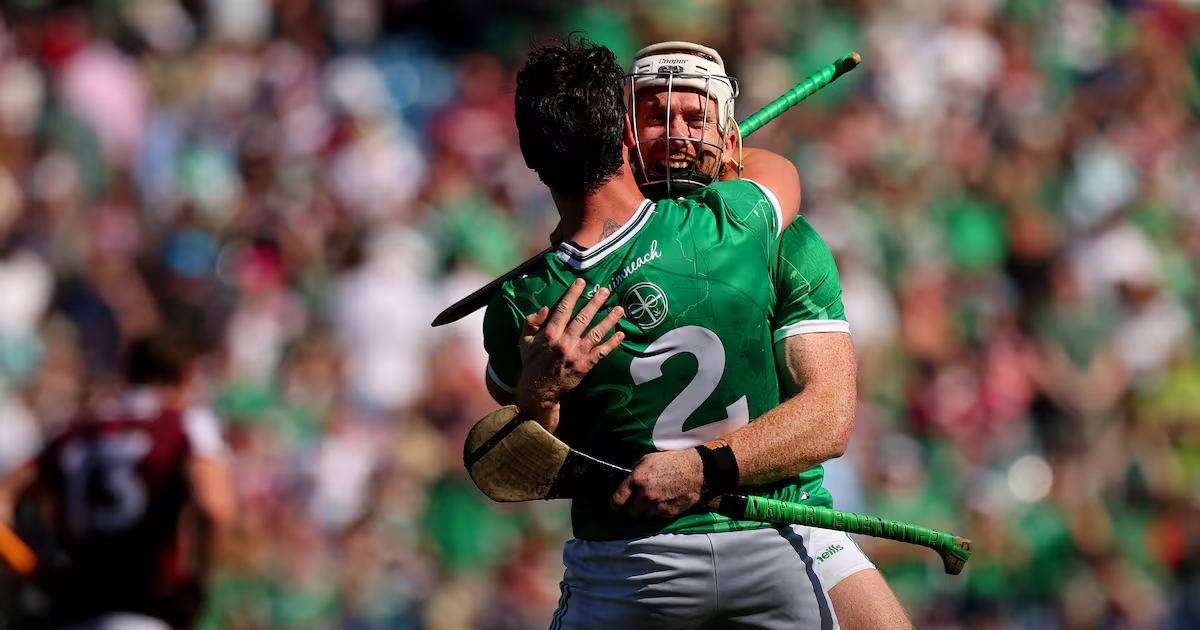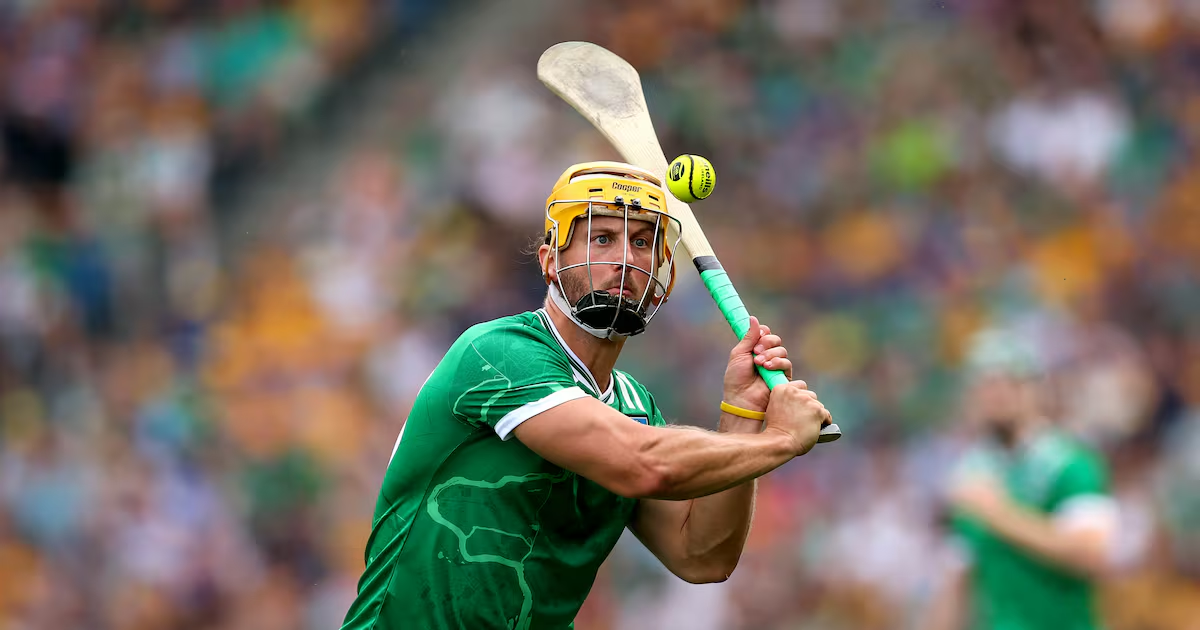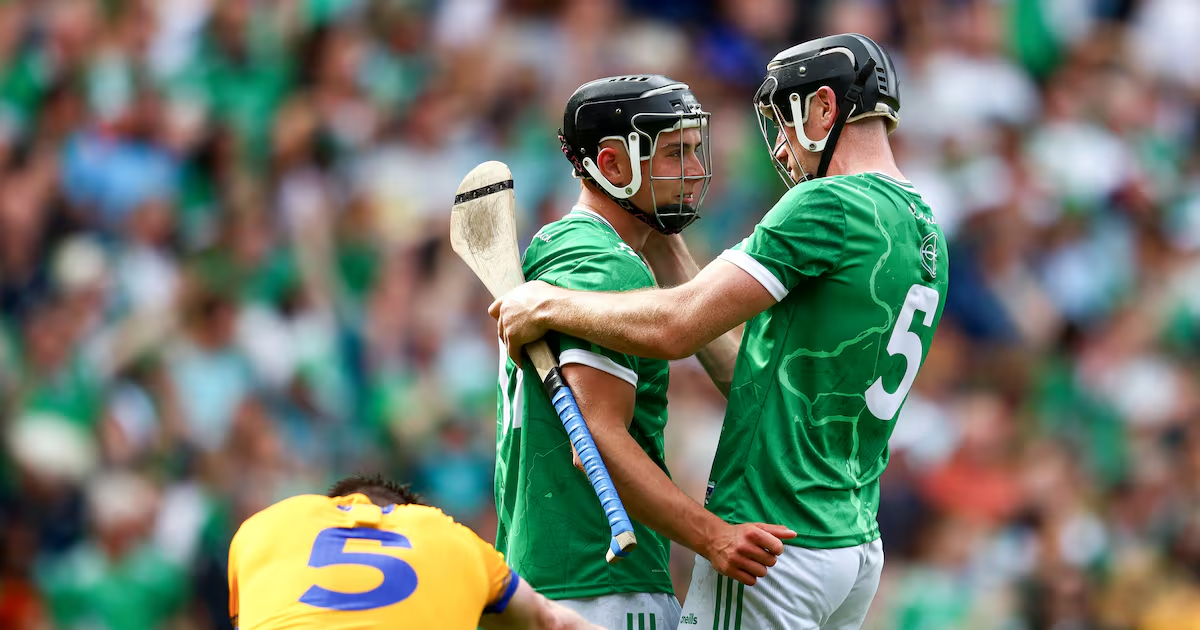
When great teams win a tight game, it is easy to explain it. The reasons were already waiting in a queue, not new, but plausible and edible. It’s like one of those cookery segments on morning TV, where the guest chef marches the ingredients through their paces and then whips a pre-cooked dish from the oven. You knew it wouldn’t be spoiled by an unexpected kitchen catastrophe.So, after Clare missed a free and an opportunity to go six points up with 59 minutes on the clock in Croke Park eight days ago, it doesn’t matter now that Diarmaid Byrnes missed two frees for Limerick in the time that was left, or that he piked a ball over the sideline under pressure. It is of no consequence that they were behind when the match clock turned red or that they had gone 70 minutes without forcing a save from the Clare goalie. When a great team wins, everything makes sense. It is the simplest self-fulfilling prophecy. We expect them to manage the bottom line, come what may. It is their expectation too. It builds into a comfortable consensus. Everyone nods. They won. Of course they won.But even for great teams nothing stays the same. In the blizzard of post-match commentary over the following days, it was remarked how unusual it was for Limerick to win a match by scoring so little, when in fact it was the second consecutive game that Limerick had won by scoring just 1-21. In 10 seasons under John Kiely, Limerick have won four championship matches by scoring that much or less, and two of them have been in the last five weeks. The feeling for the last two years has been that Kiely was managing a team in the foothills of decline. During their imperious pomp, in the thick of the four-in-a-row, they were unbeaten in 17 consecutive championship matches. But when they lost their opening game to Cork this year, it extended a run of just two wins from their previous eight championship games, stretching back to 2024. The aura around the team felt like a cover version of their original hits. Limerick manager John Kiely with coach Paul Kinnerk. Photograph: Morgan Treacy/Inpho They couldn’t have come back in the way they have this season unless they acknowledged their vulnerability. The humility of champions is not noticed nearly as much as their confidence or their brilliance. In each of the last two seasons, Limerick’s year was ended by defeats that they didn’t see coming to teams that they believed were inferior. In their minds, they needed to find a reconciliation with that.Being able to reflect as a group is a skill they acquired during their first couple of years working with Caroline Currid, their performance coach. At a presentation to Shannon Chamber early in 2019, Currid spoke about it in broad strokes. “Holding ourselves accountable,” she said. “They got so good at having real honest conversations. It took time to embed it, but they got so good at holding themselves accountable that it wasn’t about John [Kiely] or Paul [Kinnerk] or any of the coaches having to babysit the team. It was about the leaders within the team holding [the players] accountable.”As other stuff has slipped, their mentality as a group is their most enduring power. They no longer flatten opponents in the third quarter or paralyse teams with their efficiency. They scored with 78 per cent of their shots against Clare when they eviscerated them in Ennis a couple of months ago, but their efficiency eight days ago was just 52 per cent. In their two championship games against Cork, both of which were one-score games, their efficiency didn’t climb above 60 per cent.Limerick's Cathal O'Neill celebrates after winning the All-Ireland Senior Hurling semi-final. Photograph: Grace Halton/Inpho As long as they have been on the road, they have been beholden to the numbers. It is rare that Kiely will do a post-match briefing without referencing efficiency. He did so again last Sunday. The data is always at the tip of his tongue. They have always believed that whatever questions were raised by their performances, they would find an answer in the numbers.But they can’t depend on large totals in the way that they once could. Their golden target has always been 30 points, by whatever means. In their four-in-row years, they hit that number in 55 per cent of their championship matches; in the last three years, that strike rate has fallen significantly to 39 per cent. Without looking any further, that made them more vulnerable.Refreshing the team without losing its core identity has been a skilful piece of management by Kiely, though. The team is still overwhelmingly familiar and yet, for the first round of the 2025 championship against Tipperary, they had just eight starters from their first All-Ireland final. At the time, it felt like a conscious shift towards renewal; last Sunday they had nine of the 2018 starters. The bench boost that had been such a potent weapon in Kiely’s early years has been revamped, not with a flush of emerging talent, but by a process of recycling. Adam English doesn’t always start, but otherwise their finishers are Tom Morrissey in season 12, Mike Casey in season 11 and David Reidy, who made his first appearance on the panel 13 years ago: intelligent players and veterans of all their winning campaigns. Just like in their pomp, Limerick are winning games with 18 or 19 trusted players. No more than that. Limerick's Mike Casey celebrates after winning the All-Ireland Senior Hurling semi-final. Photograph: Ryan Byrne/Inpho Fundamentally, they haven’t changed. Their evolution has been within certain parameters, none of which disturbed anything essential. Over the years they have reimagined roles for a handful of players and tinkered with how they moved the ball into scoring positions, but their governing principles of play, their tactical shape, their technical proficiency, their resourcefulness, their ferocious physicality and situational cynicism are all intact. It is a tableau of excellence and hardheadedness.Every empire falls in the end. For all the great players that have graced this team, and the high-performance architecture that has supported it, their achievements have been cultivated by exceptional management. [ All-Ireland boost for Limerick as captain Cian Lynch declared fit for hurling finalOpens in new window ]But this could be the last week that Kiely, Paul Kinnerk, Seanie O’Donnell and Currid have their hands on the levers, together. How could they replace one of them without losing something vital? How could they replace all four of them at once, perhaps, and carry on as before? Is that what Limerick are facing?They must face Galway first and an outcome that has been their obsession for the last year. Great teams win. It is what we expect.
Great teams win. It is what we expect, even when the victories look different
Refreshing the Limerick hurling team without it losing its core identity has been a skilful piece of management by John Kiely
1,131 words~5 min read