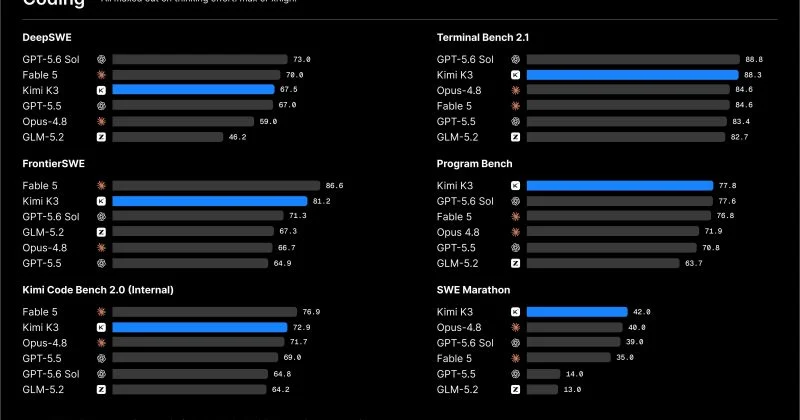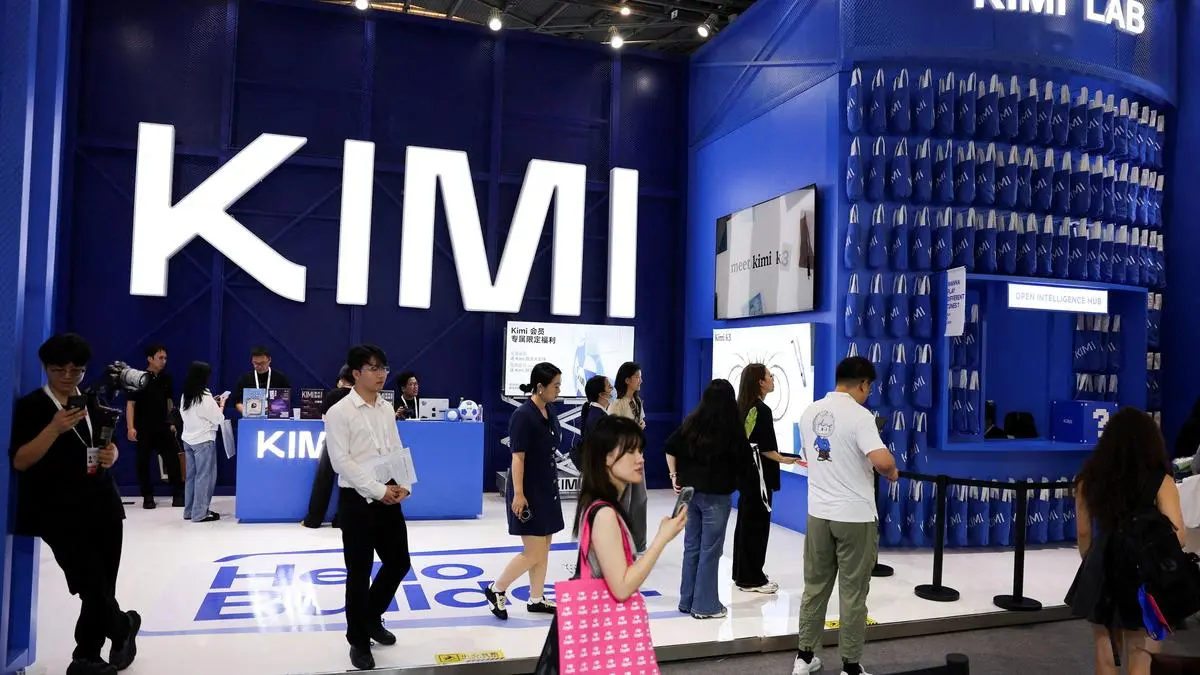
You can use Kimi K3 on Moonshot AI’s website today, much as you can use ChatGPT or Claude. On July 27, the Chinese company says it will take a second step: publish the model files that let other companies run and adapt K3 on their own systems.OpenAI and Anthropic do not distribute their leading models that way. If the files arrive as promised, a cloud provider can host K3, a large company can adapt it inside infrastructure it controls, and a developer can build on it without depending on Moonshot to keep the same product or price. Whether K3 is good enough for those options to matter will need independent testing. The files and full technical report are not public yet, and Moonshot says K3 still trails the strongest proprietary models.Publishing the files removes Moonshot from the path of each request. It does not remove the computers required to answer it.When DeepSeek R1, another Chinese model released for others to run, arrived in January 2025, it helped trigger a selloff that erased nearly $600 billion from NVIDIA’s market value in one day. Investors feared that capable Chinese models built and sold more cheaply would undermine the case for expensive chips and giant data centers. K3 has revived the same argument.Moonshot’s own deployment guide points in a different direction. For the setup it describes, the company recommends at least 64 high-end AI chips. Linking that many chips requires specialized memory, fast networking, power, cooling, software, and people who know how to operate the system. That footprint is data-center hardware, not a model most companies will load onto a spare server.A company can stop paying Moonshot for every request and still face a large bill for the machinery that turns K3 into a dependable service. This is where I part company with the NVIDIA obituary. K3 may weaken the pricing power of a closed model provider while leaving demand for chips, memory, networking, power, and cooling very much intact.My view after DeepSeek was that lower-cost intelligence would make AI economical in more places, expanding the number of tasks people were willing to run. K3 supports that view. It also gives companies another model against which to judge the premium they pay OpenAI or Anthropic.Most businesses will never assemble Moonshot’s 64-chip system. They will meet K3 through a lower-priced hosted service, a better offer from an incumbent, or a competitor whose AI costs just fell. Whether that helps you or just helps the company across the street comes down to one question: can the work you have already tuned move to a cheaper model without starting over?Here’s what’s inside:What it costs to put K3 to work. The 94-cent headline, the tokens it burns to get there, and why a lower price per token can still lose money.Why the chips don’t go away. Moonshot’s own 64-accelerator recommendation, and what it says about the NVIDIA “obituary.”What’s really in the Chinese model stack. Distillation, original architecture work, and how far behind the frontier open weights actually are.Why Moonshot is giving the weights away. The distribution play, and who captures the value when three companies share the same model.Why cheaper models make your competitors cheaper too. The agency trap, and what you have to own that a rival can’t buy from the same API.The model-replacement test. The exact exercise to run before your next renewal.
Kimi K3 is downloadable. That doesn't mean you can run it.
Watch now | Kimi K3 could pressure what OpenAI and Anthropic charge. Moonshot’s own deployment guide recommends at least 64 high-end chips.
558 words~3 min read